Fomo2026-09-04 07:57:08Fomo address-tracking tools are spreading on X, but one long-form industry critique says the old “smart money” playbook is already breaking downA long essay published by Ant.fun and carried by MarsBit argues that the surge of tools designed to map Fomo usernames to on-chain wallets, and vice versa, reflects a market habit that may no longer work. The article says those tools were built for a world where profitable wallets were controlled by identifiable individuals whose trades could be tracked and copied. In the author’s view, Fomo changes that premise because the winning accounts on the platform may be shaped less by individual edge and more by platform-level traffic allocation, incentives, and growth operations. The piece frames Fomo not as a better trading bot or a wallet wrapper, but as a platform with three layers: an account system, a social graph, and control over distribution. It also ties that thesis to Fomo’s backers, naming Benchmark Capital and Index Ventures as consumer internet investors rather than traditional crypto VCs, and argues that this shifts the valuation logic from token metrics toward mobile internet metrics such as user growth, retention, and monetization. From there, the article broadens into a larger claim about market structure. It says on-chain trading infrastructure is now taking shape across issuance, social accounts, spot activity, and derivatives through firms such as Pump.fun, Fomo, Hyperliquid, and trade.xyz, and that this infrastructure is being built by Western companies. In that framework, the old Chinese-language “smart money” narrative loses force because the market is rewarding platform control, not just informational advantage.1010
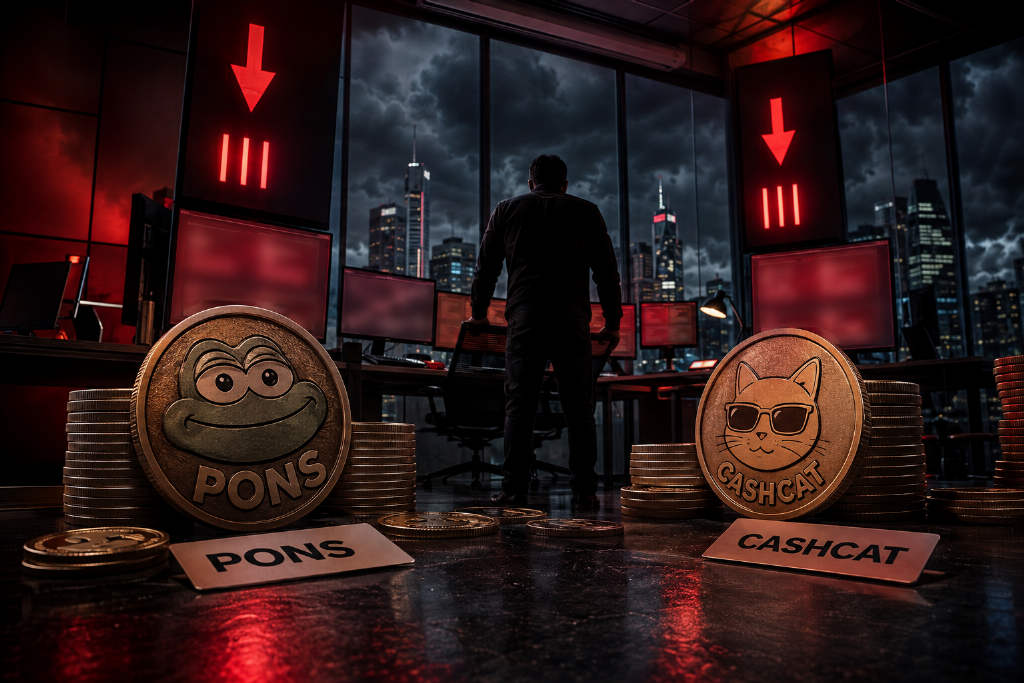
smart money2026-09-04 03:11:37Smart Money Address Shorts PONS and CASHCAT, Faces $3.35M Floating LossAccording to Lookonchain, a smart money address loraclexyz opened 3x leveraged short positions on 17.26 million PONS (~$11.6M) and 22.5 million CASHCAT (~$6.18M). The positions are currently underwater, with floating losses of $2.38M and $0.97M respectively, totaling $3.35M.980
Meme2026-09-04 01:54:08How Meme KOLs and Token Teams Can Form a Six-Level Extraction MachineA MarsBit opinion piece by JamesX breaks down six escalating ways Meme token teams and KOLs can align interests and turn attention into exit liquidity. The article argues that the scarce asset in the Meme market is not the token, the artwork, or even initial capital, but a steady stream of buyers willing to pay higher prices. In that chain — chips, narrative, attention, buy pressure, liquidity, exit — KOLs sit at the point where attention turns into market demand. The framework starts with straightforward paid promotion, where projects pay influencers in cash or tokens to post. It then moves to more opaque structures: early low-cost allocations that let KOLs show real profits, the deliberate creation of high-PnL public wallets as marketing assets, and the rise of wallet-driven distribution networks powered by bots, copytrading, Telegram groups, and secondary amplification across Crypto Twitter. At the highest levels, the piece says, a KOL may no longer be separate from the project at all — first as an undisclosed stakeholder, and eventually as the operator of the token launch and trading machine itself. The article does not say every suspicious pattern proves collusion. Instead, it argues that useful on-chain work comes from repeated behavioral patterns across many projects: when wallets buy, where they buy, who funded them, and who sells into the volume after promotion begins.970
whale movemen2026-09-03 06:03:44Binance Futures 30-Day Smart-Money Leaderboard Changes Top Spot as Semisemi Profits Over $10.78MAi Yi’s monitoring data shows Semisemi has taken over the No. 1 spot on Binance Futures’ 30-day smart-money leaderboard for live trading accounts. ChainCatcher relayed the update. Semisemi’s profit over the past 30 days came to more than $10.78 million. BTC long positions delivered realized gains above $8.06 million. ETH long positions delivered realized gains above $3.91 million. BTC and ETH trading generated most of the returns, according to Ai Yi’s tracking. Semisemi is still holding BTC and ETH long positions worth a combined $95.59 million. Those open positions carry an aggregate floating loss of around $1.885 million. The leaderboard shift was flagged by Ai Yi and reported by ChainCatcher, with the figures covering a 30-day performance window on Binance Futures. The data gives realized gains for BTC and ETH trades separately and also shows the unrealized status of the current long book, presenting a snapshot of Semisemi’s recent trading. This ranking update centers on Binance Futures live accounts, not spot trading.970
Robinhood Cha2026-09-02 04:34:00Four Dune Dashboards Offer a Closer Look at Capital Flows on Robinhood ChainTechFlowPost has highlighted four Dune dashboards that active traders are using to track Robinhood Chain, a network that has recently drawn heavy attention from token launch platforms and the "U.S. stock-mapped Meme" narrative. The article, written by David, argues that in an environment where thousands of new tokens can appear within a day, dashboard data has become a practical filter for distinguishing hype from actual capital formation. The first dashboard focuses on network-wide liquidity, including total value locked, stablecoin market cap, and tokenized real-world assets. TechFlowPost cited current figures of roughly $1.23 billion in TVL, about $826 million in stablecoins, and around $83 million in RWA tokenized assets, while also pointing to Morpho and stock token mint-and-burn data. A second dashboard tracks Ponsfamily, showing more than 586,000 created tokens, roughly $4.93 million in protocol revenue, and about $27.7 million in creator earnings. The remaining two dashboards examine Robinhood Chain’s more specific trading structure: RWA-paired Meme activity across launchpads and the so-called trenches, where bot activity, top traders, and the most traded tokens can be monitored. TechFlowPost said traders should use these dashboards to verify whether money is actually entering the chain, identify which RWA-linked narratives are attracting volume, and watch how smart-money wallets and trading bots are shaping execution conditions.840
Whale Movemen2026-08-27 05:00:17Wallet With Over $6.48 Million in Profit Buys $480,000 on Alexandrova in Polymarket Match MarketPPP, a prediction-market tracking tool, said a wallet with more than $6.48 million in cumulative profit bought $480,000 worth of shares backing Ekaterina Alexandrova to beat Clara Tauson in a Polymarket market tied to the WTA Monterrey Open women’s singles round of 16. The wallet address was identified as 0x6d20c35f65d9899b6d6b74f8466e824580f9a165. Its average entry price was 56.1 cents, and the position was showing an unrealized loss of $223,000 at the time of the update. PPP’s monitoring focused on the specific prediction event for the Alexandrova-Tauson match. The underlying event details also showed Alexandrova ranked No. 19 in the world and seeded first in the tournament, with a first-round bye. Tauson was listed at No. 42 and advanced from the opening round after coming back to win in three sets. In previous meetings between the two players, Tauson held a 2-0 edge.910
smart money2026-08-26 06:00:00GMGN lists top five tokens by smart-money net inflows over the past 24 hoursGMGN data showed the five tokens with the highest smart-money net inflows over the past 24 hours, led by nosis with $10,000 in net inflows. The list also included DOG, LaPeace, Coin, and CringeCoin, each posting gains during the same period. Among them, Coin recorded the largest 24-hour increase at 1622.1%, while nosis rose 456.2% and traded at $0.0023. DOG and LaPeace each saw $1,000 in net inflows, with prices at $0.0001 and $0.0005, respectively. CringeCoin posted $757 in net inflows and traded at $0.0001 after gaining 503.9%. The ranking was cited by ChainCatcher based on GMGN data.1030
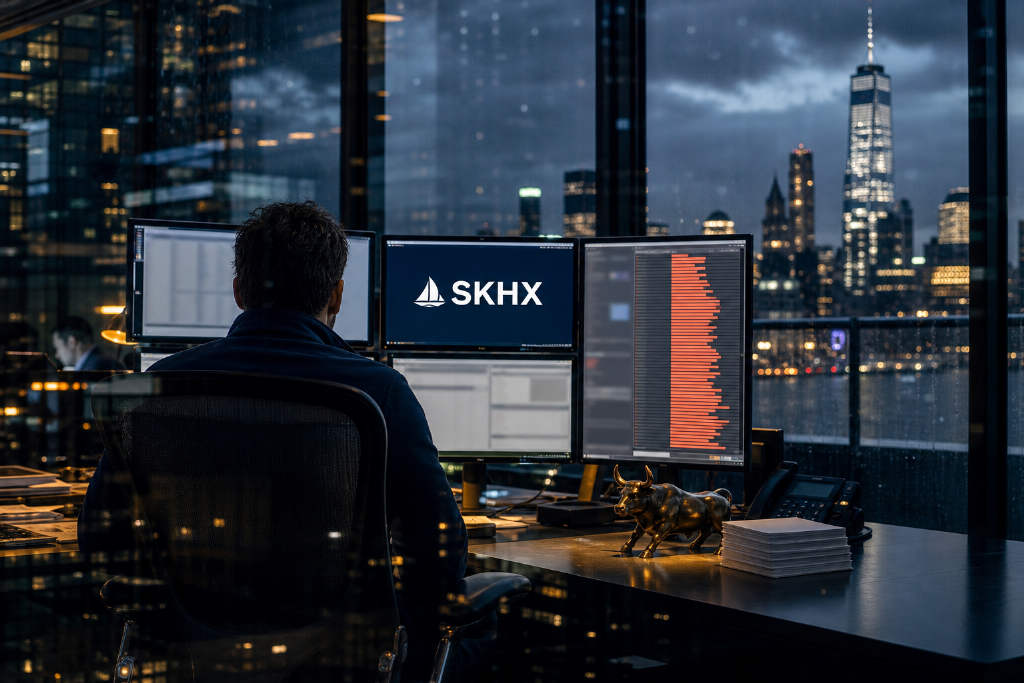
Whale Trackin2026-08-26 02:48:09Smart Money Trader Sits on $2.56 Million Unrealized Gain in SKHX, Lists $47.59 Million Take-Profit OrdersTradingBeats data showed SKHX at $1,240 on Aug. 26, up about 7.8% over the past 24 hours. A trader tracked as “storage smart money,” who chased the move and bought back into SKHX yesterday, is now holding 35,600 long contracts valued at roughly $44.205 million. The average entry price stands at $1,168.2, leaving the position with an unrealized profit of about $2.559 million, up another $1.191 million from the previous tracking update. About 80 minutes before the U.S. stock market closed this morning, the whale placed 100 reduce-only sell orders, aiming to exit nearly the entire position between $1,320 and $1,350. The weighted average order price was around $1,335, with a notional value of about $47.591 million. If fully filled, the gross profit from this round of longs would reach about $5.946 million. TradingBeats also showed roughly $48.828 million in cumulative sell orders between $1,330 and $1,350, with about $32.006 million of that coming from this trader, accounting for about 65.5% of the sell wall in that range. The address has also canceled all buy orders previously left between $1,162.6 and $1,170, shifting from buying dips to locking in gains into strength.1090