TQQQ

Market Analys
2026-09-14 09:23:43

Stock perpetuals traded over the weekend, with SOXX up 1.49% and TQQQ up 0.79%

During the weekend closure in traditional markets, stock-linked perpetual contracts on exchanges continued trading and may have priced in equity market moves ahead of the next session, according to ChainCatcher. RootData data showed that, based on median price differences, the memory/storage segment slipped 0.09% and the AI theme fell 0.15%. Among individual contracts and ETFs, iShares Semiconductor ETF (SOXX) was quoted at $509.76, up 1.49% from its previous post-close reference price of $502.26. ProShares UltraPro QQQ (TQQQ) traded at $67.68, up 0.79% from $67.15. Strategy (MSTR), SPDR Gold Shares (GLD), Coinbase (COIN), and Walmart (WMT) also posted gains, while Nebius (NBIS) and SpaceX (SPCX) moved lower versus their last post-close reference prices.

760
Stock perpetuals traded over the weekend, with SOXX up 1.49% and TQQQ up 0.79%
crypto stocks
2026-08-20 04:51:13

How Major CEXs Are Building Crypto Stock Products Across Brokerage, Tokenized Equities and Perpetuals

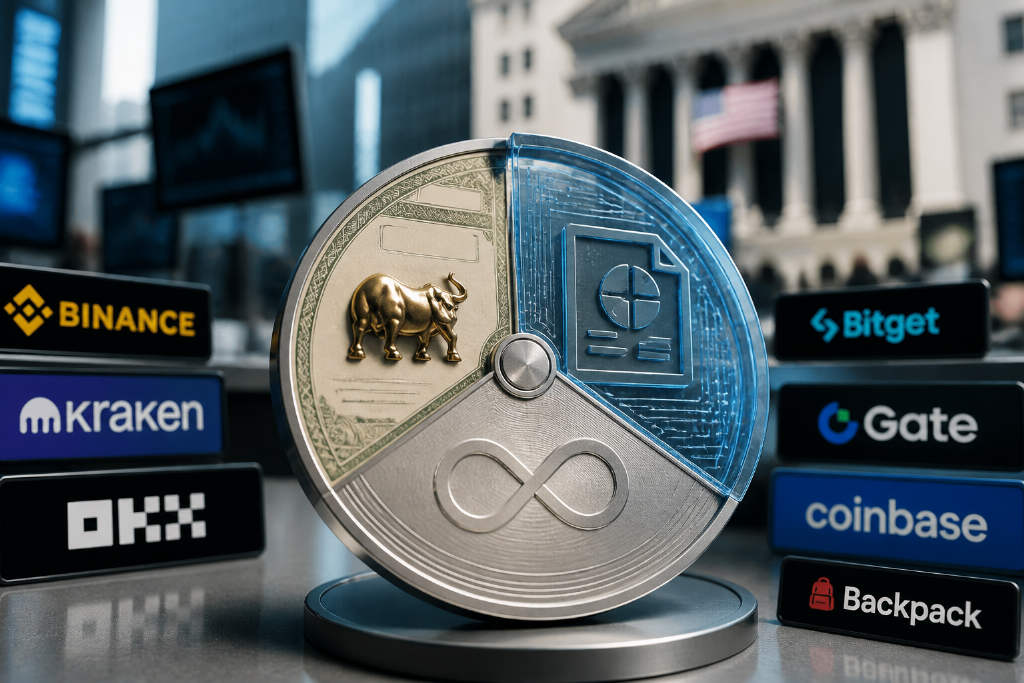
Crypto exchanges are pushing deeper into equities, turning stocks into one of the clearest product expansion paths in this market cycle. CoinGecko data cited in the report shows monthly stock perpetual volume across the top 13 crypto trading platforms climbed from about $831 million in July 2025 to roughly $34 billion in May 2026, a jump of nearly 40 times in less than a year. TradFi and RWA perpetuals spanning stocks, commodities and indexes reached $347.17 billion in May 2026 alone, with year-to-date volume above $1.32 trillion. The landscape is no longer limited to synthetic price exposure. Binance, Kraken, OKX, Bitget, Gate, Coinbase and Backpack are each combining different layers of product infrastructure, including direct access to real U.S. stocks and ETFs, tokenized stocks backed 1:1 by underlying securities, onchain-transferable equity tokens, stock perpetuals, CFDs and pre-IPO contracts. Their structures differ in important ways, especially around custody, investor rights, redemption and whether users actually own shares or only gain economic exposure. The report argues that crypto stocks remain early relative to traditional equity markets, with CoinGecko data indicating activity in crypto stock derivatives is still less than 1% of traditional stock market volume. Even so, the segment is moving from a niche RWA experiment toward a core competitive arena for centralized exchanges that want to extend from crypto into broader financial trading.

4620
How Major CEXs Are Building Crypto Stock Products Across Brokerage, Tokenized Equities and Perpetuals
crypto stocks
2026-08-20 05:03:01

How Major CEXs Are Building Crypto Stock Products Across Brokerage, Tokenization and Perpetuals

Crypto stock products are turning into one of the clearest expansion paths for centralized exchanges as they push beyond digital assets and into traditional finance. The competitive set is no longer limited to synthetic price exposure. By 2026, major platforms had rolled out a mix of real stock brokerage, tokenized equities, stock perpetuals, CFDs and pre-IPO products, often inside a single account system. According to CoinGecko figures cited in the source article, monthly trading volume for stock perpetuals across the top 13 crypto trading platforms climbed from about $831 million in July 2025 to roughly $34 billion in May 2026, an increase of nearly 40 times in less than a year. The article also notes that cumulative stock-perpetual volume in the first five months of 2026 had already surpassed the whole of 2025. On the tokenized spot side, xStocks had logged more than $35 billion in cumulative trading volume by July 2026 and nearly 200,000 holders globally, while expanding beyond U.S. stocks and ETFs into Hong Kong, the U.K., Europe and South Korea. The report reviews how Binance, OKX, Bitget, Gate, Kraken, Coinbase and Backpack approach the market through different legal and product structures. It argues that the category now spans four distinct models: traditional brokerage access to real shares, tokenized securities backed by underlying stocks, total-return or synthetic equity tokens, and stock perpetuals or CFDs that do not require 1:1 share backing. The result is a market that is still early by global equity standards, yet increasingly central to how exchanges compete for the next phase of user growth.


1480
How Major CEXs Are Building Crypto Stock Products Across Brokerage, Tokenization and Perpetuals
Nasdaq
2026-08-16 11:14:08

Nasdaq’s planned 23-hour trading day is aimed at Asia’s daytime flow, with ETFs at the center

Nasdaq plans to launch 23-hour-a-day, five-day-a-week stock trading on Dec. 6, 2026, after the U.S. Securities and Exchange Commission approved the rule change for 23/5 trading. The rollout still depends on whether market infrastructure, including the Securities Information Processor, is ready and whether related operating rules are in place. The added session would run from 9 p.m. to 4 a.m. Eastern Time, covering daytime hours in Asia and allowing investors there to trade U.S. stocks without waiting for the New York open. According to the article, the change is less about letting U.S. investors trade longer and more about pulling order flow back from overnight ATS venues, broker internalization systems and rival exchanges. Nasdaq’s own overnight data show trading is highly concentrated: out of roughly 11,300 U.S. tickers, only 1,403 traded overnight, and just 644 saw more than $10,000 in daily turnover. The top 15 instruments made up about 53% of overnight volume, with 12 ETFs and only three single stocks. That pattern suggests overnight trading is centered on macro risk transfer and price discovery in broad market products and mega-cap names, not broad equity research. The article also argues that extending trading hours raises infrastructure, staffing, compliance and market-making costs, while faster prices do not automatically mean better prices in a thinner market.

1160
Nasdaq’s planned 23-hour trading day is aimed at Asia’s daytime flow, with ETFs at the center
But Danbin
2026-08-12 10:36:10

Dongfang Harbor boosts AI chip bets, builds Intel stake, dumps Apple and Tesla in Q2

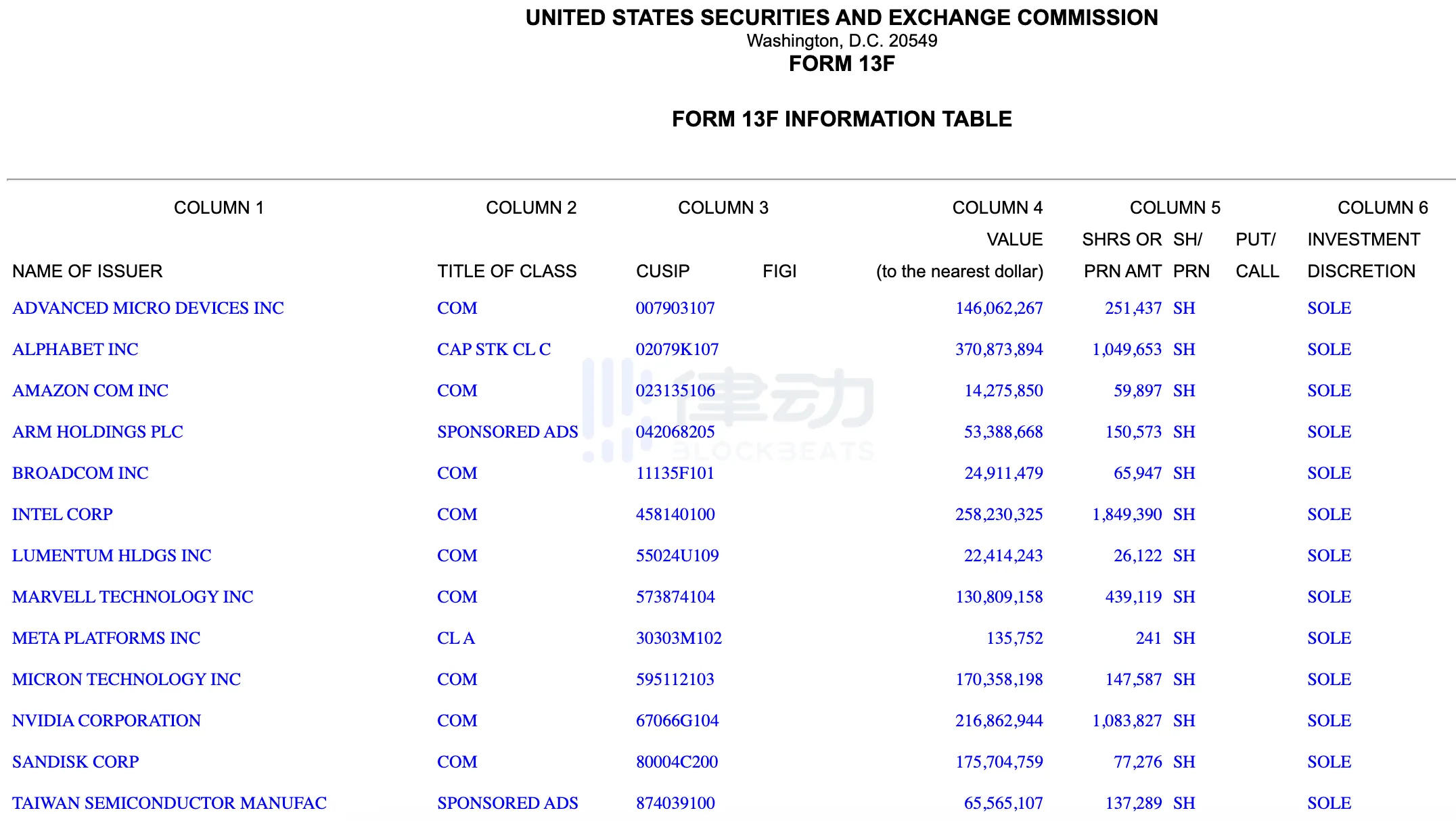
But Danbin's Dongfang Harbor disclosed a 45.6% jump in its US equity portfolio to $1.65 billion in Q2, per the latest 13F filing. Alphabet Class C remained the top holding at 22.5%, while a newly built Intel position became the second-largest. The fund also initiated stakes in SanDisk, AMD, Marvell, Arm, Broadcom and Lumentum, nearly doubled its Micron position, and exited Apple, Tesla, Circle and two leveraged ETFs.

1980
Dongfang Harbor boosts AI chip bets, builds Intel stake, dumps Apple and Tesla in Q2
Bitget
2026-07-28 06:05:57

Bitget adds 38 rToken stock tokens as collateral in crypto lending market

Bitget has expanded the collateral list on its Crypto Loans product by adding 38 stock tokens, or rTokens, bringing the total number of supported names to 103. The newly added assets include rIBM, rTQQQ and rNOK, covering major U.S. stocks and ETFs across sectors such as technology, consumer and finance. Users holding these stock tokens can now pledge them as collateral to borrow USDT, USDC and more than 100 crypto assets without selling their positions. Bitget said collateral parameters are available on its official platform. The exchange said rTokens are issued by Reality, its licensed real-world asset protocol. These tokens use the format of the letter "r" plus the stock ticker, such as rNVDA for Nvidia. According to the announcement, Reality connects to liquidity pools tied to Nasdaq and the New York Stock Exchange through a partnership with regulated broker Alpaca. Bitget also outlined several features of the product, including 1:1 reserves for the underlying assets under licensed custody, 1:1 tokenized dividend distribution, synchronized handling of corporate actions such as stock splits and reverse splits, and the ability to use holdings as joint margin in unified accounts and USDT-margined futures.

1390
Bitget adds 38 rToken stock tokens as collateral in crypto lending market
Binance
2026-07-23 02:36:00

Crypto and tech updates on July 23: Binance expands bStocks collateral, ZIL and bridge exploits draw scrutiny

A broad set of market, security, regulatory, and infrastructure developments emerged between late July 22 and early July 23. Binance said it will add 10 tokenized bStocks securities as eligible collateral and open margin trading for their related pairs, while Upbit designated Zilliqa’s ZIL as a closely watched asset and suspended deposits and withdrawals after security concerns tied to its wallet or distributed ledger. Zilliqa then disclosed a serious Ledger app nonce flaw affecting native, non-EVM ZIL transactions, saying private keys could be recovered from around five affected signatures. Security incidents also hit B² Network and an AFX-operated bridge in the Arbitrum ecosystem. Elsewhere, Payward said xStocks is expanding tokenized equities beyond U.S. names, Sui launched the Hashi Bitcoin interoperability testnet, BNY Mellon outlined plans for round-the-clock Treasury settlement, and several firms including OpenAI, Alphabet, Revolut, Tesla, and Samsung disclosed major product, spending, or financial updates. The flow also included U.S. legislative movement on the Clarity bill, SEC commentary on on-chain vaults and lending strategies, whale ETH purchases, and fresh market views from Grayscale and Bitwise.

2430
Crypto and tech updates on July 23: Binance expands bStocks collateral, ZIL and bridge exploits draw scrutiny