token buyback2026-08-31 07:38:28Crypto project token buybacks hit a record $638 million in 2026Crypto project token buybacks reached a record $638 million in 2026, according to a Techub News brief citing Crypto.news. The update points to a highly concentrated buyback picture, with Hyperliquid and Pump.fun accounting for nearly 90% of the total purchase volume. No additional project-level breakdown or timeframe inside the year was disclosed in the item, but the headline figure marks a new all-time high for annual buybacks among crypto projects. The data, as presented in the brief, highlights how a small number of issuers dominated token repurchase activity during the period covered.300
crypto projec2026-08-31 05:57:26Crypto Token Buybacks Near $638 Million This Year, With Hyperliquid and pump.fun Making Up Almost 90%Crypto projects have spent nearly $638 million buying back their own tokens so far this year, according to Financial Times reporting that cited data from Allium Labs. The figure stands above the $545 million recorded in the same period last year and far exceeds the $366,000 reported for all of 2024. The activity has been heavily concentrated in a small number of names, with Hyperliquid and pump.fun together accounting for almost 90% of this year’s total buybacks. The report said token repurchases are typically used by project teams to reduce circulating supply, add buying pressure, ease selling pressure, and support prices during a weak market. The larger buyback total this year also suggests that more crypto projects are adopting repurchases as a response to prolonged market softness.820
crypto2026-08-31 05:45:53FT: Crypto Projects Have Spent Nearly $640 Million Buying Back Their Own Tokens This YearCrypto projects have spent about $638 million on buybacks of their own tokens so far this year, according to a Financial Times report citing data from blockchain analytics firm Allium Labs. The figure is above the $545 million recorded over the same period last year, while full-year buybacks in 2024 totaled just $366,000. The report said token issuers are adopting a tactic long used in equity markets as they try to support token prices during a prolonged market slump. The buyback activity appears to be highly concentrated rather than broad-based across the sector. Allium Labs’ data shows that Hyperliquid and pump.fun together accounted for nearly 90% of the total buyback volume tracked this year. The figures point to a sharp rise in capital deployed for token repurchases, with a small number of projects making up most of the total.740
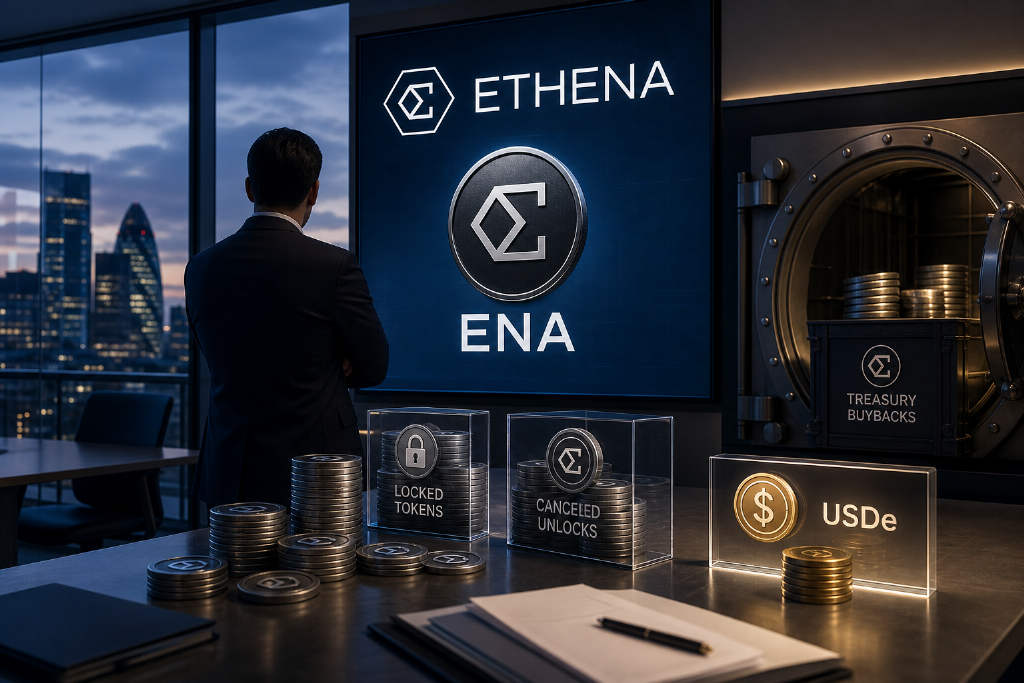
Ethena2026-08-27 22:34:47Ethena buys out early ENA sellers and puts fee-funded buybacks to a tokenholder voteEthena Foundation said it has bought out locked ENA held by early investors who had sold tokens after the market peak on Oct. 10, 2025, while also sending a fee-switch proposal for ENA buybacks to tokenholders for a vote on Thursday. The two steps were framed by Ethena as answers to what it called the project’s two standing doubts. ENA climbed about 16% in the hours after the announcement to roughly $0.17, extending a weekly gain of about 70%. The repurchases were executed over the counter during the past two weeks and applied to investors originally allocated more than 0.25% of supply who sold any ENA after the peak. Ethena said one wallet declined to participate because it remains convinced about the project, while investors who had not sold were offered a repurchase at par and none accepted. The remaining investor tokens are set to unlock in a single batch on Oct. 5, ending the monthly unlock schedule, while team tokens remain on their original vesting. The proposed buyback framework is not active at current scale. Ethena said buybacks would be funded by 95% of net revenue paid to the Foundation, but the revenue diversion only starts once USDe supply reaches $7.5 billion. With USDe at about $4.04 billion, Blockworks Advisory said the schedule currently allocates nothing.2020
Ethena2026-08-28 05:34:00ENA rebounds as Ethena Foundation moves on unlocks, buybacks and value rightsENA climbed to $0.189 on Aug. 28, up sharply from around $0.08 just 10 days earlier, with the market reaction tied less to a broad crypto recovery than to a sweeping set of changes announced by the Ethena Foundation on Aug. 27. The measures target the issues that had weighed on the token for much of the past two years: recurring investor unlock pressure, weak value accrual for token holders, and a split between protocol economics and corporate equity interests. The foundation said it had bought locked ENA from some major seed investors and reached agreements to eliminate future monthly VC unlock pressure. It also put forward a governance proposal that would direct 95% of protocol net revenue to programmatic ENA buybacks in the secondary market once USDe supply reaches set thresholds. In parallel, Ethena said protocol intellectual property and value attribution would sit exclusively with the foundation, while equity investors in Ethena Labs would no longer receive residual cash flows. Still, the bullish repricing comes with an open question. USDe supply has fallen from about $15 billion at its October 2025 peak to roughly $4 billion now, which leaves the durability of protocol revenue under scrutiny.870
Lido2026-08-14 12:07:17Lido outlines NEST framework, starting with treasury-only buybacks tied to protocol revenueLido DAO has published a breakdown of its NEST, or Network Economic Support Tokenomics, framework, a mechanism designed to connect protocol revenue with LDO token value through automated onchain buybacks. Under the initial setup, once staking revenue rises above a baseline of $40 million on an annualized basis, or about $109,000 per day, 50% of the excess revenue will be used to repurchase LDO through CoW Swap. The model also includes a daily cap of $50,000 and a 365-day cumulative cap of $10 million. At launch, NEST will run in a treasury-only mode, meaning purchased LDO will go directly into the DAO treasury. Lido said the DAO may later switch to an LP mode through an onchain vote if market conditions are suitable. In that version, half of the funds would be used to buy LDO, while the other half would be converted into wstETH and deployed as liquidity on Curve. Lido said NEST is a core part of its broader LDO value alignment strategy. The protocol described the design as transparent, adjustable and free of manual intervention, with safeguards including daily funding limits, governance-based parameter changes, oracle protections and an emergency pause. Based on backtesting using 2024 to 2025 revenue data, Lido said the model would have supported about $7.09 million in LDO buybacks, in line with its target spending scale.1470
Bitwise2026-08-13 06:50:15Bitwise CIO Matt Hougan says DeFi token buybacks could leave many crypto assets worth at least twice as muchBitwise Chief Investment Officer Matt Hougan argued in an Aug. 13 analysis that decentralized finance is moving into a phase where protocol revenue is increasingly routed back to token holders through buybacks or burns. In his view, that shift is turning non-Bitcoin crypto assets into a yield-driven market, while public valuations still fail to reflect the change. Hougan pointed to five protocols already using versions of that model: Hyperliquid, Uniswap, Aave, Pump.fun and Lighter. He cited Hyperliquid’s reported revenue of more than $800 million in 2025, with about 99% used to buy back and burn HYPE, and said Aave’s DAO had acquired more than 205,000 AAVE in its first 10 months under a buyback plan. He also referenced Uniswap’s protocol fee activation through the “UNIfication” proposal and Aave founder Stani Kulechov’s statement that 100% of revenue from the Aave protocol and GHO stablecoin would go toward AAVE. Hougan said looser U.S. regulation after 2025 is helping these models spread, though he also flagged key limits: token holders do not have a legal claim on cash flows, and governance can always change the token economic design. He added that over the next 12 to 24 months, similar mechanisms could spread across DeFi applications and Layer 1 networks, with institutional products such as ETFs and structured products becoming more willing to allocate if governance remains transparent and predictable.1550
Hyperliquid2026-08-12 06:46:16Hyperliquid open interest hits a record high as revenue keeps slidingHyperliquid is posting bigger trading numbers even as the revenue that supports HYPE has been shrinking. Open interest on the platform climbed above $11 billion on July 13, the highest level recorded for Hyperliquid in 2026, while 30-day perpetual futures volume approached $178 billion. Including centralized venues, the platform now accounts for about 9% of global perpetual open interest, up from less than 7% at the end of May. The revenue line has moved the other way. DeFiLlama data cited in the report shows Hyperliquid protocol revenue peaked at roughly $357 million in the third quarter of 2025, then fell quarter by quarter to $295 million, $217 million and about $202 million in the second quarter of 2026. That leaves revenue down 43% from the peak even as trading activity keeps rising. The report links the gap to HIP-3, a change that lets outside builders launch their own perpetual markets on Hyperliquid’s order book by staking 500,000 HYPE, worth about $28 million at current prices, and keep as much as half of trading fees. Those externally deployed markets have grown from 2% of perpetual volume at the start of 2026 to nearly 50% now. Much of that growth has come from RWA-linked perpetuals, including oil, gold, Nvidia, Tesla, Nasdaq 100 trackers and contracts tied to private companies such as SpaceX.930