Stablecoins
Nov 12, 2026

Stablecoin Supply Shrinks by $14.86 Billion in a Month, Largest Drop Since May 2022

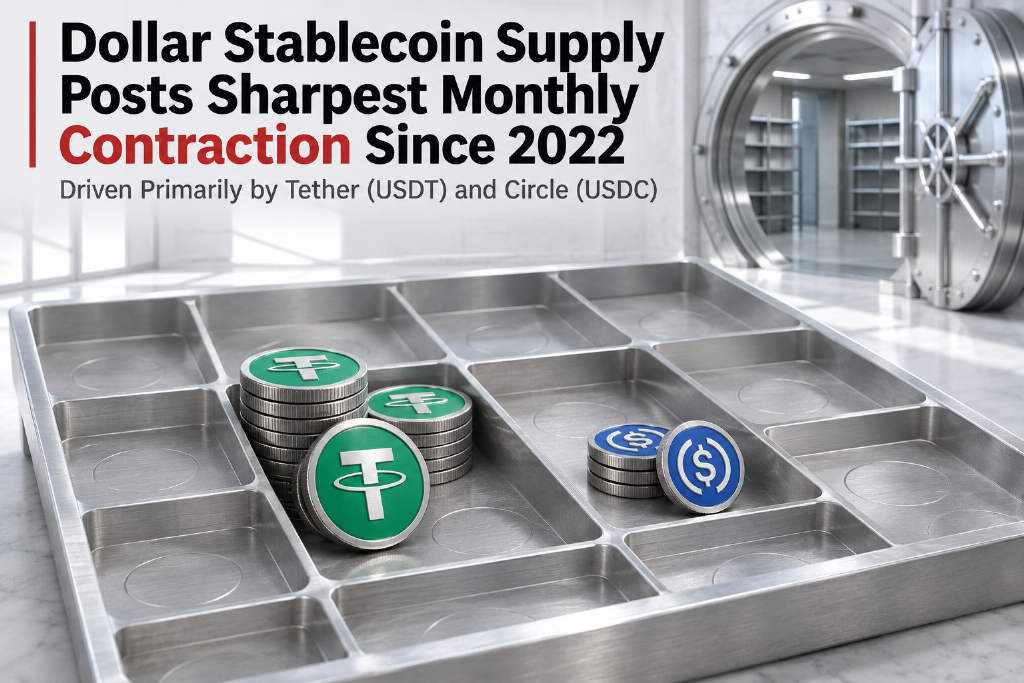
The total supply of dollar-pegged stablecoins fell to about $289.07 billion as of Nov. 12, down $14.86 billion from 30 days earlier, according to DefiLlama data cited in the report. That was the largest 30-day decline since May 2022, leaving total supply at its September 2025 level. Stablecoin supply had reached a high of about $312.85 billion on May 17, and has since fallen by roughly $23.8 billion. The decline was concentrated in Tether’s USDT and Circle’s USDC. USDT circulation dropped by $8.31 billion over the month to about $175.65 billion, while USDC fell by $2.97 billion to roughly $69.89 billion. Together, the two tokens account for about 85% of total stablecoin supply. The Block cited a CryptoQuant report saying USDT’s market capitalization fell by $6.6 billion in the 60 days through Nov. 7, more than double the $3.2 billion decline over the comparable period after FTX collapsed in December 2022. Glassnode said shrinking supply suggests holders are redeeming stablecoins for dollars and removing cash from the market. It called renewed supply growth the first signal of new capital entering. CryptoQuant said Bitcoin may form an interim low before USDT supply turns positive. Bitcoin was trading at about $73,700 on the morning of Nov. 12 Taiwan time. An October Chain News report said stablecoin supply had grown only 0.4% this year, while payment volume rose 45% year over year.

10
Stablecoin Supply Shrinks by $14.86 Billion in a Month, Largest Drop Since May 2022
Russia crypto regulation
Nov 11, 2026

Russia’s Central Bank Clears Exchanges to Begin Bitcoin Trading on Nov. 22

The Bank of Russia said exchanges may begin organized cryptocurrency trading on Nov. 22, provided the regulator has approved their trading rules. The date comes ahead of Moscow Exchange’s planned Dec. 1 launch of bitcoin, ether and Tether’s USDT in a pilot program. Exchanges will have to register participating brokers, trust managers and central counterparties, maintain order and transaction records, monitor activity, calculate several market prices and report trading data to the central bank. A separate ordinance taking effect Nov. 17 allows non-qualified investors to buy bitcoin, ether and USDT. Their annual purchases through a single intermediary will be capped at 300,000 rubles, or about $3,600 at the official exchange rate. Qualified investors will have access to all cryptoassets without a purchase cap, though both groups must pass a knowledge test and read a risk disclosure. The framework is based on Federal Law No. 282-FZ, which recognizes crypto as property and permits supervised cross-border trading while banning crypto payments for goods and services inside Russia. SPB Exchange has also said it wants to launch organized crypto trading by year-end.

20
Russia’s Central Bank Clears Exchanges to Begin Bitcoin Trading on Nov. 22
Anchorage Digital
Nov 11, 2026

Anchorage Digital Opens Tether Gold Collateral Loans to Institutions

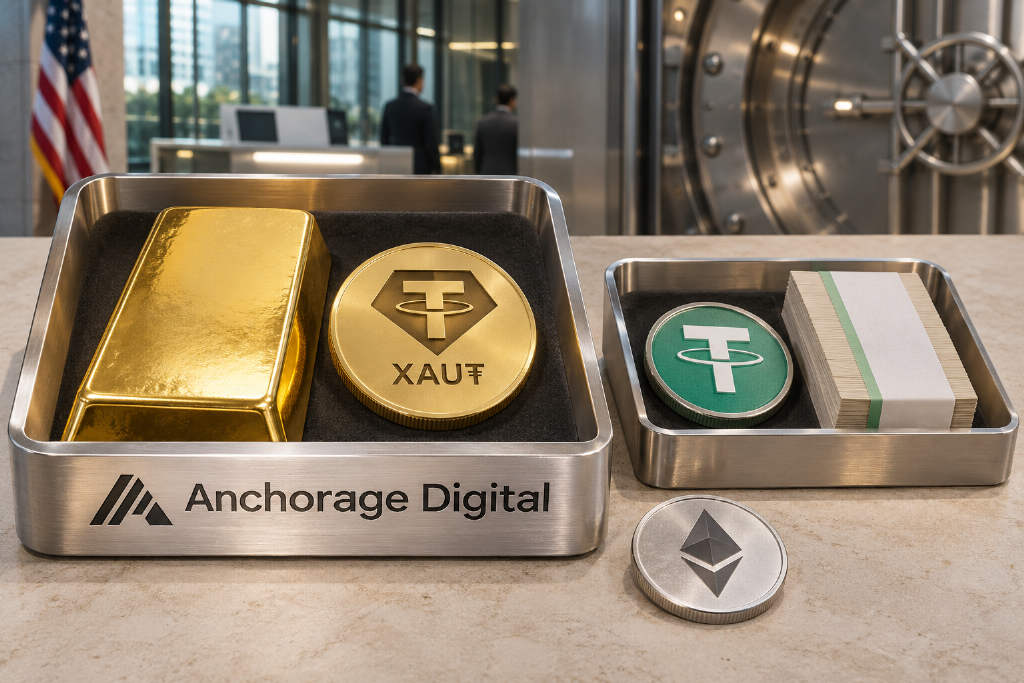
Anchorage Digital said institutional clients can now custody, trade and borrow against Tether Gold (XAU₮), the gold-backed token issued by TG Commodities S.A. de C.V. The service is available through Anchorage Digital’s institutional platform, Anchorage Digital Prime, and supports XAU₮ on Ethereum. Clients can hold the token at Anchorage Digital Bank, N.A., or Anchorage Digital Singapore, trade it through the company’s principal desk and pledge it as collateral for derivatives. They can also borrow USD or USDT from other Anchorage Digital Bank clients against XAU₮ held at the bank. Anchorage said its bank is not the lender in those arrangements; it provides custody and the infrastructure used to verify collateral. Loan-to-value ratios, interest rates and minimum sizes are set by the counterparties and are not published by Anchorage. The company said institutional activity in XAU₮ has risen more than tenfold from a year ago, with demand from precious-metals dealers, mining companies, funds, trading firms and family offices. The launch follows Tether’s $100 million investment in Anchorage at a $4.2 billion valuation in February.

20
Anchorage Digital Opens Tether Gold Collateral Loans to Institutions
Russia crypto regulation
Nov 11, 2026

Russia’s Central Bank Clears Crypto Trading on Exchanges From Nov. 22

Russia’s central bank said exchanges may begin offering cryptocurrency trading on Nov. 22, 2026, provided they first agree on trading rules with the regulator. The instruction governing transactions in digital currencies and digital rights has been registered by Russia’s Justice Ministry. The framework requires exchanges to register trading participants, including brokers, trustees managing assets and central counterparties. Platforms must keep records of orders and executed trades, monitor activity and calculate current, volume-weighted average, market and closing prices. Trading activity and its results must be reported to the central bank under procedures already used for other assets. For non-qualified investors, the central bank approved a list that includes Bitcoin, Ether and USDT. The list takes effect on Nov. 17. These investors may buy through brokers, asset managers or crypto exchange providers, using both exchange and over-the-counter channels, but purchases through any single intermediary are capped at 300,000 rubles a year. Qualified investors are not subject to those asset or purchase limits. All investors must pass a test and read a crypto investment risk disclosure before trading. The bank said it considered market capitalization, average daily volume and at least five years of pricing history on overseas trading venues when selecting assets for non-qualified investors.

20
Russia’s Central Bank Clears Crypto Trading on Exchanges From Nov. 22
Stablecoins
Nov 11, 2026

Paraguay Bank Collapse Shows Stablecoins Can Offer a Lifeline — With Limits

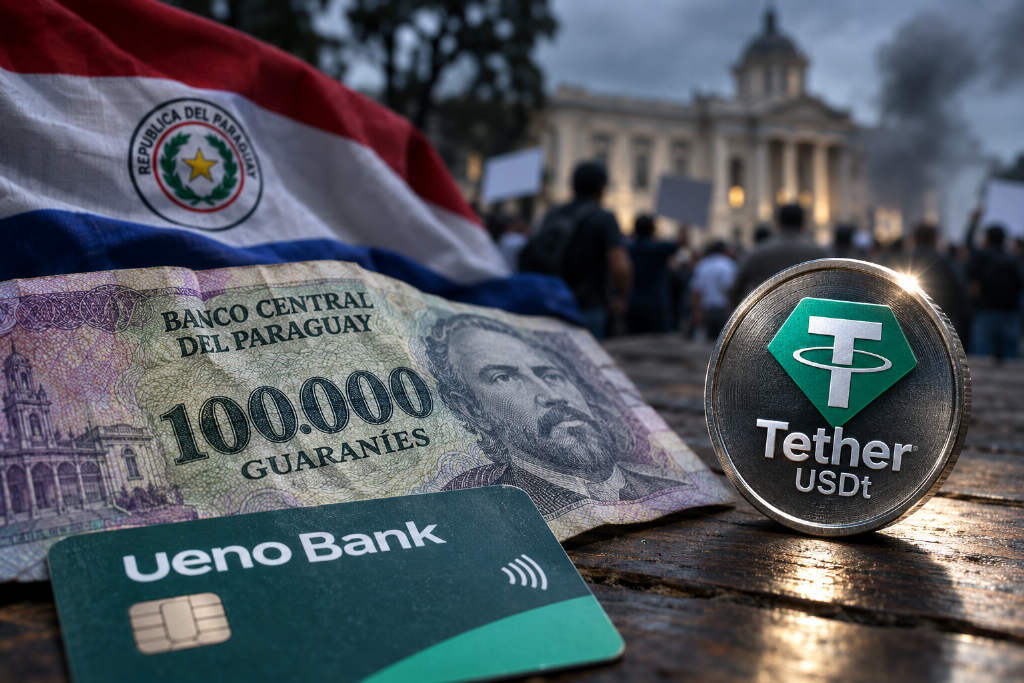
The failure of Paraguay’s digital lender Ueno Bank left nearly three million customers unable to access their accounts and pushed stablecoins into the spotlight as a source of liquidity. Paraguay’s Central Bank placed the bank into resolution on Nov. 3 after its solvency ratio fell below half the legally required minimum. An investigation also found questionable lending practices and gaps in credit documentation and accounting. The collapse came during a political crisis, with protests spreading and President Santiago Peña attempting to resign before being impeached and arrested on breach-of-trust and personal-gain charges. The local guaraní fell 12.3% in one week, while some peer-to-peer sellers charged premiums of up to 13% for USDt. X4T reported more than $10 million in local on-ramp volume over the 30 days to early November, though some activity preceded the bank’s failure. Analysts said stablecoins may help preserve value and keep payments moving, but they do not carry the same deposit guarantees as bank accounts and remain connected to the traditional financial system.

40
Paraguay Bank Collapse Shows Stablecoins Can Offer a Lifeline — With Limits
Paraguay
Nov 11, 2026

Paraguay Takes Over Ueno as Customers Lose Account Access

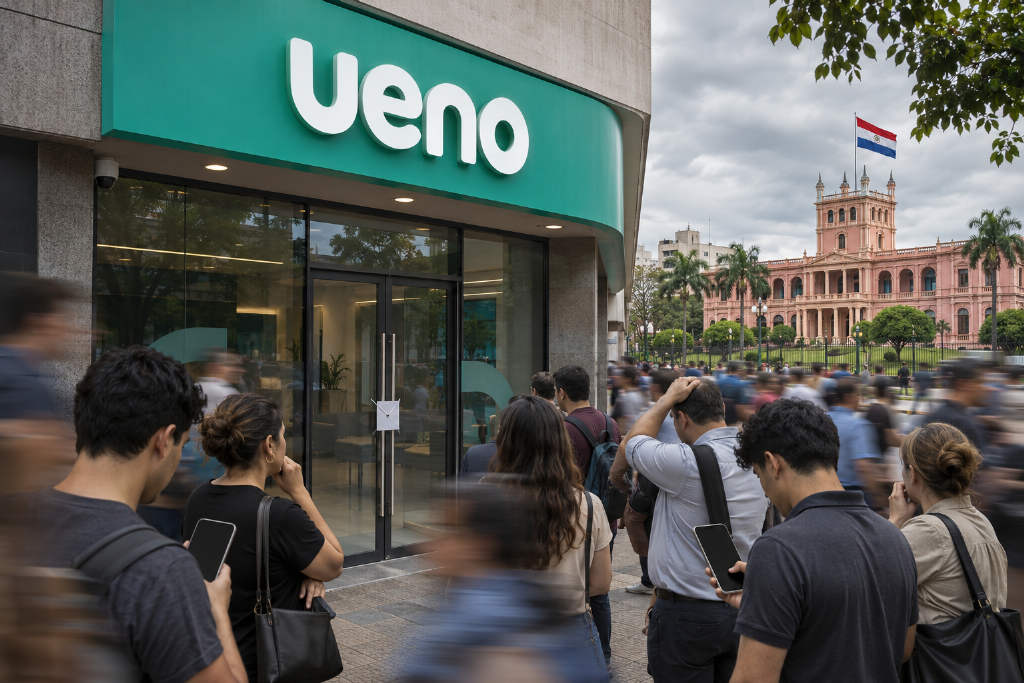
Paraguay’s central bank took control of digital bank Ueno on Nov. 3, leaving nearly 3 million customers unable to access their accounts. The customer base represents about 60% of the country’s adult population. The central bank said Ueno’s solvency ratio had fallen below half of the statutory minimum, while an investigation found suspicious lending operations along with defects in credit documentation and accounting. The takeover triggered a political crisis, with thousands of people protesting. President Santiago Peña tried to resign before facing impeachment and was later arrested over allegations of breach of trust and abuse of office for personal gain. The disruption also reached Paraguay’s peer-to-peer crypto market: some sellers charged premiums of up to 13% for USDt. The guarani fell 12.3% in one week, prompting some residents to turn to stablecoins to preserve value or keep payments running. David Eisenmann, founder of Paraguayan crypto exchange X4T, said the takeover came as salaries, rent and supplier invoices were due at the start of the month, leaving many business owners unable to pay wages. By Nov. 9, the central bank said 93.1% of Ueno deposit customers had been reimbursed.

20
Paraguay Takes Over Ueno as Customers Lose Account Access
Total 1897 items
Go topage