VOO

BIT
2026-08-28 09:55:50

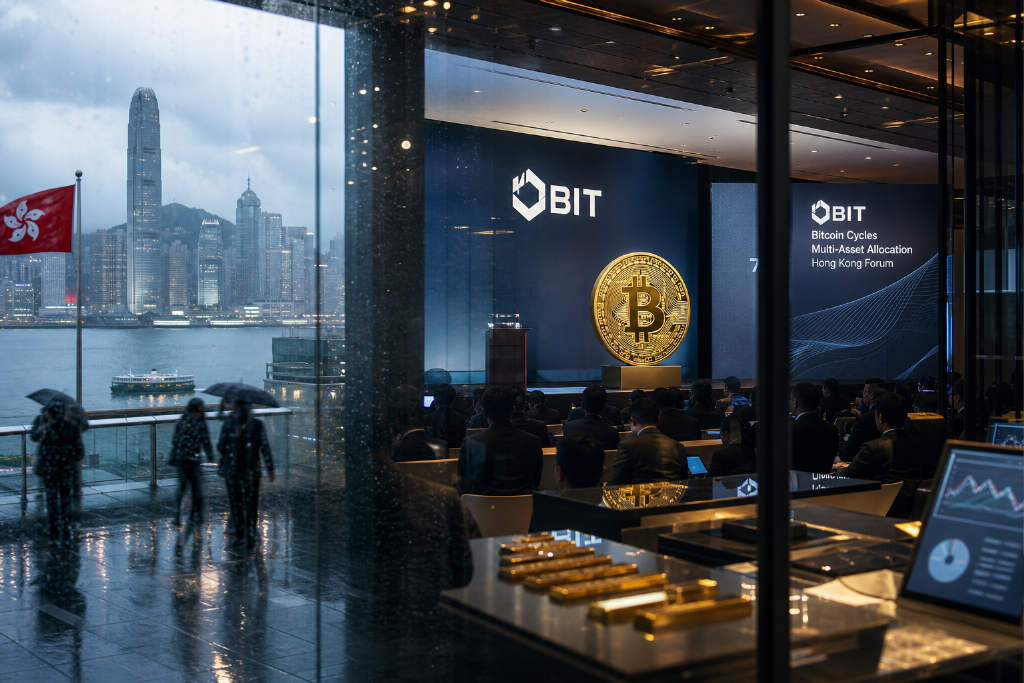
BIT holds Hong Kong forum on bitcoin cycles, capital rotation and multi-asset allocation

BIT, formerly Matrixport, held an investment opportunity forum in Hong Kong on Aug. 26 during Bitcoin Asia 2026, bringing together institutional investors, family offices, market commentators, media and academics to discuss macro cycles and digital-asset allocation. BIT said it is expanding from a digital-asset-focused platform into a multi-asset digital finance platform, after launching U.S. stock spot trading in February and later adding margin trading, securities lending and options. The company said cumulative trading volume for those products has reached about $4 billion, with HKD deposit and withdrawal support and Hong Kong stock trading planned next. Speakers covered a broad range of themes. BIT analyst Markus Thielen argued that bitcoin’s market structure reflects not only the halving cycle but also a pattern of roughly 35 months up and 12 months of correction, and said the market may be entering a new two- to three-year upcycle. Panelists also debated whether capital is rotating away from AI after the “Magnificent Seven” lost about $2.4 trillion in market value in June, while discussing gold, BTC, RWA and cash-flow-generating assets as alternative destinations. Other sessions examined tokenized U.S. equities, the institutional path for stablecoins and RWA on public blockchains, and the use of structured products to manage digital-asset exposure. In the closing conversation, analyst Phyrex said he expects the Federal Reserve to stay on hold this year and argued bitcoin’s move above $80,000 was driven more by shifting supply and demand than by a surge in new capital.
140
BIT holds Hong Kong forum on bitcoin cycles, capital rotation and multi-asset allocation
VOO
2026-08-25 13:40:03

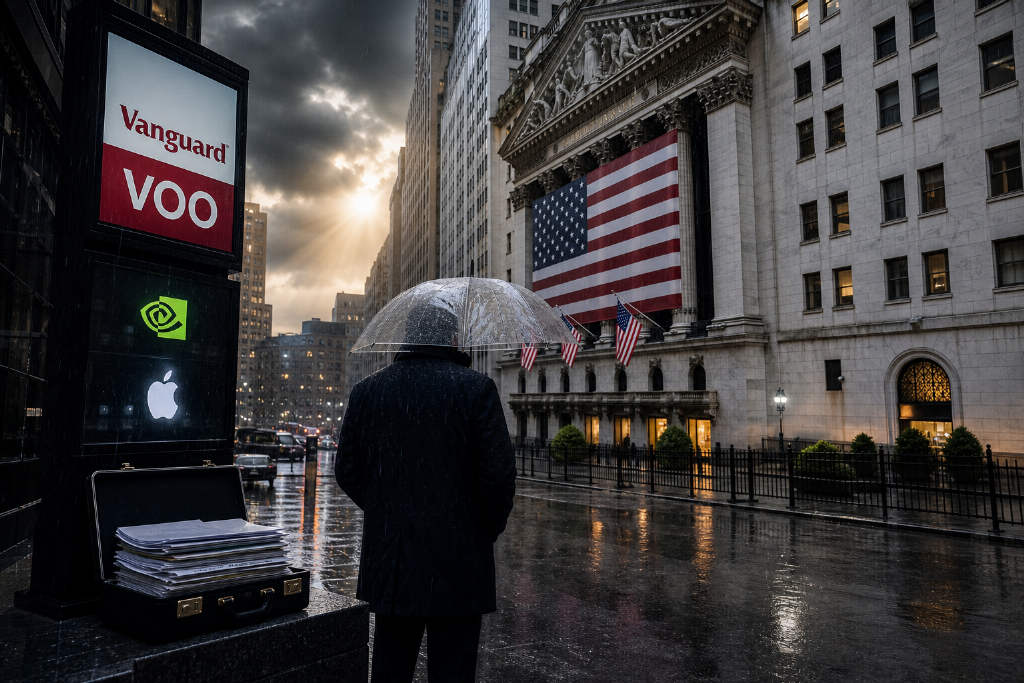
VOO Takes In $4.3 Billion in a Week as Nvidia Earnings and Apple CEO Handover Loom

Vanguard’s VOO ETF pulled in about $4.3 billion over the past week even as the S&P 500 fell 0.92% across the last five trading sessions, according to BlockBeats. The fund has now recorded roughly $69 billion in net inflows this year, making it the top ETF globally by capital intake. On June 2, VOO also became the first ETF to surpass $1 trillion in net assets. The fund’s concentration is drawing attention. Its top 10 holdings account for about 37.6% of total assets, with Nvidia and Apple making up roughly 7.55% and 7.05%, respectively. That leaves VOO with heavy exposure to large-cap technology names. Two upcoming events are now in focus. Nvidia is scheduled to report results for the second quarter of fiscal 2027 on Aug. 26. Market expectations point to revenue of about $91.85 billion, versus company guidance of $91 billion plus or minus 2%. Apple, meanwhile, is set for a CEO transition on Sept. 1, when John Ternus will replace Tim Cook. BlockBeats said the steady inflows into VOO reflect a buy-the-dip, long-term holding approach, but Nvidia’s AI demand outlook and Apple’s management transition could shape the ETF’s near-term performance.

150
VOO Takes In $4.3 Billion in a Week as Nvidia Earnings and Apple CEO Handover Loom
Nasdaq
2026-08-16 11:14:08

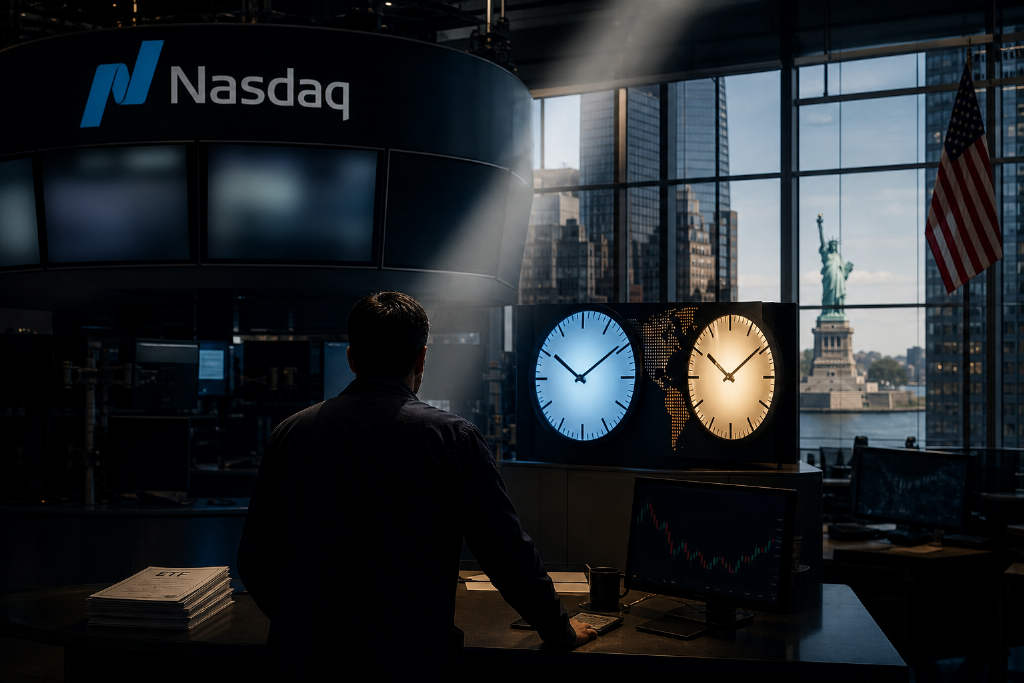
Nasdaq’s planned 23-hour trading day is aimed at Asia’s daytime flow, with ETFs at the center

Nasdaq plans to launch 23-hour-a-day, five-day-a-week stock trading on Dec. 6, 2026, after the U.S. Securities and Exchange Commission approved the rule change for 23/5 trading. The rollout still depends on whether market infrastructure, including the Securities Information Processor, is ready and whether related operating rules are in place. The added session would run from 9 p.m. to 4 a.m. Eastern Time, covering daytime hours in Asia and allowing investors there to trade U.S. stocks without waiting for the New York open. According to the article, the change is less about letting U.S. investors trade longer and more about pulling order flow back from overnight ATS venues, broker internalization systems and rival exchanges. Nasdaq’s own overnight data show trading is highly concentrated: out of roughly 11,300 U.S. tickers, only 1,403 traded overnight, and just 644 saw more than $10,000 in daily turnover. The top 15 instruments made up about 53% of overnight volume, with 12 ETFs and only three single stocks. That pattern suggests overnight trading is centered on macro risk transfer and price discovery in broad market products and mega-cap names, not broad equity research. The article also argues that extending trading hours raises infrastructure, staffing, compliance and market-making costs, while faster prices do not automatically mean better prices in a thinner market.

430
Nasdaq’s planned 23-hour trading day is aimed at Asia’s daytime flow, with ETFs at the center
S&P 500
2026-08-06 09:37:19

Why the S&P 500 Keeps Hitting Records While Many Tech Stocks Are Still Underwater

The S&P 500 closed at a record 7,736.52 on Aug. 4, 2026, and the Dow Jones Industrial Average finished above 54,000 for the first time. Yet the experience for many investors looked very different beneath those headline numbers. Nvidia was still about 20% below its peak, the Nasdaq Composite remained roughly 2% under its June record, and a number of AI and semiconductor names were far from fresh highs. The gap is not a contradiction so much as a lesson in how broad market indexes work. This report breaks down the mechanics behind that split. The S&P 500 is market-cap weighted, but technology still represents only about 29% to 30% of the index, leaving the other 70% spread across financials, healthcare, industrials, consumer names and other sectors. During June, July and early August 2026, leadership widened beyond AI hardware, with financials and healthcare helping hold the index near highs while semiconductor stocks sold off. Equal-weight performance added another layer to the story: the Invesco S&P 500 Equal Weight ETF (RSP) returned 14.9% year to date as of Aug. 5, ahead of the standard S&P 500’s 13.2%. The piece also examines the index’s concentration risk, including the fact that the top 10 holdings make up more than 37% of the S&P 500, and explains why an index making new highs does not mean every stock inside it is doing the same.

1320
Why the S&P 500 Keeps Hitting Records While Many Tech Stocks Are Still Underwater
Gate
2026-07-15 09:00:39

Gate to list 16 gStocks tokenized securities for spot trading on July 15

Gate said its gStocks section will list 16 tokenized securities for spot trading at 16:00 on July 15 (UTC+8), according to an official announcement cited by ChainCatcher. The lineup includes VOOG and IVVG, along with tokenized versions tied to Caterpillar, Bank of America, Lam Research, Costco, UnitedHealth Group, General Electric, Chevron, Coca-Cola, Procter & Gamble, HSBC Holdings, Home Depot, Arm, Netflix and Goldman Sachs. Gate said the gStocks tokenized securities product is backed by 1:1 full native reserves. The company also said the offering gives users one-stop access to 7×24 securities trading.

1090
Gate to list 16 gStocks tokenized securities for spot trading on July 15