Whales2026-10-19 02:30:00Whale withdrawals, BTC position shifts and policy moves dominate Oct. 18-19 crypto updatesA broad set of crypto market, policy and security developments emerged between Oct. 18 and Oct. 19. On-chain data showed a whale address withdrawing about $2.34 million worth of Arbitrum and Uniswap tokens from Bybit just as Arbitrum faced another week of token unlock pressure, with more than 90 million ARB unlocked. In derivatives, another large trader closed a roughly $110 million BTC long after a near miss on a stop level, then rotated into a $45.8 million long position tied to U.S. equities. Hyperliquid was also in focus on two fronts: co-founder Jeff Yan told Bloomberg he wants U.S. rules that regulate financial institutions building on the chain rather than the blockchain itself, while platform data showed fresh HYPE buybacks and burns. Elsewhere, Hacken said crypto losses reached $1.18 billion across 107 security incidents in the third quarter of 2026, and Qubic disclosed that 1,404 wallets were compromised through weak seed randomness. The update cycle also included Roger Ver’s deferred prosecution deal with the U.S. Department of Justice, Anthropic’s new public benefit fund, Latvia’s proposed crypto tax payment framework, and World’s launch of a World ID suite for banks and financial institutions.180
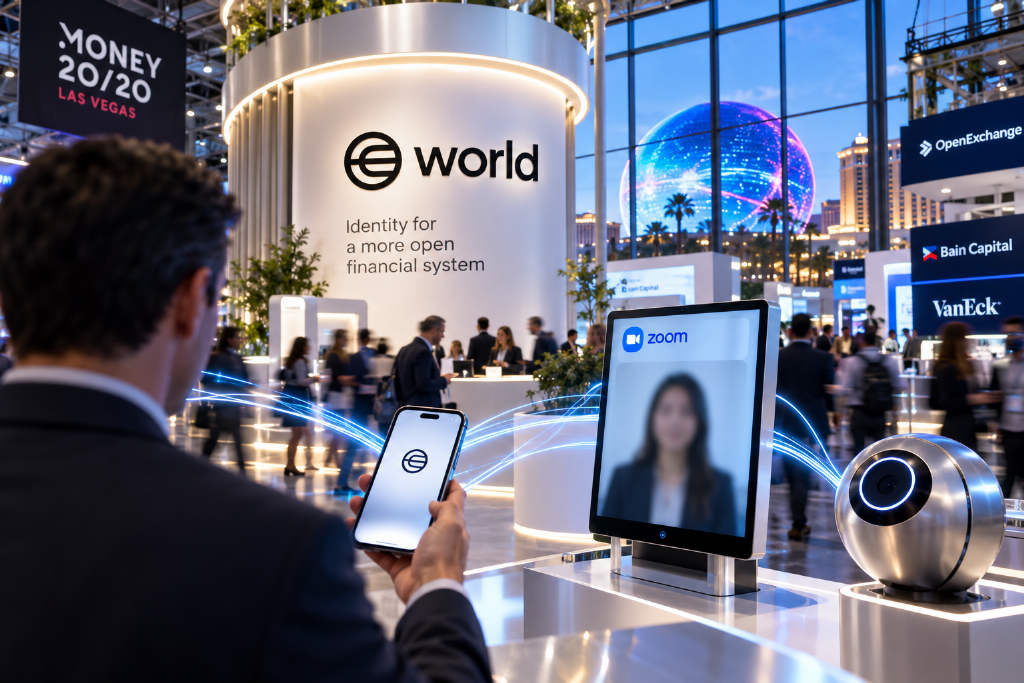
World2026-10-19 01:10:00World packages identity tools for banks and finance firms to counter deepfakesWorld, the identity network co-founded by Sam Altman, said Sunday it is bundling three existing verification products into a single offering aimed at banks and other financial firms. The package, called World ID for banking and finance, combines the World ID app, World ID for Zoom, and World ID for Agents. The company said the product was unveiled by co-founder Alex Blania at Money20/20 in Las Vegas, describing it as the first time World has targeted World ID at one specific industry. The main product update is that World ID for Zoom has moved from a limited beta announced in April to general availability. World said the tool compares an image captured during a user’s original verification at an Orb device with a live selfie and the meeting video, and that any participant can request the check during a call. The company also named OpenExchange, Bain Capital, VanEck Funds, and Outtake as design partners, though it did not identify any bank customer or provide pricing or a rollout timeline. World linked the launch to Deloitte research projecting that generative AI could push U.S. fraud losses to $40 billion by 2027, up from $12.3 billion in 2023. The company also said more than 18 million people now hold its Proof of Human credential.00
World2026-10-19 01:18:39World launches World ID verification suite for banks and financial institutionsWorld, the identity project co-founded by OpenAI CEO Sam Altman, has introduced a World ID verification product suite aimed at banks and financial institutions, marking the protocol’s first version tailored to a specific industry. Unveiled by World co-founder Alex Blania at the Money20/20 conference, the suite combines three existing products and is positioned as a tool to help institutions address deepfake fraud and AI-driven identity impersonation across customer accounts, employee workflows, and AI agent use cases. The package includes the World ID app, a wallet for storing and presenting what World calls user Proofs; World ID for Zoom, which lets call participants verify that the other party is a real person rather than a deepfake and has now moved from limited testing in April to full launch; and World ID for Agents, also called AgentKit, which allows users to delegate Proofs to AI agents for presentation to third-party platforms. World said it is working with OpenExchange, Bain Capital, VanEck Funds, and Outtake as design partners to explore banking and financial services applications, but did not disclose bank customers or pricing. The company also cited a Deloitte forecast that AI-related fraud losses in the U.S. could reach $40 billion by 2027, up from about $12.3 billion in 2023.00
World2026-10-19 01:26:44World rolls out bank-focused World ID suite and opens Zoom deepfake checks to all usersWorld, the identity project co-founded by OpenAI CEO Sam Altman, has launched a World ID verification suite aimed at banks and financial institutions, marking its first product package tailored to a specific industry. Unveiled at the Money20/20 conference, the suite combines three products: the World ID app for storing user credentials, World ID for Zoom for verifying whether a person on a call is real, and World ID for Agents, also called AgentKit, which lets users delegate identity credentials to AI agents. World ID for Zoom, which went through limited testing in April, is now generally available, and its main developer, Tools for Humanity, has joined Zoom’s independent software vendor program. World said it is discussing financial services use cases with design partners including OpenExchange, Bain Capital, VanEck Funds, and Outtake, but did not disclose which banks may adopt the product or how it will be priced. The company said demand for proof of personhood is rising as AI spreads and fraud risks increase. Citing Deloitte, World said AI-driven fraud losses in the United States could reach $40 billion by 2027. World also said more than 18 million people globally now hold its proof of human credential.40
Grayscale2026-10-04 00:59:05Grayscale says AI crypto segment surged 54% in September, with major winners possible over the next five yearsGrayscale research head Zach Pandl said the AI crypto segment rose 54% in September, well ahead of the broader crypto market’s 24% gain over the same period. Even after that move, the segment’s total market capitalization stands at only about $15 billion, making it the smallest of the six crypto sectors defined by Grayscale. Among the tokens highlighted by the firm, NEAR climbed 183% in September, Venice (VVV) gained 70%, World (WLD) rose 47%, and Bittensor (TAO) added 37%. Pandl said these projects span agent commerce, privacy-focused AI applications, human identity verification, and an open AI network covering inference, agents, data, and compute. Grayscale argues that public blockchains can provide open infrastructure for agent payments, identity, privacy-preserving computation, and verifiable records, complementing an AI development ecosystem that is currently concentrated among a small number of companies. The firm added that the AI crypto segment could produce one or more major winners over the next five years, and that recent performance suggests investors are beginning to price in blockchain’s infrastructure role in the emerging agent economy.480
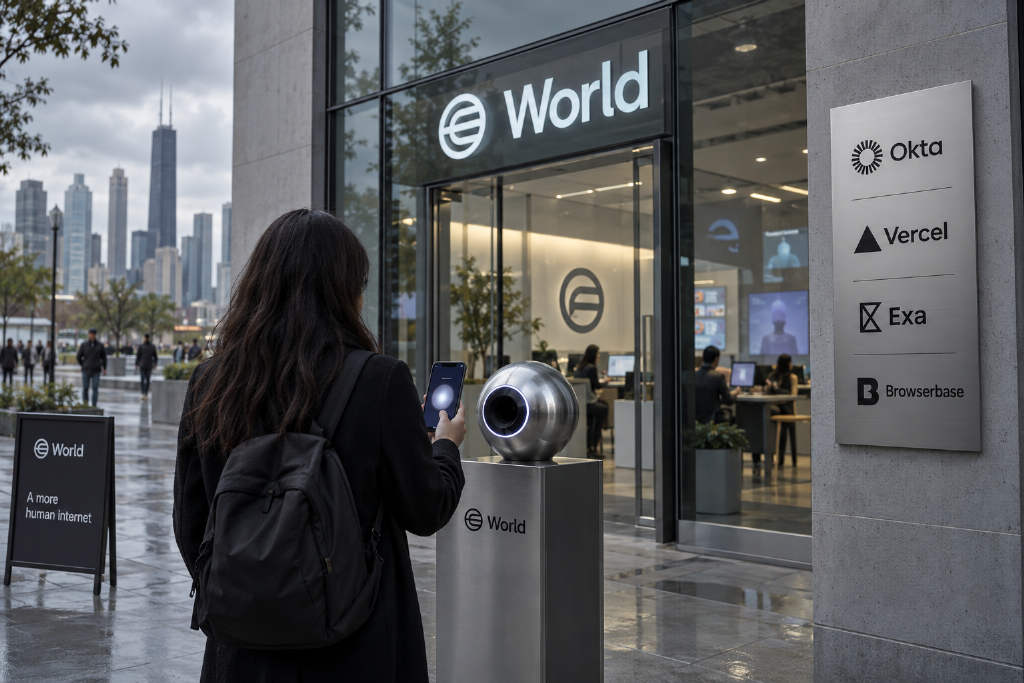
World2026-10-03 08:16:27World says AI agents will need proof of human backing, with World ID already integrated into several servicesWorld said on Oct. 3 that as personal AI agents such as Meta’s Muse, OpenAI’s dots, and Instinct gain traction, websites and online services will increasingly ask two questions: which agent is making a request, and whether that request was initiated by a real human. The company said World ID is positioned to address that verification problem without exposing personal information. According to World, World ID stores and verifies Proof of Human through zero-knowledge proofs. It described the system as giving agents three properties: privacy, because no personal information is shared; uniqueness, because each person counts only once; and neutrality, because it is built on an open protocol that can work across platforms. World also said several products have already integrated World ID for agent verification use cases. Those include the beta version of Okta’s Human Principal, Vercel’s WorkflowSDK, Exa’s free API credits, and Browserbase’s web navigation tools. The integrations are aimed at checking whether an agent is backed by a real person or whether a human approved a specific step.430
Polymarket2026-09-20 13:52:57Polymarket fraud case, SEC exemption framework, and weekly crypto project updates draw attentionWuBlockchain’s latest roundup spans a wide set of crypto developments, led by a Wall Street Journal report that Polymarket’s U.S. business was hit by a large fraud attack in February, with bad actors attempting to move at least $10 million through stolen debit cards, betting activity, and withdrawals. The report also said a payment processor at one point flagged more than 80% of deposits it handled as fraudulent, far above the roughly 1% industry norm cited in the story. Separately, analysts at Goldman Sachs and Citizens said the U.S. Securities and Exchange Commission’s proposed five-year “innovation exemption” framework for tokenized U.S. stocks traded via AMMs on public blockchains could create openings for Coinbase, Robinhood, and Circle, though they also pointed to structural limits. Other items in the roundup include Strategy’s roughly 47.6% one-month gain, a kidnapping case involving a crypto professional’s family in France, Robinhood Chain’s fee economics, and a series of project updates covering Hyperliquid, Polygon, Solana, Ondo Finance, World, Lido, Aave, Starknet, Linera, and Cronos.640
Hyperliquid2026-09-20 06:48:47Weekly project roundup: Hyperliquid rolls out lending, World launches finance app, Polygon plans POL burnA busy week across crypto projects brought a mix of lending rollouts, token burn plans, infrastructure changes and governance proposals. Hyperliquid launched manual lending, letting users borrow quoted assets such as USDC and USDT against HYPE and BTC collateral, with lending assets on the platform reaching $269 million. Polygon Foundation CEO Sandeep Nailwal said Polygon plans to permanently burn 100 million POL, with the contract already deployed on testnet and a possible quarterly burn path for fees collected after mainnet activation. World introduced World Money, a self-custodial finance app now available in more than 150 countries and regions, combining stablecoin payments, investing, yield products and global transfers while integrating Stripe, Kalshi and Morpho. Elsewhere, Solana shortened its block target interval to 250 milliseconds without increasing total transaction capacity, Aave proposed a custodied collateral lending model for institutions using Anchorage, and Lido floated an emergency CEX liquidity-making framework for LDO. Starknet also launched a privacy-focused prediction market trading service, while Linera said it is shutting down due to a lack of funding and Cronos advanced a proposal to direct Ult and Cronos Launch revenue toward CRO buybacks and burns.830