XMC

ChainCatcher
2026-09-07 02:27:19

Research note says China’s memory push is now split across CXMT, YMTC and XMC

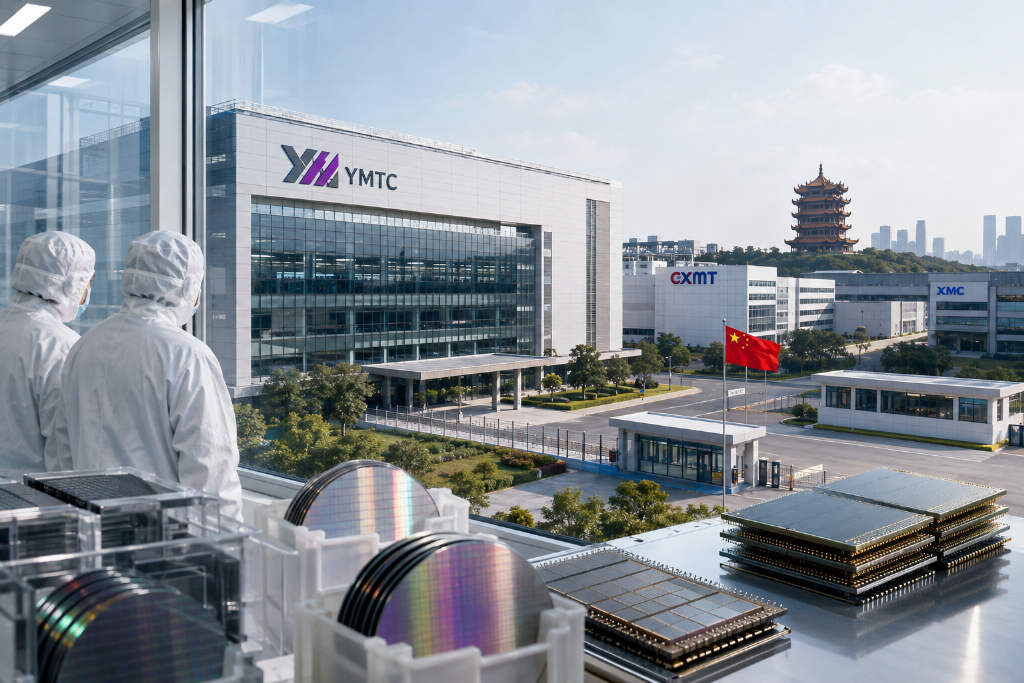
A research note from Schulz_Research said China’s memory buildout is no longer centered on a single company, but on a three-part structure led by CXMT, YMTC and XMC. In the note, CXMT is described as handling DRAM wafers, while YMTC focuses on NAND and is adding DRAM at its newest plant. XMC, a foundry controlled by YMTC, is tasked with stacking products from both lines. The post linked that structure to rules Beijing has applied since late December last year. Under those rules, newly approved factories must show in procurement tenders that at least half of their equipment is sourced domestically, with exemptions granted only when no domestic option is available. Schulz_Research said YMTC’s Wuhan Phase 3 is the first advanced memory project cleared under that framework and is set to begin production later this year. The note also outlined capacity figures for CXMT, YMTC and XMC, alongside market-share estimates and product updates including DDR5, LPDDR5 and planned HBM3 production.

20
Research note says China’s memory push is now split across CXMT, YMTC and XMC
Fujian Jinhua
2026-08-02 08:35:06

Fujian Jinhua returns to view after years in the shadows, but its climb in DRAM is still unfinished

Fujian Jinhua Integrated Circuit Co. Ltd., once seen as one of China’s three major memory projects alongside Yangtze Memory Technologies and ChangXin Memory Technologies, is back in focus after years of disruption. The company was hit by a U.S. export blacklist and criminal charges just as its DRAM production line was coming together, bringing progress to a halt and pushing it out of the public eye for years. That legal overhang began to lift at the end of 2023, when Micron Technology reached a global settlement with Fujian Jinhua and both sides withdrew lawsuits worldwide. On Feb. 27, 2024, a federal court in San Francisco ruled that prosecutors had failed to prove Jinhua stole Micron trade secrets. The decision cleared the company of the charges that had defined much of its recent history. The article traces Jinhua’s rise from a state-backed strategic project launched in Jinjiang in 2016, its early technology partnership with United Microelectronics Corp. (UMC), the central role of executive Chen Zhengkun, and the impact of years of sanctions on its production roadmap. It also places the company inside the economics of the DRAM industry, where scale, capital intensity, yield management and intellectual property disputes have long shaped the global pecking order. Jinhua is still far behind larger Chinese peers. Its 12-inch fab is producing about 40,000 wafers a month, with expansion to 60,000 planned for 2026, and the company remains on the U.S. entity list. But with local state backing, a niche DRAM focus and more than 1,007 related patents, it has not dropped out of the race.

2470
Fujian Jinhua returns to view after years in the shadows, but its climb in DRAM is still unfinished