Singapore2026-09-30 13:00:00Chainalysis says Singapore crypto activity hit $284 billion as institutional trading surgedSingapore posted the strongest crypto growth in Central and Southern Asia, Southeast Asia and Oceania over the year ended June 2026, with total activity rising 55.4% to $284 billion, according to Chainalysis. The report said the gain came largely from institutional platform activity, which jumped 94% to $60 billion and was concentrated among a small group of market makers, over-the-counter desks and institutional brokerages. That expansion came even as the broader CSAO region contracted 6.8% over the same period. The data arrived as Singapore continued to tighten rules for crypto firms while also backing tokenization, stablecoins and digital-asset settlement. In 2025, the Monetary Authority of Singapore required locally based crypto firms serving overseas customers to obtain a license or leave the market. StraitsX CEO Tianwei Liu said that shift reduced speculative activity while leaving more banks and large companies using blockchain in production. MAS has also pushed ahead with initiatives including BLOOM, which supports trials involving regulated stablecoins and tokenized bank money. Ripple joined the program on March 25 to test cross-border trade settlement using RLUSD. Elsewhere in the region, Chainalysis found heavy small-value P2P usage in the Philippines, Thailand and Vietnam, alongside rising cross-border stablecoin flows.90
Singapore2026-09-30 13:09:38Singapore crypto economy reaches $284 billion as institutional platform activity jumps 94%Singapore’s crypto economy grew 55.4% to $284 billion in the 12 months through June 2026, reclaiming its position as the largest crypto economy in Central & Southern Asia and Oceania, according to Chainalysis data cited by Cointelegraph. The report also showed that activity on institutional platforms in Singapore rose 94% to $60 billion, with flows concentrated among a small number of market makers, over-the-counter trading firms, and institutional brokers. Over the same period, the broader region’s crypto economy contracted 6.8%. Chainalysis also found that the Philippines, Thailand, and Vietnam recorded a combined 5.4 million peer-to-peer transfers below $10,000, accounting for 14.4% of the global total. In all three countries, cross-border stablecoin activity exceeded domestic activity, and regional cross-border volume was 3.2 times larger than domestic volume.110
Singapore2026-09-30 13:15:09Singapore crypto activity rose 55.4% over the past year, reclaiming the region’s top spot: ChainalysisSingapore’s crypto economy expanded 55.4% year over year to $284 billion in the 12 months through June 2026, according to Chainalysis data cited by Cointelegraph, allowing the city-state to regain its position as the largest crypto economy across Central Asia, Southeast Asia and Oceania even as the broader region contracted 6.8%. The increase was driven mainly by institutional platforms, where activity jumped 94% to $60 billion and was concentrated among a small group of market makers, over-the-counter trading firms and institutional brokers. Chainalysis said the growth was centered on larger trades on existing platforms rather than a wave of new service providers entering the market. At the same time, Singapore has been tightening crypto rules while also advancing tokenization, stablecoins and digital asset settlement. In 2025, the Monetary Authority of Singapore required locally based crypto firms serving overseas clients to obtain licenses or leave the market. StraitsX CEO Tianwei Liu said the move curbed speculation and increased blockchain use in production by banks and large companies. MAS has also used its BLOOM initiative to test compliant stablecoins and tokenized bank deposits, with Ripple joining on March 25 to trial cross-border trade settlement using RLUSD.250
Chainalysis2026-09-29 23:16:52Chainalysis says crypto crime is becoming more professionalized, with attackers adopting AI faster than defendersDuring Money20/20 Asia in Bangkok in April 2026, Chainalysis ASEAN and Hong Kong Regional Director Diederik Van Wersch told WuBlockchain that the crypto industry is entering a phase where several forces are converging at once: stablecoins are moving deeper into payments, more institutions are entering on-chain finance, regulators are shifting from rulemaking to enforcement, and AI is changing both attack and defense. In his view, that convergence matters more than any single trend on its own. Van Wersch said on-chain crime is becoming more organized and industrialized. Chainalysis cited figures from its 2026 Crypto Crime Report showing that crypto addresses linked to illicit activity received at least $154 billion in 2025, up 162% year over year, with value received by sanctioned entities rising 694%. He also argued that blockchain transparency does not automatically make the sector safer. Public data still needs attribution, cross-chain tracing, behavioral analysis, and real-world context before it can support risk decisions. The interview also covered stablecoin compliance, regional competition among Hong Kong, Singapore, and the UAE, growth across APAC markets such as India, Japan, Indonesia, and Vietnam, and the limits of manual investigations as criminals begin using AI more aggressively. Van Wersch said attackers are currently adopting AI faster because they face fewer regulatory and audit constraints, but he maintained that defenders still hold a structural advantage because blockchain transactions remain traceable and auditable over time.230
China2026-09-26 10:28:35China ranks No. 2 in domestic wallet-to-wallet crypto transfers despite broad trading banChainalysis said in its 2026 Global Crypto Adoption Index, released on Sept. 23, that China ranked 12th overall among 117 countries, even as the country continues to prohibit domestic virtual asset exchange and trading activity. The standout data point was China’s position in domestic peer-to-peer crypto activity: it placed second worldwide, behind only Nigeria, in a category that tracks transfers sent directly from one personal wallet to another within the same country, without going through exchanges or other platforms. The report covered the period from July 1, 2025, to June 30, 2026. Chainalysis said global domestic wallet-to-wallet transfer volume rose from $56.8 billion to $228.7 billion over the year, a 302.9% increase, with 96% of that volume tied to stablecoins. Over the same stretch, capital flowing into exchanges, DeFi, and other services fell from $9.30 trillion to $8.90 trillion. China’s other three category rankings were outside the top 10: No. 14 in cross-border activity, No. 15 in on-chain balances, and No. 29 in service flows. The report did not disclose China’s actual transfer amount for the domestic wallet category. It also said country attribution relies on modeled estimates, including behavioral signals and website traffic data, which may still contain errors even after attempts to filter out VPN and bot traffic.260
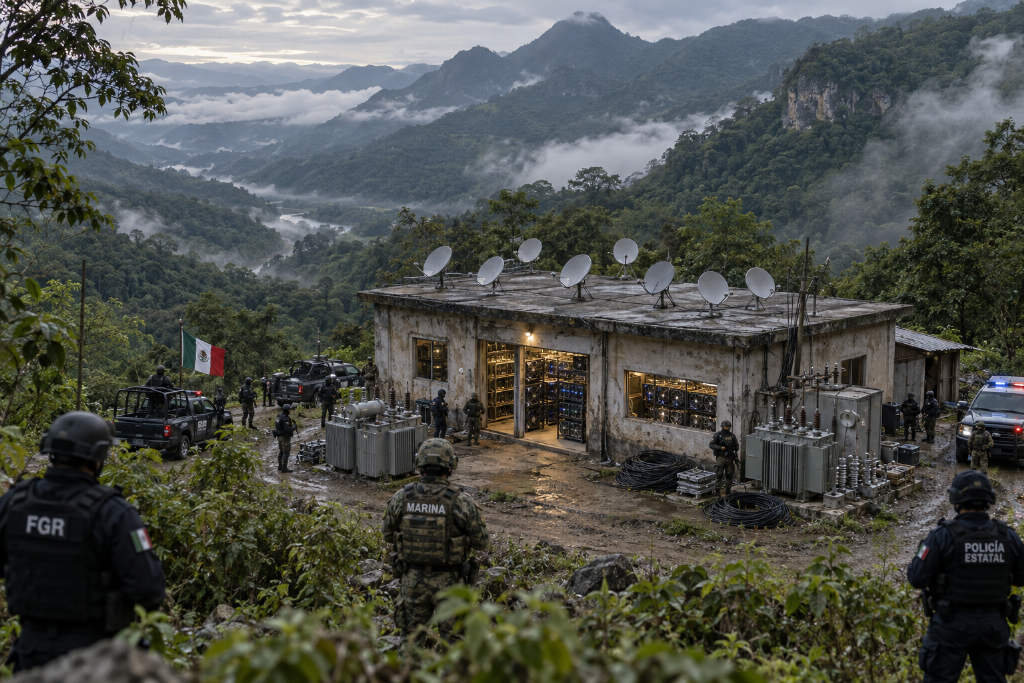
Mexico2026-09-21 13:31:17Remote Mexico mining bust exposes power theft risks beyond on-chain transparencyMexican authorities uncovered a suspected illegal cryptocurrency mining operation in the Sierra region of Puebla in early September 2026, seizing a site that housed about 300 machines, transformers, 80 medium-voltage connection points, and eight satellite dishes. Prosecutors are treating the case as a theft of state energy rather than a standalone crypto-mining offense, because mining itself is not specifically criminalized in Mexico. Investigators say the site was likely positioned near the Nuevo Necaxa hydroelectric system to exploit access to electricity, and an unauthorized transformer installation helped lead police to the property. The case has also widened into a financial inquiry, with forensic accountants tracing how the expensive equipment was purchased and whether money laundering was involved. The broader backdrop is a fragmented regulatory environment: crypto ownership, trading, and mining are generally allowed in Mexico, even though cryptocurrencies are not legal tender. The article argues that while blockchain ledgers make token transfers visible, they do not capture the physical energy chain that powers mining. That gap leaves room for organized illicit operations, with the costs of stolen electricity ultimately absorbed by utilities, power grids, and paying consumers.470
France2026-09-21 09:56:33French crypto IT worker forced to hand over access codes after home invasion, €40,000 in crypto stolenA family in Vendin-le-Vieil, a town in northern France, was held hostage early Sunday after four masked men broke into their home, according to a report cited by ChainCatcher from BFMTV. The attackers entered at around 4 a.m., tied up a couple and their two children with tape, and kept them restrained for more than three hours. The 40-year-old father, who works as an IT specialist in the local crypto sector, was taken into another room, beaten, and forced to provide access codes. Roughly €40,000, or about $46,000, in cryptocurrency was then transferred out. The Béthune prosecutor’s office said the four suspects fled by car and remain at large. The family’s 12-year-old daughter was struck in the face with a car key during the attack. The victims were reported to be in shock, taken for forensic examination, and given support through a victims’ assistance association. Authorities have opened a case for kidnapping and extortion by an organized gang, with the regional judicial police and France’s cybercrime office leading the investigation. The report also placed the case in a broader pattern of so-called wrench attacks in France. The national office for combating organized crime has recorded more than 70 crypto-linked kidnappings and unlawful detentions in the first eight months of 2026, while 88 people were charged in an earlier crackdown this year.330
France2026-09-21 05:40:42French crypto worker robbed at home and forced to transfer €40,000 in digital assetsA crypto industry worker in northern France was forced to transfer €40,000 worth of cryptocurrency after four masked men broke into the family home, according to a Techub report citing the local prosecutor’s office. The attack took place in the early hours of Sept. 20 in Vendin-le-Vieil, Pas-de-Calais. Family members were tied up during the robbery, and the victim’s 12-year-old daughter was struck in the face with a car key. The assailants reportedly demanded identity details and access codes. The case comes as violent crimes targeting crypto holders continue to rise in France. The country’s interior minister said in June that authorities had recorded 77 cases this year involving kidnapping, unlawful confinement, and extortion linked to such targets. Chainalysis data cited in the report showed that, by mid-2026, France had logged 30 public incidents, already exceeding the total for all of last year.360