BackfrxUSD

frxUSD

KRWQ
2026-09-10 02:51:44

KRWQ removes tokenized Korean Treasury bond KTB from reserves

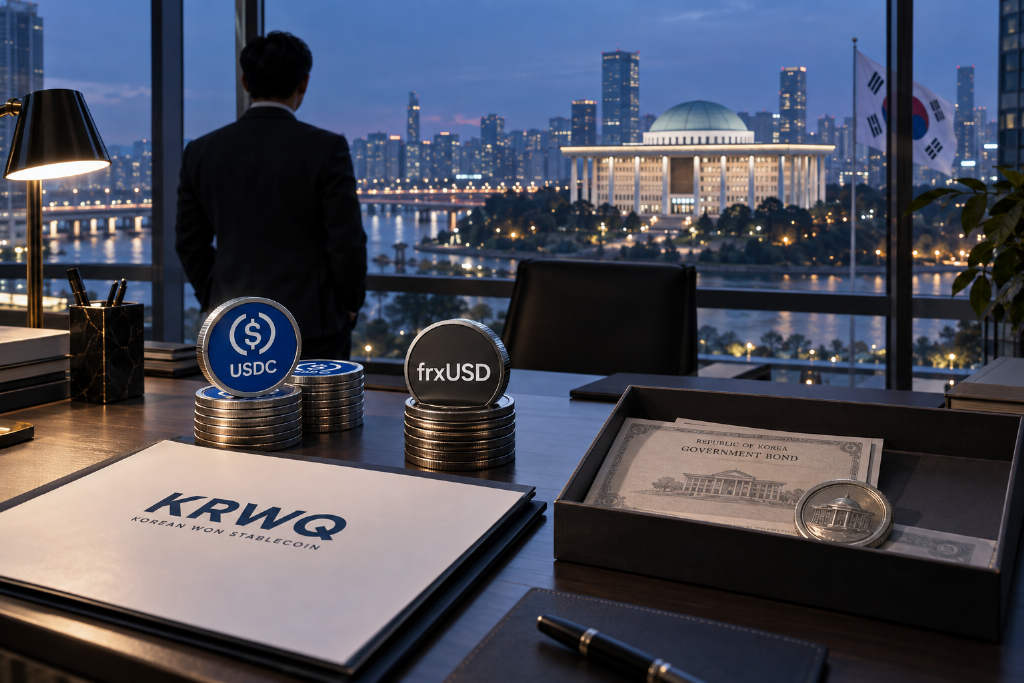
KRWQ, a Korean won stablecoin, has removed KTB, a tokenized Korean Treasury bond, from its reserve assets, according to Odaily. The project’s reserves are now made up only of USDC and frxUSD. The input provided no details on when the change was made beyond the publication timestamp, and it did not include any explanation for the adjustment. No additional reserve assets were mentioned in the source. The report was published as a 7x24 newsflash by Odaily on Sept. 10, 2026.

40
KRWQ removes tokenized Korean Treasury bond KTB from reserves
Sonic
2026-09-05 13:48:57

Sonic CEO says crypto’s old narrative has broken down as blockchains shift toward revenue

Sonic Labs CEO Matt Visser used a lengthy public letter to argue that crypto can no longer rely on the same storylines that powered the DeFi era. In his view, the market is no longer rewarding promises about a future financial system, and blockchains now have to prove they can ship products that generate real revenue. He said Sonic has organized its work around four focused initiatives — payments, AI, perpetuals and real-world assets, and prediction markets — and plans to disclose named owners, milestones, and kill conditions for each in Q4. Visser also pointed to Aave’s proposal to shut down its Sonic deployment as a practical example of the new standard. He said deposits on Aave’s Sonic market had fallen to about $7.6 million and were contributing less than $5,000 per quarter, not enough to cover maintenance costs. The issue, he wrote, is not optics or chain politics but economics: integrations built for announcements rather than meaningful usage will eventually be cut. The letter also makes clear that Sonic does not plan to lead with tokenomics. Visser said buybacks, burns, fee sharing, and similar mechanisms only matter if there is underlying revenue to route. Until Sonic’s business units can point to actual income, he said, any token value-accrual design would amount to treasury spending dressed up as fundamentals.

190
Sonic CEO says crypto’s old narrative has broken down as blockchains shift toward revenue
Curve DAO
2026-09-04 02:12:38

Curve DAO Approves Funding for yRisk, Whose Developers Were Linked to $9.6M Security Incident

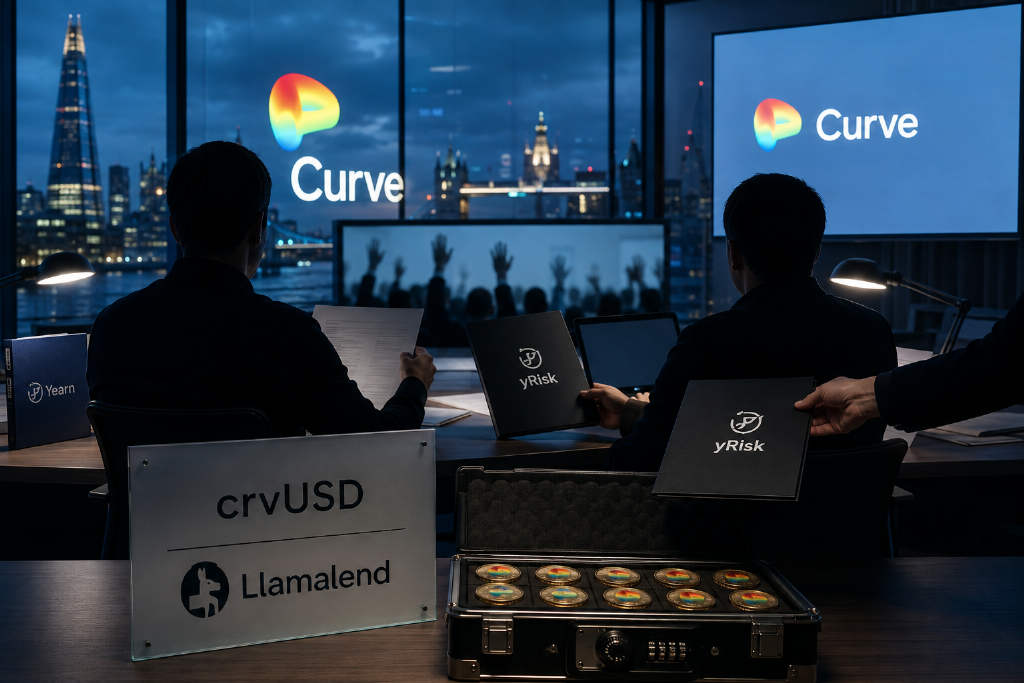
On September 2, Curve DAO approved a proposal to fund yRisk, a new risk management provider, to oversee the risk parameters of the crvUSD stablecoin and the Llamalend lending protocol. This move follows the early termination of the previous provider, LlamaRisk. yRisk will receive 125,000 frxUSD as compensation. Notably, two of yRisk's developers were previously involved in a security vulnerability incident that led to a loss of $9.6 million. The news was reported by Techub News, citing WuBlockchain.

90
Curve DAO Approves Funding for yRisk, Whose Developers Were Linked to $9.6M Security Incident
Curve DAO
2026-09-03 18:11:53

Curve DAO appoints yRisk to oversee risk for crvUSD and Llamalend

Curve DAO has approved yRisk as the new risk provider for crvUSD and Llamalend, wrapping up a selection process that began in July after LlamaRisk exited its renewed mandate 10 months early. The winning team, described in its own proposal as two primary Resupply developers and core developers at Yearn and Resupply through their respective limited companies, cleared both a non-binding preference vote and a later binding proposal with little opposition. The arrangement gives yRisk two revocable one-year vesting streams: 125,000 frxUSD in principal held in sfrxUSD, with all sfrxUSD yield returning to the Curve treasury, and 568,181 CRV. Swiss Stake, which reviewed bids for the DAO, said yRisk brought relevant Curve experience and open deliverables, but flagged capacity as the main concern because the team has only two contributors with other responsibilities. The mandate covers risk work for crvUSD and Llamalend, which together sit inside a broader Curve ecosystem that held $1.33 billion, while crvUSD circulation stood at $285.5 million and Llamalend’s v1 and v2 markets held notably smaller balances.

160
Curve DAO appoints yRisk to oversee risk for crvUSD and Llamalend
Curve DAO
2026-09-03 18:16:29

Curve DAO Approves Proposal 1492, Appoints yRisk as Risk Provider for crvUSD and Llamalend

Curve DAO has passed proposal 1492 on September 2, appointing yRisk as the risk provider for crvUSD and Llamalend, concluding a selection process that began in July. The proposal received 621 million veCRV in favor votes, with only 5.33 votes against, and was executed 87 minutes after voting ended. yRisk will receive a one-year renewable grant consisting of 125,000 frxUSD principal (deposited in sfrxUSD) and 568,000 CRV tokens, below its requested annual funding of $250,000. The two-person team describes itself as the primary developer of Resupply, a stablecoin and lending protocol built on crvUSD and CurveLend, which suffered a $9.6 million loss from a donation attack in June 2025 – though this incident was not mentioned in the proposal. Swiss Stake, the reviewing entity, acknowledged yRisk's Curve expertise but expressed concerns about its small team size and the workload of monitoring multiple Llamalend markets. The previous risk provider, LlamaRisk, ended its collaboration with Curve early on May 29, ceased operations on June 30, and returned approximately 270,000 crvUSD in unvested funds to the treasury.

180
Curve DAO Approves Proposal 1492, Appoints yRisk as Risk Provider for crvUSD and Llamalend
Osero
2026-08-19 04:20:50

Osero launches stablecoin yield app with APY at 3.52%

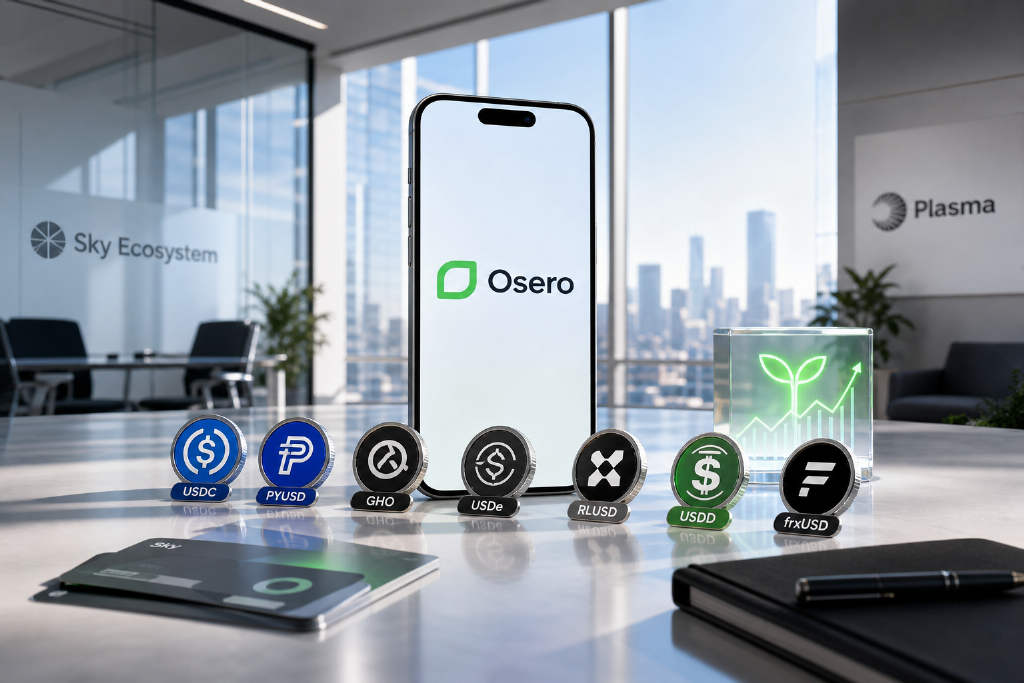
Stablecoin yield project Osero has officially launched Osero App and opened it to all users. According to its website, the app is currently offering an annual percentage yield of 3.52%. Supported assets include USDC.e, USDe, AUSD, GHO, PYUSD, RLUSD, USDD, USDG, USDtb, and frxUSD. Osero says the yield comes from sUSDS and the savings rate mechanism within the Sky Ecosystem. Earlier reporting from Foresight News said Osero was incubated by Stablewatch and raised $13.5 million in May this year, with Sky Ecosystem and Plasma co-leading the round. The launch marks the public rollout of the app after that financing update.

540
Osero launches stablecoin yield app with APY at 3.52%
RWA
2026-08-08 04:03:15

RWA Hits $32 Billion On-Chain, but Most Tokenized Assets Still Sit Idle

Real-world assets became one of crypto’s hottest themes in July, with on-chain value rising to a record $32 billion, up about 22% from the start of the month and above the previous high set in April. Yet the expansion in issuance has not translated into broad on-chain activity. Data cited from BeInCrypto Intelligence, RWA.xyz, Stacks partner Edgy, and DWF Labs shows that a large majority of tokenized assets are barely moving: more than 70% of tracked assets recorded no weekly transfer activity, while roughly 87% to 90% of the market remains outside lending, collateral, or other DeFi use cases. The gap is also visible across major platforms. Securitize leads in scale with more than $4.9 billion in tokenized assets but posts DeFi utilization of only about 0.7%. Ondo Finance manages nearly $3.5 billion across more than 10 chains and 168 integrations, yet its utilization rate is only around 2.7%. Maple Finance, by contrast, manages a smaller $2.3 billion but has more than $1.6 billion in active loans, over $22 billion in cumulative loan originations, and a utilization rate of 62%. The article argues that asset design, compliance restrictions, and weak market infrastructure are the main reasons tokenization has not automatically produced circulation. As the sector matures, competition is shifting from issuance volume to actual use, liquidity, and distribution.

310
RWA Hits $32 Billion On-Chain, but Most Tokenized Assets Still Sit Idle
Sonic Labs
2026-08-07 03:03:43

Sonic Labs CEO says DeFi Summer will not return, puts token S behind revenue-first product plans

Sonic Labs CEO Matt Visser used his 50th day in the role to publish a long public letter that rejects the idea of a return to "DeFi Summer" and resets the company around revenue. He argued that crypto has failed to deliver on its original promise to transform financial services, while market narratives that once supported the sector have weakened sharply. As one example, he pointed to Aave’s proposal last week to shut down its Sonic deployment, saying deposits on Aave tied to Sonic had fallen to about $7.6 million and were generating less than $5,000 in quarterly revenue for the protocol, not enough to cover maintenance costs. Visser said Sonic is now pushing four focused product tracks: payments and foreign exchange, AI agent infrastructure, perpetuals and real-world assets, and prediction markets. He added that each initiative will have a named owner, milestones, and clear stop conditions disclosed in Q4. Across all four, revenue is the main operating metric. On token design, Visser said S comes at the end of the sequence, not the beginning. Buybacks, burns, fee sharing, and flywheel structures are easy to announce, he wrote, but without real revenue they amount to moving treasury funds around and dressing that up as value accrual. His message was blunt: build products first, generate revenue second, and only then decide how value should be routed to token holders.

500
Sonic Labs CEO says DeFi Summer will not return, puts token S behind revenue-first product plans