Core DAO2026-09-02 04:29:07Core DAO Launches Emergency Hard Fork After Validators Claim Excess CORE Rewards; Exchanges Halt TransactionsCore DAO has initiated an emergency hard fork after some validators received CORE rewards exceeding the protocol's intended issuance. The incident is under control, and the malicious validators can no longer claim excess rewards. Multiple exchanges, including Coinbase, Bithumb, Coinone, Bitget, and LBank, have suspended CORE deposits and withdrawals. Core has not disclosed the total amount or duration of the excess rewards. The team promised a technical post-mortem report. Cointelegraph received no response from Core by press time.860
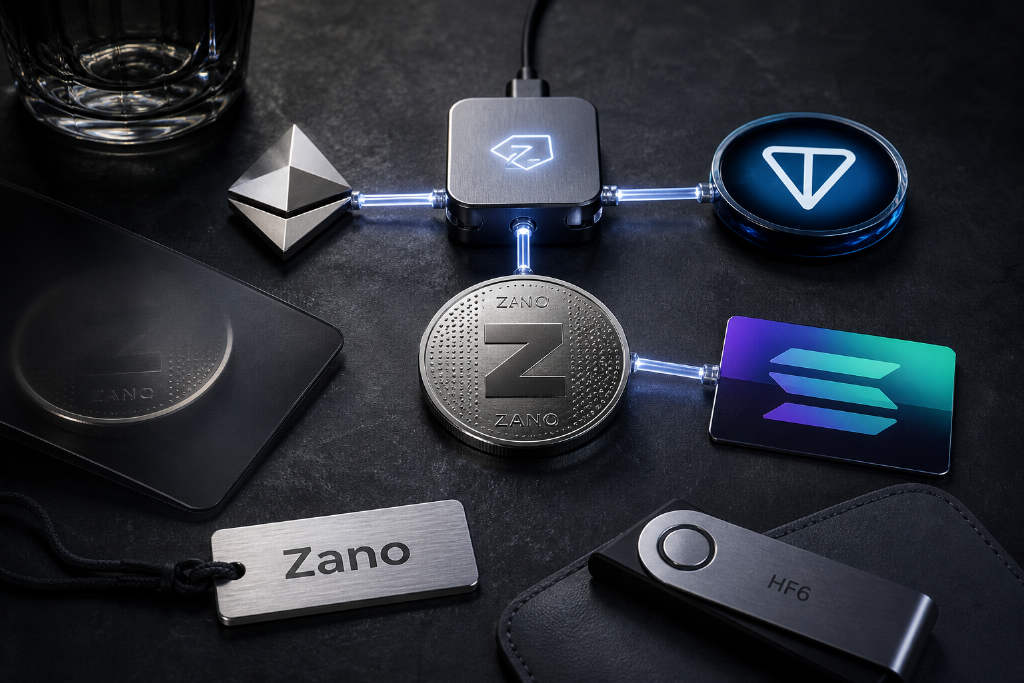
Zano2026-08-31 19:44:43Zano activates sixth hard fork, enabling non-custodial native ZANO transfers to Ethereum, Solana and TONPrivacy blockchain Zano activated its sixth hard fork, HF6, on Aug. 31 at block height 3,833,000, with the upgrade now live on mainnet. The release marks the largest upgrade in the network’s seven-year history. HF6 adds Gateway Addresses, a feature designed to give centralized exchanges, decentralized exchanges and cross-chain bridges a directly traceable single balance with instant synchronization, while keeping existing addresses and their privacy model intact. Following the upgrade, native ZANO can now move in a non-custodial way to Ethereum, Solana and TON. Zano said assets are public on those external networks and regain privacy protection once bridged back to Zano. The upgrade also tightens consensus validation rules and strengthens wallet encryption, mining pool fault tolerance, payment IDs, anti-DoS limits, SOCKS5 proxy support and RPC interfaces. According to Bitcoin.com News, HF6 is also a prerequisite for the Zano Execution Layer, an EVM-compatible chain under development that does not yet have a fixed launch date. Zano’s next-generation consensus protocol, Zenith, is listed on its 2027 roadmap.870
Zano2026-08-31 19:45:52Zano activates HF6 at block 3,833,000, enabling native cross-chain transfers to Ethereum, Solana and TONPrivacy-focused blockchain Zano has activated its sixth hard fork, HF6, at block height 3,833,000, with the upgrade now live on mainnet. The network described it as the largest upgrade in its seven-year history. HF6 introduces Gateway Addresses, a feature designed for centralized exchanges, DEXs and cross-chain bridges that offers a directly traceable single balance and instant synchronization while keeping existing addresses and their privacy model unchanged. The upgrade also allows native ZANO to move in a non-custodial manner to Ethereum, Solana and TON. Once on those external networks, the asset is public; when bridged back to Zano, its privacy protections return. Beyond cross-chain changes, HF6 tightens consensus validation rules and strengthens wallet encryption, mining pool fault tolerance, payment IDs, anti-DoS limits, SOCKS5 proxy support and RPC interfaces. HF6 is also described as a prerequisite for the Zano Execution Layer, an EVM-compatible chain still under development with no fixed launch date. Zano’s next-generation consensus protocol, Zenith, has been placed on the project’s 2027 roadmap.910
Bitcoin2026-08-31 14:29:27BIP-110 Backers Plan Sept. 1 Launch for BLAKE2b Fork ChainDevelopers backing BIP-110 are planning to launch an independent proof-of-work chain on Sept. 1 that uses the BLAKE2b algorithm. The proposed chain would replace an earlier minority branch that produced only two blocks and failed to attract enough SHA-256 hashpower support. Under the hard fork plan, Bitcoin’s mining algorithm would shift from SHA-256d to BLAKE2b, which means existing Bitcoin mining machines would not be able to redirect hashpower to the new network directly. So far, no major exchange, wallet provider, or Lightning Network implementation has publicly committed to supporting the chain. Its launch still depends on whether the required technical conditions are met, according to Techub, citing crypto.news.960
Polygon2026-08-30 22:36:14Polygon Pushes Two Hard Forks to Patch PoS Flaws; POL Drops 6.8% WeekPolygon Labs has disclosed that it fixed a set of vulnerabilities on its proof-of-stake network through two hard forks, with the fixes privately deployed before public disclosure. In a Wednesday forum post, the team explained the patches were delivered via the Austin hard fork on the Bor client and the Kyoto hard fork on the Heimdall client, following the standard process for consensus-affecting upgrades: testing on Amoy testnet, then disclosure after mainnet activation and safety checks. Austin addressed two denial-of-service paths in block processing, including a bug allowing a malicious block producer to crash peers with oversized field data. Kyoto handled broader consensus hardening; the most serious flaw let an attacker force the entire validator set into expensive coordinated work with one cheap transaction. Polygon said no vulnerability had been observed exploited on mainnet and all issues were proactively addressed. Both upgrades are mandatory and live, with no state migration or resync needed. The disclosure comes as Polygon completes its MATIC-to-POL migration as part of a broader architecture overhaul. POL traded around $0.09983 on Sunday, down 2.3% in 24 hours, about 6.8% over the week and 60.8% over the past year, with a market cap near $1.07 billion, according to CoinGecko.890
Polygon2026-08-30 22:33:01Polygon disclosed PoS security fixes after privately deploying two hard forksPolygon Labs said it repaired a batch of security flaws in its proof-of-stake network through two hard forks that were deployed before any public disclosure. In a forum post published Wednesday, the company said the fixes were included in the Austin hard fork for the Bor client and the Kyoto hard fork for the Heimdall client. Polygon said it followed its standard process for consensus-related fixes by rolling them out quietly, validating them on the Amoy testnet, activating them on mainnet, and only then disclosing the details publicly once the network was safe. According to Polygon, the Austin fork closed two denial-of-service paths tied to block processing, including one in which a malicious block producer could crash peer nodes by packing a block with an oversized data field. The Kyoto fork addressed a broader set of consensus-hardening issues, including a more serious flaw that could have allowed an attacker to trigger expensive coordinated work across the full validator set with a single crafted transaction. Polygon said none of the flaws were seen exploited on mainnet, and both upgrades are now mandatory, already active, and require no state migration or resync. The disclosure comes after Polygon completed its legacy MATIC-to-POL migration. CoinGecko data cited in the report showed POL trading near $0.09983 on Sunday, down 2.3% over 24 hours, about 6.8% over the past week, and roughly 60.8% over the past year, with a market capitalization near $1.07 billion.500
Polygon2026-08-30 21:06:48Polygon Discloses Security Flaws Patched in Austin and Kyoto Hard ForksPolygon has disclosed several previously undisclosed security vulnerabilities that were recently fixed through two hard forks named Austin and Kyoto. The flaws could affect the company's proof-of-stake network. The vulnerabilities were found across the Bor and Heimdall clients, with issues ranging from denial-of-service risks to exhaustion of validator resources. There were also defects affecting checkpoint and milestone processing. Polygon said that all fixes were tested privately before they were deployed to mainnet and before the company went public with the details. The most severe problem concerned Heimdall. Specially crafted transactions could force validators to perform excessive processing work, which in turn could disrupt network operations. The Austin hard fork separately fixed two denial-of-service risks in the Bor client, both of which could slow down block processing or lead to node crashes. Polygon also stated that none of these flaws had been exploited on mainnet, and that the patches were completed proactively before any vulnerability details were publicly disclosed.850
Polygon2026-08-30 21:06:35Polygon Discloses Security Vulnerabilities Fixed in Austin and Kyoto Hard ForksPolygon has disclosed multiple security vulnerabilities that remained unpublicized until their fixes had already been completed. The issues were resolved through two hard forks, Austin and Kyoto, and could affect Polygon’s proof-of-stake network. The vulnerabilities spanned the Bor and Heimdall clients, including denial-of-service risks, validator resource exhaustion, and problems tied to checkpoint and milestone processing. Polygon explained that each fix was tested privately before it was deployed to mainnet and before public disclosure. The most severe case was in Heimdall: specially constructed transactions could force validators into excessive processing work and disrupt the network. The Austin hard fork also fixed two denial-of-service risks in Bor, which could slow block processing or crash nodes. Polygon also confirmed that the vulnerabilities were not exploited on mainnet. The fixes had been completed proactively ahead of the public release of vulnerability details. No exploitation has been observed, Polygon said. The disclosure arrives after the fixes had already gone live on mainnet.810