Tech Mahindra
Oct 26, 2026

Tech Mahindra, Mastercard team up on embedded B2B payments

Tech Mahindra has announced a partnership with Mastercard aimed at modernizing B2B payments for enterprises worldwide. According to Techub News, citing Finextra, the two companies plan to embed secure virtual card and payment capabilities directly into enterprise resource planning, or ERP, systems and procurement platforms. The move is designed to bring payment functions closer to the software businesses already use for purchasing and operations. The announcement identifies Tech Mahindra as an AI-focused digital transformation and technology consulting company, while Mastercard will provide the payment layer for the joint effort. No financial terms or rollout timeline were disclosed in the brief. The reported focus is on integrating secure payment tools into existing enterprise workflows rather than requiring separate payment steps outside those systems.


600
Tech Mahindra, Mastercard team up on embedded B2B payments
Base
Oct 24, 2026

Base says Mastercard is using an x402 and USDC agent payment setup settled on Base

Base said in a post on X that Mastercard is adopting an agent payment method built on x402 and USDC, with settlement taking place on the Base network. The update was cited by Odaily as a brief news item. The source text did not provide additional details on rollout timing, transaction volume, commercial scope, or the specific structure of the payment flow beyond naming x402, USDC, and Base as the settlement network. As presented in the original report, the statement came directly from Base’s post on X.

1470
Base says Mastercard is using an x402 and USDC agent payment setup settled on Base
Mastercard
Oct 23, 2026

Mastercard Pilot Highlights Split Between Authorization and Settlement in AI Agent Payments

TheDefiant says two pieces of infrastructure serve different jobs in AI agent payments: AP2 records spending authority, while x402 carries payment requests. The distinction matters because a payment instruction is not the same as money actually moving. The article points to Mastercard’s machine-payment pilot as a practical example. In that setup, a signed voucher represents authorization, but final settlement happens as a separate step. That framing helps explain how Mastercard Agent Pay, AP2, and x402 fit together in an emerging agentic economy, where software agents may need to request, approve, and complete payments through distinct layers rather than a single action.

790
Mastercard Pilot Highlights Split Between Authorization and Settlement in AI Agent Payments
crypto payments
Oct 23, 2026

Crypto payments push deeper into the mainstream, with compliance emerging as the key competitive line

Crypto-linked card payments are growing quickly, but the sector’s compliance gaps are drawing sharper scrutiny. Data cited in the article shows monthly stablecoin card spending topped $1.2 billion in September 2026, roughly triple the level a year earlier, while the total stablecoin market cap has nearly doubled over the past two years to more than $300 billion. At the same time, a Crystal Intelligence report published in April said nearly 70% of crypto card providers had weak KYC requirements or none at all, and TRM Labs estimated illicit crypto flows exceeded $158 billion last year. The piece argues that weak KYC is not accidental. It stems from a mix of offshore licensing, intermediary issuing structures, and product designs built around minimal verification. It also links those gaps to sanctions evasion risks, workarounds for geographic restrictions on U.S. AI services, pressure on weaker-currency economies, and reputational exposure for card networks and banks. Against that backdrop, the article says regulators in the U.S., Europe, and Hong Kong, along with Visa and Mastercard, are tightening standards. For compliant providers, the shift changes the role of compliance from a cost center into a market access requirement, affecting banking relationships, issuance capacity, merchant quality, and long-term operating viability.

1020
Crypto payments push deeper into the mainstream, with compliance emerging as the key competitive line
Reserve Bank of Australia
Oct 22, 2026

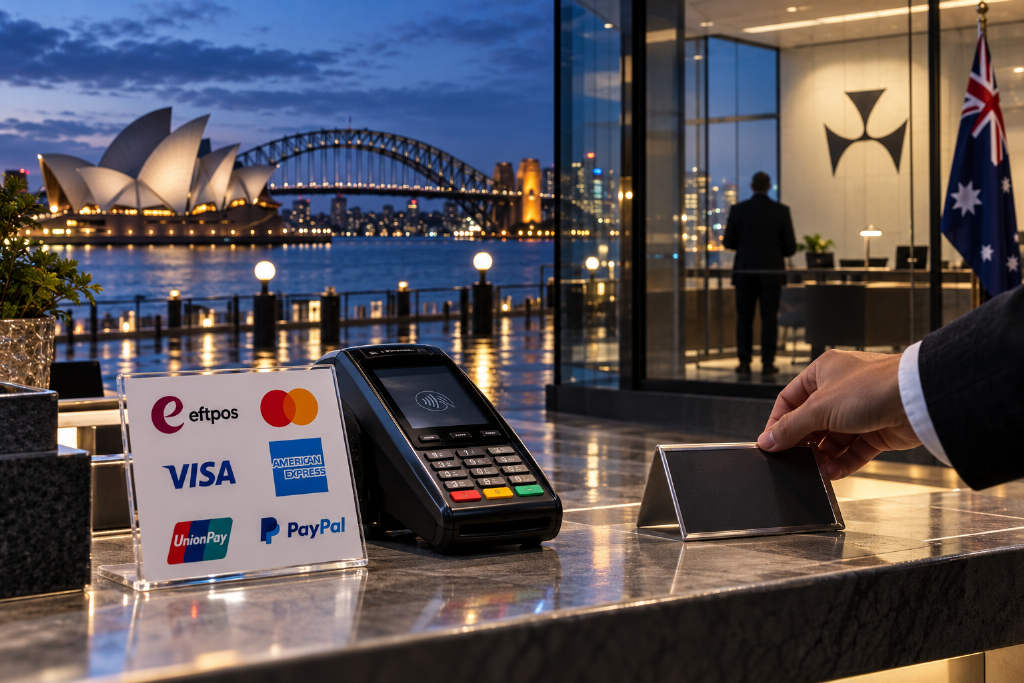
RBA says card surcharges on eftpos, Mastercard and Visa will be removed from October 2026

The Reserve Bank of Australia said in an FAQ attached to its retail payments regulation conclusions that removing card payment surcharges on eftpos, Mastercard and Visa from Oct. 1, 2026 would be in the public interest. From that date, the central bank will also lift the ban that had prevented those designated card networks from enforcing no-surcharge rules, under changes tied to Standard No. 3 of 2016 and the 2026 revisions to merchant card payment costs and surcharging standards. eftpos, Mastercard and Visa have each decided to introduce no-surcharge rules from Oct. 1, 2026, generally covering credit, debit and prepaid cards, including cards issued overseas. American Express, UnionPay and PayPal have also decided to remove surcharges, though they are not currently subject to formal RBA regulation. American Express and UnionPay will exit their existing undertakings with the RBA on Oct. 1, 2026, while PayPal’s no-surcharge rule will take effect on Oct. 5, 2026. The change applies only to fees added because a customer pays by card. It does not cover weekend or public holiday surcharges, booking fees or service fees. The reform will be rolled out in stages, including lower interchange caps for domestic card transactions, new disclosure requirements for card payment costs, and later application of interchange caps to overseas-issued cards acquired in Australia.

960
RBA says card surcharges on eftpos, Mastercard and Visa will be removed from October 2026
Mastercard
Oct 22, 2026

Mastercard draws lines between Crypto Credential, KYC, Travel Rule and blockchain screening

Mastercard has outlined how Crypto Credential differs from KYC/AML checks, Travel Rule requirements and blockchain screening, framing them as separate tools used for separate jobs in crypto payments. The comparison says identity verification, transfer-party information and onchain risk alerts should not be treated as interchangeable compliance steps. Instead, each addresses a different part of the payment flow. The key point in the article is that none of these controls automatically determines whether a transaction goes through. Mastercard says the provider handling the payment remains responsible for deciding whether a payment can proceed. That leaves the final judgment with the service provider even when identity checks have been completed, transfer information has been collected, or blockchain monitoring has generated alerts. The source page was only partially available in the provided input, so the report is limited to the facts explicitly shown there and does not add details beyond Mastercard’s stated comparison.

730
Mastercard draws lines between Crypto Credential, KYC, Travel Rule and blockchain screening
Mastercard
Oct 21, 2026

Mastercard opens AI machine-payment pilot APIs and sandbox to developers

Mastercard has opened its AI machine-payment pilot to developers, making buyer-side and seller-side APIs, a toolkit, and a sandbox available for broader testing. The move expands developer access to the company’s experimental setup for machine-driven payments. According to the article, the program tied to this rollout is Agent Pay for Machines, and it remains a noncommercial pilot rather than a live commercial product. The report also places the development in the context of AI agents and the emerging “Agentic Economy.” No additional commercial launch details were disclosed in the source summary. The update centers on developer testing infrastructure and access, not a full market release.

770
Mastercard opens AI machine-payment pilot APIs and sandbox to developers
Coinbase
Oct 21, 2026

Coinbase CEO says Mastercard partnership on agentic finance could reshape the economy

Coinbase CEO Brian Armstrong said on X that the company is working with Mastercard to push forward agentic commerce through x402, Coinbase Dev, and Base. He said agentic finance will change the economy as software agents take on more tasks for users. The post followed Mastercard’s earlier announcement that it is helping agents pay for digital services. According to Armstrong’s description, Coinbase is providing payment infrastructure for every Mastercard agent using Cloudflare, with x402 and Coinbase supporting that setup. The comments frame the partnership around payments infrastructure for AI-driven agents rather than a broader consumer product launch. Armstrong attributed the update directly to the collaboration with Mastercard and linked it to the wider idea of agentic finance.

800
Coinbase CEO says Mastercard partnership on agentic finance could reshape the economy
Total 258 items
Go topage