AI investing2026-08-12 02:33:00PANews X Space: AI Investing Enters a Pause as Focus Shifts From Compute Sellers to Real AdoptersPANews hosted a Twitter Space on Aug. 11 to discuss the latest pullback in global AI and compute-linked equities and what may define the next leg of the trade. The conversation followed recent volatility in Korean memory stocks and a broad correction across U.S. AI hardware names, alongside a view cited from Morgan Stanley China chief economist Xing Ziqiang that AI investing is entering a “halftime break.” In that framework, the market’s next main line could shift away from pure compute “pick-and-shovel” suppliers toward companies that can actually use AI to cut costs, improve efficiency, and grow revenue. Guests including Investment TALK, BIT brokerage head Elio Cui, Virtuals ecosystem lead Harry, and The Mu co-founder Sun argued that the recent sell-off looked more like a leverage flush and a reset in sentiment than a deterioration in fundamentals. They pointed to still-rising capital expenditure from major cloud companies, continued interest in AI data center buildout, and ongoing debate over whether hardware, power infrastructure, AI applications, and open-source models from China will shape the sector’s next phase. The discussion also touched on credit conditions, rate sensitivity, and whether strong fundamentals and weaker share prices can converge again.1730
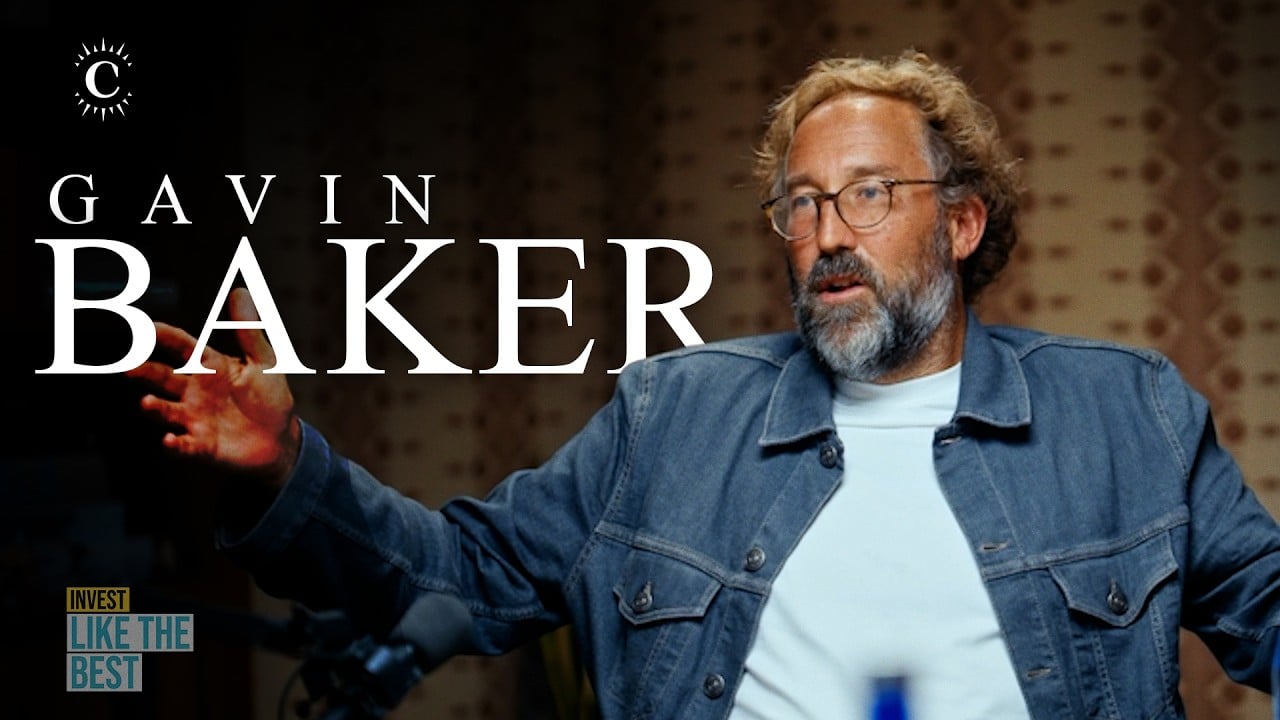
Gavin Baker2026-08-06 04:03:34Gavin Baker says July’s AI selloff broke from the data, with Nvidia at its lowest forward multiple in a decadeGavin Baker, founder and chief investment officer of Atreides Management, argued on Invest Like The Best that July’s selloff in AI stocks diverged sharply from industry fundamentals. He said GPU availability, GPU rental pricing, DRAM spot pricing, and token growth were all still accelerating even as many AI names fell 40% to 60% from their highs. Baker said Nvidia is now trading at its lowest forward price-to-earnings multiple of the past decade, which he sees as a sign that public markets are heavily discounting AI earnings. He also said investors misread Meta’s move to rent out compute, overstated the threat from open-source models, and treated widening CDS spreads as a credit alarm when banks may simply have been hedging commitments. At the same time, he identified regulation as the clearest downside risk, discussed long-term memory supply agreements, described Nvidia’s evolving financing model as a form of credit enhancement with revenue sharing, and pointed to SpaceX and orbital computing as underappreciated parts of the broader AI infrastructure buildout.2960
White House2026-08-04 23:30:26Axios: White House Won’t Publicly Release Details of Advanced AI Model Review FrameworkThe White House does not plan to publicly release the details of a new framework used to evaluate advanced artificial intelligence models, according to an Axios report cited by BlockBeats on Aug. 5. Three sources familiar with the discussions said the framework’s details will only be shared with companies that take part in the process. That means companies outside the process, along with policymakers, researchers, and U.S. allies, will not be able to see how the government intends to carry out one of its key AI policies. Axios reported that the White House held a staff-level meeting with industry representatives on Tuesday to discuss the framework, which was recently completed. Companies that were not invited to the meeting still do not know what is in the framework. It also remains unclear which "trusted partners" may receive early access to advanced models under the system, including whether any foreign governments would qualify. Sources also said open-source models were discussed during the meeting, though no additional details were disclosed. Nvidia employees were among those who took part, the report said.1730
National Supe2026-08-02 08:35:55China’s National Supercomputing Internet launches DeepSeek-V4-Flash API serviceChina’s National Supercomputing Internet has rolled out API access and model files for the official release of DeepSeek-V4-Flash, identified as DeepSeek-V4-Flash-0731. The service is now available for one-click integration and rapid deployment, according to monitoring cited by Dongcha Beating. The model was introduced as having gone through extensive post-training work, with major gains in agent capabilities and instruction-following performance. The release note also said that, across multiple benchmark tests, the official version of DeepSeek-V4-Flash can perform on par with the strongest closed-source models currently available. The update also highlights the broader scale of the platform’s AI ecosystem. China’s Supercomputing Internet AI community has now gathered more than 1,700 popular open-source large models, spanning major families including DeepSeek, GLM, Qwen, and Kimi. The platform has also made API interfaces broadly available for several domestic open-source models, including DeepSeek-V4, MiniMax-M3, and Kimi-K3.2230
OpenAI2026-08-01 07:45:44Rohan Paul says open-source models proved useful in security responseChainCatcher reported, citing X user Rohan Paul, that when an OpenAI model breached Hugging Face, Anthropic's Claude 5 declined to assist with forensic work. Hugging Face then turned to Nvidia's quantized GLM 5.2 to complete its emergency response. Paul argued that restricting open-source models would weaken defenders' capabilities. In his view, the incident showed the practical value open-source models can have during a live security response, especially when other systems are unwilling to participate in incident handling. The report did not provide additional technical details about the breach or the response process, but it framed the episode as an example of how model availability can affect defensive operations in urgent situations.1790
Fish Audio2026-07-28 14:08:40Fish Audio raises $50 million in seed round as ARR reaches $21 millionFish Audio, an AI voice startup, said Tuesday that it has closed a $50 million seed round, according to a report by TechCrunch cited by BlockBeats on July 28. The round was led by Coreline Ventures and Capital Today, with participation from 359 Capital, Parable, Play Time, Alphalist Partners, Bayhouse Ventures, Carya Venture Partners, and HF0. The company began as a small project started by former Nvidia researcher Shijia Liao, who trained an open-source voice generation model on a single GPU after becoming dissatisfied with the lack of expressive synthetic voice technology on the market. Fish Audio said its Fish Speech code repository has now received more than 31,000 GitHub stars and is widely used by independent developers, game designers, and content creators. Over the past year, the startup has launched five models, including four voice generation models and one speech-to-text model. Three of the voice generation models have been open-sourced, while its latest S2.1 Pro model is available only through a paid API. Since launching last year, the company said its open-source and hosted models have attracted more than 8 million users, with annual recurring revenue reaching $21 million.1900
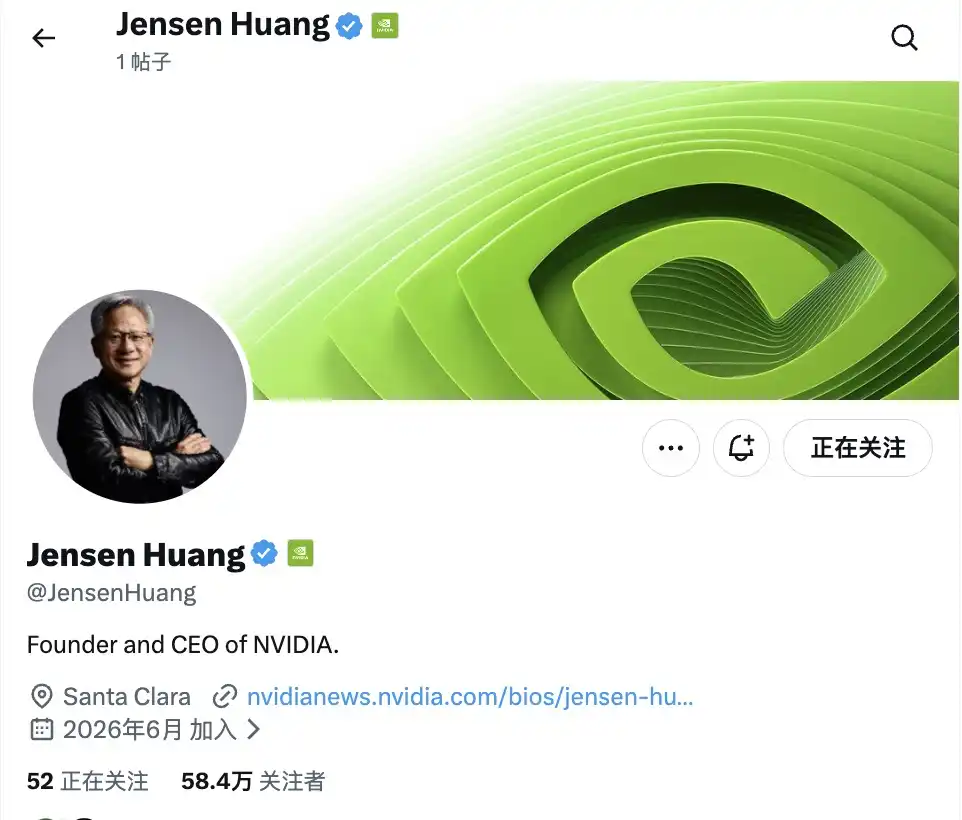
Jensen Huang2026-07-25 01:33:19NVIDIA CEO Jensen Huang gains 584,000 followers within 12 hours of joining XNVIDIA CEO Jensen Huang drew 584,000 followers within 12 hours of joining X on July 25, according to BlockBeats. His first post reached 33.629 million views and centered on a letter signed by NVIDIA explaining why open-source models matter. The post said artificial intelligence will change every industry, be built by every company, and be developed by every country, adding that open-source models strengthen safety and cybersecurity, speed up innovation and distribution, and enable sovereignty. Elon Musk later reposted the message in support. Huang is currently following 52 accounts on the platform. Beyond NVIDIA’s official account network, the list is concentrated on major technology company CEOs and figures from the U.S. venture capital circle, with most of the focus tied to the AI infrastructure ecosystem. The move quickly turned Huang’s X debut into a closely watched event across the tech sector.1790
AI2026-07-24 05:15:17AI Compute Costs Fall 60% a Year, but Enterprise Bills Keep Rising Under Jevons ParadoxAnthropic CEO Dario Amodei says AI inference costs are falling by about 60% annually, yet Red Hat's Brian Gracely argues enterprise spending keeps climbing as cheaper compute drives more usage.300