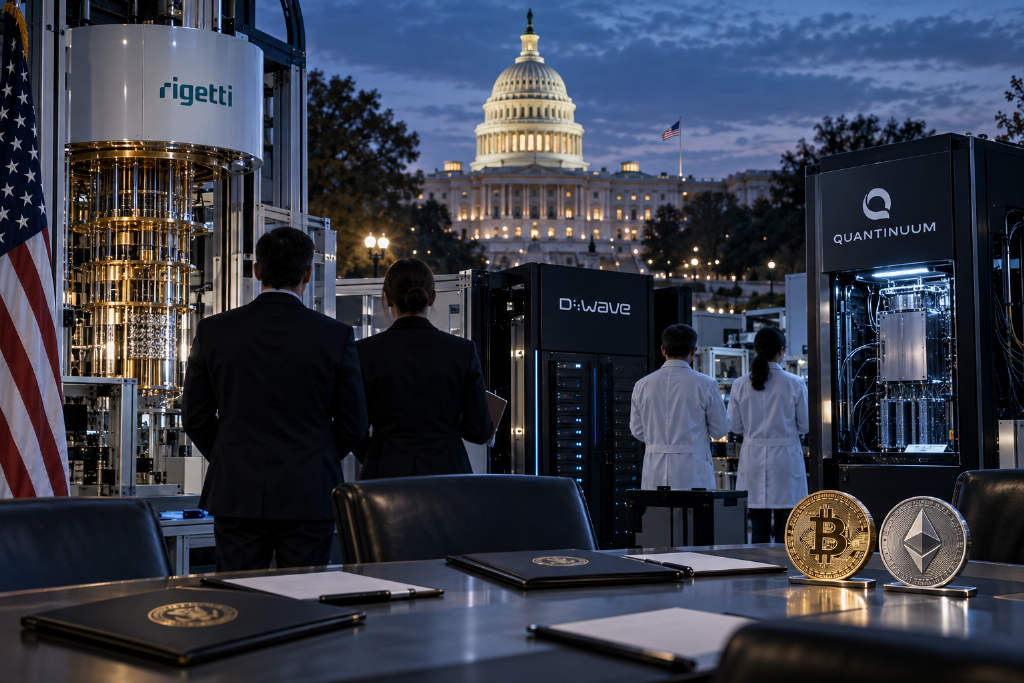
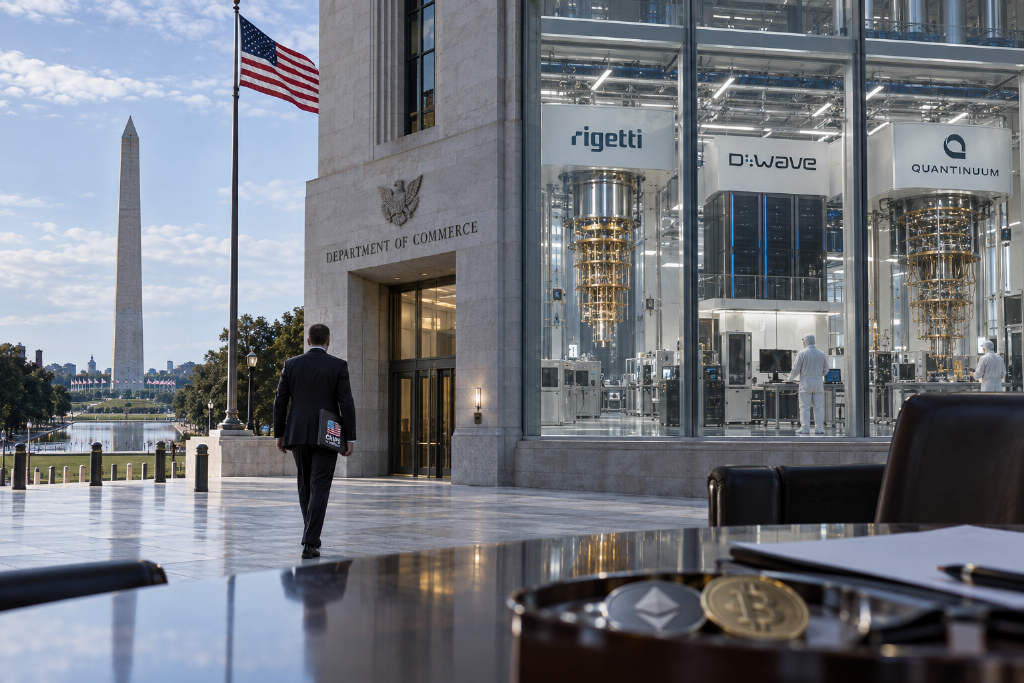
Policy Regula2026-09-10 06:59:26US finalizes quantum R&D awards as Bitcoin BIP-360 and BIP-361 debates gain tractionThe US Department of Commerce on Sept. 8 finalized CHIPS research and development awards for Rigetti, D-Wave, and Quantinuum, with each company eligible for as much as $100 million and the three together receiving up to $300 million. The same day, PsiQuantum was approved for up to $100 million, while GlobalFoundries was approved for up to $375 million, including support tied to domestic quantum foundry capacity. Earlier in May, the department had already announced $2.013 billion in intended quantum industry investments across nine companies. The latest funding has sharpened attention on a long-standing risk for Bitcoin: a future quantum computer powerful enough to break current cryptography. While there is no evidence such a machine is close to breaking Bitcoin today, developers are debating how long a migration away from quantum-vulnerable setups could take. BIP-360 focuses on reducing long-term public-key exposure through a new output type called Pay-to-Merkle-Root, or P2MR. BIP-361 goes further by outlining how the network might phase out vulnerable addresses and eventually restrict ECDSA and Schnorr-based spending. According to material cited in the draft, more than 34% of Bitcoin’s supply had exposed public keys on-chain as of March 2026.970
Policy Regula2026-09-10 01:26:26US commits up to $300 million to quantum hardware as Bitcoin and Ethereum race toward a 2029 post-quantum windowThe US Commerce Department finalized a quantum funding package on Sept. 9, setting up CHIPS Act grants of up to $100 million each for Rigetti, D-Wave and Quantinuum, while also taking minority equity stakes in the three companies. The money is earmarked for hardware, manufacturing capacity and error-correction systems needed to build larger fault-tolerant quantum machines. At the same time, Ethereum’s protocol team has set December 2029 as a self-imposed deadline for making the base layer quantum-resistant across execution, consensus and data, based on an assumption that a potential "Q-Day" could arrive as early as 2030. Bitcoin has no single network-wide deadline, but work this year around BIP-360 and BIP-361 has accelerated, and researchers and institutions are also treating 2029 as the point by which a credible migration path needs to be in place. Estimates from Google Quantum AI and roadmaps from IBM and Quantinuum are tightening that timeline, turning post-quantum migration from a long-range discussion into an engineering and coordination problem for crypto’s two largest networks.820
U.S. Departme2026-09-10 00:24:35U.S. Commerce Department plans up to $100 million each for three quantum computing firmsThe U.S. Department of Commerce will provide up to $100 million each to Rigetti, D-Wave, and Quantinuum under the CHIPS Act, for a combined total of as much as $300 million, according to Odaily. The department will also take minority stakes in all three companies. The funding is intended to support research and development tied to fault-tolerant quantum computers, including hardware, manufacturing, and error-correction systems. The update also carries implications for the crypto sector’s longer-term security planning. Ethereum has set December 2029 as its deadline for making the execution layer, consensus layer, and data layer quantum resistant. On the Bitcoin side, developers are advancing two post-quantum signature migration proposals, BIP-360 and BIP-361. Industry participants believe a workable migration path needs to be in place before 2029. Together, those timelines show that quantum-readiness is being treated as a concrete engineering target across both computing and blockchain infrastructure.780
IonQ2026-09-09 16:46:05IonQ Unveils Superion 256 Quantum Computer as Bitcoin Quantum-Risk Debate ContinuesIonQ, a publicly traded quantum technology company based in Maryland, said Tuesday that it has launched its Superion 256 quantum computer and opened orders for the system, with deliveries expected in 2027. The company said SkyWater, its chipmaking subsidiary, has fabricated the first 256-qubit processors, while teams at several U.S. facilities have trapped the first ions in prototype systems. IonQ says the platform is designed around established semiconductor manufacturing methods, with control electronics built directly into the chip. CEO and Chairman Niccolo de Masi linked the launch to two strategic acquisitions, saying Oxford Ionics contributed trapped-ion control using standard electronics, while SkyWater enabled manufacturing at semiconductor costs and scale. The company also said Superion 256 fits in a standard server rack, will be available through the cloud, and follows a design cycle that SkyWater reduced from nine months to two. IonQ added that it pre-sold its first system in early 2026, plans deliveries in 2027, and is developing Superion 10K for an error-resistant computing demonstration in 2027 and commercial production in 2028. The announcement arrives as researchers continue to debate how soon quantum computers could pose a real threat to Bitcoin security. In July, Galaxy announced up to $5 million for Bitcoin quantum-security work, including research, developer grants, and an advisory council.830
Bitcoin2026-09-09 15:30:00Bitcoin and Ethereum face a 2029 quantum timetable as U.S. backs $300 million hardware pushCoinDesk reports that the quantum threat to crypto is not here yet, but the timelines are getting harder to ignore. Progress toward fault-tolerant quantum machines is starting to line up with the migration plans being discussed across the crypto sector, with both tracks converging on roughly the same 2029 window. That puts Bitcoin and Ethereum in a race against a clock that is becoming more concrete, even if the immediate risk has not arrived. The report also points to U.S. support for a $300 million hardware push. In that setting, the issue is no longer framed as a distant theoretical problem alone. Instead, it is becoming a scheduling challenge for major blockchain networks whose future security planning may need to keep pace with advances in quantum hardware.710
Coinbase2026-09-09 15:26:01Coinbase joins Stanford workshop on post-quantum paths for BitcoinCoinbase said it held a closed-door "Post-Quantum Bitcoin Workshop" at Stanford University together with Stanford cryptography professor Dan Boneh and Localhost Research, bringing in Bitcoin developers, cryptography specialists, researchers, institutional custodians and hardware wallet experts. The discussion focused on how Bitcoin could prepare for future quantum computing threats and what a workable migration path might look like. According to Coinbase, participants reviewed progress in quantum computing, the state of post-quantum cryptography, and several post-quantum signature approaches that could fit Bitcoin. The workshop also covered Ethereum’s quantum-resistance planning, operational requirements faced by institutional custody businesses, and the possibility of adding post-quantum security to Bitcoin through mechanisms such as new output types. A key view from attendees was that the industry should spend less effort trying to predict the exact moment quantum computing becomes a real threat to current cryptographic systems, and more effort building well-tested response plans in advance. They said quantum computing is not yet an urgent crisis for Bitcoin, but early research and coordination could reduce the risk of a rushed network upgrade or asset migration later. No single post-quantum approach has yet reached consensus, and trade-offs remain across security, transaction data size, hardware performance, key management and user migration complexity.720
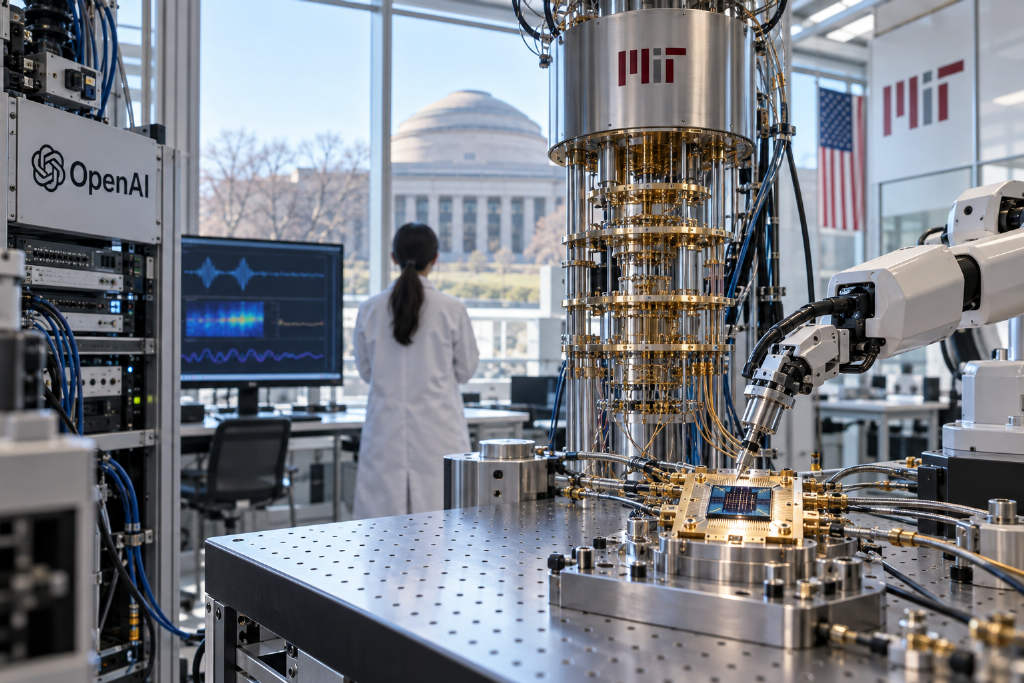
OpenAI2026-09-09 12:43:11OpenAI and MIT say AI agents can autonomously run superconducting qubit calibration experimentsOpenAI and the Massachusetts Institute of Technology’s Engineering Quantum Systems group have released a case study saying AI agents powered by GPT-5.6 Sol and Codex can autonomously execute end-to-end superconducting qubit experiments. According to the report, the system was connected directly to lab hardware and handled microwave pulse planning, instrument control, signal processing, data fitting, and iterative qubit calibration without real-time human micromanagement. The test centered on a previously unmeasured six-qubit chip, including four fixed-frequency qubits and two tunable-frequency qubits. OpenAI and MIT said the agent explored unknown physical parameters on its own. In 40 standard measurements involving fixed-frequency qubits, researchers intervened only four times. The study says the system could identify transition frequencies, calibrate control and readout pulses, and estimate coherence-related properties through a closed-loop workflow. The report also draws a clear line around current limitations. Performance weakened in low signal-to-noise conditions, with the model taking longer to search parameters and sometimes misclassifying anomalous physical behavior. The researchers said AI agents can reliably handle well-defined standard workflows, but experienced scientists are still needed when data become ambiguous or physically abnormal. The article also notes a separate math-related dispute involving OpenAI, Tristan Buckmaster, Anthropic researcher Levent Alpöge, and comments from CEO Sam Altman.850
Qualcomm2026-09-09 11:50:06Qualcomm-Amazon AI chip pact carries up to $60 billion ceiling as U.S. takes stakes in three quantum firmsWhiteLine Daily’s September 9 roundup centered on four AI financing and commercialization developments that investors are watching closely. Qualcomm said it has entered a multi-generation collaboration with Amazon on AI data-center products, including large-scale custom chips for AI inference and high-speed optical interconnect technology reaching up to 1.6T. SEC-linked terms cited in the report show the arrangement includes warrants for Amazon to buy up to 25 million Qualcomm shares at $161.26 each, with vesting tied to commercial milestones and cumulative payment thresholds that can extend as high as $60 billion. Separately, the U.S. Department of Commerce finalized CHIPS Act quantum R&D funding agreements with D-Wave Quantum, Rigetti Computing, and Quantinuum. Each company is set to receive $100 million, and the government will hold minority, non-controlling equity stakes in all three. OpenAI CFO Sarah Friar also said at the Goldman Sachs Communacopia + Technology Conference that enterprise revenue grew 32% from June to July, allowing the company to reach an approximate 50:50 split between enterprise and consumer revenue by midyear. Amazon, meanwhile, is preparing its first-ever sterling bond sale, adding another funding channel for expanding AI infrastructure investment.1030