


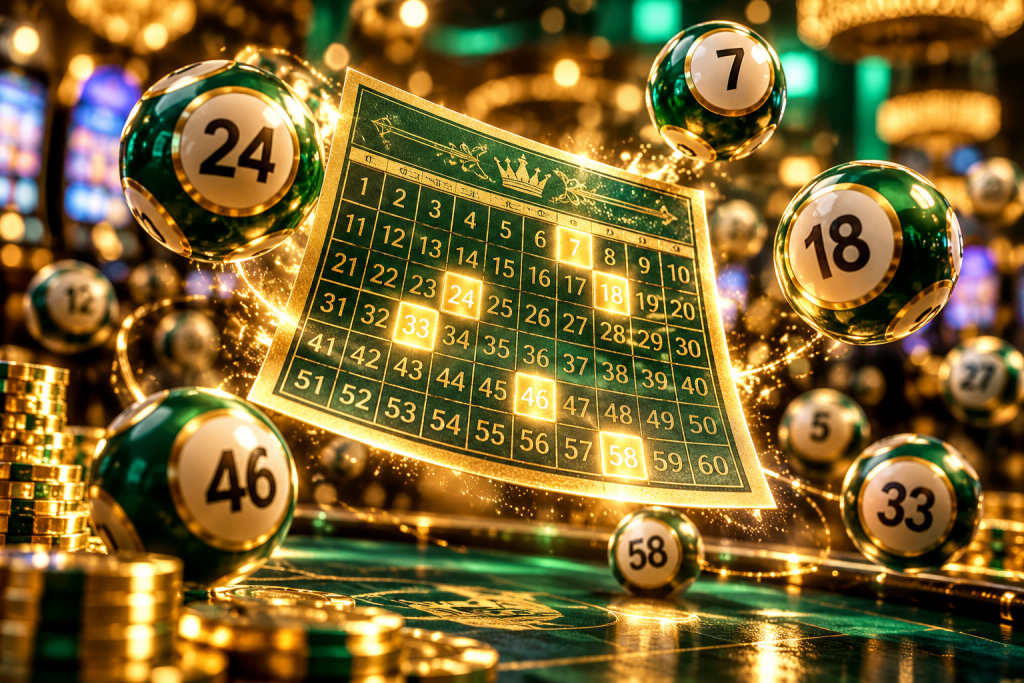
What You Are Looking At on a Keno Ticket
A keno ticket looks busier than it is. You are choosing a handful of numbers from a wider field, then waiting to see how many of your numbers appear in a single draw. The version played in Tennessee and in many other places is a pari-mutuel or fixed-odds numbers game, and the core mechanic does not change much from one venue to the next. What changes is the size of the field, how many numbers you may pick, and how the payout table is built.
Because the question asks about a specific state's game, the honest answer is that the exact field size and prize table are printed on the ticket or the game's own rules page. What you can learn here is how to read that ticket, how a draw works, and what the numbers on the payout table mean.
The Basic Sequence of a Keno Round
Every keno round follows the same skeleton. First you mark your numbers, which keno calls spots. Then the game draws a fixed quantity of numbers from the same field, using a random number generator or a mechanical ball machine depending on the product. Your result is simply the count of matches between your spots and the drawn numbers. There is no strategy in the draw itself, no order of numbers, and no way to influence which numbers appear.
The field size matters because it sets the probability of matching any single number. A game that draws from a field of eighty numbers behaves differently from one that draws from a field of forty. The number of spots you choose also changes the shape of the result. Choosing more spots gives you more chances to match, but the payout table usually requires a higher number of matches before anything is paid. Choosing fewer spots lowers the match target but also lowers the top of the prize table.
How to Read the Payout Table
Keno payouts are not a single number. They are a table indexed by two things: how many spots you picked, and how many of those spots matched the draw. A ticket that lets you pick up to ten numbers will print ten rows, one for each possible spot count, and each row will show a prize for each possible match count.
The table is built around the game's return to player, or RTP. RTP is a theoretical percentage of total wagered money a game returns to players over a very large number of rounds. It is a long-run statistical average, not a per-session guarantee. The house edge is the mathematical advantage the operator holds on a given game, expressed as a percentage of each wager, and the two are complements: they sum to 100% for the same game. Keno tables often show a wide spread between the lowest and highest prizes because the probability of matching every spot is extremely small, while the probability of matching none or one is much larger.
What you should look for on any keno ticket is the prize column for the spot count you chose. A table that shows a prize for matching three of ten spots does not apply to you if you only picked four spots. The relevant row is always the one matching your own ticket.
Fixed-Odds and Pari-Mutuel Keno Are Not the Same
Some keno products pay a fixed amount for each match count, printed on the ticket before the draw. Others are pari-mutuel, meaning the prize pool for a given match level is divided among everyone who hit that level. The difference changes how you should read the numbers.
| Feature | Fixed-odds keno | Pari-mutuel keno |
|---|---|---|
| Prize amount | Printed on the ticket before the draw | Depends on how many players matched the same level |
| Predictability | You know the prize for each match count in advance | You know only the prize pool share, not the final amount |
| Where the table lives | On the ticket or the game's posted rules | On the game's prize-pool disclosure or results page |
| What changes round to round | Only whether you match | Whether you match and how many others matched |
Both formats are common, and a single state can offer both under different product names. The ticket itself will say which one you are holding. If it lists exact prize amounts for each match count, it is fixed-odds. If it refers to a prize pool or a share, it is pari-mutuel.
What the Word "Keno" Does and Does Not Promise
Keno is a lottery-style game, not a skill game. The draw is independent every round, and previous draws have no influence on the next one. A number that has not appeared in many draws is not due, and a number that appeared several times is not hot in any predictive sense. Those patterns exist only in hindsight.
The only decisions you make are how many spots to play, which numbers to mark, and how much to wager. None of those decisions changes the probability that any given number is drawn. They change the distribution of outcomes: more spots means a lower probability of matching all of them but a different prize table, and a larger wager scales the prize without changing the match probability.
Because the query names Tennessee, the specific field size and prize table for the game you are asking about are printed on the ticket and on the game's own rules page. The Tennessee lottery and any licensed retailer post those documents. You do not need to memorise them; you need to read the row that matches your spot count.
Where the Ticket's Terms Live
Every keno product has three documents worth knowing. The first is the ticket itself, which shows your spots, the draw number, the wager, and often the prize table. The second is the game rules, which define the field size, the draw size, the match requirements, and whether prizes are fixed or pari-mutuel. The third is the results page, which lists the drawn numbers for each past draw so you can check your ticket.
If you are playing a digital version inside an app, the same information appears in the game's information panel, usually behind an icon labelled "info", "help", or "pays". The cashier and game category screens are separate from that panel, and the panel is where the prize table and field size are stated. If you cannot find the field size or the prize table, do not guess from a different game's table. Keno variants differ enough that a table from one product does not transfer to another.
How a Keno Draw Is Generated
The draw itself is produced by a random number generator or a mechanical draw machine. In a digital product, the random number generator is the algorithm that determines game outcomes. Independent testing laboratories are commonly used to certify RNG behaviour, and certification covers game mechanics, not an operator's financial conduct. In a mechanical draw, the machine is the physical equivalent, and the same principle applies: each number in the field has an equal chance on every draw, and the draw does not remember what came before.
This matters because keno is often played quickly, and a fast sequence of rounds can feel like a pattern. It is not. The probability of matching a given number is the same on the first draw of the day and the last, and the game's RTP is a property of the prize table and the field size, not of the sequence of numbers that happens to appear.
FAQ
How many numbers do I pick in Tennessee keno?
The number of spots you may pick is set by the specific game product and printed on the ticket or the game's rules page. Different keno products allow different ranges, so the answer for one Tennessee game is not automatically the answer for another. Read the spot-count range on the ticket you are holding.
Does the order of my keno numbers matter?
No. Keno matches are counted by set membership only. If the draw contains the numbers you marked, they count as matches regardless of the order in which they were drawn or the order in which you marked them on the ticket.
Can I use past Tennessee keno results to pick better numbers?
No. Each draw is independent, and past results do not change the probability of any number appearing in the next draw. A number that has appeared often or rarely in past draws has the same chance as any other number in the next draw. The only information past results give you is what already happened.
Play responsibly
Gambling should be treated as paid entertainment, never as a way to earn income or recover losses. 1-800-MY-RESET (1-800-697-3738)
18+ or 21+ depending on where you are; follow the minimum age that applies to you.
This article is general information about how these mechanics work. It is not legal advice and not a recommendation to gamble or to use any particular operator. Availability and legality differ by jurisdiction — check the rules that apply where you are.