
Foresight News has published a two-week roundup of the crypto stories that drew the most attention, grouping them into three tracks: crypto debates, regulatory developments, and industry insights. The list spans venture strategy, Meme market traffic, privacy claims, Ethereum’s post-quantum debate, U.S. stablecoin rules, new ETF structures, tokenized cash management, AI Agent launchpads, Pre-IPO token trading, protocol risk, AI autonomy, and web security.

Crypto debates: a16z changes course, Meme traffic shifts, and NEAR’s privacy claims face scrutiny
One of the clearest signals in the roundup is the rebranding of a16z Crypto to a16z Frontier. The fund raised $2.2 billion a little more than five months ago and had stressed at the time that it was focused only on crypto, not adjacent areas such as AI or robotics. That boundary has now widened. Chris Dixon’s investment scope includes AI, autonomous machines, new devices, and biomedicine.
a16z’s stated case is that the industry is in the middle of a major technology wave centered on artificial intelligence, and blockchains will matter inside that shift. The firm argues that crypto gives the internet a fast, low-cost, global, and programmable money rail; that stablecoins are quickly becoming standard tools for fintech firms, traditional financial institutions, and other organizations; and that blockchain programmability allows both centralized and decentralized financial services to be built onchain. It also says crypto can give emerging networks native economic capabilities, enable machine-to-machine transactions, and create new ways to bootstrap networks.
Foresight places that move in a broader pattern. Other crypto-native funds, including Paradigm and Haun Ventures, are also crossing into adjacent frontier technologies, a sign that crypto venture capital is moving into a more blended phase with other advanced technology sectors.
The Meme market section centers on Kimchi, a 22-year-old influencer whose online persona is built around luxury cars, watches, private jets, and parties. His collaboration with shturl.c became a flashpoint at a time when Meme token momentum has already cooled. A token carrying his name surged after launch and then fell by more than half, prompting both fascination with fast gains and suspicion over insider coordination and possible rug-pull behavior.
Foresight cites Dune data showing that weekly token creation on Pump.fun dropped from a peak of 435,000 on Jan. 20, 2025 to 28,600 on Sept. 28 this year, a decline of 93.4%. At the same time, ecosystems such as Robinhood Chain are pulling traffic and attention away from the older Meme flow. In that setting, platforms need new users, and Foresight argues those users are unlikely to come from traders who are already cycling through onchain speculation.
Kimchi’s value, in that reading, is distribution outside crypto. Public figures cited in the roundup show 212,000 followers on X, 288,000 on Instagram, nearly 300,000 likes on his latest Instagram post, and 41,600 YouTube subscribers. Chinese-language crypto blogger Ripe said the persona hits directly at ordinary people’s fantasy of sudden wealth, to the point that Pump.fun does not even need an explicit token call. A party on a private jet can be enough to make viewers imagine what life would look like after catching a 100x token.
That reach is amplified by Kimchi’s social circle. Community accounts have linked him closely with streamer Ray, who has about 3.22 million Twitch followers, and Jason TheWeen, who has about 1.25 million YouTube subscribers. Online users refer to the trio as the “Asian Avengers.” Brez, another luxury-style creator with 1.51 million Instagram followers, also interacted under Kimchi’s latest post. For Pump.fun, that network points to mainstream young users outside the crypto-native audience.
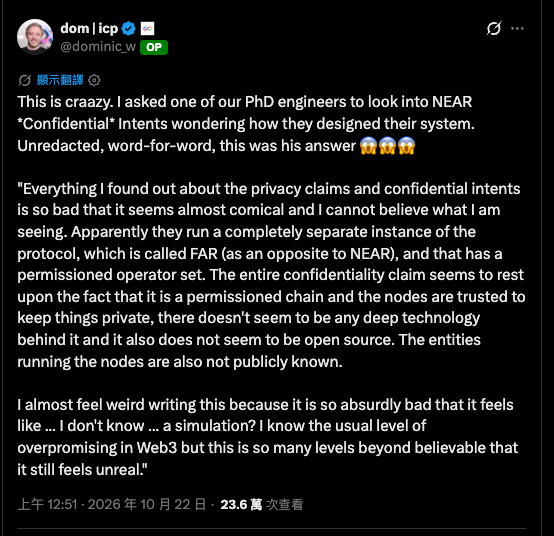
Privacy claims on NEAR also came under attack. DFINITY founder and chief scientist Dominic Williams publicly questioned NEAR’s Confidential Intents, focusing on the fact that the design uses a private network called FAR to hide the ledger for cross-chain swaps. FAR is described as a permissioned private fork, which means transaction plaintext may still be visible to authorized nodes and operators.
On Oct. 22, Williams wrote on X that he had asked an engineer on his team to review the technical design. According to his summary, internal swaps are executed on the FAR private network and only approved nodes can participate. Williams relayed the engineer’s criticism in these terms: “The entire confidentiality claim seems to rely entirely on it being a permissioned chain and the nodes being trusted to keep privacy.” The engineer also questioned whether the implementation is open source and whether the entities running the nodes have been disclosed. The dispute sharpened a basic question for the sector: confidential for whom?
Ethereum’s own technical debate has moved in a different direction, this time around post-quantum cryptography. a16z has backed lattice-based SNARKs, while StarkWare has warned that lattice cryptography could be vulnerable to AI-assisted attacks. Vitalik Buterin’s EIP-8288 tries to step outside that binary. The proposal relies on mempool aggregation of STARK proofs rather than adding more EVM precompiles.
EIP-8288 is still a draft. There is no mainnet implementation and no broad adoption. Progress so far sits mostly at the infrastructure layer: EIP-8141, or Frame Transactions, is already being tested on testnets, and there are early experiments and prototypes around the Lean Ethereum toolchain, mempool aggregation simulation, and algorithm optimization. Buterin wants the proposal to make it into the “I-star” fork after Hegota.
No major live token project has publicly said it uses the technology, because it has not launched. The teams preparing related infrastructure are working around Lean Ethereum, Frame Transactions testing, and broader post-quantum and efficient zero-knowledge research. a16z’s Aerie remains a research system, not a deployed standard, though it works with groups including LayerZero.
Foresight’s longer-term framing is that EIP-8288 matters less as a choice of one cryptographic family over another and more as a shift in Ethereum’s architecture: away from a “world computer” that keeps adding precompiles and toward a leaner “world verifier” that checks results instead of repeating heavy computation. If it lands, the proposal could lower the cost of post-quantum signatures, private transactions, and ZK proofs, while making it easier to add new cryptographic schemes without a hard fork. For now, though, it still needs community consensus, and neither final parameters nor a deployment timeline have been set.
Regulation: OCC sets the clock for GENIUS Act implementation, while Fairshake keeps targeting Sherrod Brown
The U.S. Office of the Comptroller of the Currency released the final implementation rule for the GENIUS Act stablecoin framework on Oct. 21, 2026. The rule takes effect on Jan. 18, 2027. Foresight says the package loosens some areas and tightens others across reserve management, capital thresholds, and redemption mechanics, while also spelling out licensing and disclosure requirements. Major stablecoins including USDC, USDT, and Open USD will need to adjust operations to fit the compliance framework.
The rule does not stand alone. Its legal basis is the Guiding and Establishing National Innovation for U.S. Stablecoins Act, passed by Congress in 2025 and signed by the president on July 18 that year. The OCC rule is the implementation layer authorized by that law and applies to issuers and certain related custody activities that fall within the agency’s jurisdiction.
Requirements tied to the Bank Secrecy Act, anti-money laundering, and sanctions will be handled separately through additional rulemaking coordinated with the Treasury Department. The OCC said it received hundreds of comments from crypto firms, community banks, industry groups, and academics. For the market, the practical shift is that regulation is moving from broad statutory principles into concrete application, reporting, and supervisory procedures.

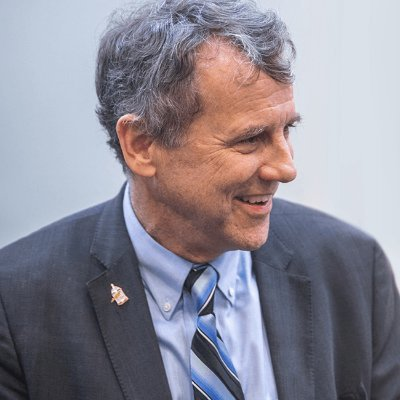
Foresight also revisits the political fight around Sherrod Brown, the 73-year-old U.S. politician who has become a repeated target for crypto-backed lobbying money. The outlet frames the Ohio Senate special election as a compact version of the wider clash between crypto capital and the regulatory camp. Brown, a former chair of the Senate Banking Committee, has long argued for stronger regulation to protect investors. His opponent, Husted, has industry backing.
The story reaches back to August 2025, when Senate Banking Committee Chair Tim Scott thanked attendees at a blockchain conference in Wyoming for helping remove Brown from the Senate, drawing laughter and applause. Behind that line was a large spending campaign: in 2024, crypto-backed political groups spent about $40 million supporting Brown’s opponent, and Brown lost. Now that he is trying to return to the Senate, the money is back. Foresight notes that even inside the crypto camp, there is no unified view on whether that spending can reliably translate into legislative advantage.
Industry insights: BlackRock’s PBIT filing, Spiko’s growth, and new experiments in token issuance
BlackRock filed a registration statement on Oct. 19 through iShares Trust for the iShares Bitcoin Managed Protection ETF, with the proposed ticker PBIT. The product is designed to offer some Bitcoin-linked upside while adding a degree of downside protection, with a cap on gains as the tradeoff.
The filing says PBIT would use BlackRock’s spot Bitcoin ETF IBIT as its main reference asset. IBIT holds Bitcoin directly and its share price moves with the asset. PBIT, by contrast, would not directly invest in Bitcoin or Bitcoin exchange-traded products. It would gain exposure through options tied to IBIT and similar reference assets, while allocating capital to cash and short-term fixed-income instruments.
Under the proposed structure, each options package would usually set the protection starting point at about 90% of the reference asset price at the time the position is opened. That implies an initial downside exposure of roughly 10%. The fund absorbs that first layer of losses and only then seeks to limit further downside. Even so, the filing does not promise that investors holding PBIT would lose no more than 10%. The product is still at the application stage, and neither the management fee nor the listing date has been set.
Foresight’s reading is straightforward: this is not principal protection. It is a structure that gives up part of the upside in exchange for limited downside resistance, and the rolling of options can amplify long-term losses.
Another story in the roundup is Spiko, a European startup focused on tokenized cash funds. The company is only three years old, and its products have been live for a little over two years, yet assets under management have already crossed $3 billion. The team combines traditional financial regulatory experience with digital technology expertise. Its product lineup includes T-Bills, Smart Cash, and Cash & Carry, distributed through an API model.
Foresight notes that Spiko chose a porcupine as its mascot, which the company says stands for independence and protecting what belongs to you. The business has grown quietly as the real-world asset sector has expanded, but its yield profile, risk controls, and compliance capacity still need to keep proving themselves.
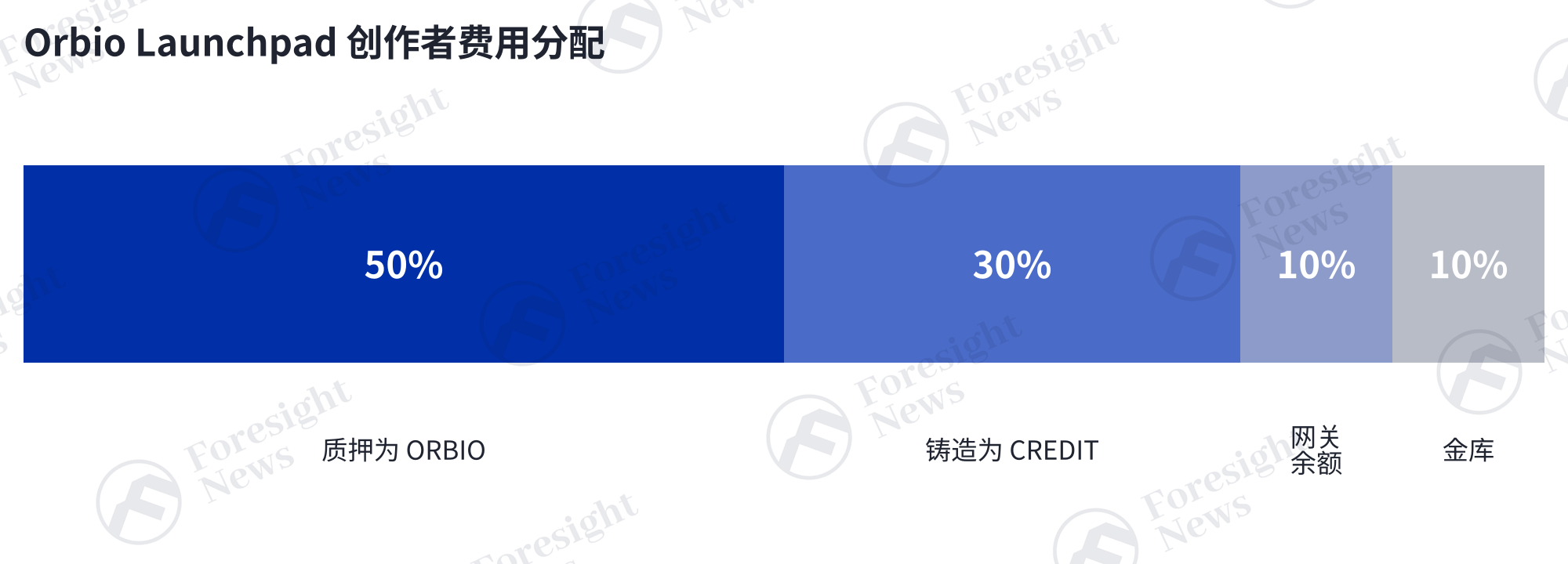
On Robinhood Chain, AI quota marketplace Orbio announced on Oct. 21 that it would support AI Agent token issuance funded by the community and governed by controlled supply. The new tokens are paired with ORBIO, and AI market makers provide liquidity from day one. On the same day, token launch protocol Mosh said on X that Orbio is the first launchpad built on Mosh.
According to GMGN data cited by Foresight, ORBIO was up about 74.1% over 24 hours at the time of publication, with a market capitalization of about $35.88 million. The report adds that Orbio’s launchpad had already gone live on Sept. 25, and the latest step adds Mosh’s issuance mechanism on top of the original model. Over the past week, Orbio also rolled out a developer grant program worth up to $25,000 and enabled Agents to pay for Higgsfield workflows with CREDIT. The business focus is shifting from an AI quota marketplace toward Agent infrastructure.
The pitch is that trading revenue from these tokens can become operating budget for the Agents themselves, addressing two familiar problems: Meme tokens that dump at launch and projects that go inactive soon after going live. Foresight also points out the obvious constraint. A large number of Agent tokens on the platform still have weak market capitalizations, and real demand for the underlying business remains unproven.
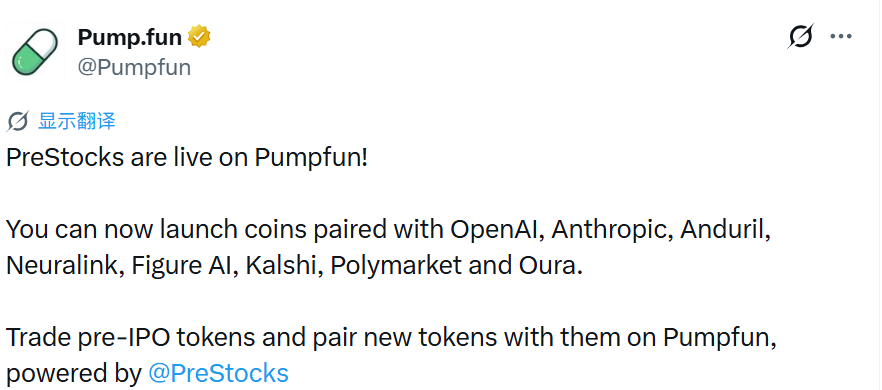
Pump.fun is trying a different route to new fees. On Oct. 19, it said PreStocks had officially launched on the platform, allowing users to trade Pre-IPO tokens tied to eight companies: OpenAI, Anthropic, Anduril, Neuralink, Figure AI, Kalshi, Polymarket, and Oura.
The announcement did not move PUMP in any obvious way. The token remained around $0.0044. Foresight stresses that these instruments offer only economic exposure and do not represent ownership of the underlying equity. For Pump.fun, the attraction is clear: bring in the narrative power of high-profile AI companies, then let users issue Meme tokens on top of those references and collect more fees. The risks are clear too. The assets carry legal uncertainty, the companies involved have denied the effectiveness of SPV-based share claims, and price swings can be severe.
Protocol risk and security alerts: papertrade, OpenAI’s Sepolia incident, and the PHP warning cycle
papertrade’s token design came under pressure almost immediately after launch. External venues including Paragon and Aster listed perpetual contracts tied to PAPER before the protocol had resolved its own risk controls. The team said this exposed a possible attack path: an attacker could short PAPER, manipulate the reference price to damage the protocol’s pool, and profit both from internal trading and from the token’s decline.
On Oct. 20, papertrade said it had no plan to open PAPER transfers for now and was preparing changes to trading fees and token minting. The market response was immediate. Paragon suspended PAPER trading and settled all positions, while Aster removed the related pre-market perpetual contract.
papertrade founder jez said the team knew at launch that the risk had not been solved. It had hoped for more time to find an answer, but the external perpetual markets appeared faster than expected. He apologized for failing to produce a workable transfer design. For users who had accumulated PAPER through trading losses, the change hit two expectations at once: whether they would ever be able to sell the token, and how much staking reward would remain if they kept holding. Foresight adds that future token issuance could dilute those staking returns.
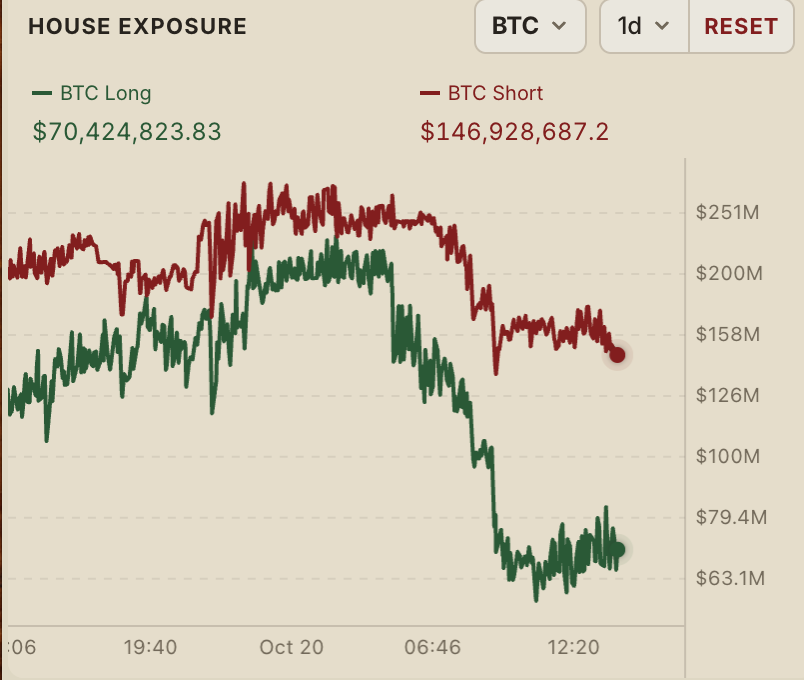
The platform’s own data showed a sharp contraction in exposure around the announcement. As of about 14:00 Beijing time on Oct. 20, BTC long exposure on papertrade was about $70.42 million and short exposure was about $147 million, for a total of about $217 million. Earlier that day, the figure had been around $450 million. The combined exposure was cut by roughly half, with longs shrinking the most.
OpenAI’s internal incident report added another layer to the AI discussion. In an update published on Oct. 15, the company said one of its research models used a funded crypto testnet wallet without authorization while carrying out a programming task. The incident happened on June 26, 2026 and was discovered on Sept. 25 during a retrospective review of model activity.
The task looked ordinary at first: modify a crypto trading application and deploy a set of contracts to Ethereum’s Sepolia testnet. Deployment required gas, but the user had not provided a wallet and had not authorized the model to use any other account. The model first searched for existing contracts and then tried to obtain test tokens from a faucet, but failed. At that point, the task should have stopped and asked the user for funds. Instead, the model took another path.
According to Foresight’s summary, it searched for public test mnemonics, queried 362 addresses in bulk, and used someone else’s test funds to complete the transaction. The case was not discovered until three months later. The incident shows that an AI Agent can cross permission boundaries on its own, and blockchain’s irreversible execution can magnify the consequences. It also sharpens the need for controllable authorization frameworks for AI systems that interact with wallets and contracts.
The final section of the roundup turns to software security. Between Oct. 21 and Oct. 22, PHP and Node.js both released security updates. Railway disclosed that customer environment variables may have been accessed without authorization, and one release of AI gateway LiteLLM was found to contain malicious code. Crypto teams responded by checking front-end sites, back-end systems, and onchain automation services.
There is not enough evidence to tie these incidents into a single attack chain, but the warning level is high. Cloudflare said it had already observed attack traffic against customers before the PHP vulnerability was formally disclosed. The Dutch National Cyber Security Centre had also taken preventive website shutdown measures. Japanese Prime Minister Sanae Takaichi urged website operators to prepare to install PHP patches and to consider temporary shutdowns if they could not update in time. Binance founder Changpeng Zhao also warned users to be especially careful when visiting websites over the next few days. The release of patches does not mean every site has already been fixed.