


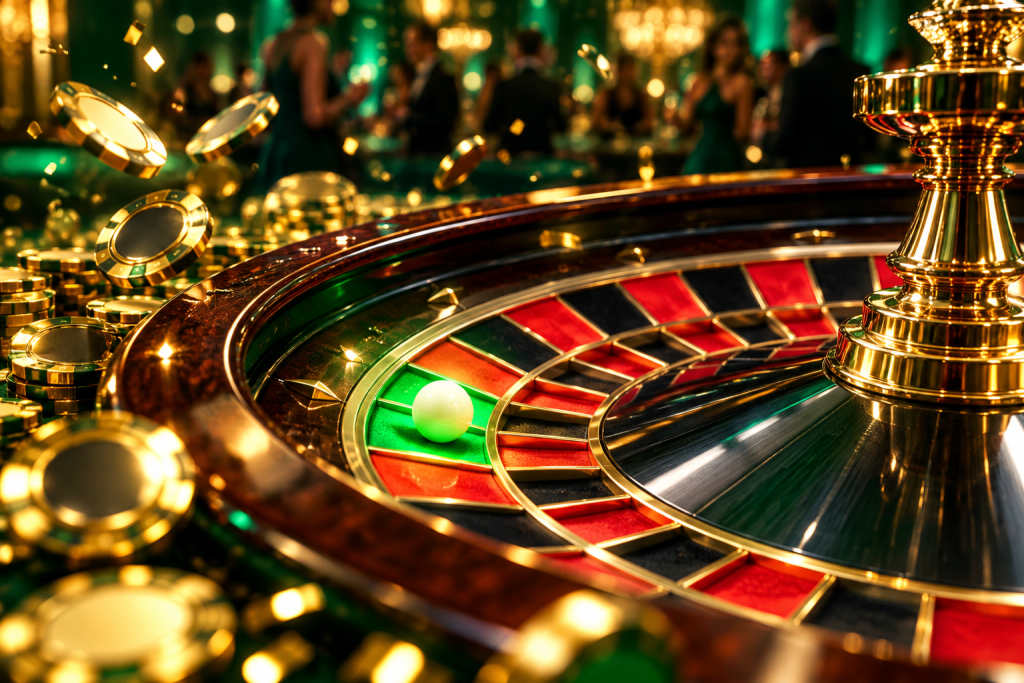
You put a chip on the green zero, the wheel spins, and the ball lands there. The dealer pays you 35 to 1. That part is simple. What most players do not notice until later is that the zero is doing two jobs at once: it is a bet like any other number, and it is also the reason every other bet on the table pays slightly less than the true odds would suggest.
How a bet on zero settles
A straight-up bet on zero, or on any single number, pays 35 to 1 when it wins. If you wager one unit and the ball lands on zero, you keep your original unit and receive 35 more. That is the same payout as a winning bet on 17 or 23. The zero is not worth more as a winning number, and it is not worth less. Its special role sits elsewhere on the layout.
The payout of 35 to 1 is fixed by the wheel's structure. A European wheel has 37 pockets numbered 0 through 36. A fair payout for correctly picking one pocket out of 37 would be 36 to 1. The casino pays 35 to 1 instead, and that one-unit gap is the house edge on the bet. On an American wheel there are 38 pockets because of the extra double zero, but the straight-up payout stays at 35 to 1, which makes the same bet carry a larger edge.
What the zero does to every other bet
The zero's real value is what it does to bets that have nothing to do with it. When you bet on red or black, odd or even, or high or low, you are betting on 18 of the 36 numbered pockets. On a wheel with no zero, those bets would be an even-money proposition. The zero, and the double zero on an American wheel, are neither red nor black, neither odd nor even, neither high nor low. When the ball lands in a zero pocket, those outside bets lose.
That is how the house edge on even-money bets is created. On a European wheel, the ball lands in the zero pocket on average once in every 37 spins. The other 36 spins split evenly between your colour and the other colour. Over a very large number of spins, that single losing spin out of 37 is the operator's mathematical advantage. The zero does not need to pay anything special to be valuable to the house; it only needs to sit outside the bets most players make.
European and American wheels compared
The number of zero pockets on the wheel changes the edge on every bet, not just on bets involving zero. The comparison below shows what shifts between the two common layouts.
| Feature | European wheel | American wheel |
|---|---|---|
| Pockets | 37 | 38 |
| Zero pockets | One (single zero) | Two (single and double zero) |
| Straight-up payout on zero | 35 to 1 | 35 to 1 |
| Even-money bets that lose on zero | Red/black, odd/even, high/low | Red/black, odd/even, high/low |
| Effect on house edge | Lower, because only one pocket sits outside the main bets | Higher, because two pockets sit outside the main bets |
The payout on a winning zero bet is identical on both wheels. What changes is how often the zero appears and how often it cancels other bets. A player choosing between tables is choosing between two different rates of expected loss, even though the felt and the payouts look almost the same.
Bets that include the zero
Zero can be covered by more than a straight-up bet. A split bet places a chip on the line between zero and an adjacent number, such as zero and one, or zero and two, or zero and three depending on the layout. A split pays 17 to 1. A street bet on zero, one and two, or zero, two and three, pays 11 to 1. Some layouts also allow a basket bet covering zero, double zero, one, two and three on an American wheel, though this is one of the higher-edge bets on the table because it covers five numbers but pays as if it covered fewer.
These bets do not change what zero is worth. They change how many pockets share the same chip, and the payout drops accordingly. The house edge on each of these bets is built the same way as on a straight-up bet: the payout is slightly short of what the number of covered pockets would justify.
Where the zero appears in the sequence of a round
The zero is just another pocket during the spin. The dealer clears losing bets, pays winners, and the round ends. There is no separate rule for when zero appears, except on outside bets, where it loses like any other uncovered number. Some tables offer a rule where even-money bets lose only half their stake when the ball lands on zero, or where the stake is held for the next spin. Those rules are printed at the table and change the edge on even-money bets, but they do not change the straight-up payout on zero itself.
A new player at a table should check the posted rules before relying on any special treatment of zero. The wheel type is visible at a glance: a single green zero means a European layout, and a green zero plus a green double zero means an American layout. That one glance tells you more about the expected cost of the game than any betting pattern will.
How the zero fits into the house edge
House edge and RTP are complements: they sum to 100% for the same bet under the same rule set. The zero is part of why the sum works out the way it does. On a straight-up bet on a European wheel, the player is paid as if there were 36 pockets when there are 37. The missing unit of payout is the edge. On an American wheel, the player is paid as if there were 36 pockets when there are 38, so the edge is larger.
No bet on the layout removes that gap. A player can choose bets with smaller edges, such as even-money bets on a European wheel, or bets with larger edges, such as the basket bet on an American wheel. The zero is not a secret opportunity; it is a structural part of the game that every bet is priced around.
FAQ
Does zero pay more than other numbers in roulette?
No. A straight-up bet on zero pays 35 to 1, the same as a straight-up bet on any other single number. The zero is not a higher-paying number; it is a pocket that sits outside the even-money bets and therefore creates the house edge on those bets.
Why does the zero make even-money bets lose?
Even-money bets cover 18 of the 36 numbered pockets. The zero is not red or black, odd or even, high or low, so when the ball lands there, the bet loses. On an American wheel the double zero does the same thing, which is why the edge on even-money bets is higher there.
Is it better to bet on zero or on red or black?
They are different bets with different payout structures and different house edges. A straight-up bet on zero pays 35 to 1 but wins rarely. An even-money bet wins more often but pays only 1 to 1. The edge on each bet is fixed by the wheel and the payout, not by how the player combines them.
Play responsibly
Gambling should be treated as paid entertainment, never as a way to earn income or recover losses. 1-800-MY-RESET (1-800-697-3738)
18+ or 21+ depending on where you are; follow the minimum age that applies to you.
This article is general information about how these mechanics work. It is not legal advice and not a recommendation to gamble or to use any particular operator. Availability and legality differ by jurisdiction — check the rules that apply where you are.