


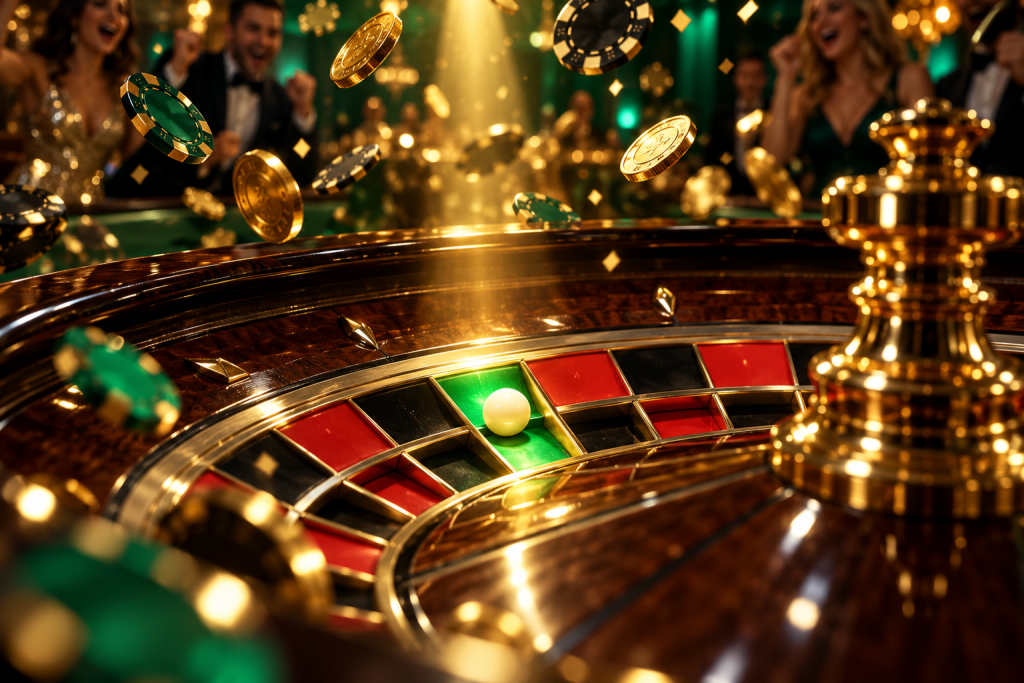
What the Zero Pocket Does to Your Bet
Roulette is the only table game where a single pocket that nobody bets on by name quietly changes the odds of every other wager on the layout. The zero is not a neutral outcome. It is the mechanism that gives the house its mathematical advantage on most bets, and it behaves differently depending on whether you are sitting at a European or American wheel.
When the ball lands in zero, any bet placed directly on that number pays as a straight-up winner. But every bet placed on red, black, odd, even, high, low, a column, or a dozen loses outright. No partial refund, no push, no second chance. That single rule is why the zero matters more than any other number on the felt.
Understanding what zero pays, and what it does to the rest of the table, is the fastest way to read a roulette layout correctly before you put chips down.
Straight-Up Payout on Zero
A straight-up bet is a wager placed on one number, including zero. The payout for a winning straight-up bet is 35 to 1. That means a winning bet returns 35 units of profit for every 1 unit staked, plus the original stake is returned to you. The zero pocket pays exactly the same as any other single number on the wheel.
There is nothing special about the payout itself. A chip placed squarely on the zero pays 35 to 1, identical to a chip placed on 17 or 23. What is special is the role zero plays when it is not the number you bet.
The payout ratio of 35 to 1 does not match the true odds of hitting a single number. On a European wheel with 37 pockets, the true odds against any one number are 36 to 1. The gap between the 35 to 1 payout and the 36 to 1 true odds is the house edge on that bet. On an American wheel with 38 pockets, the true odds are 37 to 1, making the same 35 to 1 payout a worse proposition for the player.
European vs American Zero: Why One Pocket Changes Everything
The number of zero pockets on the wheel changes the house edge on nearly every bet, not just bets on zero itself. A European wheel has a single zero. An American wheel has both a zero and a double zero.
| Feature | European wheel | American wheel |
|---|---|---|
| Pockets | 37 | 38 |
| Zero pockets | One (single zero) | Two (single and double zero) |
| Straight-up payout | 35 to 1 | 35 to 1 |
| True odds against one number | 36 to 1 | 37 to 1 |
| Effect on outside bets | Zero loses red/black, odd/even, high/low | Zero and double zero both lose those bets |
The extra zero pocket on the American layout does not change any payout. It changes the frequency with which the house wins. Every spin that lands in a zero pocket collects all the even-money and outside bets on the table, and the American wheel has twice as many pockets that do that.
What Happens to Outside Bets When Zero Lands
Outside bets are the wagers placed around the perimeter of the number grid: red or black, odd or even, high or low, columns, and dozens. On most roulette tables, a zero result loses all of these bets. The zero pocket is green, not red or black, not odd or even, and not part of any column or dozen.
Some tables use a rule called "la partage" or "en prison" on even-money bets. Under la partage, a player loses only half an even-money wager when zero lands. Under en prison, the losing bet is held on the table for the next spin, and if it wins, the player gets the original stake back without additional winnings. These rules reduce the house edge on even-money bets, but they are not universal. The table rules posted at the venue or on the game information panel state whether either rule applies.
If neither rule is in effect, which is the default on most tables, zero simply takes every outside bet on the layout. That is the moment the house edge becomes visible in a single spin.
Why the Zero Makes Roulette Different From a Coin Flip
An even-money roulette bet looks like a coin flip: red or black, odd or even. But a coin has two sides and a European wheel has 37 pockets. The zero is the extra outcome that belongs to neither side of the bet.
On a European wheel, 18 pockets are red, 18 are black, and one is green. A bet on red wins on 18 outcomes and loses on 19. That one-pocket deficit is the house edge on the bet. It is not a large percentage, but it is present on every spin, and it compounds over the number of spins you play.
On an American wheel, the same red bet wins on 18 outcomes and loses on 20. The double zero doubles the deficit. The payout has not changed; the probability has. That is the entire story of why the zero matters: it is not about what you win, it is about how often you lose.
Betting on Zero Itself
You can bet on zero directly, or you can include it in combination bets. A straight-up bet on zero pays 35 to 1. A split bet covering zero and one neighbouring number pays 17 to 1. A street bet covering zero, one, and two pays 11 to 1. These payouts are the same as any other number in the same position on the layout.
Betting on zero does not change the house edge. It is a bet like any other single number or small group of numbers. The payout is fixed, the probability is fixed, and the house advantage is built into the gap between those two figures. Some players treat zero as a hedge against outside bets, placing a small straight-up bet on zero to recover something when the outside bets lose. That does not change the mathematics of either bet; it simply splits the stake across two separate wagers with their own edges.
The Sequence of a Round From Buy-In to Settlement
Roulette follows a fixed sequence at every table, and knowing it prevents most procedural mistakes.
You buy in by placing cash on the table, never directly into the dealer's hand. The dealer exchanges it for roulette chips, which are typically a distinct colour assigned to you so that bets at the table can be told apart. These chips have no value away from the table and must be exchanged for regular casino chips before you leave.
Once the dealer opens betting, you place chips on the layout. You may place multiple bets on the same spin. When the dealer calls no more bets, the layout is closed and nothing may be touched. The ball is spun, lands in a pocket, and the dealer marks the winning number. Losing bets are cleared first, then winning bets are paid from the outside inward. Your original stake remains on the table until the dealer pays it; do not reach for it before the payout is complete.
When you are finished, ask the dealer to colour you up, which means exchanging your roulette chips for value chips that can be cashed at the cage.
Procedural Mistakes New Players Make
The most common error at a roulette table is reaching for chips after the dealer has called no more bets. Once the call is made, the layout is closed. Touching a bet after that point can void it or get you removed from the table.
The second mistake is placing cash directly into the dealer's hand. Dealers cannot take cash hand to hand. Cash goes on the table, and the dealer picks it up from there. The same applies to chips when you buy in.
The third is leaving the table with roulette chips still in hand. Roulette chips are not cashable at the cage. They must be exchanged at the table first. Walking away with them means you are carrying chips that have no value anywhere else.
The fourth is betting late. When the dealer's hand passes over the layout or the call is made, the window has closed. Late bets slow the game and are generally not accepted.
How the Zero Shapes Strategy Choices
Roulette does not have a strategy that changes the house edge. No bet selection, progression, or pattern alters the fact that the zero pocket belongs to the house on outside bets and that every payout is slightly short of the true odds. What a player controls is which bets they make and how long they play.
Bets on a single number carry a larger potential payout but a lower probability of winning. Even-money bets carry a higher probability of winning but a smaller payout. The house edge differs between these bets on some tables, particularly when la partage or en prison rules apply to even-money bets only. The table rules state which bets those rules cover.
A player who wants the lowest expected loss per unit wagered should look for a European wheel with a favourable even-money rule and bet on the outside. A player who wants a larger potential payout accepts a higher expected loss rate by betting on single numbers. Neither choice is a way to win; both are choices about how the loss rate is distributed.
FAQ
Does zero pay more than other numbers in roulette?
No. Zero pays 35 to 1 on a straight-up bet, the same as any other single number. Its importance comes from the fact that it loses every even-money and outside bet on the layout, which is what creates the house edge on those wagers.
What happens if the ball lands on zero and I bet on red?
The red bet loses. Zero is green, not red or black, and is not part of any even-money pairing. Unless the table uses the la partage or en prison rule, the full stake is collected by the house.
Is betting on zero a good way to cover my other bets?
It is a separate bet with its own payout and its own house edge. Placing a small bet on zero alongside outside bets means you have two independent wagers, each with a negative expectation. It does not reduce the edge on the outside bets; it adds a second bet with its own expected loss.
Play responsibly
Gambling should be treated as paid entertainment, never as a way to earn income or recover losses. 1-800-MY-RESET (1-800-697-3738)
18+ or 21+ depending on where you are; follow the minimum age that applies to you.
This article is general information about how these mechanics work. It is not legal advice and not a recommendation to gamble or to use any particular operator. Availability and legality differ by jurisdiction — check the rules that apply where you are.