


The Wheel Turns on a Promise of Pure Chance
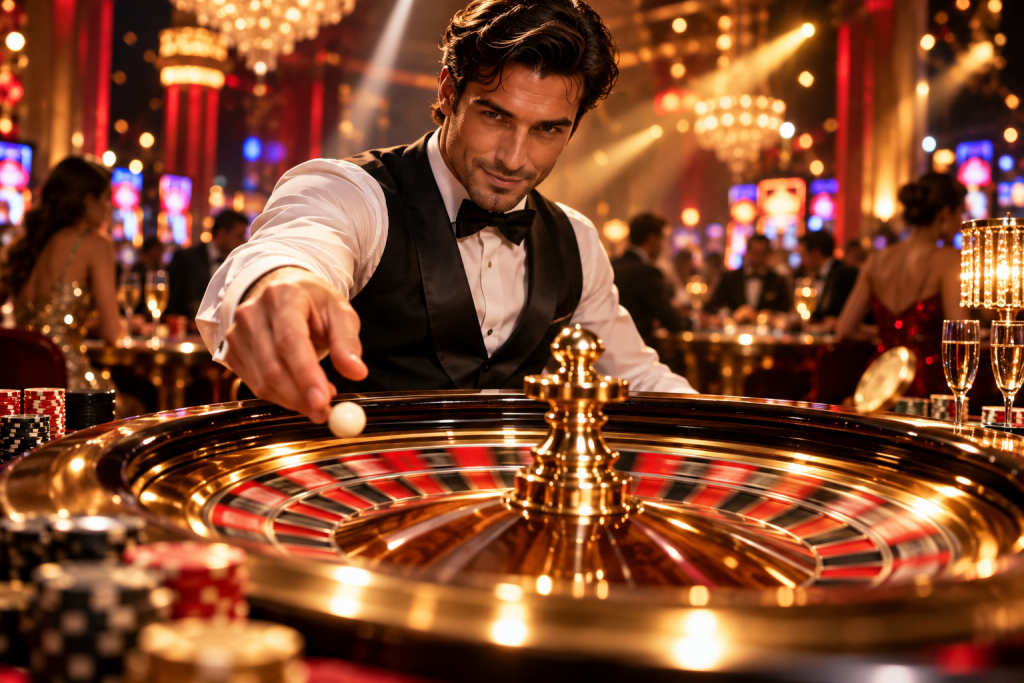
A player walks up to a roulette table with a stack of chips and no cards to memorise, no opponent to read, no decision tree to study. The croupier spins a wheel in one direction and sends a small ball travelling the other way. For the next twenty to forty seconds, nothing the player does matters. That is the core of the game's appeal: a brief window where skill is irrelevant and the outcome belongs entirely to physics and probability.
Unlike blackjack, where a player can make a costly mistake on every hand, or poker, where a weak player gets punished over hours, roulette asks almost nothing of the person sitting at the table. They choose where to put chips, and then they wait. A first-time player and a thirty-year regular face the same wheel, the same odds, and the same silence between the spin and the result. That equality of ignorance is rare in a casino, and it is a large part of why the game keeps drawing people in.
One Game, a Dozen Different Risk Appetites
Roulette does not force every player into the same wager. The layout allows a spread of bets that range from nearly even-money propositions to long-shot single numbers. A cautious player can cover red or black, odd or even, or a column of twelve numbers. A player chasing a bigger payout can bet a single number and wait for the ball to land exactly there. The same spin serves both temperaments.
This flexibility changes how the game feels. A player betting on red experiences frequent small wins and frequent small losses, which keeps the session moving. A player betting on a single number experiences long stretches of nothing followed by an occasional large payout. Neither approach changes the built-in edge, but they produce very different emotional rhythms. The game's design lets a player choose the rhythm that suits them, and many players return because they have found a betting pattern that feels comfortable even though no pattern changes the mathematics.
| Bet type | What it covers | How it plays | Why players choose it |
|---|---|---|---|
| Even-money (red/black, odd/even, high/low) | 18 of the 37 or 38 numbers | Frequent wins and losses, small swings | Longer sessions with less bankroll movement |
| Column or dozen | 12 numbers | Moderate frequency, larger payout | A middle ground between caution and ambition |
| Six-line or corner | 6 or 4 numbers | Less frequent wins, bigger payouts | More action than even-money without a single-number wait |
| Single number | 1 number | Rare wins, large payout | The thrill of a long-shot hitting |
The table above shows why two people at the same wheel can be having completely different experiences. One is grinding out small results on the outside bets; the other is waiting for one number to change their evening. The game accommodates both without either needing to learn a new ruleset.
Losses Are Priced Into the Design
Every bet on a roulette layout carries a house edge. On a European wheel with 37 pockets, a bet on a single number pays 35 to 1, but the true odds against hitting that number are 36 to 1. That one-unit gap is the operator's mathematical advantage, and it is present on every spin, every bet, every session. The American layout adds a double-zero pocket, making 38 pockets and widening the gap further.
None of this is hidden. The wheel is visible, the payouts are printed on the table, and anyone can count the pockets. Players who understand the edge still play, because the price of the edge is the cost of the experience: the spin, the anticipation, the occasional win. What the edge means in practice is that over a large number of spins, the player's expected result is a slow loss at a rate determined by which bets they make. Short sessions can end ahead, sometimes well ahead, and those sessions are memorable. The long-run average is what it is, and no betting pattern changes it.
The Social Ritual Around the Wheel
Roulette is one of the most visible games in any casino. The wheel sits in the middle of the action, the croupier runs the table with a set sequence of calls and movements, and the other players' chips crowd the layout. A winning number produces a collective reaction that a slot machine cannot replicate. Players who never speak to each other still share the same moment when the ball drops.
That ritual matters. Many people play roulette not because they believe they will beat the wheel but because the table is an event. The spin gives a group of strangers a shared outcome every minute or so. The croupier's rhythm, the placement of chips, the pause before the result is announced — these are part of what the player is buying. The house edge is the admission price for that experience.
What the Player Controls
A roulette player controls very little, but the few things they do control shape the session. They choose which wheel to play: a European single-zero layout carries a smaller edge than an American double-zero layout, because the extra pocket on the American wheel increases the operator's advantage on every bet. They choose which bets to place: even-money bets on a European wheel lose less slowly on average than single-number bets, though the difference is not dramatic. They choose how many spins to play and how much to stake per spin.
They do not control the outcome of any spin, and they cannot influence where the ball lands. A player who has lost five spins in a row is not due for a win. The wheel has no memory, and each spin is independent of the last. Betting systems that increase stakes after losses do not remove the edge; they redistribute the timing of wins and losses, often creating larger losses when a losing streak runs long. The honest way to describe roulette strategy is that it is a method for managing how much is wagered and for how long, not a method for changing the expected result.
Why the Game Endures
Roulette has survived for more than two centuries because it offers something that skill-based games cannot: a complete suspension of responsibility for the outcome. The player makes one decision, then watches. The wheel does the rest. That is a form of entertainment, and for many people it is worth the expected cost.
The game also rewards patience in a way that feels fair. A player who bets the same small amount on red for an hour will see the balance move up and down in small steps. They will rarely be wiped out on a single spin, and they will rarely double their money on one either. That steadiness is comfortable. A player who wants more drama can move to the inside bets and accept the longer dry spells. The game lets each person find their own level of tension, and that is a rare quality in a casino product.
FAQ
Is roulette a good game for beginners?
Roulette is easy to learn because the rules are simple and the dealer handles the mechanics. A beginner can place a bet on red or black without knowing anything else about the game. The trade-off is that every bet carries the same built-in edge, so a beginner is not at a strategic disadvantage compared with an experienced player — but neither is anyone at an advantage.
Do some roulette bets give better odds than others?
On a European wheel, the house edge is the same on most bets, but the American double-zero layout increases the edge across the board. The practical difference between bets is volatility: even-money bets produce frequent small results, while single-number bets produce rare large ones. A player choosing between them is choosing a rhythm, not a better deal.
Why do people keep playing when the odds are against them?
Most people play roulette for the experience rather than as a plan to make money. The spin creates tension, the table is social, and the occasional win is genuinely exciting. The expected loss over time is the price of that entertainment, and many players accept it the same way they accept paying for any other leisure activity.
If you or someone you know is struggling with gambling, help is available. Contact the National Problem Gambling Helpline at the helpline printed in the footer below for confidential support, or visit NCPGambling.org for resources and information. Please play responsibly and within your limits.
Play responsibly
Gambling should be treated as paid entertainment, never as a way to earn income or recover losses. 1-800-MY-RESET (1-800-697-3738)
18+ or 21+ depending on where you are; follow the minimum age that applies to you.
This article is general information about how these mechanics work. It is not legal advice and not a recommendation to gamble or to use any particular operator. Availability and legality differ by jurisdiction — check the rules that apply where you are.