
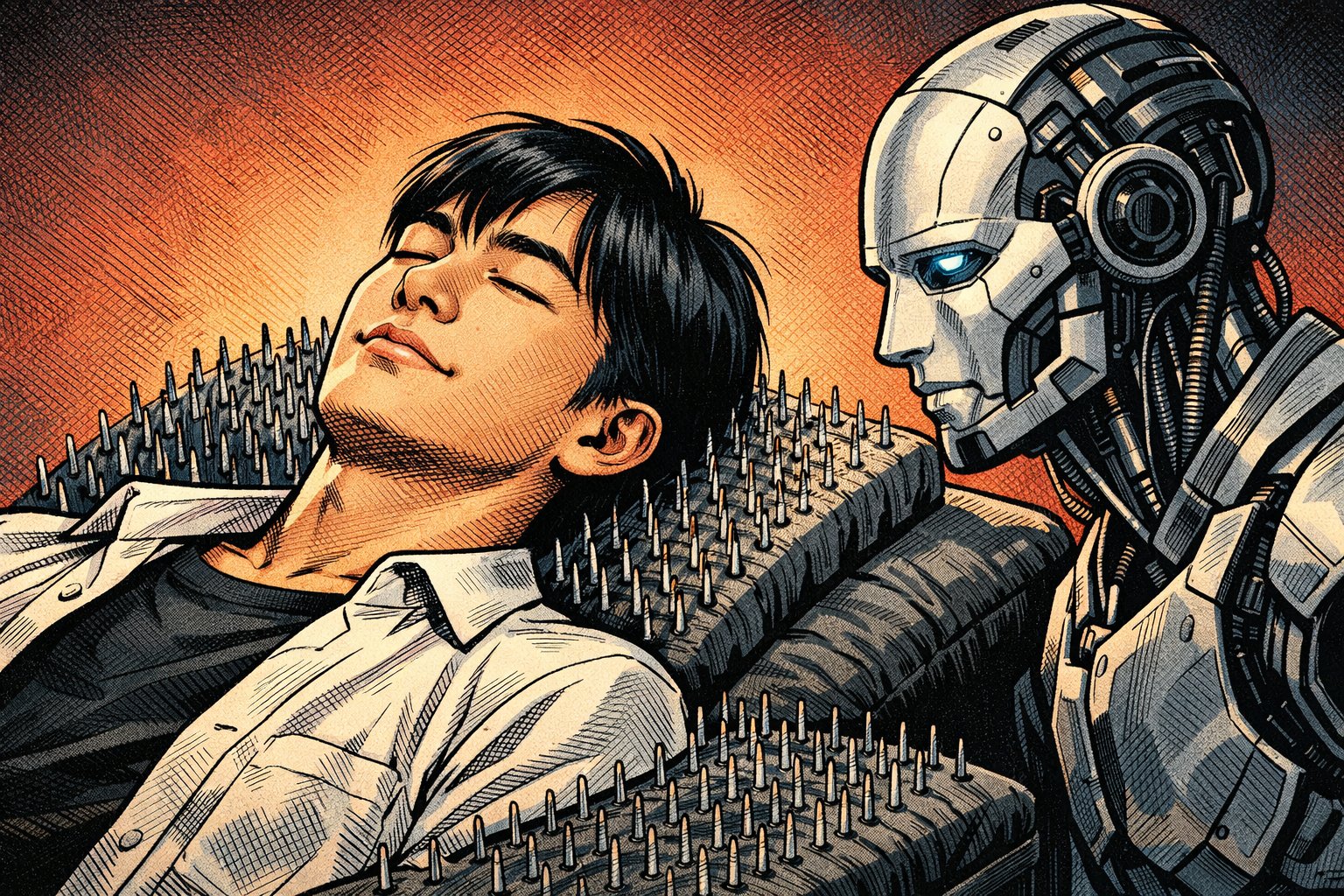
Every year when Taiwan's college entrance exam results come out, the debate between humanities and STEM majors reignites. On an island that prides itself on tech manufacturing, the saying 'STEM is the highway, humanities are hell mode' has long reflected market realities. But with the AI wave sweeping the globe, a harsher argument emerges: if humanities were already hell mode, AI has cranked the difficulty to an unprecedented level.
Past 'Hell Mode': Structural Wage and Industry Disparities
Before discussing AI's impact, it's essential to understand why humanities were called 'hell mode.' Two structural issues stand out: wage ceilings and industry demand asymmetry. Taiwan's economy relies heavily on tech and manufacturing, giving STEM graduates clear career paths and relatively high starting salaries. In contrast, traditional humanities disciplines—literature, history, philosophy, sociology, anthropology—offer limited positions (researchers, teachers, cultural workers), and most have flat salary growth. Second, skill substitutability and market saturation: many humanities graduates end up in low-barrier roles like administration, marketing, planning, and editing, where supply far exceeds demand, leading to intense competition and a cycle of low pay and long hours.
AI's 'Dimension Reduction Strike': Text Processing Becomes a Cheap Commodity
Many debate whether AI will gain consciousness or rule the world, but they miss the urgent reality: in language processing and content generation, AI has leapfrogged beyond catching up. Writing commercial copy, summarizing meeting notes, drafting legal documents, translating between languages, generating news reports, creating stories—these skills once considered the core of 'text workers' are now being replicated, optimized, and surpassed by AI. AI can digest massive data and produce coherent, well-structured text in seconds. Jobs that rely solely on organizing, arranging, and polishing text are seeing their value rapidly diluted.
Case Study: The Legal Profession—Efficiency Revolution and Value Reshaping
The legal industry illustrates this transformation clearly. Can AI replace lawyers entirely? Not yet—lawyers also need strategic thinking, human insight, courtroom improvisation, and client communication. However, AI has already become an 'army of associate lawyers' for top practitioners. Previously, drafting a complex litigation brief—from researching precedents to finalizing arguments—could take 8 to 10 hours of focused work. Today, a lawyer skilled with AI tools can have AI produce a draft in tens of minutes, then devote saved time to higher-value strategy, business development, or client reassurance. What once took a day can now be done in two to three hours with higher quality. This means the M-shaped market for legal services will accelerate sharply: top lawyers multiply their output, handle more cases at lower cost, and gain exponential competitive advantage. Meanwhile, those who depend on repetitive legal document processing find their living space squeezed—AI does the work faster and cheaper.
Beyond Lawyers: A Shared Challenge for All Text Workers
This structural unemployment driven by efficiency is not limited to law. Journalists, editors, translators, copywriters, research assistants—everyone whose core skill is 'producing text' faces the same challenge. A team that once required several copywriters for different marketing needs may in the future need only one strategy director who knows how to command AI. Translating a book that once took months may become AI first-pass plus professional polishing as the norm, slashing demand for pure translation labor. When the marginal cost of 'producing text' approaches zero, the market will no longer pay a premium for mere writing.
Choosing a traditional humanities major today carries higher risk than ever. This is not to deny the value of humanistic literacy—critical thinking, historical depth, understanding of human nature are more important than ever. But these qualities alone do not easily translate into market value. If after exam results you still choose humanities, your goal should not be to become a 'text producer,' but a 'creator of ideas' and a 'master of tools.' The path is harder, but only thus can you find an irreplaceable position in the coming structural upheaval.