
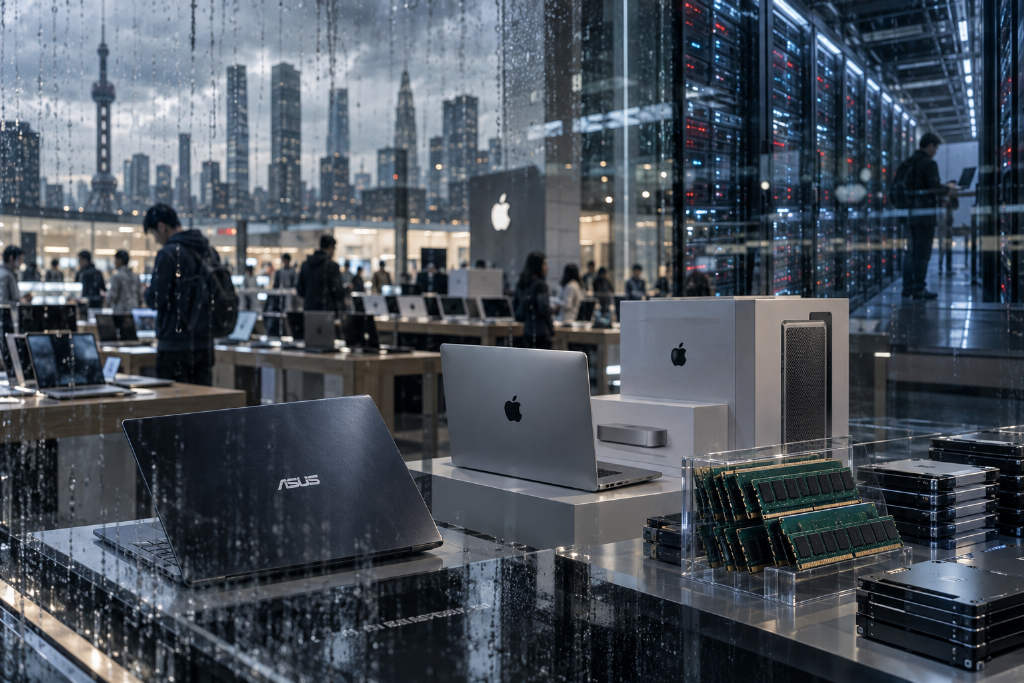
Global PC shipments fell hard in the third quarter of 2026, despite the fact that this period is usually a seasonal sweet spot for the industry. In a preliminary release dated Oct. 8, International Data Corporation (IDC) said worldwide traditional PC shipments, covering desktops, notebooks, and workstations, totaled 62.7 million units, down 20.1% from 78.5 million units a year earlier.
Shipments were also down from 69 million units in the second quarter, a sequential drop of 9.1%. So the market moved about 15.8 million fewer PCs than it did in the same quarter last year. And this happened in a quarter that normally posts stronger demand than Q2.
IDC Research Director Jitesh Ubrani said, "What we are seeing now is the result of heavy pull-ins in the first half of the year. Vendors and channels stocked up aggressively early in the year in an effort to get ahead of price increases, and that disrupted the usual seasonal pattern in which the third quarter is larger than the second." In plain English, the market is now feeling the effects of those first-half pull-ins, when vendors and channel partners loaded up on inventory before expected price hikes, throwing off the normal pattern where Q3 beats Q2.
IDC linked the weak quarter to strategic pull-ins across the industry, driven by ongoing supply tightness and higher prices tied to AI data center expansion. Put simply, demand got dragged into the first half. That left the channel carrying too much inventory in the second half.
Omdia reported an even steeper decline
Omdia released its own numbers a day later, and they looked worse. Using its own methodology across the same three product categories, the firm put third-quarter shipments at 58.1 million units, down 21.2% year over year. It said this was the biggest decline since the first quarter of 2023.
The gap between IDC and Omdia came to about 4.6 million units. That reflects different counting methods, not a fight over the trend. Both data sets show a global PC market that shrank by about one-fifth in the third quarter.
AI server buildouts pushed up DRAM and SSD costs
The slowdown was not just about when demand showed up. It was also about cost. IDC said tight supply, combined with AI data center expansion, pushed prices higher and lifted the cost of finished PCs.
TrendForce said in a Sept. 30 release that DRAM suppliers are still giving advanced-node capacity priority to high-performance server products, leaving the broader market undersupplied. Flash memory used in SSDs is getting pricier too.
Omdia Chief Analyst Ben Yeh said DRAM and SSD now make up close to 40% of a PC’s total cost, versus a more typical level of about 15%, and that prices have risen more than fourfold. He said repeated price hikes by PC makers over the past several quarters still have not fully made up for those component cost increases.
Omdia showed the change with a mainstream model that sold for about $699 in the first quarter of 2025. Back then, the bill of materials was $435. By the third quarter of 2026, that bill of materials had climbed to $699. Same number. Which means component cost alone had risen to equal the full selling price of that class of machine from a year and a half earlier.
Lower shipment volume did not always mean weaker revenue
Shipping fewer units did not automatically mean lower revenue. In its fiscal third-quarter earnings release on Aug. 26, for the quarter ended in late July, HP said revenue from its personal systems segment rose 18% year over year to $11.8 billion, even as unit shipments fell 16% during the same period.
That left HP selling fewer machines at a higher average selling price. HP Chief Financial Officer Karen Parkhill said on the earnings call that memory and storage will account for an even larger share of bill-of-materials costs going forward.
ASUS and Apple lost less share than peers and gained market share
Among the top vendors, IDC said Lenovo, HP, and Dell all fell faster than the broader market. Together, those three companies gave up 4.2 percentage points of market share. IDC said that may reflect the aftereffects of earlier pull-ins. HP took the hardest hit, with shipments down 30.9% year over year.
Apple and ASUS held up better. IDC said Apple shipped 5.9 million units in the third quarter, down 11.3% from a year earlier, while its market share rose from 8.5% to 9.5%. ASUS shipped 5.5 million units, down 8.6%, and its share increased from 7.6% to 8.7%, the smallest decline among the top five brands.
IDC and Omdia did not line up exactly on Apple’s shipment figure. IDC said Apple shipped 5.9 million units, while Omdia estimated 6.77 million. Even so, both firms landed in the same place on the big picture: HP fell the most, ASUS fell the least, and both Apple and ASUS gained market share.
Premium product mix helped cushion the impact
Omdia said Apple’s premium positioning softened the blow from rising prices.
ASUS said in its Aug. 12 investor briefing that high-value products, including gaming systems, premium models, Copilot+ PCs, and commercial PCs, made up 65% of revenue in its PC business. The company said that product mix improved its ability to absorb higher component costs. In the second quarter, ASUS reported shipment growth of 20% year over year, making it the only company among the top five brands and the only one in the Windows camp to post positive growth.
Omdia’s chart showed that from early 2025 to the third quarter of 2026, bill-of-materials costs for entry-level PCs rose by about 70%, while flagship models priced above $1,500 rose by about 54%. Lower-priced machines saw the bigger cost jump, and buyers in that segment are usually more sensitive to price. Brands focused on higher-priced products had a better shot at passing those costs along.
IDC does not expect prices to return to last year’s levels soon
For buyers, IDC’s message was blunt. Ubrani said promotional activity and short-lived pockets of relief may show up as channels try to clear excess inventory, but he added, "We do not expect prices to get close to the levels of a year ago, and prices will remain high," meaning prices are not expected to get anywhere near where they were a year earlier and should stay elevated.
Supply conditions are not loosening either. TrendForce expects contract prices for commodity DRAM to rise another 10% to 15% in the fourth quarter of 2026, while NAND Flash is projected to increase 15% to 20%. The rate of increase may slow. But prices are still heading up.
The report also said brands are cutting SSD capacity in mainstream models to control costs, so buyers may need to pay attention to storage capacity instead of looking only at model names and sticker prices.
Research firms see more weakness ahead
Omdia expects fourth-quarter 2026 PC shipments to fall another 24% year over year, followed by a 7% decline for full-year 2027. IDC also warned that a worsening macroeconomic environment is the biggest risk, and said the outlook for the coming quarters could get worse before it gets better.



