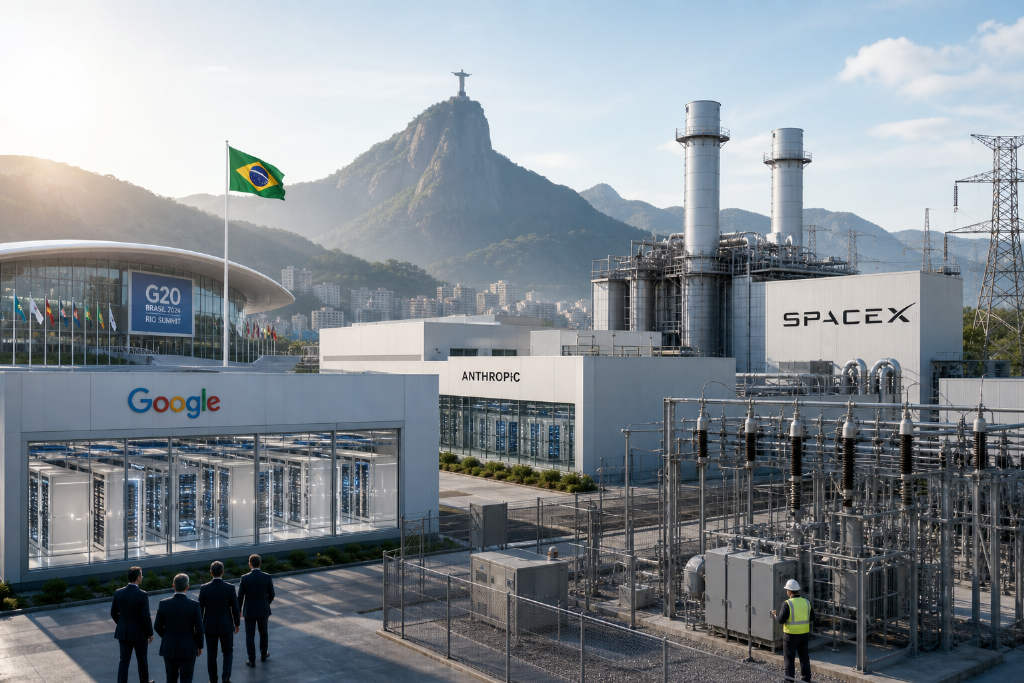
In his speech at the G20 summit, Elon Musk warned that global AI development is approaching a critical power bottleneck, predicting that the electricity consumption for AI chips will face a shortfall of at least 15 gigawatts by 2027. He attributed this to the mismatch between the rapid growth of AI chip production capacity (40-50% annually) and the slower expansion of electricity supply outside China (10-20% per year). Musk noted that companies such as Google and Anthropic have already begun renting computing capacity from SpaceX, which has built its own power plants to quickly scale up. He also mentioned that China has abundant electricity resources but is constrained by GPU export restrictions, while other countries could potentially establish new revenue streams by building power infrastructure and hosting AI data centers.
At the G20 summit, Elon Musk said global AI development is running into a power bottleneck. His forecast was blunt: by 2027, electricity demand for AI chips will come up short by at least 15 gigawatts. He pointed to the mismatch in growth rates too. AI chip production capacity is rising 40-50% a year, he said, while electricity supply outside China is growing just 10-20% annually. That gap, he argued, will turn into a core constraint.
Musk also said companies such as Google and Anthropic have already leased computing power from SpaceX, which built its own power plants so it could expand fast. And he said China has plenty of electricity, but GPU export restrictions are holding it back. Other countries, he added, could open up new tax revenue streams by expanding power infrastructure and hosting AI data centers.
This article was originally published by Bit.Fan. For more cryptocurrency news and market insights, visit www.bit.fan. Disclaimer:
The market information, project data, and third-party content displayed on this platform are for industry information sharing only and do not constitute any form of investment advice or return commitment.
Cryptocurrency trading carries high risks. Users should fully assess their risk tolerance and make independent decisions. All profits, losses, and legal responsibilities are borne by the users themselves.