
The argument that sparked the debate
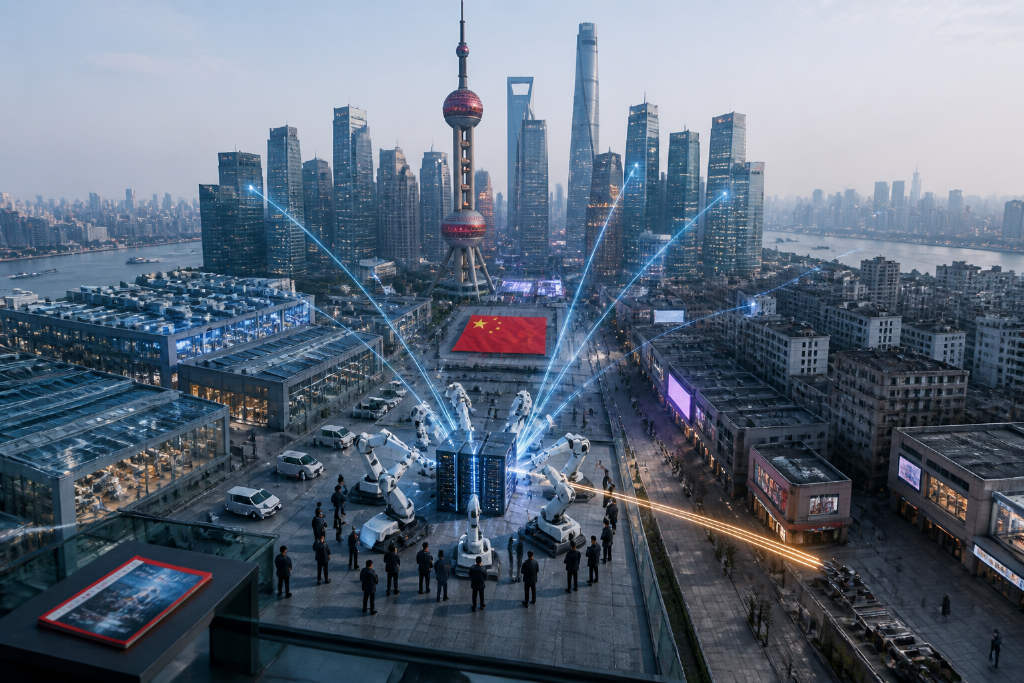
The Economist recently published a commentary that drew sharp reactions in China. The article said China has made striking progress in robotics, artificial intelligence, new energy and advanced manufacturing, but household consumption remains weak, corporate profits are under pressure and market confidence has not fully recovered. It went further, arguing that China’s determination to win the technology race may have distorted resource allocation, sending large amounts of capital, talent and policy support into frontier technologies without fully addressing weak demand in the broader economy.
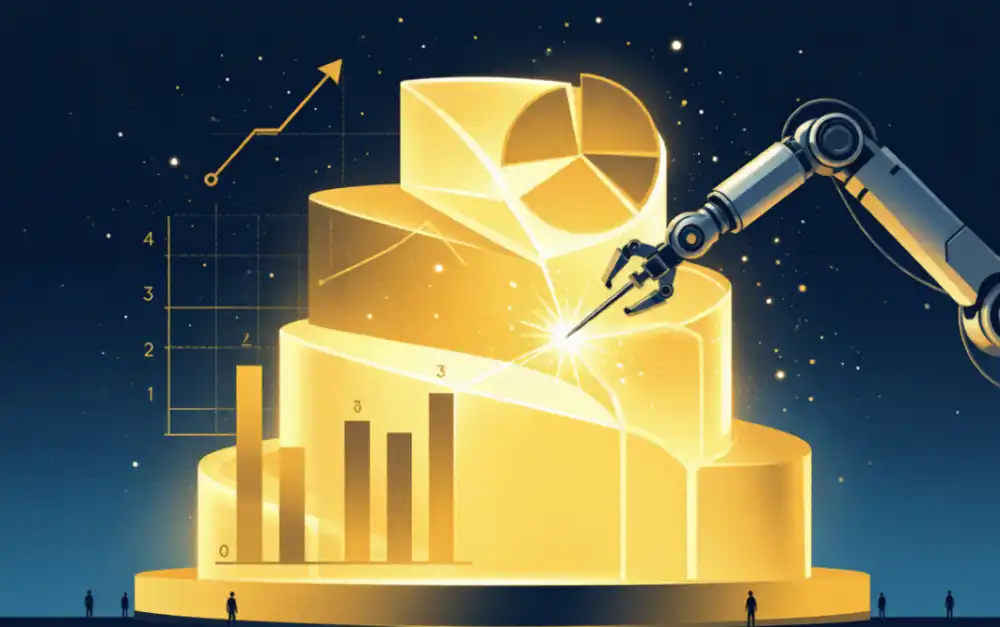
On the surface, that sounded like a critique of China’s push into robots and AI. But stripped of ideology, the article points to a larger question: when machines become more capable, how do people share in the value they create?
AI is changing the logic of wealth distribution
For more than two centuries, industrial society has rested on a fairly stable model of wealth creation and distribution. Capital supplied funding, companies organized production, workers contributed labor, and wages allowed households to take part in economic growth. Tax systems, pension schemes, social security networks and consumer markets all depended on labor income rising over time.
Industrial revolutions kept raising productivity, but machines were still tools. Steam engines boosted physical labor, assembly lines improved manufacturing, and computers made office work faster. Human beings remained the irreplaceable core of production. Productivity gains could therefore translate into more jobs, higher wages and stronger consumption, creating a self-reinforcing cycle. The rise of the Western middle class over the past century was, in large part, the result of that cycle.
AI is changing that equation.
For the first time in history, tools created by humans are beginning to substitute for cognitive labor. Steam engines replaced muscle, robots replaced repetitive labor, and large language models plus agentic systems are now moving into knowledge work. Anthropic has disclosed that more than 80% of its internal code is generated by Claude. Microsoft, Google and Meta have already begun relying heavily on AI assistance in research and development. Legal services, finance, consulting, education, media and design are all feeling the impact.
- More than 80% of Anthropic’s internal code is generated by Claude
- Large models and agent systems are entering knowledge work
- Legal, finance, consulting, education, media and design are being reshaped
If AGI eventually arrives, machines will not only handle physical labor. They will also take on large portions of knowledge work, management work and even some decision-making tasks. At that point, economies could keep expanding, corporate profits could keep rising and productivity could keep improving, while the number of people directly involved in value creation keeps shrinking.
For decades, the biggest fear around technological change was unemployment. Over the long run, though, distribution may matter more than jobs alone. Consumption comes from income, and income comes from employment. If more labor is replaced by machines and no new source of income is created, the economy faces a basic contradiction: firms can produce more, machines can work more efficiently, but consumers may see little growth in purchasing power, or even a decline. Keynes’s old concern about demand shortfalls could reappear in a new form in the AI era.
China’s real challenge is the transmission channel
Seen from that angle, The Economist’s criticism of China captures a symptom but misses the core issue. China’s problem is not that it has too many robots or that AI is advancing too quickly. On the contrary, as the old growth model driven by real estate fades, China has to rely on new productive forces — AI, advanced manufacturing, robotics, new energy and semiconductors — to find a new engine of growth. Giving up on technological innovation would only increase the risks around economic transition.
The real question is how China can connect the chain from technological innovation to corporate earnings, household income and consumption growth.
China now has the world’s most complete industrial system, and it continues to make progress in electric vehicles, solar power, batteries, industrial robots and AI. At the same time, consumer confidence remains weak, price competition has intensified in some sectors and companies remain hesitant to invest. That suggests supply-side capability and demand creation are still not moving in sync.
Weak demand is not simply a matter of people refusing to spend. It reflects unstable income expectations, damaged balance sheets and social security systems that still need improvement. In other words, the issue is not technology itself, but how the productivity gains from technology spread across society.
The distribution problem is already global
This is no longer just a China issue. It is visible around the world. Over the past few years, the U.S. tech megacaps have accounted for most of the S&P 500’s gains. OpenAI, Anthropic, Nvidia and SpaceX have created extraordinary wealth stories, and the combined market value of the world’s 10 largest technology companies has surpassed $20 trillion. At the same time, labor’s share of U.S. GDP has been falling for years, while wealth keeps concentrating among a smaller group of people who control data, algorithms, compute and capital.
AI is creating a bigger pie, but fewer people are sitting at the table. That is why more economists are now talking about “AI dividend sharing.”
Three paths could emerge. The first is the traditional capitalist path, where machines belong to capital, most AI-generated profits go to shareholders, and redistribution happens later through taxes and welfare. The United States is broadly following this route. The second is a state-capitalist path, where governments use sovereign funds, public capital and strategic investment to help build AI infrastructure so the public can indirectly share in the returns. Discussions around government ownership stakes in leading AI companies, pushed by Donald Trump, already resemble that idea. The third is more experimental: digital sovereign wealth funds, universal shareholding schemes, or a new form of basic income for the AI age, allowing society to directly share the gains from intelligent systems.
Oil defined the 20th century. Data, compute and algorithms may define the 21st. If oil revenue can feed public wealth funds, then should AI’s excess returns also be partly returned to society? That question is set to become one of the defining policy debates of the coming years.
Who gets the wealth AI creates
For China, this may also be a strategic opening. Its advantages are not limited to a large market, a complete industrial chain and rapidly developing AI technology. It also has the institutional capacity to coordinate industrial policy, social security and long-term strategy.
The country’s real task is not to slow robot development. It is to turn the wealth created by robots into higher household income, stronger consumption and better social protection.
That means future policy will need to do more than support AI, robotics and advanced manufacturing. It will also have to advance income distribution reform, improve the social security system, build vocational retraining programs and explore mechanisms for sharing AI-generated gains. Technology spending will need to move beyond pure capacity expansion and industrial competition toward broader social value.
In the end, The Economist was not really asking whether China should develop robots. It was asking where the wealth created by robots will go. The same question applies to the United States, Europe, Japan and every country that is moving into an intelligent society.
The next 20 years may not be decided only by who has the best models, the most robots or the largest compute centers. They may be decided by who can build a distribution system that fits the AI economy. When machines start working, what will humans earn? When AI creates value, how will people own that value? When productivity rises faster than ever, how will the gains turn into broader social welfare? That is the central political economy problem of the AI era.
This article was originally published on the WeChat account AI时代我的人生下半场, written by Dr. Xi Chunying.