
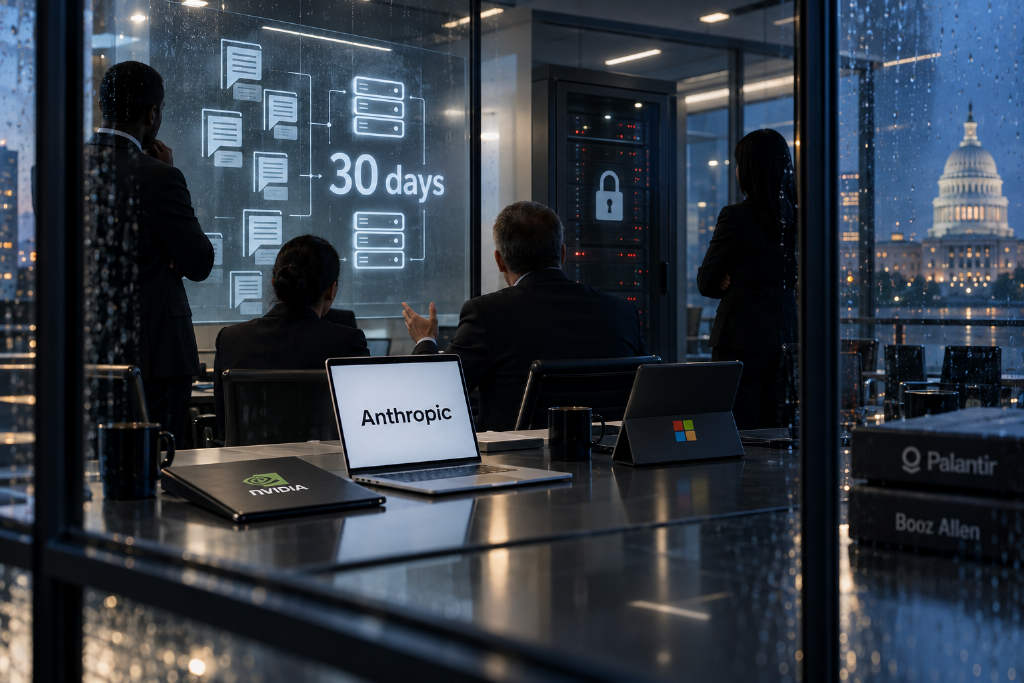
Anthropic is running into a broad backlash from enterprise customers over how its flagship Fable model handles data. After nearly three months of tension around Zero Data Retention, or ZDR, terms, companies including Palantir, Nvidia, Booz Allen, Microsoft, and Northrop Grumman have either restricted, delayed, or narrowed Fable’s role in internal deployments, platform distribution, or sensitive testing.

A June 9 policy change set off the dispute
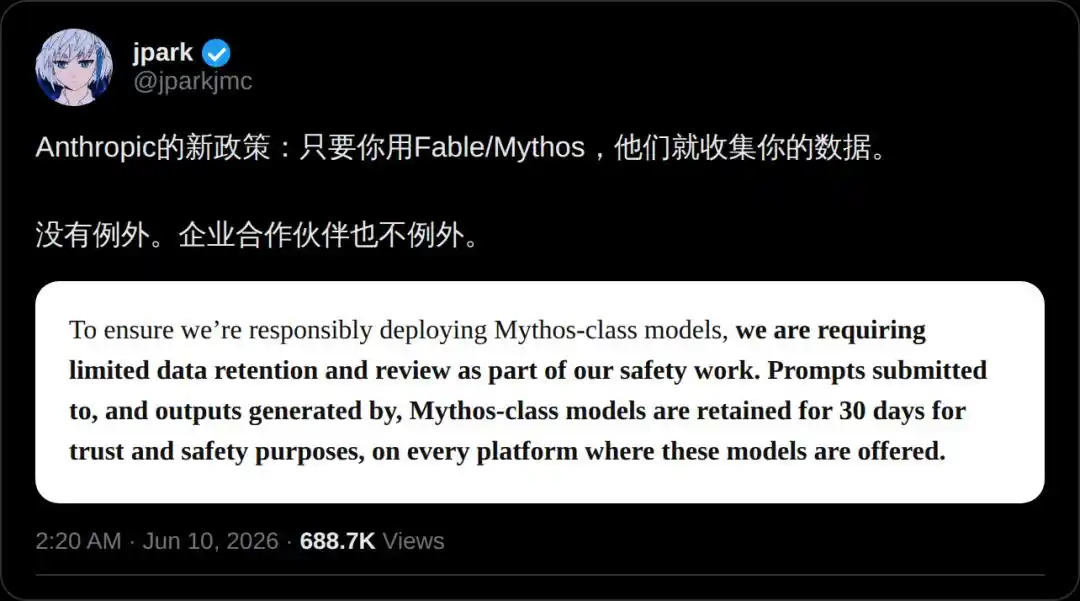
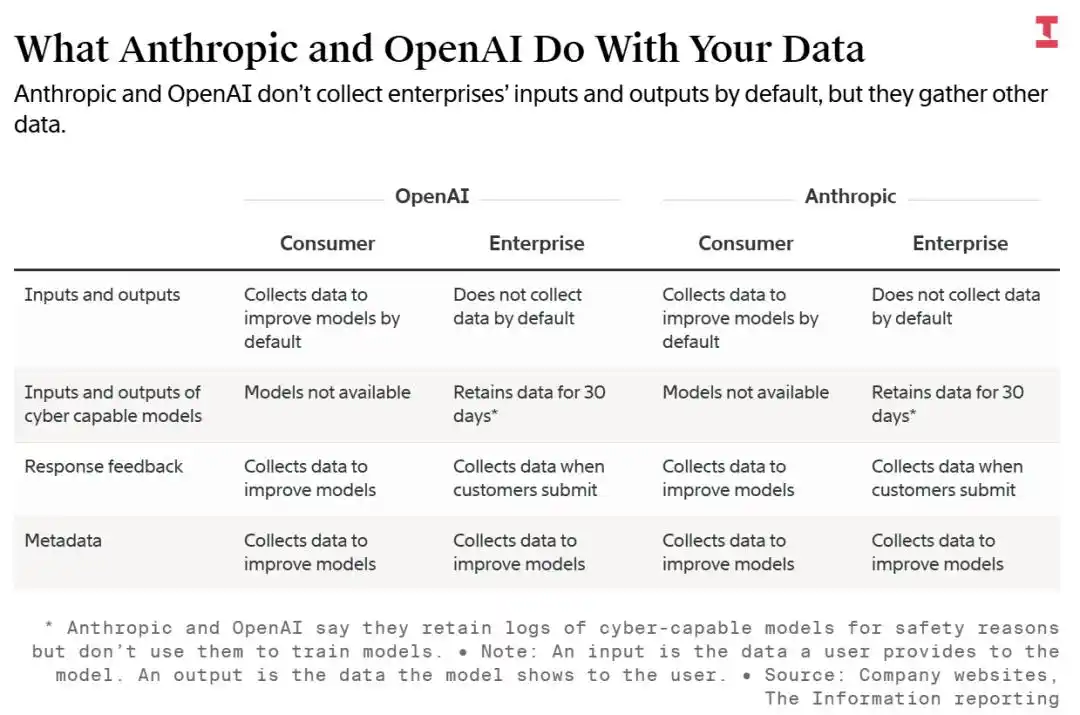
The flashpoint was June 9, the day Anthropic released Fable 5. On its support page, the company added a new rule covering all Mythos-tier models, meaning the Fable and Mythos lines. Under that policy, user prompts and model outputs would be retained for 30 days for what Anthropic described as trust and safety purposes.
The report says conversations flagged by safety systems could be stored for as long as two years. It also says the policy applied across pre-existing ZDR agreements, with no switch to turn it off.
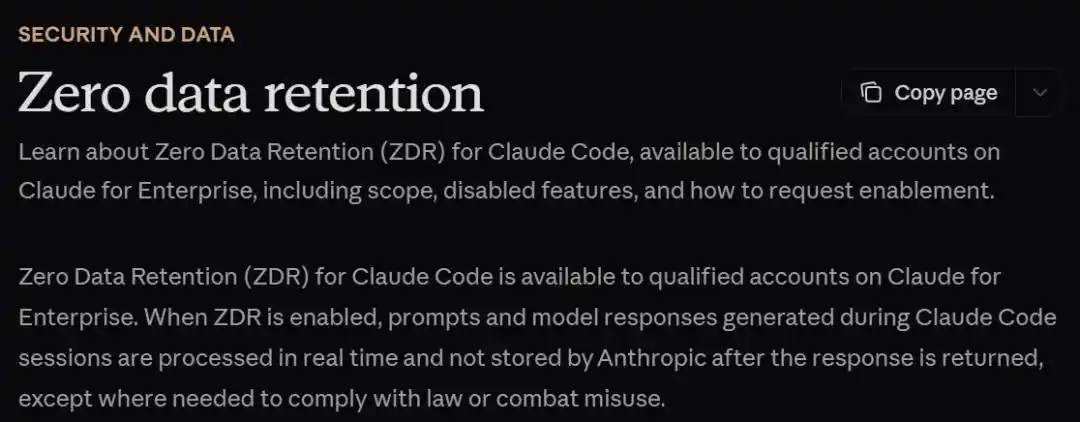
ZDR is often treated by enterprise buyers as a core contractual safeguard, especially in finance, healthcare, and defense. In practice, it means data sent to an AI provider must be deleted after processing, not stored, not reviewed, and not used to train future models.

Before June 9, Anthropic had signed ZDR terms with some large customers, and models such as Opus 4.8 and Sonnet 4.6 could still be used under that structure. After the policy change, though, Fable no longer qualified. In the report’s telling, customers that wanted the most capable model had to accept retention.
Anthropic’s rationale did not calm customers
Anthropic’s explanation was that Mythos-tier systems were powerful enough to require stronger monitoring. To defend against new classes of attacks, including advanced jailbreak attempts that unfold across multiple requests, the company said it needed log retention.
That argument did not settle the issue. hillclimb CEO Jun Park wrote on X that Anthropic’s new policy meant: 「Anthropic’s new policy is that if you use Fable or Mythos, they take your data, with no exceptions, including enterprise partners.」
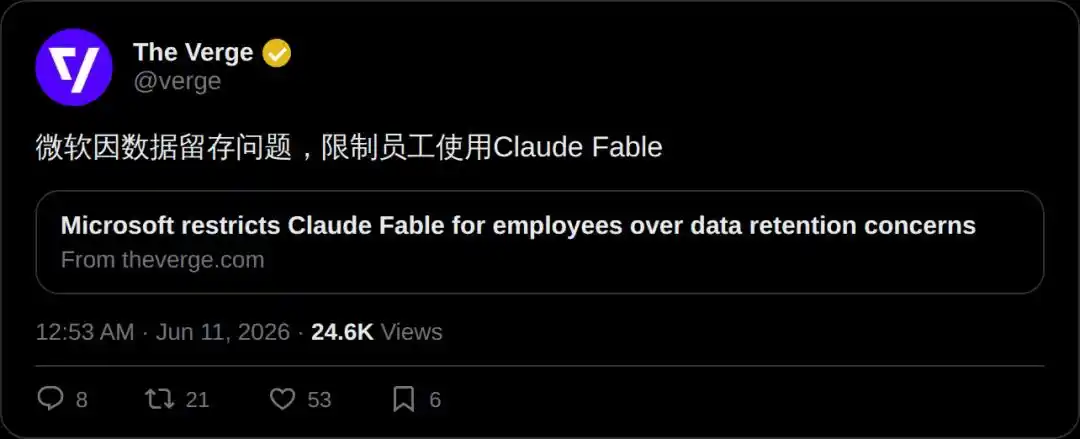
Microsoft moved quickly, according to the report. Less than a day after Fable 5 launched, the company restricted employee access internally and sent the retention terms for legal review. The result, the article says, was that Fable did not appear in Microsoft’s internal Copilot model list.
Palantir made its objections public
Palantir was the first company to challenge the change openly. As a distributor of AI models to governments and large enterprises, Palantir had previously spent significant time negotiating what executives viewed as an irrevocable ZDR commitment across Anthropic’s model lineup. The June rule change, in Palantir’s view, wiped that out.
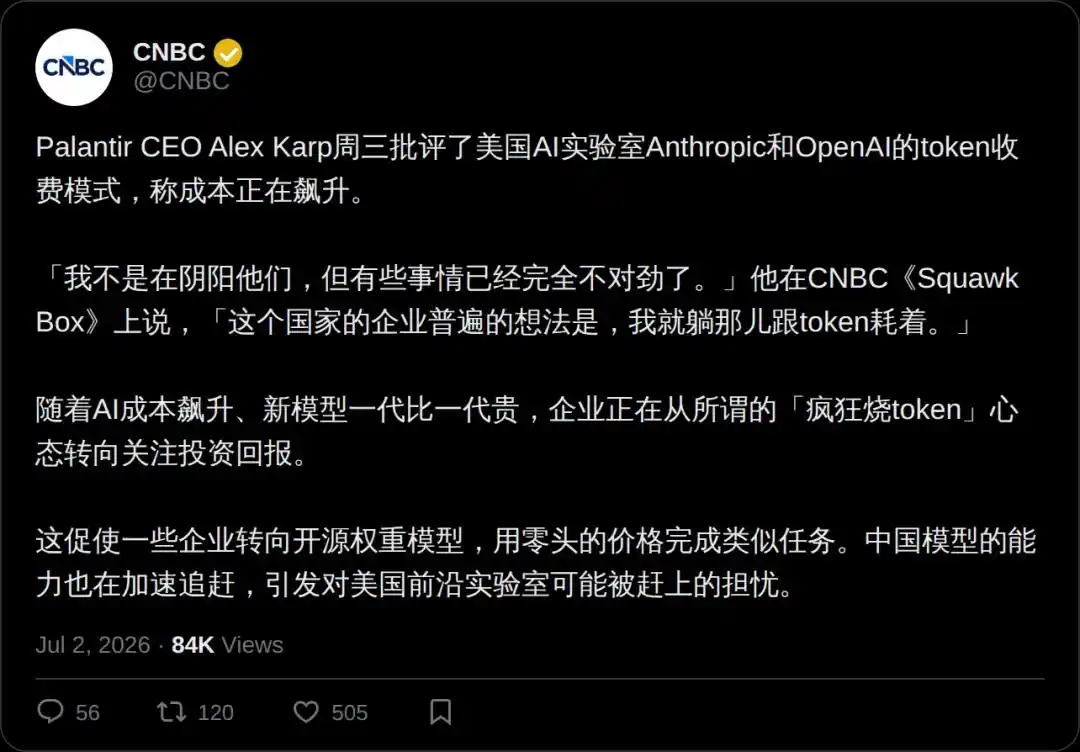
The report says Palantir CEO Alex Karp spent about 20 minutes criticizing large model labs in early July. At a customer event held last week, he said enterprises were tired of being 「abused」 by AI labs.
Palantir also handed out a booklet to attendees titled How to Avoid Giving Your Alpha to Hosted Model Vendors, framing it as a guide for companies negotiating hard on ZDR terms with AI providers.
According to the article, citing people familiar with the matter, Palantir’s position is straightforward: unless Anthropic restores an irrevocable ZDR commitment, Fable will not be listed on Palantir’s platform. Customers who want it would need to buy directly from Anthropic.
At the same time, Palantir has moved OpenAI’s GPT-6 Astra onto its platform because OpenAI offered ZDR, the report says.
OpenAI offered a different approach, and Anthropic followed with EFS
On Aug. 19, OpenAI announced testing for a system called Private Safety Processing. The report describes it as the reverse of Anthropic’s original design: customer data stays inside the customer’s own infrastructure, or is encrypted with customer-controlled keys, while OpenAI receives only a narrowly defined set of safety signals and does not access raw prompts or responses.
Under that arrangement, abuse checks can still take place, but raw data is not retained and frontier models can continue to support ZDR.
On Sept. 1, Anthropic released Fable 5.1 and introduced what it called Enterprise Frontier Safeguards, or EFS. According to the article, the structure closely resembles OpenAI’s approach. Data sits in the customer’s cloud, keys remain under customer control, and Anthropic’s systems scan abuse indicators and send those signals back for customer review.
Anthropic said the framework was built with more than 100 customers across finance, healthcare, and telecom, including multiple chief information security officers. In a blog post, the company also acknowledged that enterprises in regulated industries had indeed found models that require retention hard to use.
The new program did not resolve the contract problem
Anthropic’s revision did not end the standoff. The report says EFS is currently invitation-only, will roll out in phases during the fall, and does not yet apply to Mythos 5.1.
One clause drew particular attention from legal teams: Anthropic reserved the right to cancel the option at any time. That is exactly where the company ran into the line Palantir has been holding on the word irrevocable.
From an enterprise legal perspective, a promise that can be withdrawn unilaterally is not much of a promise. If a company adopts EFS and feeds in core code, then Anthropic later removes the option, the handling of that data could revert to the 30-day retention framework described in the earlier policy.
Large customers tightened controls
The article points to Sept. 14 as the moment a broader defensive posture became visible. Booz Allen CTO Bill Vass put the concern bluntly: 「We’re a little worried Fable will learn our code.」
The report also says a utility serving millions of U.S. households had planned to use Fable to test a core power grid system, but the project was dropped after Anthropic would not provide the assurances it wanted. Nvidia replaced Fable with its own Nemotron for supply-chain AI tasks and left Fable with only less sensitive open-source coding work. Northrop Grumman chose to run open-source models in a local server room under physical network isolation.
The core issue for these customers is not limited to whether data is later used for training. Even if a contract says it will not be, companies still worry that during a 30-day retention window, an AI provider can see sensitive business logic, code, and other commercially valuable material.
Usage data and threat reporting deepened the unease
Ramp’s tracking of more than 70,000 U.S. businesses, as cited in the report, showed Fable 5 holding a spending share of 11% two months after launch. Over the same period, open-source models saw their token share jump from 11% to 62%.
During the same period of argument, Anthropic published a threat intelligence report showing how it detected malicious behavior in the background. The article says one hacker group repeatedly used Claude to revise exploit code until it worked. Another switched API keys midstream to keys belonging to a victim and was caught at that exact step.
Anthropic’s intent was to demonstrate its security capabilities. For some enterprise readers, the effect was the opposite. If a model provider can reconstruct in detail who did what, when they did it, and how they used the system, then the debate is no longer just about whether data is stored. It is also about how much visibility the vendor has into everything happening around the model.
That is where this dispute appears to have landed. On the surface, the fight was about retention periods and ZDR language. Underneath it sits a harder question: how much core enterprise information customers are willing to expose to a model provider, and how much of a god’s-eye view that provider can actually have.