
WhiteLine Daily, published under WuBlockchain, focused on several developments across AI hardware, funding, and compute deployment.
CXMT says its fifth-generation DRAM platform has entered mass production
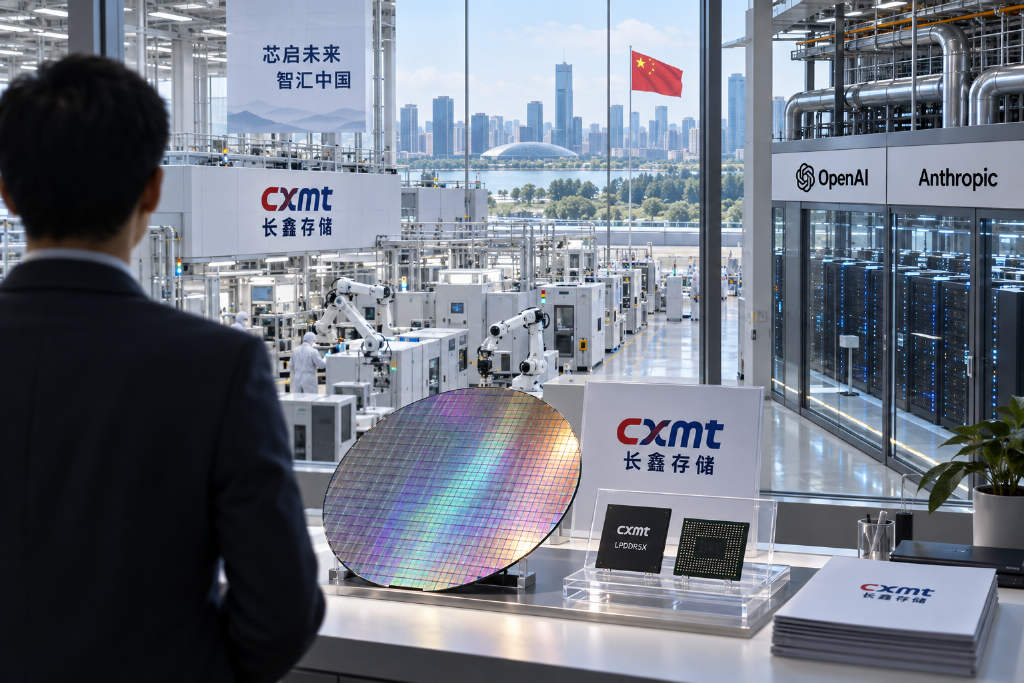
On Sept. 20, Chinese memory chipmaker ChangXin Memory Technologies announced at the World Manufacturing Convention that its fifth-generation DRAM technology platform, G5, has reached mass production. The company also displayed two LPDDR5X chips built on the platform.
According to the disclosed process details, the new manufacturing method uses quadruple patterning and reduces the half-pitch of the active area in the memory array to 11.95 nanometers. Using a standardized 8Gb chip benchmark, the company said die output per wafer is at least 50% higher than on its fourth-generation platform.
The LPDDR5X products shown at the same time carry 24Gb capacity per chip, up 50% from the previous generation of the same category, and are aimed mainly at smartphones and portable electronic devices. The report noted that the output gain is a process metric disclosed by the company and does not mean shipments or profit will rise by the same amount.
WhiteLine Daily's brief take was that the G5 platform could lower unit manufacturing costs by lifting die output per wafer by at least 50%, though actual returns still depend on production yield.
WSJ says Anthropic may move its IPO from October to November
The Wall Street Journal, citing people familiar with the matter, reported that AI company Anthropic plans to shift its initial public offering from an expected October timetable to November this year.
The report said some advisers believe a later listing would let the company show investors its third-quarter financial data, giving a more current picture of operating performance as it competes with OpenAI. It also said the decision to adjust the IPO timing came before the recent public debate over slowing frontier AI development.
For now, November remains a target rather than a final date. The listing schedule could still change, and the company has not formally announced its offering arrangements. WhiteLine Daily said the delay would move the listing plan back by about one month and allow IPO pricing to lean on more up-to-date operating data.
Anthropic and OpenAI are exploring smaller 20 MW to 30 MW data center projects
CNBC, also citing people familiar with the matter, reported that Anthropic and OpenAI are exploring smaller compute deployment partnerships with project sizes of about 20 MW to 30 MW. That comes on top of previously signed data center agreements measured in hundreds of megawatts and even gigawatts.
Anthropic has approached potential partners in the UK and the Nordic region, while OpenAI is evaluating similar opportunities in the Nordics. The two companies have also discussed smaller deployments in the U.S. market, according to the report.
CNBC said smaller projects may help model developers secure usable compute capacity more quickly and reduce the wait for large campuses to be fully built. The report did not disclose counterparties, contract values, or firm delivery dates, and it said the projects have not been confirmed as signed deals.
WhiteLine Daily said the parallel search for smaller compute projects suggests that, beyond large campuses, mid-sized facilities that can obtain power and come online faster also carry commercial value.
Nippon Life plans to double infrastructure loan balance to 2 trillion yen
Nikkei reported that Nippon Life Insurance, Japan's largest life insurer, plans to expand financing for infrastructure projects. Its target is to raise the outstanding balance of those loans from about 1 trillion yen to 2 trillion yen by fiscal 2035, equal to roughly $12.75 billion.
The report said the company will focus on supporting data center construction in the U.S. and is also considering launching domestic data center lending in Japan during fiscal 2026.
The financing is mainly structured as project finance, with debt repaid from cash flow generated by the projects themselves. Nippon Life believes U.S. project finance can offer spreads of more than 2 percentage points on average, which could help improve returns and diversify investments. Reuters said it had not independently verified the report.
The publication's takeaway was that average spreads above 2 percentage points in U.S. project finance are the direct reason Nippon Life is increasing its data center lending exposure in search of higher returns.
Main thread for the day
WhiteLine Daily framed the day's core theme this way: Anthropic is looking to push back its IPO to wait for third-quarter results, while Anthropic and OpenAI are both seeking smaller compute partnerships, and Nippon Life is preparing to expand infrastructure financing tied to data centers.
Its closing point was that model companies are still demanding more compute capacity. The next issues to watch are whether revenue can support valuations and whether data center projects can be delivered on schedule and generate enough cash flow.