
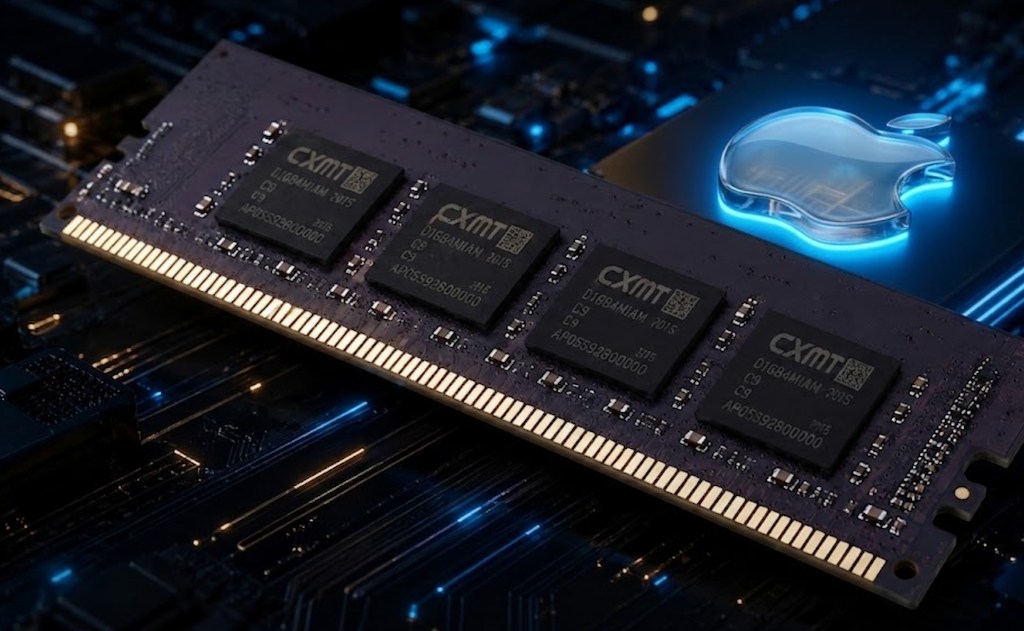
Apple’s push to cut hardware costs by diversifying its supply chain has run into resistance in memory procurement. South Korean media outlet Digital Daily reported that Apple recently held price talks with Chinese memory maker ChangXin Memory Technologies, or CXMT, for memory used in the next-generation iPhone and other smart devices, but CXMT rejected Apple’s request for lower prices.
Price talks with CXMT reportedly failed to bring costs down
According to the report, Apple had hoped to push procurement costs lower to ease pricing pressure on upcoming devices. That effort did not succeed. Industry sources cited in the report said CXMT’s current quotes are already in line with those from Samsung Electronics and SK Hynix, and some products are said to be priced even higher.
Strong domestic demand in China has strengthened CXMT’s hand
Huawei, Xiaomi and other Chinese technology brands have continued expanding smartphone shipments and have signed contracts early to lock in capacity as they try to reduce exposure to U.S. sanctions risk. As a result, CXMT’s memory output has been heavily absorbed by domestic orders in China.
The report said this likely means CXMT has little reason to sacrifice profit in response to customer pressure for discounts or to accept strict quality certification requirements in exchange for lower-priced deals.
HBM shift by Korean suppliers has changed pricing power in standard DRAM
Samsung and SK Hynix have redirected capacity and resources toward higher-margin high-bandwidth memory, or HBM, to meet data center demand. That shift has left CXMT with more pricing power in the standard consumer DRAM market.
In the past, international brands often used lower-cost Chinese components as leverage in negotiations with other suppliers. With memory now in short supply, that tactic is no longer working in the same way.
Next-generation iPhone margins could face added pressure
For Apple, the cost of higher-capacity memory and more advanced chips will directly affect manufacturing costs for the next iPhone lineup. If those costs cannot be controlled, the company’s gross margin could come under pressure.
The market expects Apple may respond by raising prices on some models or by increasing the sales mix of higher-end devices to support overall profitability if component costs keep climbing.