

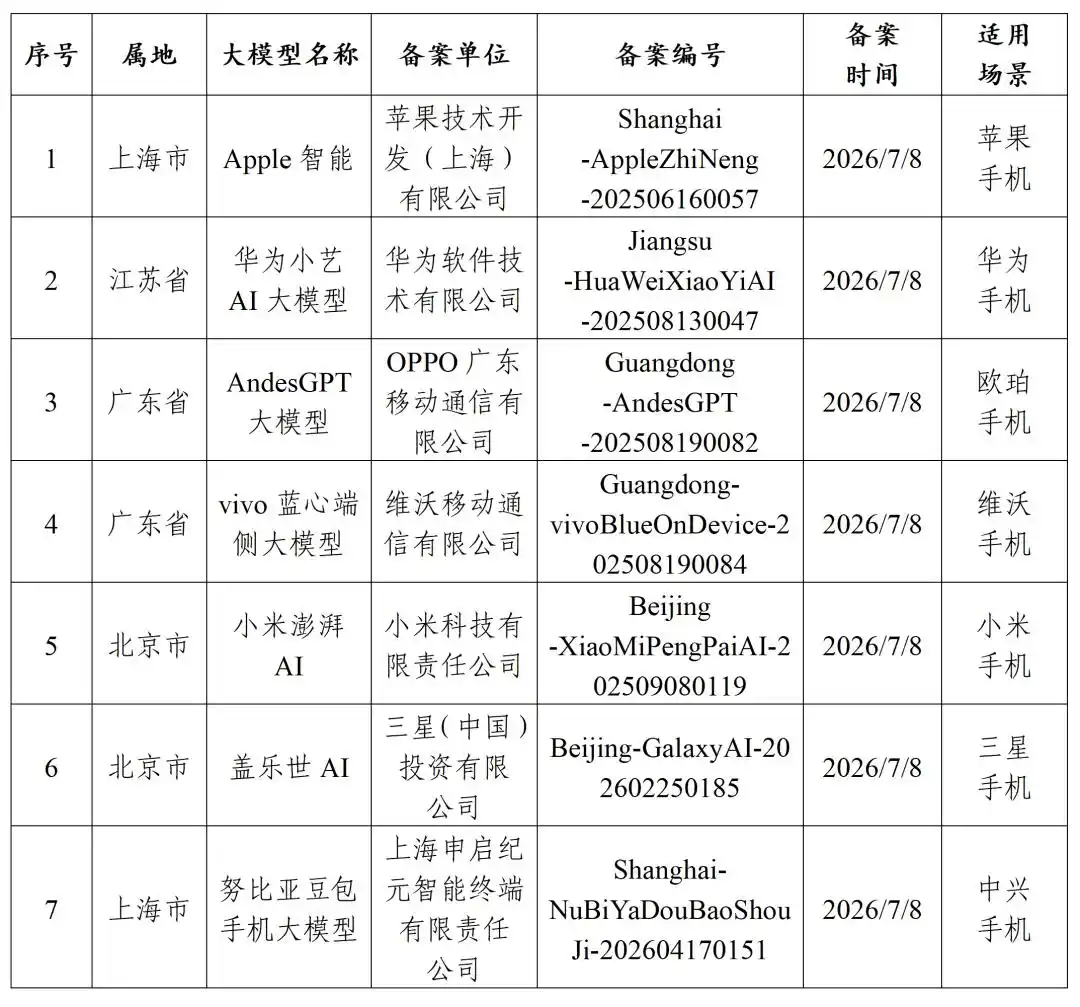
Apple Intelligence is now on China's filing list for mobile on-device generative AI services, according to a new notice from the Cyberspace Administration of China. The notice covers seven services: Apple Intelligence, Huawei's Xiaoyi AI large model, OPPO's AndesGPT large model, vivo's Blue Heart on-device large model, Xiaomi HyperAI, Samsung Galaxy AI, and Nubia's Doubao phone large model.
The article describes this as the largest collective approval so far in China's mobile on-device AI segment. Counting from Apple Intelligence's first appearance at WWDC in June 2024, mainland users had been waiting two years for the local version of Apple's AI features.
Qwen will back Apple Intelligence in China
Alibaba's Qwen will be integrated into Apple Intelligence for users in China across iOS, iPadOS, macOS, and visionOS, adding capabilities for text understanding, image understanding, and content generation.
Alibaba said Qwen would be integrated into Apple Intelligence to bring AI features to users in China on iOS, iPadOS, macOS, and visionOS. Users will be able to access Qwen's text and image understanding and content generation features directly on Apple devices without switching between apps.
A brief preview appeared in March, then vanished
The filing acts as a compliance pass, but mainland users had already seen a short-lived version before Apple obtained it.
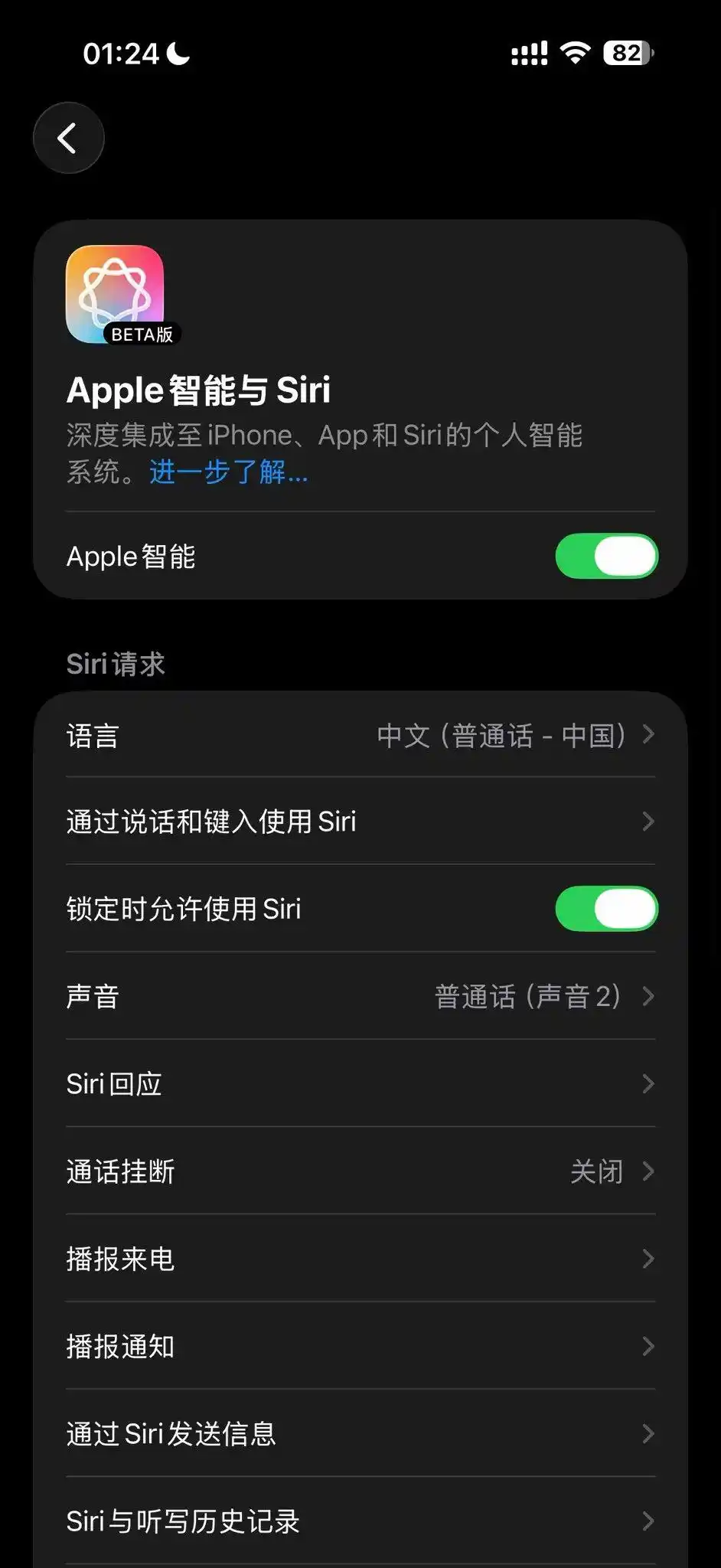
On March 31 this year, one day before Apple's 50th anniversary, an "Apple Intelligence & Siri" entry briefly appeared in the settings page on mainland Chinese iPhones. There was no launch event and no press release. The feature appeared and was then quickly removed.
Bloomberg reporter Mark Gurman said the release looked accidental. He argued Apple would not quietly launch mainland AI without any publicity, would not choose China's early-morning hours for such a rollout, and would not rely on Google's engine for visual recognition instead of a domestic engine in China. He also noted that regulatory approval had not yet been granted at that point.
Hands-on impressions: fast, but rough
The article sums up the short-lived test build in two words: fast, but rough.

Speed was the most immediate impression from the on-device model. Features such as text polishing, summarization, and AI object removal responded with little visible delay. In one example cited by the article, a 200-word draft could be rewritten into a more professional tone in under two seconds. Playground could generate images from text prompts in about three to five seconds, though the phone became noticeably warm.
The article says processing was done locally and data was not uploaded to the cloud, which supported privacy protection. The trade-off was accuracy. Summaries of long and complex text could miss key information, rewritten text could sometimes sound unnatural, and AI removal worked acceptably on simple backgrounds but showed shadow residue, blurred edges, and broken textures in more complex scenes. Writing tools, translation, and visual recognition were usable, but there was still a noticeable gap against competing products that call cloud-based large models.
As framed in the source article, Apple chose privacy over performance. The version that surfaced in March and disappeared within a day also exposed the likely boundary of Apple Intelligence on mainland devices: on-device models can run quickly and keep data local, but depth and accuracy still need help from cloud models. The article adds that there had been no clear and reliable confirmation of which model had actually been connected at that time.
Seven vendors cleared on the same day
Apple was not alone in receiving the filing. Huawei, OPPO, vivo, Xiaomi, Samsung, and Nubia were cleared on the same day as well, making this a broad batch approval for on-device AI from seven smartphone makers.
Nubia's Doubao phone large model is expected to debut during WAIC, according to the article.
For Apple, the cost of arriving late has already shown up in its earnings. The article says iPhone sales in China have remained under pressure, and Tim Cook had previously acknowledged on an earnings call that the absence of Apple Intelligence was one reason competitiveness had weakened. Huawei, Xiaomi, and OPPO had already made AI features standard on flagship models, while some brands had also connected models such as DeepSeek, widening the experience gap.
Filing is done, but launch timing is still unclear
At WWDC 26, Apple showed a new Siri AI built with Google and based on Gemini. The system supported cross-app contextual awareness and natural conversation, and could pull email and calendar information in real time during calls. At the same time, Apple said the new Siri AI would not arrive in China immediately.
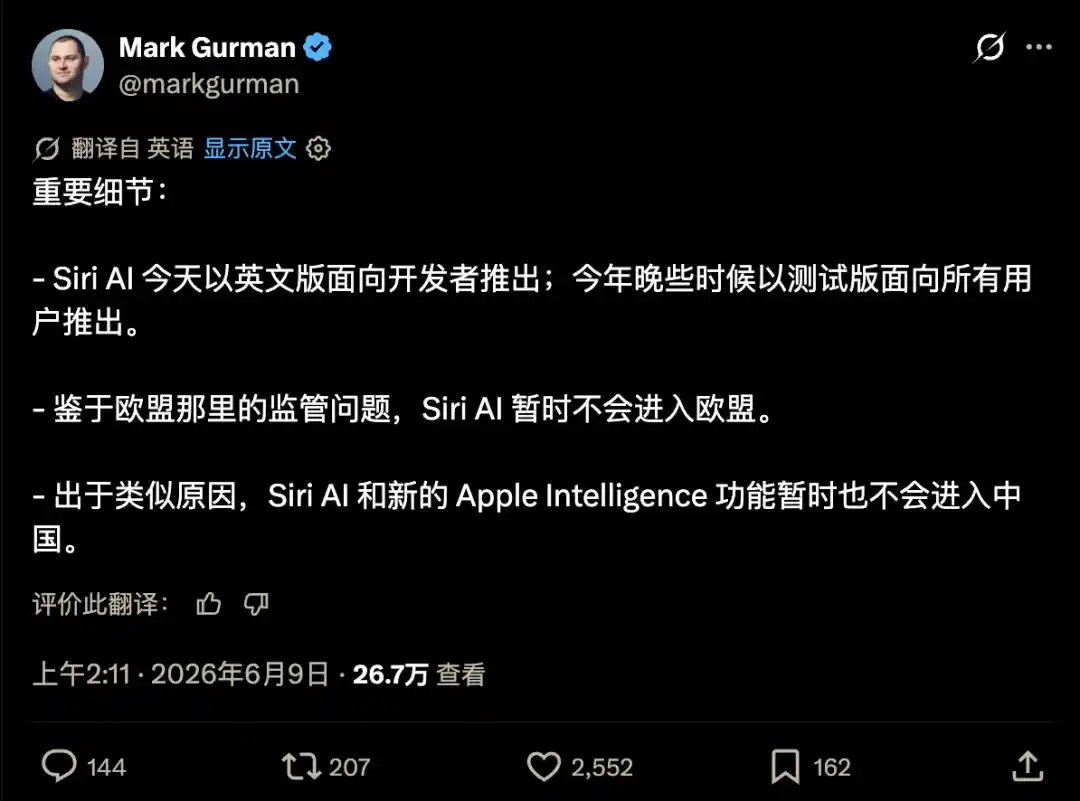
The article says the foundation model for the mainland version is Alibaba's Qwen, which means its stack is different from the overseas release. Apple has not made any commitment on a launch date or on the final scope of features.
The filing resolves the compliance issue, but the path from regulatory clearance to a public rollout still includes engineering work such as version adaptation, feature trimming, and model tuning. For mainland iPhone users, the next iOS update notes may offer the clearest signal: whether Apple Intelligence appears there at all, and how many features remain when it does.
Until then, the two-year wait is not quite over.