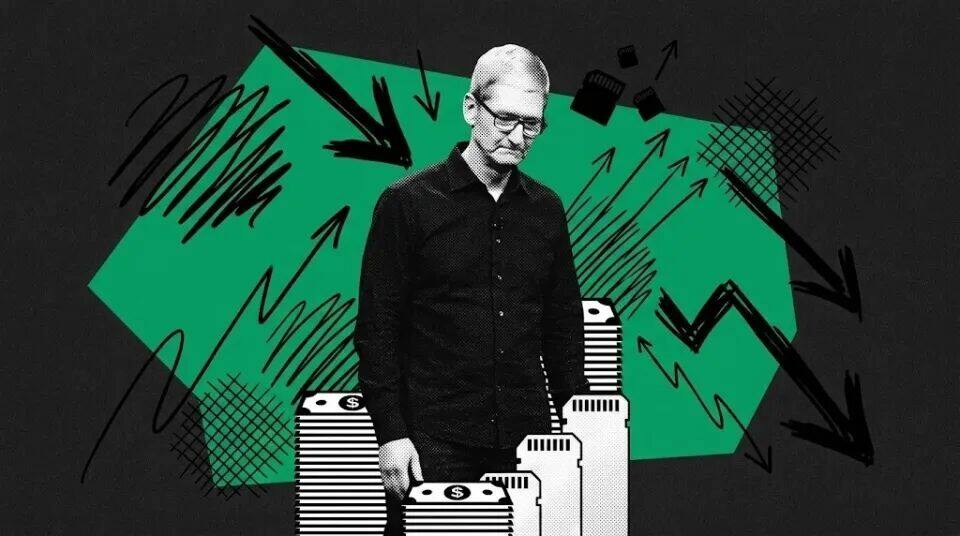
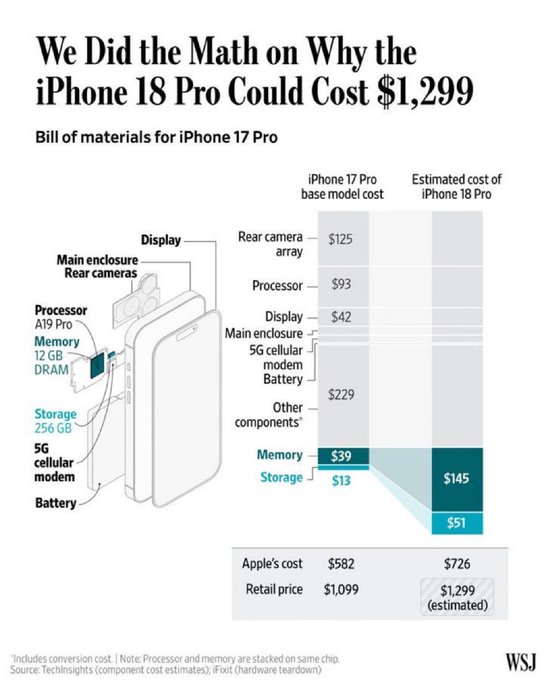
When an iPhone is sold, how much of its profit goes to Apple versus its component suppliers? Recently, tech blogger @BluthCapital, channeling Micron's CEO, tweeted: "For over a decade, Apple bought chips from us (MU) for $5, put them in a metal box, and sold them for $99. When we tried to raise the price to $7, they mocked us. Now that we're charging $50, they've raised their product price by $250." This observation sparked widespread discussion, accompanied by a breakdown of iPhone 18 costs.
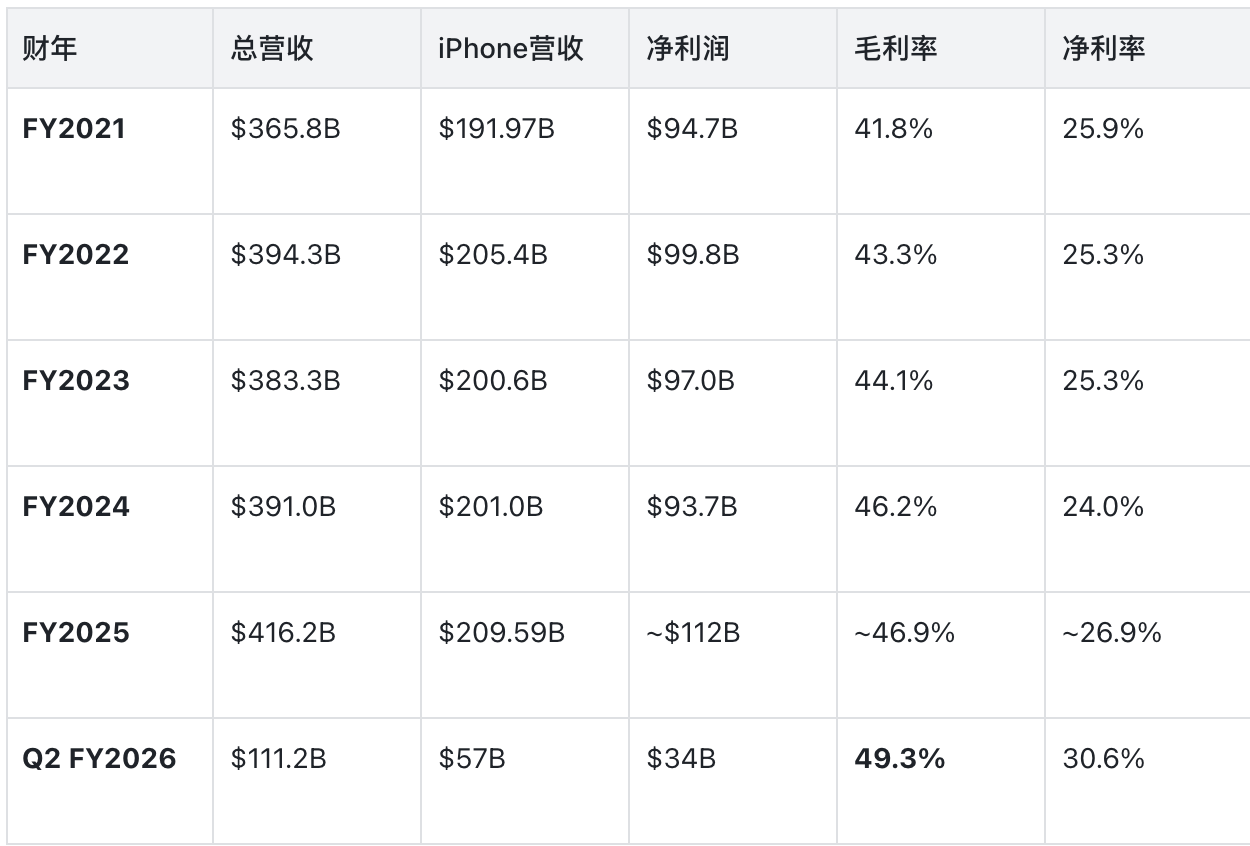
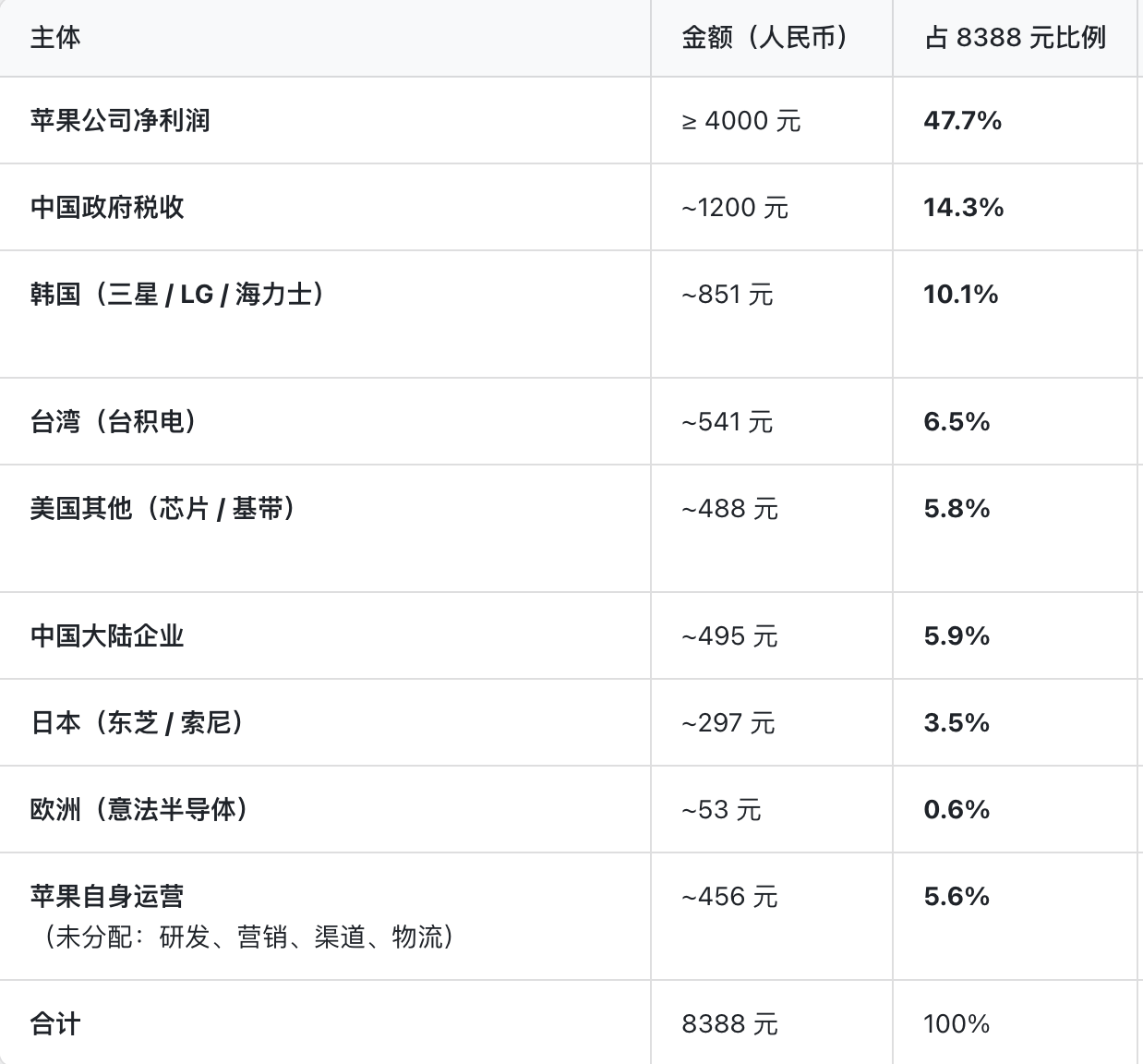
Estimates suggest Apple takes about a quarter of each iPhone's profit, while memory giants get roughly one-thirtieth, and TSMC (due to its monopoly) collects 4-5%. Counterpoint data shows Apple has consistently commanded nearly 50% of global smartphone operating profits. IDC 2025 data indicates Apple captured about 75% of total industry profit on just 18% market share. Based on Apple's Q2 2026 earnings (iPhone revenue $57 billion, net profit $34 billion, shipments ~61 million units), net profit per iPhone is estimated at $320-340, with a net margin of 33-36%.
Memory Costs: From Negligible to Critical
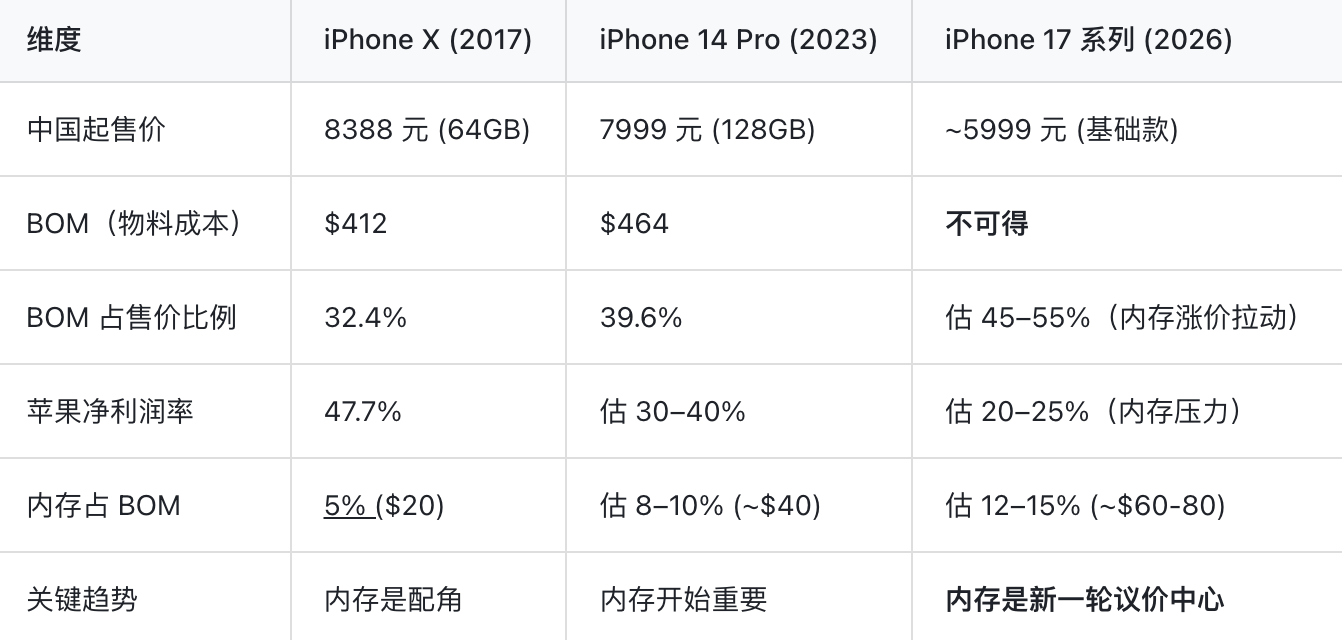
The role of memory cost in the iPhone has evolved through three phases. In 2017's iPhone X era, memory cost accounted for only 1.6-2.3% of BOM (~$20-30), while Apple's net profit margin approached 50%. By 2023's iPhone 14 Pro, BOM cost reached $464 (nearly 40% of the $999 selling price), though memory's share wasn't separately disclosed; overall profit margin dropped 3.7% versus the iPhone 13 Pro. Fast forward to 2025-2026's iPhone 17 series, memory cost is estimated at 12-15% of BOM, or $60-80 — roughly double the level of a few years ago.
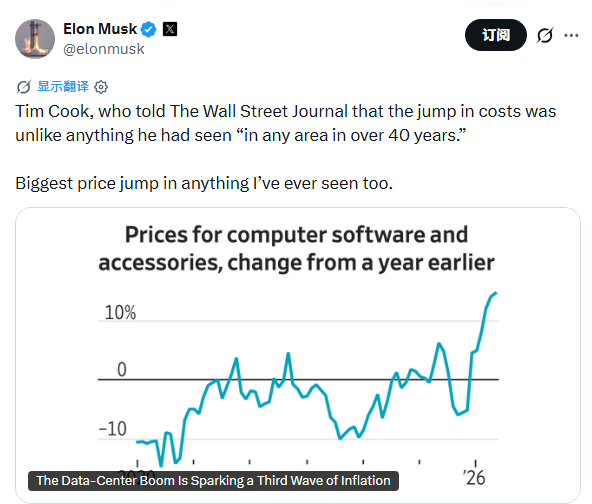
TrendForce data shows Q1 2026 DRAM contract prices jumped 93-98% quarter-on-quarter, with Citi forecasting an 88% full-year increase for DRAM. This directly impacts consumer electronics. On June 17, Apple CEO Tim Cook told the Wall Street Journal that "memory suppliers are passing on enormous pricing pressure." Within a week, on June 25, he changed his tone, calling it a "once-in-a-century flood" and announced across-the-board price increases for Mac, iPad, HomePod, Apple TV, and Vision Pro. Apple's stock fell 6%, wiping out $263 billion in market cap — the largest single-day drop since April 2025. Elon Musk also chimed in, saying, "This is the most insane price jump I've ever seen."
AI-Driven Memory Boom: From 'Customer Power' to 'Supplier Power'
The fundamental driver is surging demand from the AI industry. Each AI server requires 8x more DRAM and 3x more NAND than a standard server. Samsung, SK Hynix, and Micron have shifted advanced capacity to high-margin HBM (High Bandwidth Memory) and high-end DDR5, actively cutting DDR4 consumer lines, causing a shortage of generic DRAM. Micron's Q3 fiscal report revealed a staggering 84.6% gross margin and revenue growth of 346% to $41.46 billion, showcasing the cash-generation capability of monopolistic memory makers. SK Hynix recently announced its U.S. IPO, seeking to raise $29 billion. Notably, one of Nvidia's Vera Rubin AI servers uses memory equivalent to 14,500 MacBook Neo units — a vivid illustration of the supply-demand imbalance.

Faced with this shift in bargaining power, Apple is actively lobbying the Trump administration to approve purchases from Chinese memory maker ChangXin Memory Technologies (CXMT), aiming to break the Samsung-SK Hynix-Micron stranglehold. With CXMT's IPO imminent, the question is whether it can replicate the wealth-creation miracles seen in Micron and SK Hynix. The memory market's pie continues to expand, but the power rebalancing between Apple and its suppliers has just begun.