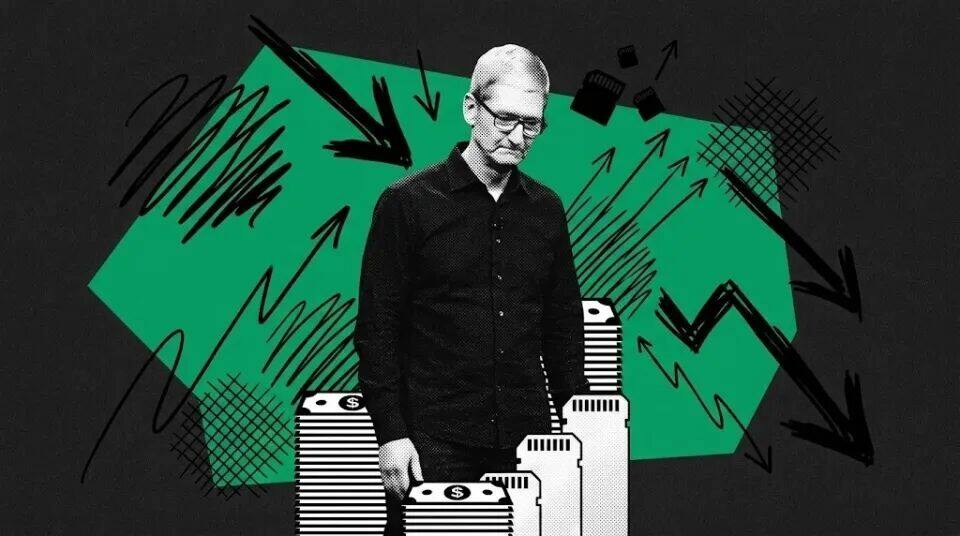
iPhone Profit Breakdown: Apple Takes a Quarter, Memory Makers Get One-Thirtieth
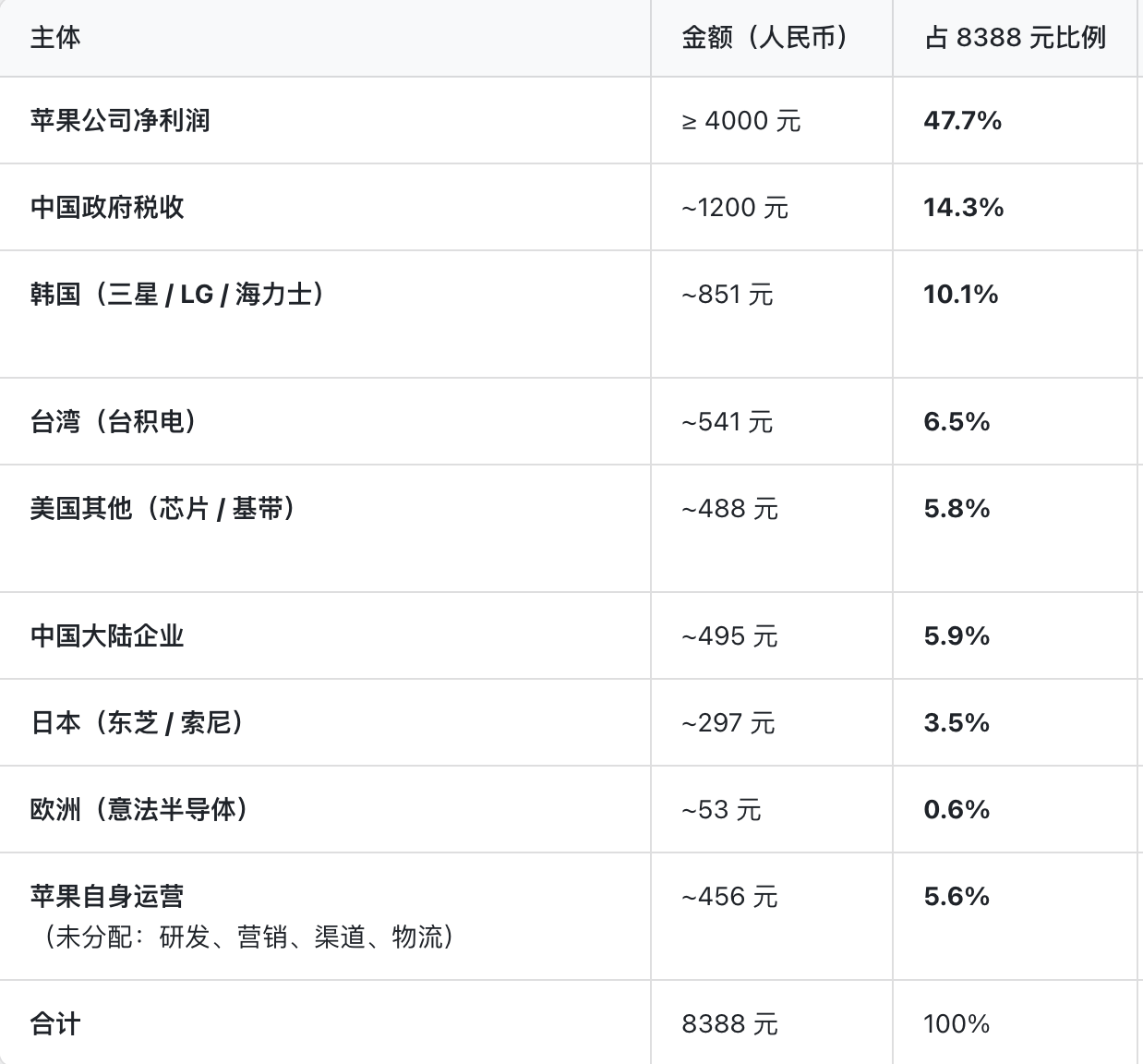
How are the profits from each iPhone distributed? Tech blogger @BluthCapital, mimicking Micron's CEO, quipped that Apple bought chips for $5 for over a decade, put them in a metal box, and sold them for $99. When Micron tried raising the price to $7, Apple sneered. Now that Micron asks for $50, Apple raises the product price by $250. According to estimates, Apple's net profit per iPhone stands at $320–$340, with a net margin of 33%–36%, capturing about 75% of the global smartphone industry's total profit (IDC data). Memory giants (Samsung, SK Hynix, Micron) capture only about one-thirtieth, while TSMC takes 4%–5% due to its monopoly position. Apple has long maintained nearly 50% of global smartphone operating profits (Counterpoint), and in 2025, with 18% market share, it pocketed 75% of industry profits.
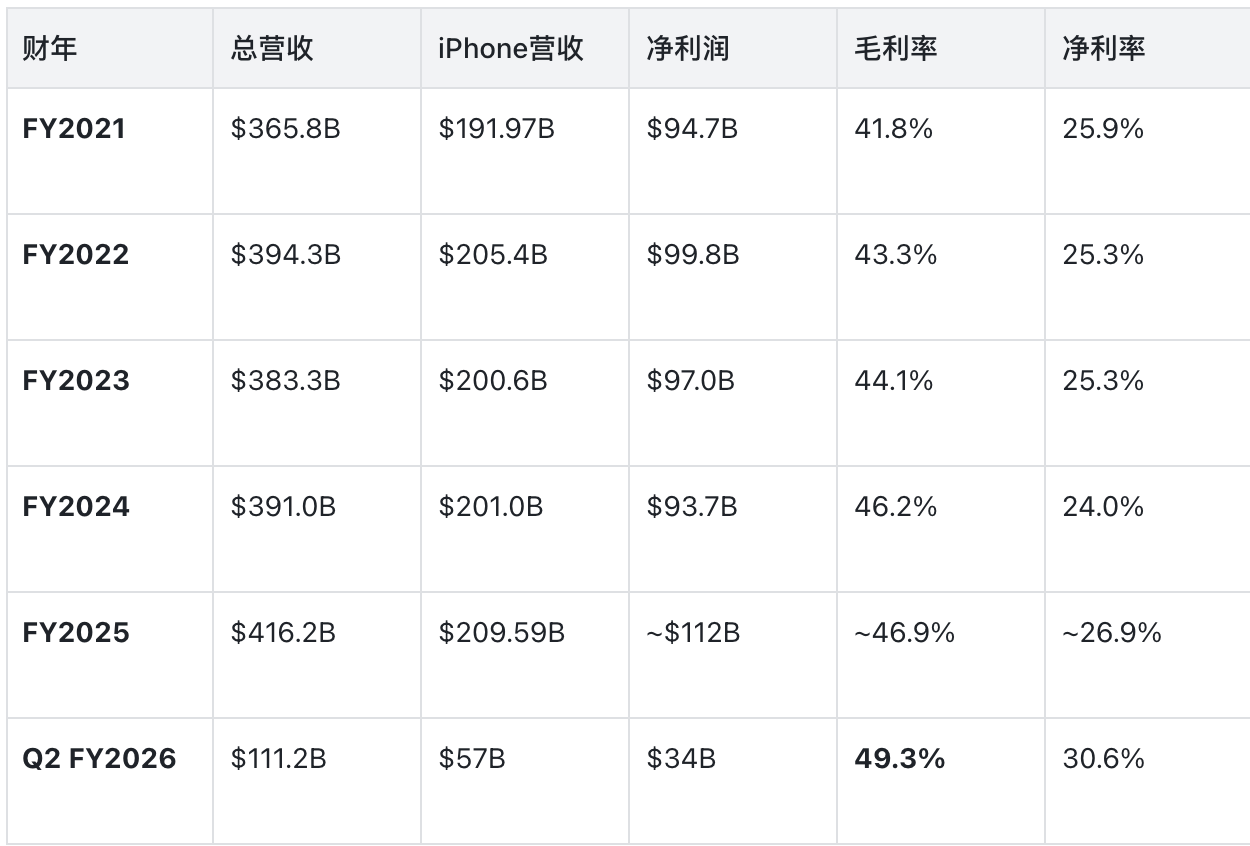
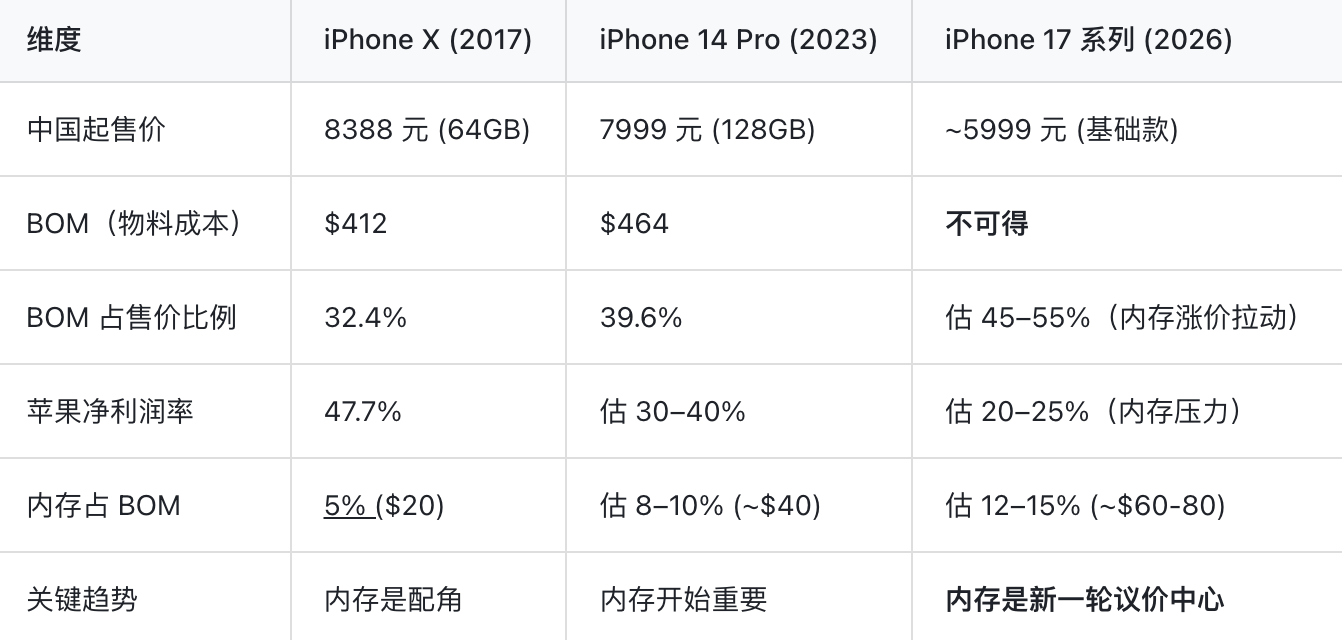
Looking at Apple's Q2 2026 earnings, iPhone revenue reached $57 billion, net profit $34 billion, with shipments of about 61 million units. Over the past five years, net profit grew from $94 billion to $112 billion, and net margin stabilized around 25%. However, the role of memory costs in the BOM has fundamentally changed—from a minor 'byproduct' to a 'critical component.'
Three Leaps in Memory Cost: From 2% to 15%, Apple's Pricing Pressure
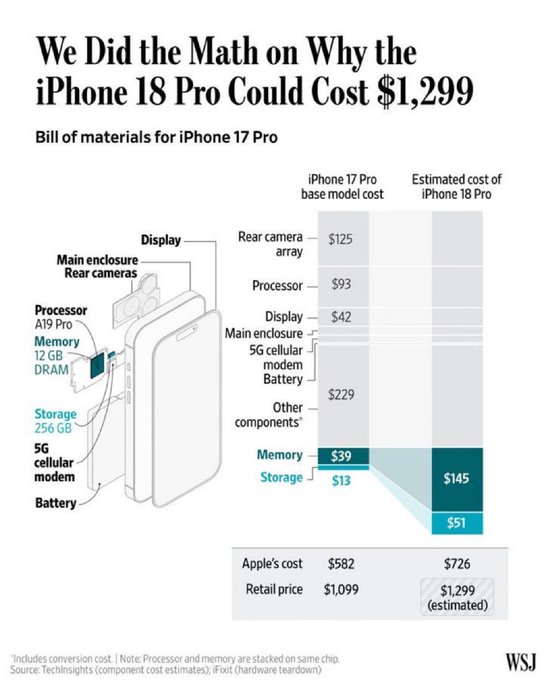
According to Counterpoint teardown reports, during the iPhone X era, memory cost accounted for only about 2% of BOM, and Apple's net profit margin was nearly 50%. By the iPhone 14 Pro (2023), BOM cost had risen to ~$464 (~RMB 3,170), with memory share at 5%–8%. For the iPhone 17 series (2025–2026), memory cost share jumped to 12%–15% (~$60–$80), doubling from a few years earlier. TrendForce data shows a 93%–98% quarter-on-quarter increase in general DRAM contract prices in Q1 2026, with Citi forecasting an 88% full-year average increase.
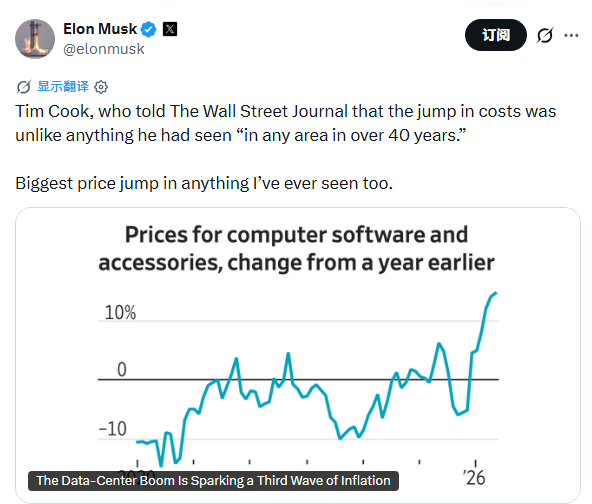
On June 17, Tim Cook acknowledged memory price hikes were transmitting huge cost pressure, but within a week he escalated his language, calling it a 'once-in-a-century flood.' Apple subsequently raised prices across its entire product line (Mac, iPad, HomePod, Apple TV, Vision Pro). Apple shares fell 6%, erasing $263 billion in market value—the largest drop since April 2025. Elon Musk echoed Cook's sentiment, calling it 'the steepest price jump I've ever seen.'
Memory Bull Market: AI Servers Devour Consumer Supply, a 1:14,500 Imbalance
The AI boom is the primary driver of this memory bull market. Each AI server requires 8x DRAM and 3x NAND compared to a standard server. Samsung, SK Hynix, and Micron have shifted advanced capacity to high-margin HBM and DDR5, curbing consumer-grade lines, leading to general DRAM shortages. Micron's Q3 gross margin reached 84.6%, with revenue surging 346% YoY to $41.46 billion. SK Hynix announced plans to list in the U.S., seeking to raise ~$29 billion. One Nvidia Vera Rubin AI server uses memory equivalent to ~14,500 MacBook Neo units, highlighting the extreme supply-demand imbalance.

Apple is actively lobbying the Trump administration for permission to purchase memory chips from China's CXMT (ChangXin Memory Technologies) to break the monopoly of Samsung, SK Hynix, and Micron. CXMT is preparing for an IPO next month. The memory market's pie continues to grow, but the power struggle between buyers and sellers is far from over—Apple's attempts to introduce alternative suppliers mark a new chapter in this rebalancing.