
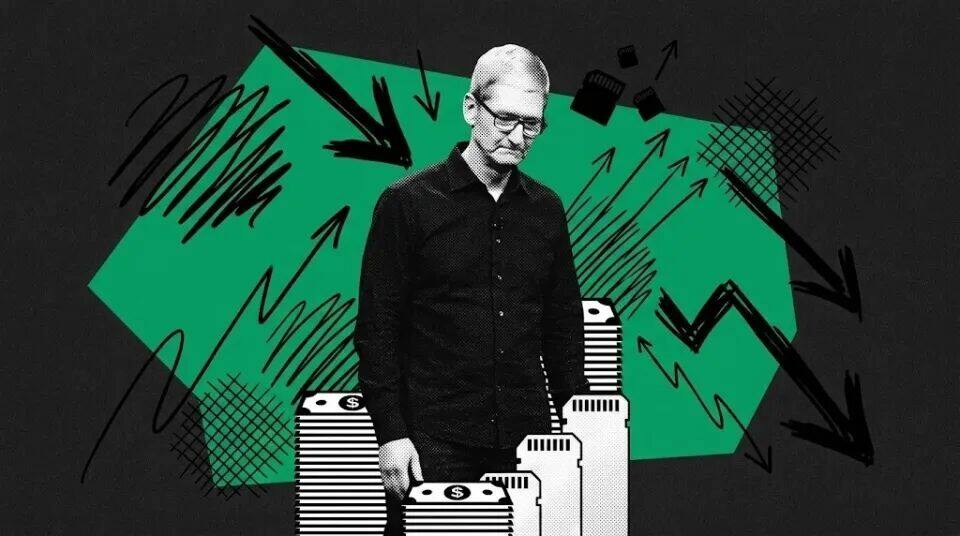
iPhone Profit Distribution: Stark Contrast Between Apple and Memory Vendors
Tech blogger @BluthCapital mocked Apple's pricing strategy in a satirical post: Apple buys chips from Micron for $5, puts them in a metal box, and sells for $99; when Micron tries to raise price to $7, Apple mocks; now Micron charges $50, Apple simply hikes product prices by $250. This highlights the long-standing profit imbalance between Apple and memory suppliers.
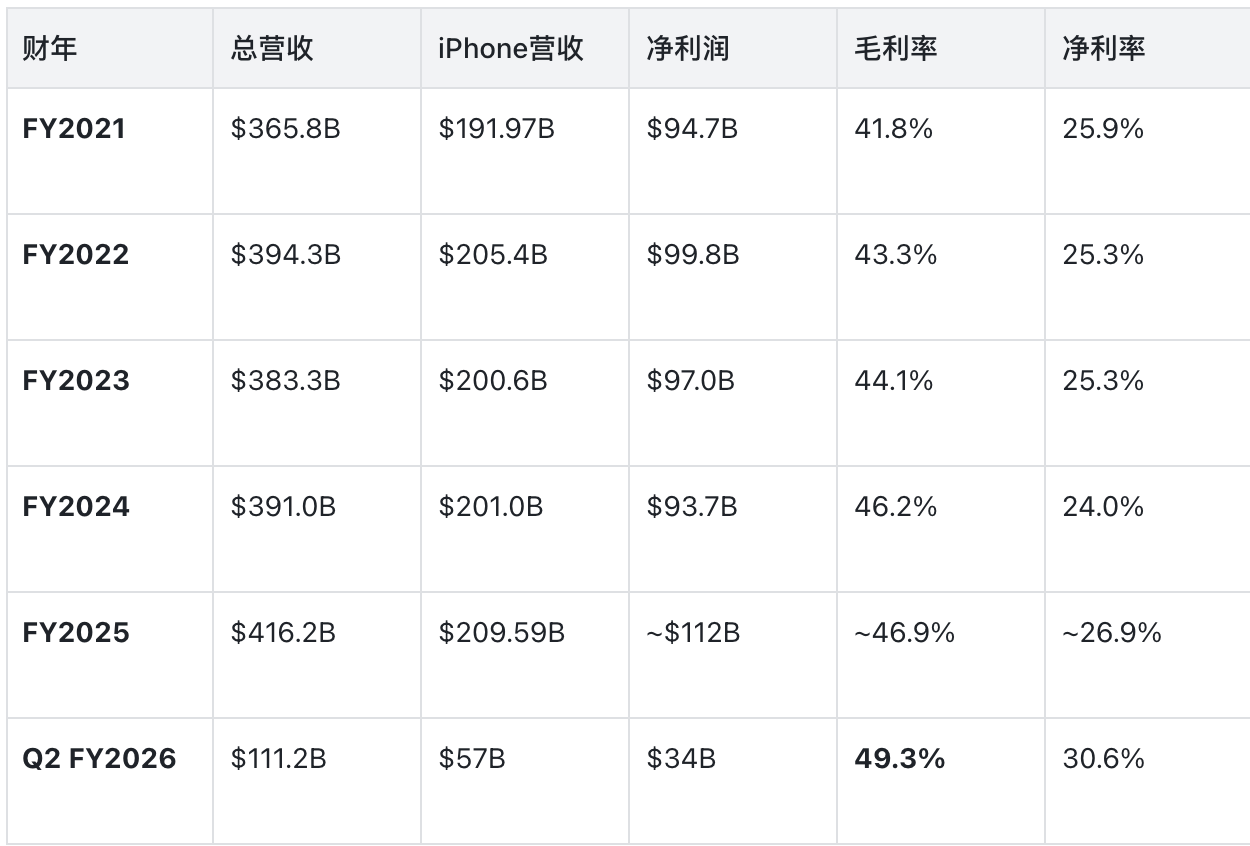
According to Counterpoint, Apple has consistently captured nearly 50% of global smartphone operating profits. IDC 2025 data shows Apple's 18% market share reaps about 75% of industry profits. Based on Apple's Q2 2026 earnings, iPhone revenue was $57 billion, net profit $34 billion, with estimated shipments of 61 million units. Net profit per iPhone is about $320-340, net margin 33-36%. In contrast, memory giants take roughly 1/30th of the profit (about 3.3%), while TSMC, due to its monopoly, captures 4-5%.
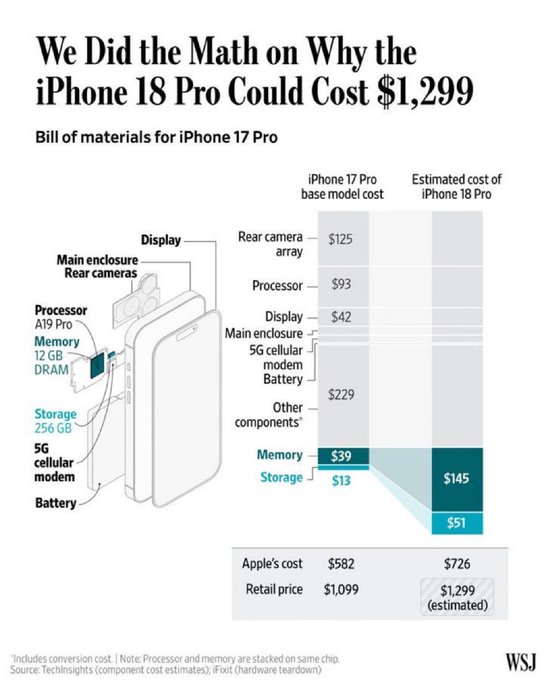
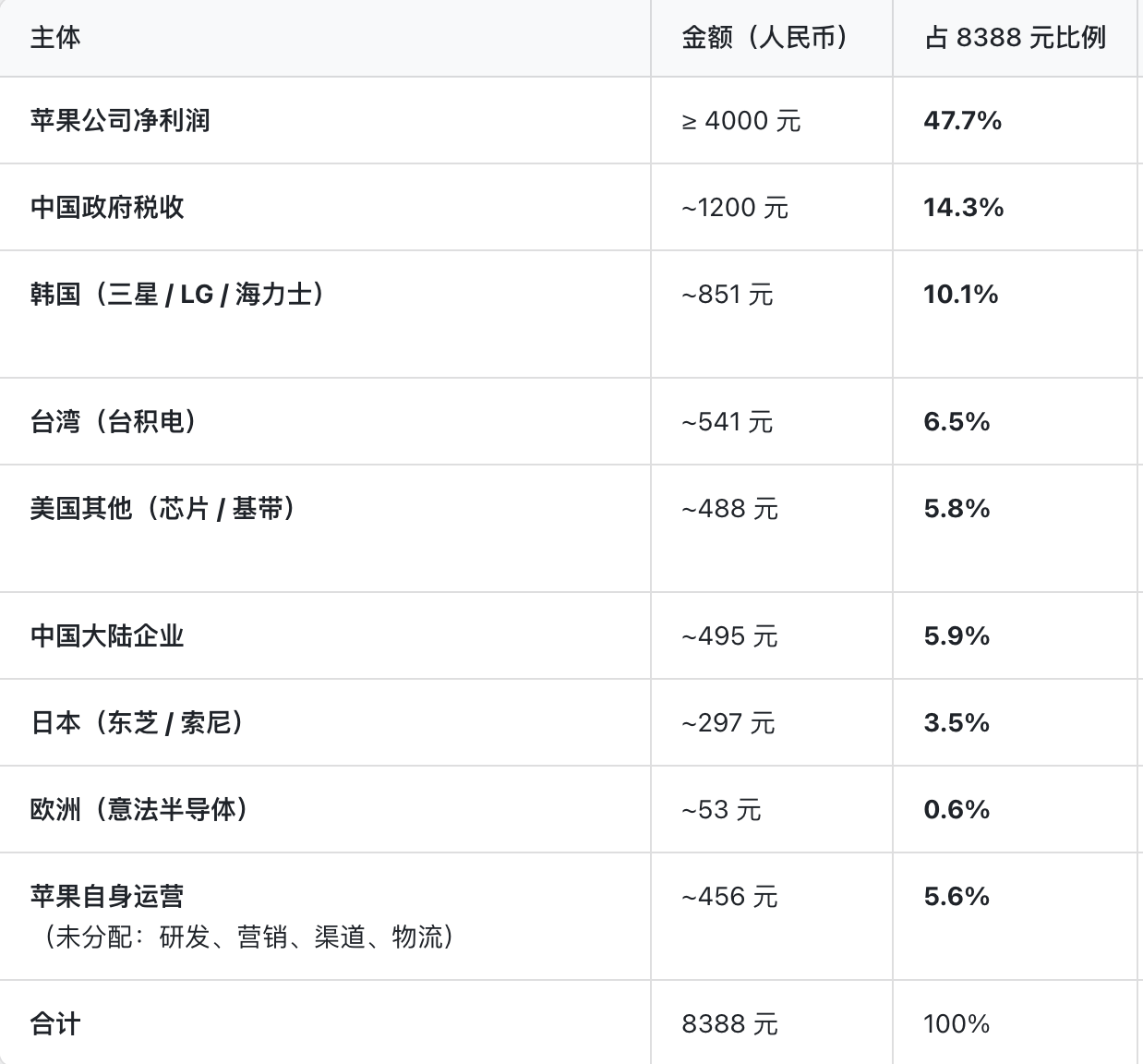
A widely circulated cost breakdown for the hypothetical iPhone 18 shows Apple retaining about a quarter of the profit, memory vendors a tiny slice, with the rest covering other hardware, channels, R&D, and taxes.
Three Eras of Memory Cost: From Trivial to Critical
Memory's role in iPhone has evolved through three phases: initial 'scrap part,' then 'important component,' now 'critical component.' In 2017's iPhone X, memory cost just 1.6-2.3% of the $999 retail price (about $16-23), Apple's net margin near 50% — memory was practically an afterthought.
By 2023's iPhone 14 Pro, BOM cost rose to $464 (about 40% of retail), Apple's still netted ~40%. The 128GB version had modest cost growth, but higher-capacity variants had disproportionately higher margins, yet overall profit was 3.7% lower than iPhone 13 Pro due to camera and processor price hikes.
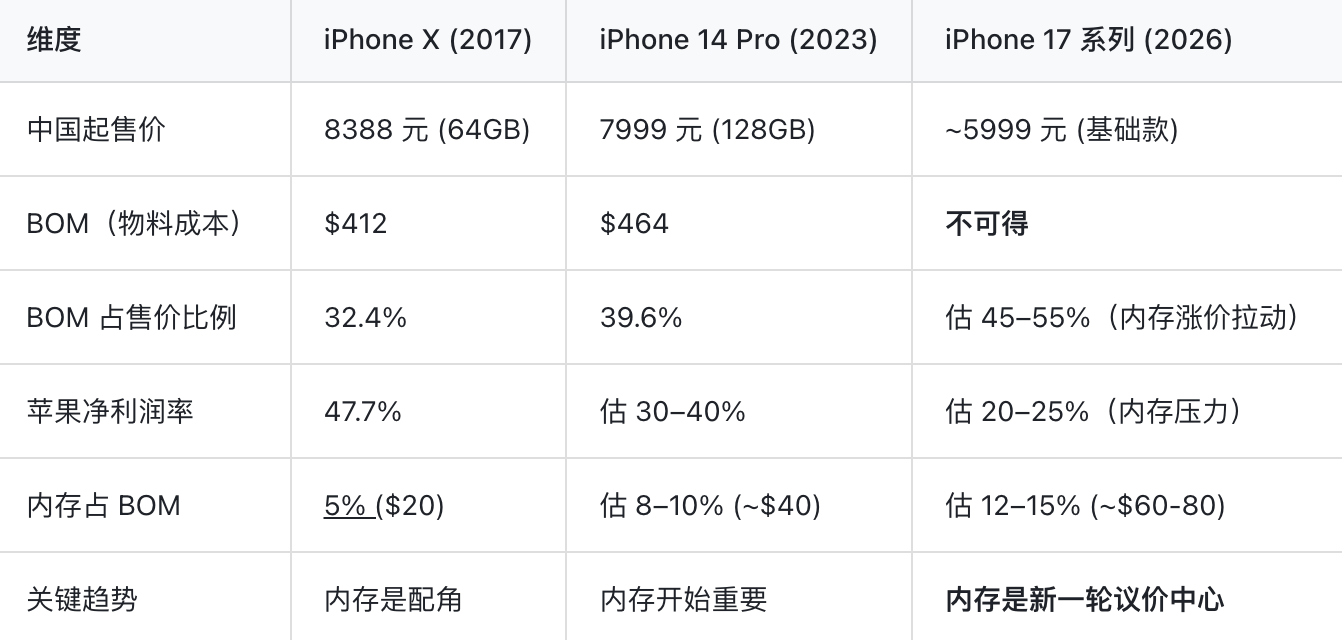
For the 2025-2026 iPhone 17 series, memory cost doubled, reaching 12-15% of BOM (about $60-80). TrendForce reports DRAM contract prices surged 93-98% QoQ in Q1 2026, while Citi forecasts 88% YoY gains for 2026. The table below summarizes cost evolution:
| Model | Year | Retail Price ($) | BOM ($) | Memory % of BOM | Apple Net Margin |
|---|---|---|---|---|---|
| iPhone X | 2017 | ~999 | ~370 | 1.6-2.3% | ~50% |
| iPhone 14 Pro | 2023 | ~999 | ~464 | ~5% | ~40% |
| iPhone 17 series | 2025-2026 | ~1299 | ~550 | 12-15% | 33-36% |
Memory Bull Run Driver: AI Demand Squeezing Consumer Supply
The core driver of memory price hikes is AI industry demand. Each AI server requires 8x the DRAM and 3x the NAND of a standard server. Samsung, SK Hynix, and Micron have shifted advanced capacity to high-profit HBM and DDR5, cutting consumer DRAM lines, causing general-purpose DRAM shortages.
Micron's Q3 earnings showed gross margin of 84.6% and revenue of $41.46 billion (+346% YoY), underscoring monopoly profit power. SK Hynix is seeking a $29 billion US IPO. Nvidia's Vera Rubin AI server uses memory equivalent to about 14,500 MacBook Neos, illustrating extreme demand-supply imbalance.

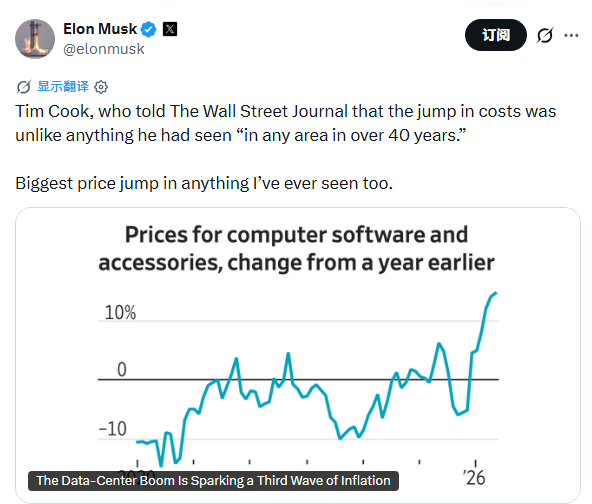
Apple CEO Tim Cook acknowledged in a June 17 WSJ interview that memory price hikes are transmitting cost pressure, saying 'We absolutely need memory pricing and supply to return to reasonable levels for consumer products.' But less than a week later, on June 25, Cook described the cost shock as a 'once-in-a-century flood' and announced price increases across Mac, iPad, HomePod, Apple TV, Vision Pro. The news sent Apple's stock down 6%, erasing $263 billion in market cap — the biggest single-day drop since April 2025. Elon Musk echoed: 'This is the most violent price jump I've ever seen.'
Apple's Response and Industry Restructuring
Facing memory vendors' newfound pricing power, Apple is actively lobbying the Trump administration for approval to buy memory chips from Chinese startup CXMT (Changxin Memory Technologies) to break the Samsung-SK-Micron oligopoly. CXMT is planning an IPO next month; its success in replicating the wealth creation of SK Hynix or Micron will determine whether it can secure a seat at the table.

The memory market pie is still growing, but power has shifted to suppliers. The classic 'big store bullies the customer or customer bullies the store' dilemma now favors memory makers due to structural AI demand. For CXMT, this is both a challenge and a historic opportunity.