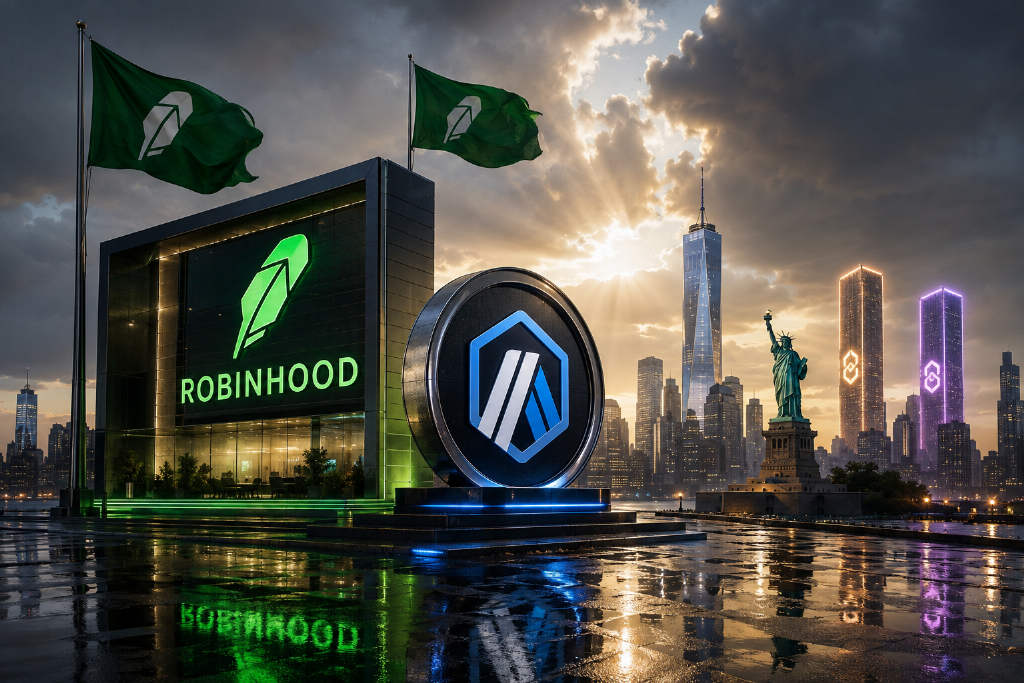
ARB, the native token of Arbitrum, surged over 48% to $0.196 on September 6, driven by the strong trading activity on Robinhood Chain. Robinhood Chain, built on Arbitrum's technology stack, reached a new milestone with its 24-hour DEX trading volume exceeding $1.89 billion, surpassing Solana and BNB Chain to become the top public chain by DEX volume. The chain's annualized fee revenue is estimated at $110 million. Under the license agreement, Robinhood Chain must return 10% of its net protocol revenue to the Arbitrum ecosystem, with 8% allocated to the Arbitrum DAO treasury and 2% to the Arbitrum Developer Guild.
ARB Jumps More Than 48% as Robinhood Chain DEX Volume Beats Every Other Chain
On September 6, HTX exchange data showed ARB, Arbitrum’s native token, jumping more than 48% in one day. It touched $0.196 at the high and is now trading at $0.1933. The move came as trading on Robinhood Chain went wild.
Robinhood Chain DEX Volume Reaches $1.89 Billion
Robinhood Chain, built with the Arbitrum technology stack, went live on mainnet on July 1. Last night, its 24-hour DEX trading volume climbed past $1.89 billion, pushing ahead of Solana and BNB Chain and taking the No. 1 spot among public chains for the first time. And based on the annualized average fee revenue from the past 30 days, Robinhood Chain’s annualized revenue sits at about $110 million.
Revenue Sharing Agreement
Under the cooperation license agreement, Robinhood Chain must send back 10% of its net protocol revenue to the Arbitrum ecosystem: 8% goes to the Arbitrum DAO treasury, and 2% goes to the Arbitrum Developer Guild.
This article was originally published by Bit.Fan. For more cryptocurrency news and market insights, visit www.bit.fan. Disclaimer:
The market information, project data, and third-party content displayed on this platform are for industry information sharing only and do not constitute any form of investment advice or return commitment.
Cryptocurrency trading carries high risks. Users should fully assess their risk tolerance and make independent decisions. All profits, losses, and legal responsibilities are borne by the users themselves.