

Blockchains are finding that selling blockspace no longer offers much protection as a business model, according to a new analysis by Castle Labs Research, translated by TechFlow and published by MarsBit. Infrastructure is easier to replicate, blockspace keeps getting cheaper, and the revenue flowing to applications is pulling further away from what chains themselves capture.
The follow-up to the report The Verticalization Thesis: How Blockchain Revenue Models Are Evolving argues that more networks are now trying to internalize a larger share of the value produced in their own ecosystems. The paper splits those efforts into two buckets: ecosystem expansion, represented by Arbitrum and Polygon, and product expansion, represented by MegaETH and Sophon.
Blockspace is becoming a weaker source of differentiation
The report says every blockchain’s core business is the sale of blockspace. The problem is that blockspace is easy to copy and difficult to defend as a differentiated product. Most chains offer broadly similar infrastructure, which leaves liquidity as one of the few remaining points of separation.
Established ecosystems with deeper liquidity tend to attract more builders, which drives more use of blockspace and reinforces a familiar flywheel. But as the industry advances, blockspace becomes cheaper. Even if the number of builders and users rises, chain-level revenue does not expand enough to match the fees earned by applications.
Castle Labs says it covered this dynamic in more detail in its earlier verticalization report, which discussed how chains such as Hyperliquid try to retain exposure to their wider ecosystems. That report also pointed to examples including Arbitrum’s Timeboost, MegaETH’s USDm buyback flywheel, and efforts by CEX chains to broaden revenue sources. This latest piece focuses on what has changed since then: more chains are reacting to the growing spread between chain fees and app fees.
Ecosystem expansion: Arbitrum and Polygon
One path is to broaden the ecosystem itself. That can mean distributing a chain stack to other networks, adding revenue-sharing structures, or positioning the chain as the default settlement layer for a specific set of use cases.
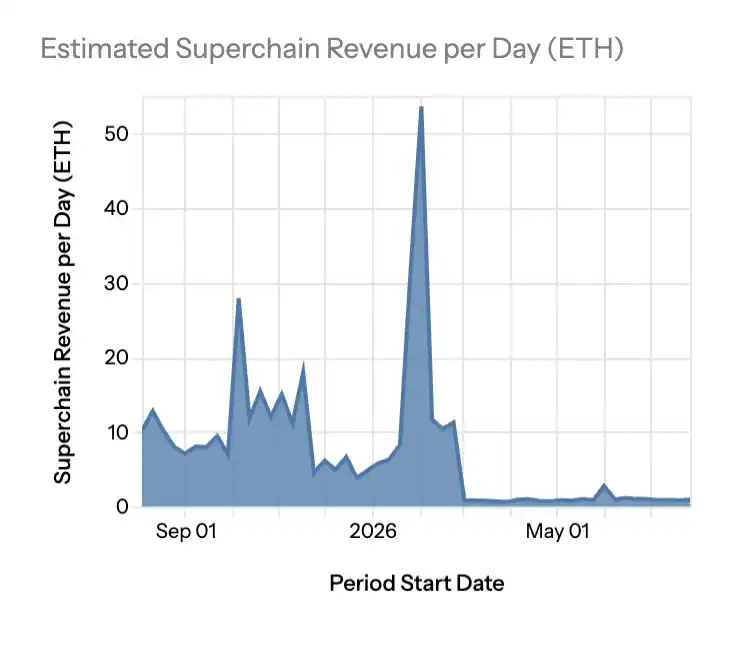
The report points to Optimism as an early example. Through the Superchain model, Optimism supplies OP Stack to different Layer 2 networks and charges either 15% of onchain net profit or 2.5% of L2 revenue, whichever is higher. Castle Labs says the model worked well and was adopted by several L2s.
Still, the weakness in that structure was exposed in February, when Base left the Superchain. According to the report, Base had previously contributed more than 90% of Superchain revenue, well above Optimism’s own share.
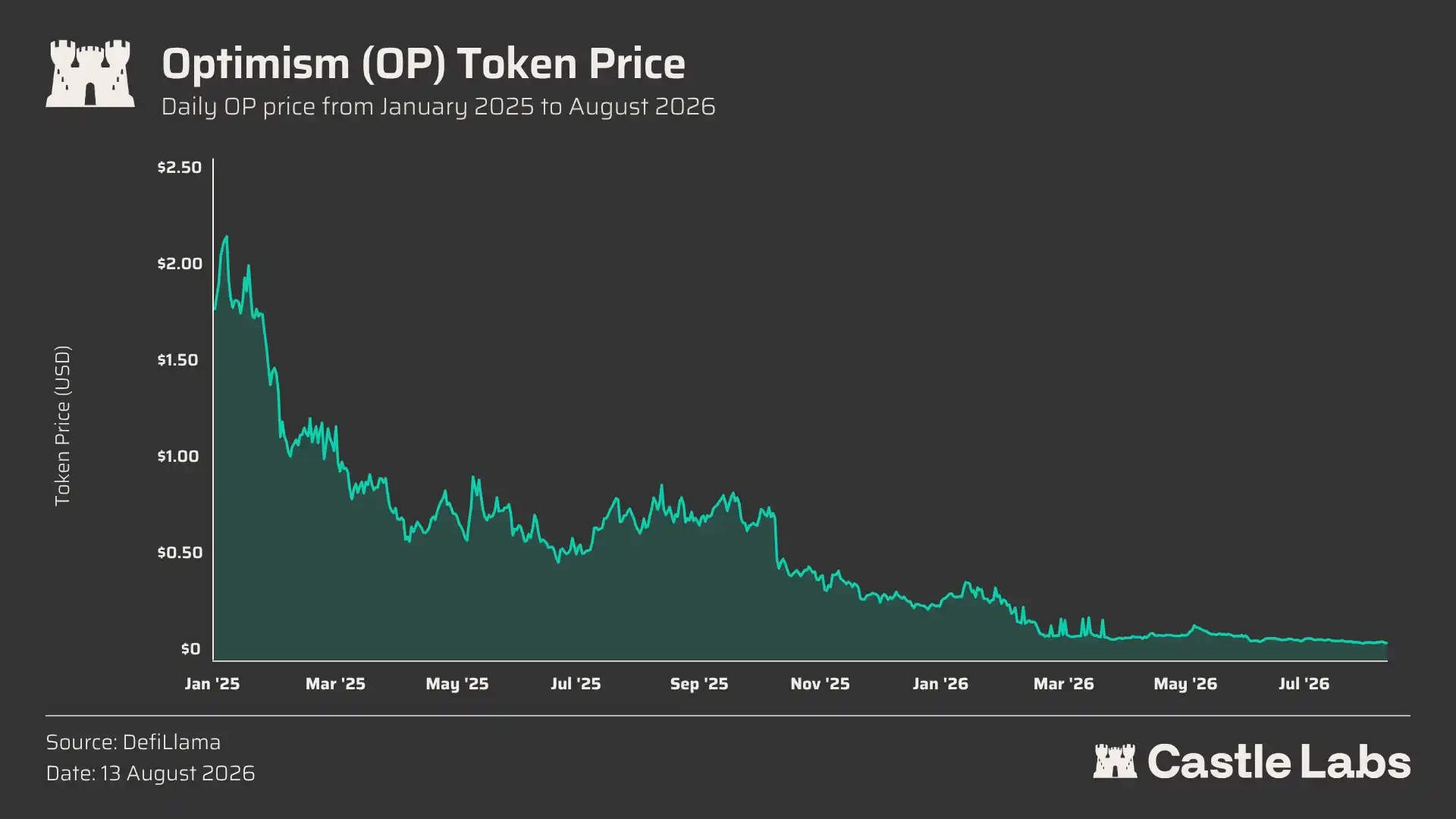
Only weeks before Base’s departure, OP tokenholders had approved a proposal to allocate 50% of Optimism Superchain revenue to OP buybacks. After the network lost most of that revenue in February, those buybacks no longer had enough economic weight to build meaningful token value, the report says.
Castle Labs does not treat this as proof that ecosystem expansion itself is flawed. Superchain is still used by multiple networks, and the stack continues to grow, with Celo, Ink and Unichain among the chains using it.
Arbitrum Stack and the Robinhood contribution
Arbitrum has taken a comparable route with Arbitrum Stack. The report presents it as a clean example of the bet that a chain stack can turn into a meaningful business line.
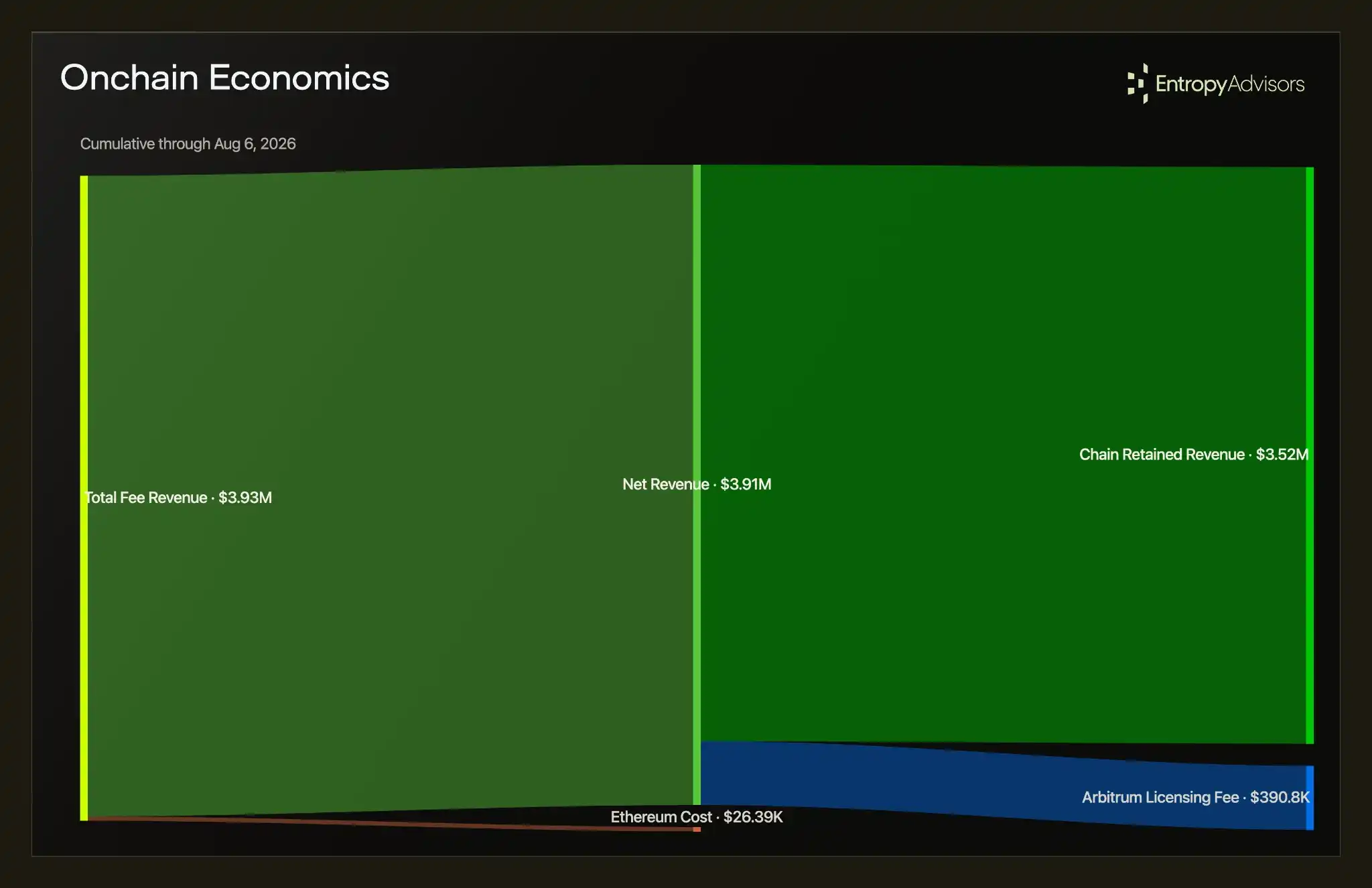
Robinhood launched its own L2 on Arbitrum Stack last month, and the deployment has generated about $4 million in revenue so far. Under a 90/10 split, that has brought roughly $390,000 to Arbitrum, the report says.
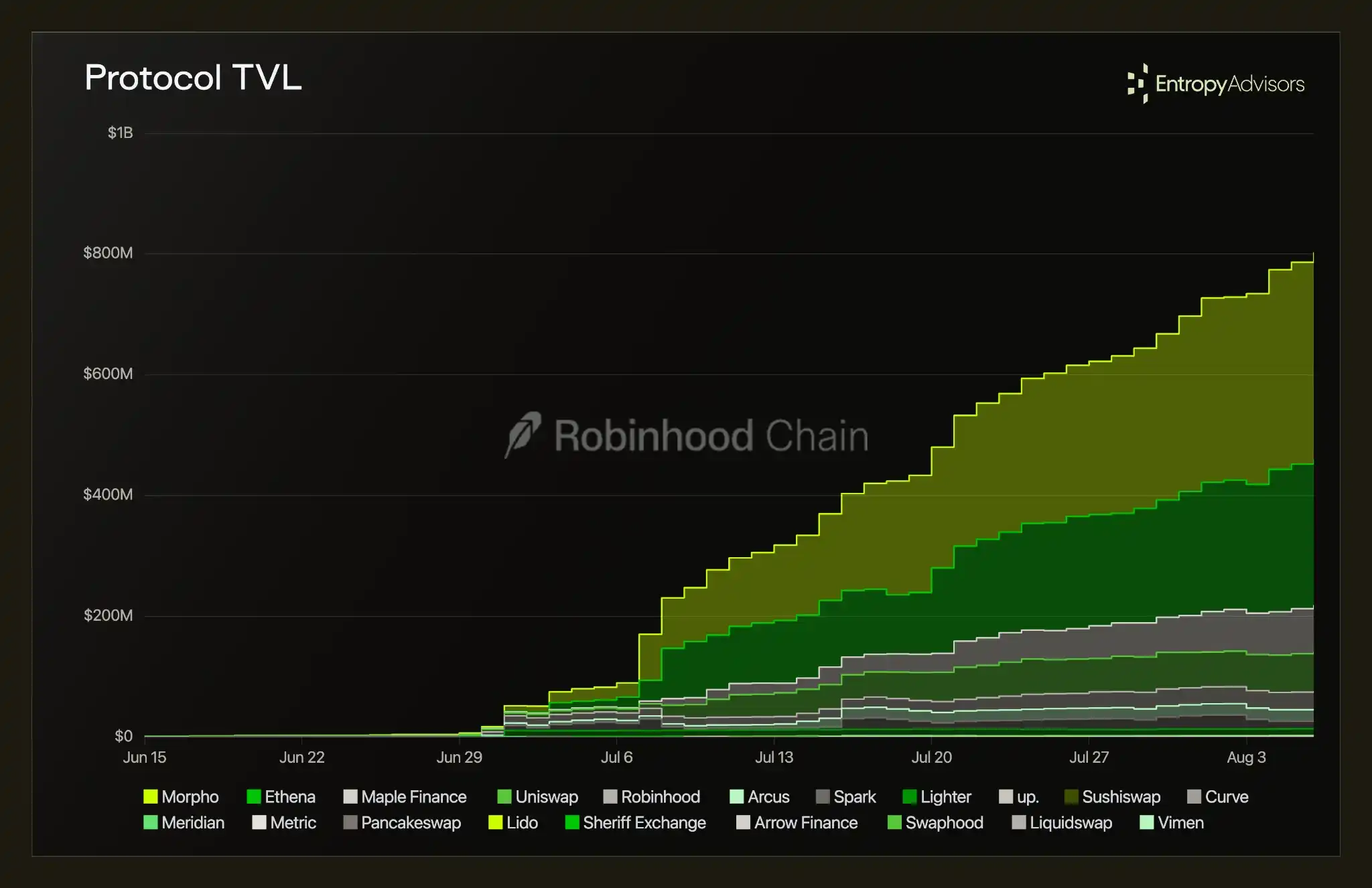
Plume Network, a real-world asset chain, also runs on Arbitrum Stack. Even so, Robinhood remains the largest contributor to the stack’s recent growth. Total value locked across the stack is now above $800 million, according to the article.
Robinhood’s deployment also expanded Arbitrum’s tokenized equities footprint. The report says that chain is focused on bringing tokenized stocks onchain and currently stands at $25 million in size. Just one month after launch, Robinhood Chain’s TVL had already reached half of Arbitrum’s $1.63 billion TVL.
Timeboost and treasury deployment
Arbitrum has also added Timeboost alongside its ecosystem push. Users can pay higher fees for transaction priority, and since its launch in April 2025, Timeboost has contributed more than $7.7 million to the treasury, the report says.
That income has not been left idle. Castle Labs notes that the Arbitrum DAO treasury has both onchain and offchain deployments designed to earn yield. On $90 million in net deployed capital, it has generated $4 million in interest.
The report argues that this treasury approach could be useful for many DAOs, since a large number of them remain overly concentrated in native tokens that decline over time and weaken long-term sustainability.
Even with those efforts, the article says there is still no clear connection between Arbitrum Stack’s success and value accrual to the ARB token. Offchain Labs announced a buyback plan last year, but continuing token emissions and unlocks have kept pressure on ARB.
Polygon’s push to become a payments chain
Polygon is the other major ecosystem-expansion case in the report. Castle Labs says the network is increasingly positioning itself as a payments chain for fintech and general-purpose use.
That strategy lines up with the partners already using the network. Stripe routes stablecoin payments through Polygon. Mastercard uses it to settle merchant payments and support its Agent Pay product. Revolut, Paxos and Cash App also rely on Polygon infrastructure, according to the article.
The report says those users are drawn by Polygon’s high throughput and very low fees, which keep interaction costs down. Polygon is also working on enterprise-grade controls intended to make the chain easier for large fintech firms to adopt.
Polygon has processed about $2.9 trillion in stablecoin volume so far, while stablecoin supply on the network stands at $3 billion. That supply has grown by more than 80% since 2025, the report says.
Usage in payments is growing, but most of Polygon’s revenue still comes from the Polymarket deployment. Castle Labs frames that as a concentration issue and a potential single point of failure, which is why Polygon has been trying to open up additional revenue streams.
The report also says Polygon’s distributions have not translated into clear token value accrual. Ongoing emissions have weighed on performance. Even though the chain often ranks near the top in chain revenue and token buybacks, that has not been enough to offset steady sell pressure.
Product expansion: chains building applications themselves
The second route is more direct. Instead of only trying to widen the ecosystem, some chains are moving down the stack and building products on top of their own infrastructure.
Castle Labs says the underlying issue is the same across much of crypto: applications collect substantial fees, but those fees do not naturally pass down to the chain layer. Looking across the last 30 days, the report says app fees on different chains have been much larger than chain fees, even as application revenue keeps rising.
That result is not surprising in pure infrastructure terms. A healthy chain should, in theory, have high app fees and low chain fees because that makes it an efficient place to deploy. But if the chain itself cannot earn enough fees, it becomes much harder to defend valuation, tokenomics and a sustainable operating model.
That is why newer networks such as MegaETH and Sophon, and even older chains such as Sei, have started moving toward direct app development rather than leaving all of that upside to third-party teams.
MegaETH’s first-party app pivot and USDm
MegaETH has not been live for long, but the report says it has already been grappling with the disconnect between app fees and chain-level exposure. In response, the team has shifted more of its focus to building applications on its own chain while still supporting OMEGA apps, defined in the article as apps that can only be built on MegaETH because of its ultra-low latency and high throughput.
Castle Labs describes that as a major change from MegaETH’s earlier horizontal ecosystem-expansion path.
The article quotes MegaETH’s Shuyao Kong as saying: 「We are redirecting the energy we had effectively lent to third-party builders toward first-party apps we build ourselves — consumer apps designed directly for the people we want to serve.」
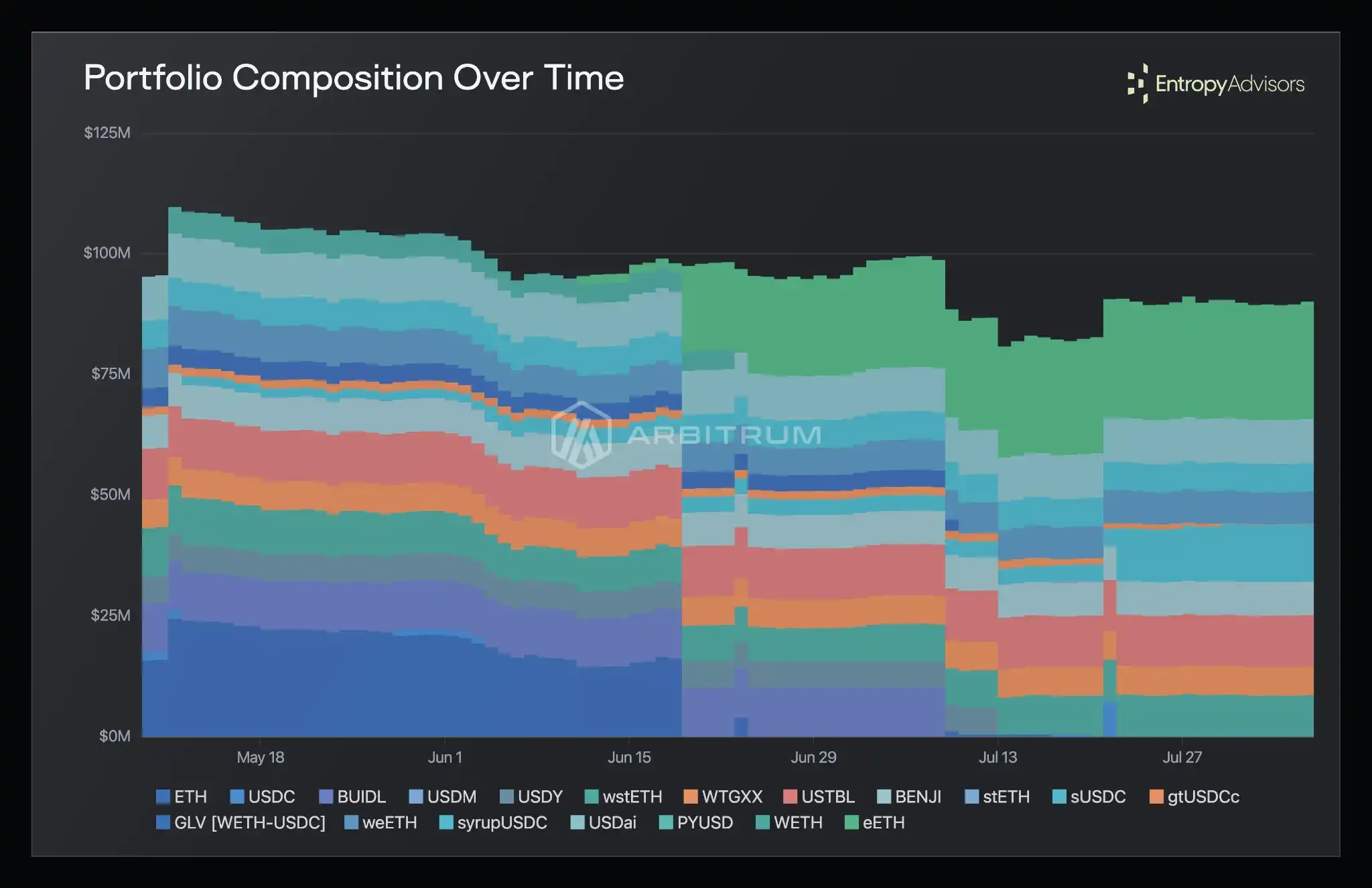
MegaETH is also trying to own some of the value generated by stablecoins on its chain. The team launched USDm, or MegaETH USD, a white-label stablecoin built with Ethena. The backing is deposited into BlackRock’s BUIDL fund, giving onchain stablecoin supply a yield close to SOFR, according to the report.
At the current $18 million supply and with SOFR around 3.6%, USDm can generate about $650,000 a year for MegaETH buybacks and burns, the article says. But the model is highly dependent on ecosystem success because the stablecoin has to be used in practice.
That has become a problem. USDm supply has fallen more than 95% from a peak of about $600 million in May this year as onchain usage has declined.
The report says MegaETH’s efforts to raise chain revenue have so far had limited impact, and the network is facing pressure on both adoption and token price. Castle Labs lists several factors, including weak communication, a limited ecosystem, and hesitation around some parts of the launch process.
Another issue is the lack of an active incentives program to attract liquidity. The article contrasts that with Monad, which it says has pushed hard on that front and already shown results, adding more than $400 million in TVL in the past month alone.
Sophon shuts down chain operations and turns to Base
Sophon is another example in the product-expansion group, though its path is different from MegaETH’s. The report says Sophon has shut down chain operations and moved into a more active builder role on Base.
Unlike MegaETH, Sophon did not find adoption on its own chain, then chose to shut it down and reposition itself as a builder. Its first application under that shift is Pyre, a crypto card product, according to the article.
Castle Labs says Sophon’s token price has also been disappointing, reflecting weak chain adoption, the shutdown of the chain itself, and the failure of its “entertainment and consumer apps” narrative to attract enough builders in that segment.
Chains are trying to become more than chains
The report closes by arguing that the crypto application market is large, the audience is large, and the room to build is still wide open. It points to recent apps such as FWA and Fomo, and to more widely known names such as Pumpfun and Polymarket, as examples of what this route can produce.
The broader point is simple. Hundreds of chains still offer nearly the same thing: blockspace. Without liquidity, they are hard to distinguish. For established chains, liquidity remains a moat that keeps attracting builders and adding chain fees. For newer chains, the challenge is tougher because they often need incentives to draw liquidity in, and that liquidity can leave once the incentives fade. The report cites MegaETH as one case of that problem.
Liquidity still matters, but Castle Labs says it is not enough to justify the valuation multiples many blockchains carry today because the fees retained by the chains themselves are too small.
That is now starting to change. More chains are trying to move beyond being neutral infrastructure. Some are expanding ecosystem products. Others are building applications directly to add value to their own networks. Arbitrum and MegaETH are among the examples the report highlights.
Castle Labs frames this as a broader return to utility. In the end, the article says, every network comes down to users and usage. Chains have spent years building around that goal, often supported by large incentive programs that bought loyalty from participants. But the report’s conclusion is that chains need applications more than applications need chains. More of them are now trying to deal with that principal-agent problem through vertical integration and direct app development.
Chains are becoming more than chains. Whether that works remains an open question. The competition, the report says, has already begun.