
Arthur Hayes, co-founder of BitMEX, returned to the Kyle Chasse crypto podcast hosted by Master Ventures CEO Kyle Chasse and explained why he had sold several of his largest crypto positions. The positions named in the discussion were HYPE, NEAR, Worldcoin and Zcash. Hayes said the sale was not based on a project-specific crypto thesis. Instead, he described a macro chain running through oil prices, the Iran war, Donald Trump’s 2026 midterm election strategy, anti-AI politics, AI valuation pressure and the liquidity impact of a SpaceX IPO at a roughly $1.8 trillion valuation.

Hayes said he had just published an essay called “Reality Check,” around 5,000 words long, and that the podcast version was a compressed explanation of the same argument. At the center of his view is what he called a reflexive interaction between oil prices and Trump’s campaign message for the midterms. Trump, in Hayes’ framing, needs to help Republicans defeat Democrats in November 2026 and keep control of both chambers. The Iran war, whether people like it or not, is already part of the political and inflation backdrop.
Oil, Hormuz and the political cost of inflation
Hayes argued that Trump and the Iranian Revolutionary Guard need some form of agreement to end the conflict, but both sides are constrained by the price of oil. Trump has to worry about domestic voters who dislike high gasoline prices and energy-driven inflation. Iran, meanwhile, faces pressure from China and other developing countries that need oil and commodities to move through the Strait of Hormuz. In his description, higher oil prices make everyone more eager to negotiate, while falling prices reduce the urgency to reach a deal.
He said this back-and-forth has lasted for roughly three months, or for as long as the war has been going on. During that process, commercial and national stockpiles of oil and other hydrocarbons are being drawn down. Hayes said energy analysts may disagree on the exact charts, numbers and dates, but he sees a shared conclusion: pre-war inventories were ample, creating the belief that oil and gas supply was excessive and keeping prices relatively low. Those surpluses, in his view, are now being depleted at an accelerating pace. Once inventories cross a certain threshold, he said the only way to restore market balance is a rapid rise in oil prices.

The worst case he outlined is that Trump and the Iranian Revolutionary Guard fail to reach an agreement, and by October the Strait of Hormuz remains effectively blocked, with only 25% to 30% of shipping volume able to pass through. He also described a less severe path in which an agreement is reached in one or two months and shipping resumes to some degree. Even then, countries would need to rebuild national reserves, and he said they would hold more than before because they had just experienced what it meant to depend on Trump and Iranian generals for access to crucial goods. That rebuilding demand would apply to oil, natural gas, helium and other inputs required to operate a modern economy.
Why Hayes thinks Trump could turn against AI
Hayes connected that commodity backdrop to the U.S. midterm election. He noted that, on Polymarket, Democrats’ probability of retaking the House had risen to 82%. In his view, Republicans are being beaten on the cost-of-living issue. Voters see inflation at the gas station, feel it directly, and associate the White House and the war with Republican responsibility. Hayes said policy works with long lags, so Trump has limited room to reverse the inflation narrative before the election.
That is where Hayes brings in AI data centers, regulation and taxation. He said Democrats are finding a powerful message: stop building more data centers, tax AI giants and regulate AI. The concern, as he described it, is not limited to low-income workers losing jobs. Wealthier workers also fear being replaced by AI. If an opposition party can channel that fear, it can combine two messages: inflation tied to Republican war policy and an AI construction boom effectively backed by Republican politicians.

Hayes’ theory is that if Trump needs to pull “a rabbit out of a hat,” AI is the one issue where he can reverse his public stance. Trump could adopt the Democratic message and say he wants more scrutiny of data centers, an AI national dividend and taxes on AI companies. Hayes stressed that this could be rhetoric rather than policy. Trump could say many things before November and then decide later whether to act. In Hayes’ view, the political goal would be to portray Republicans as the party protecting Americans from AI, even though Republican financing and support helped enable the boom.
He tied Trump’s willingness to attack AI back to oil prices. The longer the war continues without resolution, the more commodity pressure builds for later price spikes, and the greater Trump’s incentive becomes to use AI as a campaign target in an effort to protect the House. Hayes said taxes and regulation are particularly damaging to the AI narrative. He cited South Korea, where a politician spoke about a national AI tax and Cosby hit limit down that day. If similar rhetoric starts coming from the ruling party in the United States, especially from Trump himself, Hayes said the AI bubble could peak over the months leading into the election and drag crypto down with it. That is the reason he said he cleared his portfolio in the second half of the previous week.
AI capex, debt and Bitcoin’s underperformance
When Chasse asked where Hayes’ liquid assets were now positioned, Hayes said he had been buying listed shell companies with liquidity reserves, such as Treasury B-type vehicles, and a little bit of gold mining exposure. Chasse also asked whether energy could hold up if the AI bubble breaks. Hayes answered that people still need oil regardless of whether they like it. Oil powers civilization. He also clarified that he was not saying AI would stop growing. His point was that investors’ willingness to pay forward multiples for that growth would decline, causing asset prices to fall even if company earnings remained attractive.
Hayes referred to a chart showing the second derivative of capital expenditure growth. He said AI capex had already reached $800 billion in 2026 and that the second derivative of AI capex would begin to decelerate from 2027. In his words, investors cannot pay 100 times sales for SpaceX or any AI company if both earnings and capital expenditure growth are decelerating. The key issue is not whether revenue still grows, but how fast it grows, how the rate of change shifts and how investors perceive that rate of change. Based on the law of large numbers, he argued, capex growth cannot continue at the same pace seen from 2023 to 2026.
Hayes also revisited one of his own mistakes: why Bitcoin did not rise much more after November 2022. He said he had often argued on Chasse’s show and elsewhere that everything comes down to liquidity. If future liquidity increases, Bitcoin should rise. Yet from the commercialization of ChatGPT on November 30, 2022 to the present, Bitcoin rose but Nvidia and other AI stocks rose far more. Bitcoin topped last October at $125,000. Hayes said his model showed that trillions of dollars of liquidity had been created, so he had to ask why Bitcoin was not at $500,000 or $1 million and why it had underperformed AI.
He said the missing piece was where the money went. The market collectively believed AI could be one of the most transformative technologies in history, and it required a massive trillion-dollar capex buildout. Hayes asked whether AI had effectively crowded out other risk assets by absorbing excess liquidity first. As a rough example, he used U.S. M2 and said it had increased by at least $1.5 trillion since ChatGPT. He then asked Perplexity AI how much debt had been issued to AI and AI-related companies. The estimate he cited was about $1.5 trillion, including $1.3 trillion concentrated in 2025 and 2026.
From that, Hayes concluded that Bitcoin was able to rebound from its lows because liquidity was indeed created and AI did not absorb much of it before 2025. From 2022 to mid-2025, factors such as the decline in reverse repos gave Bitcoin room to benefit. But AI company capex and lending began to scale in 2025, especially into 2026, and that coincided with Bitcoin’s period of struggle. He described Bitcoin as having peaked last October and then fallen 50% to 60%. If all liquidity is flowing to AI and that process has not stopped, then an AI bubble correction would not automatically send money into Bitcoin. In a bubble break, he said, investors sell AI, Bitcoin and everything else, and correlations go to one until the dust settles.
SpaceX as a liquidity test for the AI narrative
Chasse then raised the issue of the S&P 500 rising while many individual stocks fall, with the index carried by a small group of technology names. He also pointed to upcoming listings by OpenAI, Anthropic and SpaceX, which could add more than $4 trillion of new market value to the equity market. Hayes said these IPOs would have difficulty performing well because the market does not just expect them to trade normally. It expects an IPO to surge 50% or more to prove that investors still believe in AI and that the chosen star company will continue upward.
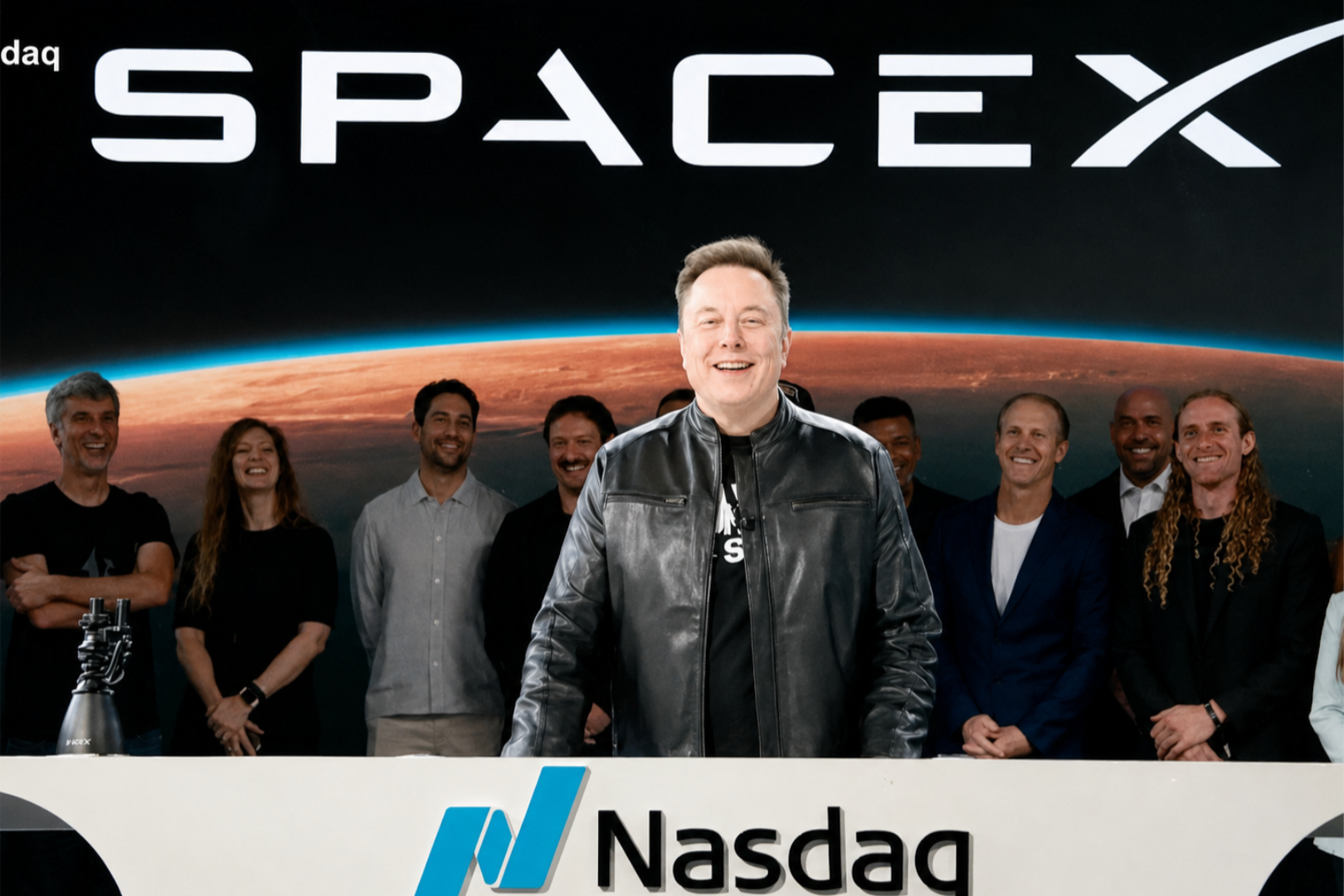
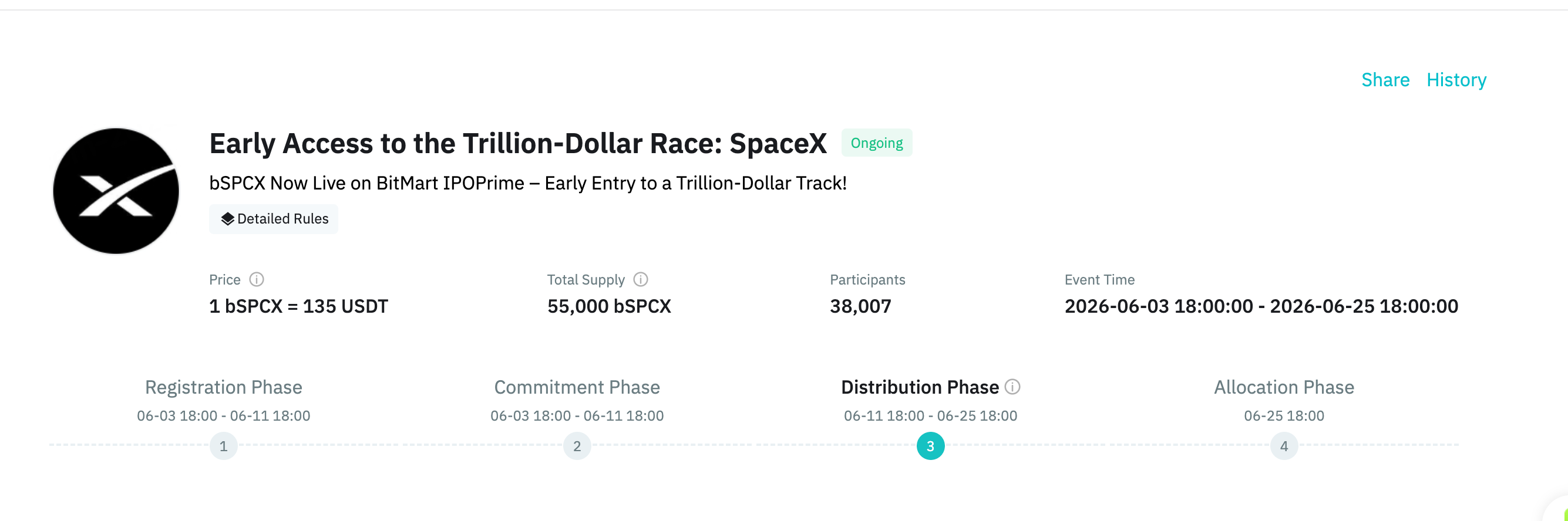
Hayes focused especially on SpaceX. He said a SpaceX issuance at around $1.8 trillion would immediately make it the seventh-largest company in the world. For the stock to rise another 50%, it would need to become larger than Amazon. He said that, based on reading the S-1, SpaceX would trade close to 100 times sales. He called that valuation absurd for a company that, in his view, has not yet proved the thesis embedded in the data-center story.
He compared the structure to a familiar crypto pattern: low float and high fully diluted valuation. Hayes said SpaceX would have a 4% to 5% float, rising to nearly 25% by September, with insiders selling to the market from July through October. He acknowledged that satellite internet is a strong business, but said that is not the reason investors are buying SpaceX in this argument. If SpaceX rises only 10%, he said, the market reaction could still be disappointment because expectations would be for a 50%, 60% or 70% move.
In Hayes’ view, pricing the IPO at $1.8 trillion creates a nearly impossible bar to clear. If SpaceX were a $100 billion company, it could rise two or three times and reinforce the AI story. At $1.8 trillion, he said, it is maximizing extraction. Beating Nvidia-like expectations would be extremely difficult. He argued that a disappointing SpaceX debut would make investors question whether they should bid aggressively for Anthropic or OpenAI in September. If those two AI giants then have to lower their valuation or reduce the offering size before listing, that would create a damaging precedent by effectively announcing that AI expectations had been set too high.
The Fed, re-entry conditions and crypto’s next window
On Federal Reserve policy and Warsh, Hayes said the narrative the market wants to believe is that policymakers can look through wartime commodity inflation and trust that an AI productivity miracle will deliver non-inflationary growth, allowing rate cuts. Hayes rejected that as a base case. He said oil prices are higher and not coming down in the near term. He also said the two-year Treasury yield is about 60 basis points above the effective federal funds rate, which in his interpretation means the market is telling the Fed it needs to raise rates.
Hayes added that Trump may privately ease his obsession with rate cuts if he wants to address affordability. Cutting rates while inflation is at 3.5% to 4% would hurt him in the midterms, in Hayes’ view. He therefore expects Warsh’s base case to be no change, with the key distinction being whether the hold is hawkish or dovish. A hawkish hold that emphasizes accumulating inflation pressure would lead markets to discount the idea that the Fed will need to act later. Hayes said bubbles fear higher rates because rising funding costs push people out of the casino.
When asked about crypto catalysts between now and the midterms, Hayes said he did not see many signs of money printing, and even if money is printed, it is going straight into AI construction. He said there is no large positive catalyst visible that would pull crypto out of weakness or make it outperform AI. In a perfect high-growth, low-inflation environment, he argued, investors would choose Nvidia or Samsung over Bitcoin because AI-related assets have performed so strongly. That creates a pressure loop for institutions: if Nasdaq rises 50% and a manager rises only 10% because he hedged, clients will demand exposure to the winning trade.

Hayes said he would consider re-entering the market if, by autumn, oil prices are moderate, Trump has not turned against AI billionaires and the major IPOs by SpaceX, Anthropic and OpenAI open with extremely strong performance. He described that as a strict condition because these would be among the largest IPO events in history and would need extraordinary gains to match the scale of expectations. If actual performance fails to meet those expectations, he said the market faces trouble.
On the next crypto bull market, Hayes said more money printing is needed, and the new money must not all flow to AI. He did not give a date. If the AI bubble breaks and financial institutions fail, he said a bailout would arrive at some point, and that would be the moment when crypto can outperform: AI would no longer be the credit-fueled asset rising as before, investors would need to trade something else, and Hayes hopes that something else will be crypto. He added that the answer is always money printing, while the timing is the hard part.
In the rapid-fire section, Chasse asked whether Bitcoin would end the year above or below $100,000, whether Hayes would buy back HYPE before year-end, and how he would allocate $1 million among Bitcoin, HYPE, short-term Treasuries and gold. The available transcript also includes Hayes saying that the market had just experienced an altcoin season consisting of four assets, with people making a lot of money in HYPE and several other coins. He added that it may happen again, but he did not know. He also reminded listeners that Bitcoin has been the best-performing asset in human history over the past 15 years, but many people did not enter at one cent; those who entered during the ETF era are, on average, down, making path dependence and entry timing central to investor outcomes.