
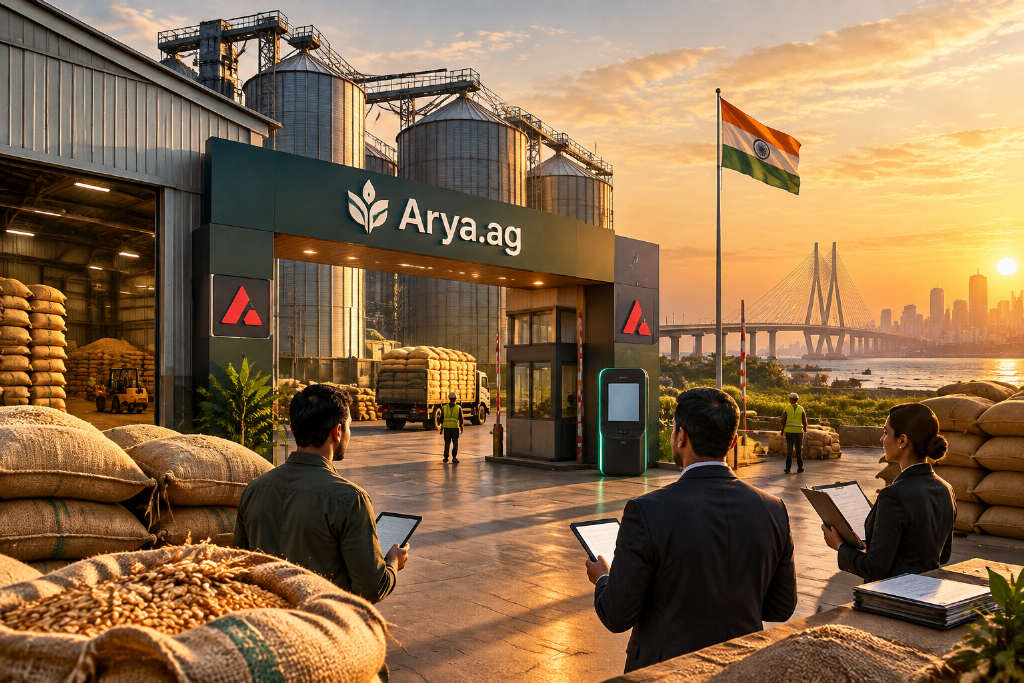
Arya.ag, India’s largest agricultural warehousing company, said it plans to build a dedicated Layer 1 blockchain using Avalanche technology and move grain inventories, warehouse receipts, and loan-status records on-chain.
Under the plan described in the report, roughly $2 billion in crop inventory, storage receipts, and related lending data will be tokenized and recorded on the network. Ava Labs is providing technical support, though the value of the contract was not disclosed. Arya.ag said three major banks are already preparing to connect, and other banks can apply to join.
The move targets a long-standing problem in India’s agricultural credit system. The report said about 40% of India’s population are farmers, yet only 15% have access to formal credit. Many of the rest rely on informal borrowing channels that often carry higher interest rates. Farmers can seek warehouse-backed loans after storing grain, but inventory records, collateral status, and outstanding loan balances are typically spread across separate systems, making verification slow and opaque for banks.
Devika Mittal, Ava Labs’ India head, said in an interview: 「Currently, every warehouse and bank has its own record system. Putting that information onto a shared blockchain ledger can significantly speed up the loan approval process.」
How the on-chain warehouse system is structured
Based on the report, the setup includes several main elements:
- Arya.ag will build a dedicated L1 blockchain based on Avalanche technology;
- grain warehouse receipts, inventory data, and loan-status records will be put on-chain;
- three major banks are preparing to connect, while other banks may apply to join;
- Ava Labs will supply technical support.
The report added that India already recognizes electronic warehouse receipts, or e-NWR, as legally valid collateral. Even so, the system still relies on offline and paper-based processes. By moving that workflow onto blockchain infrastructure, Arya.ag is effectively tokenizing physical assets tied to about $2 billion in inventory.
Nandan Nilekani unveiled the plan in Mumbai
Nandan Nilekani is central to the project. The report described him as a co-founder of Infosys and the former leader of India’s Aadhaar national identity program. He formally unveiled the initiative on Thursday at the Global Fintech Festival in Mumbai.
Nilekani is also working with Agustín Carstens, former general manager of the Bank for International Settlements and former governor of Mexico’s central bank, on the Finternet project. That effort aims to establish standards for blockchain-based communication between warehouses and banks.
Current business scale
The report listed Arya.ag’s operating scale as follows:
- about $2 billion in crop inventory held in warehouses;
- about $1.3 billion in annual lending through banks and financial institutions;
- about $230 million in direct lending through its lending arm, Arya Dhan.
Those figures indicate the blockchain initiative is being applied to an existing warehousing, collateral, and lending flow rather than a small isolated pilot.
RWA reaches agricultural warehousing
The report noted that tokenization has so far been most commonly associated with Treasuries, funds, and equities. Arya.ag’s use of blockchain in agricultural warehousing and supply-chain finance points to a different real-world asset application.
At the same time, Arya.ag has not disclosed how much business volume has already been processed on-chain, and it has not provided a specific timetable for scaled expansion. At this stage, the project is presented as an infrastructure upgrade rather than a system that has already demonstrated large-scale rollout.