

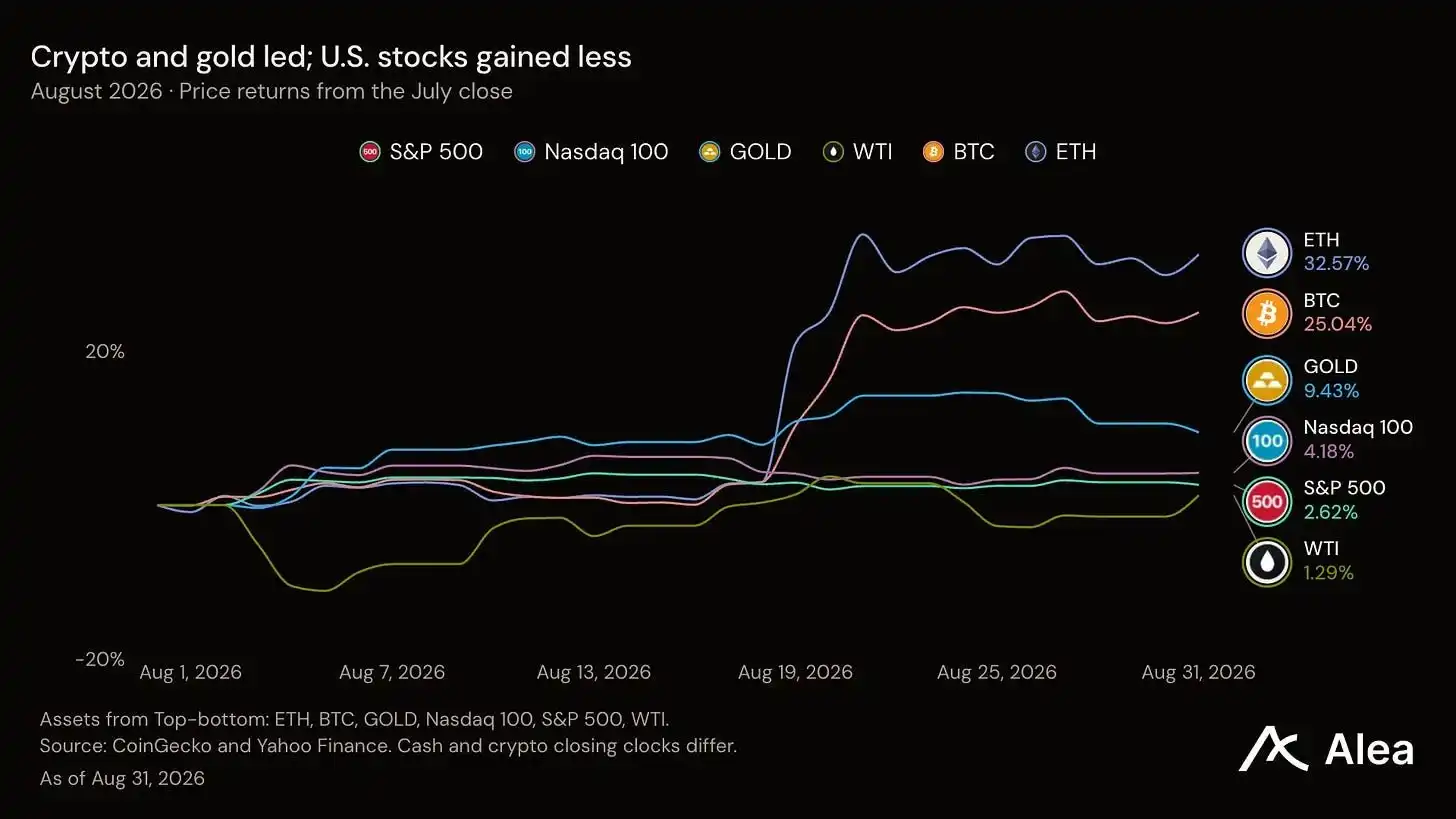
Crypto and gold led cross-asset returns in August, while U.S. equities showed a much narrower pattern under the surface. In Flow Brief, Alea Research said BTC gained 25.04% for the month, ETH rose 32.57%, and gold added 9.43%. The Russell 2000 ETF (IWM), used in the report as a gauge for U.S. small-cap stocks, rose only 0.94%.
The report’s central point was simple: broad market strength did not produce equal outcomes across all assets. Even within rising markets, some tokens and stocks were left behind.
Crypto strength and gold gains stood out across asset classes
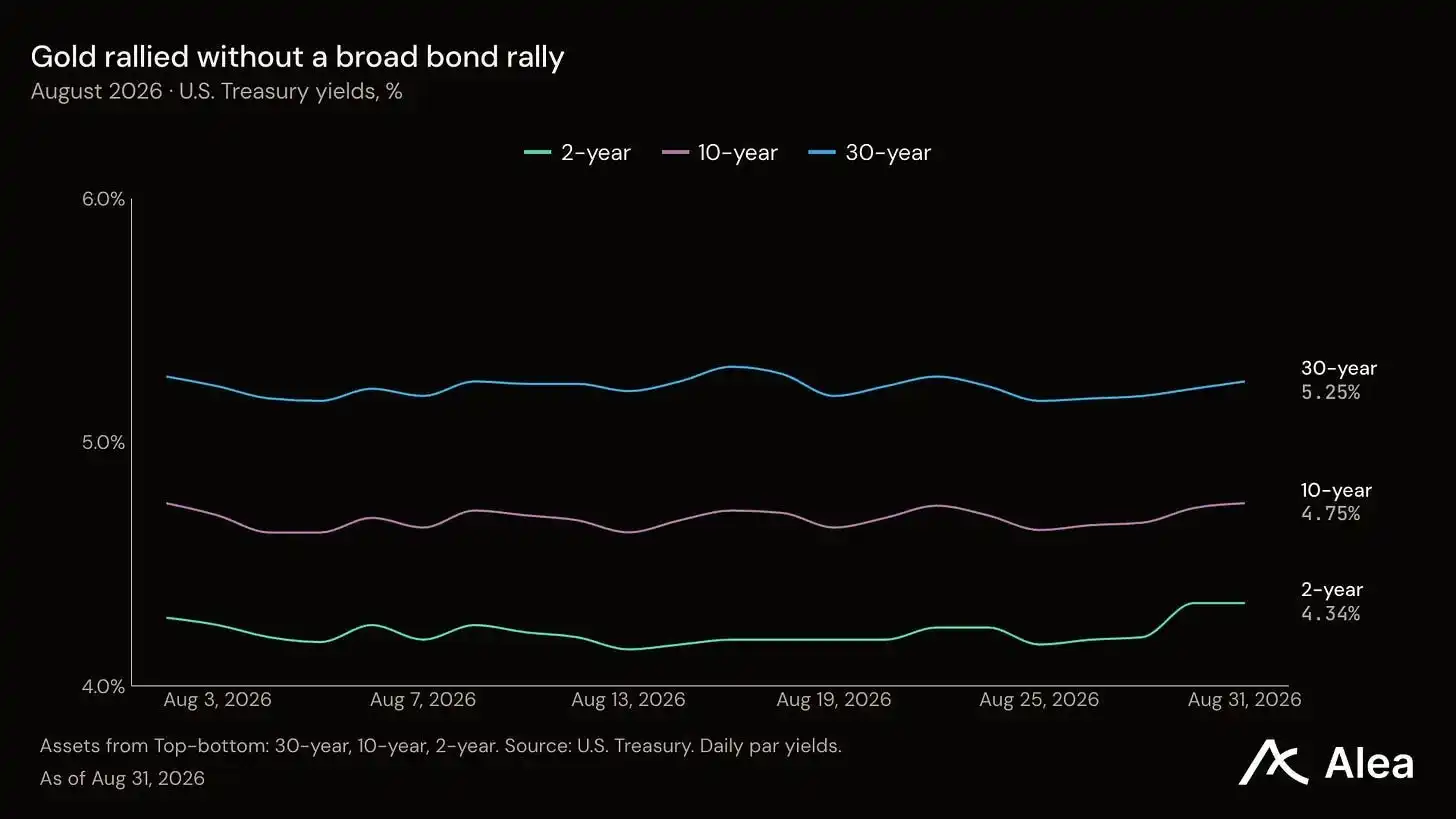
Alea’s August performance table covered BTC, Ether, gold, WTI crude, the S&P 500, and the Nasdaq 100. It said the rise in digital assets went well beyond BTC alone, and that gold’s advance did not come with a sharp drop in U.S. Treasury yields.
The 10-year Treasury yield ended the month at 4.75%, unchanged from the start of August. The 2-year yield rose 6 basis points to 4.34%. Alea said that matched the Federal Reserve’s Aug. 28 emphasis on price stability.
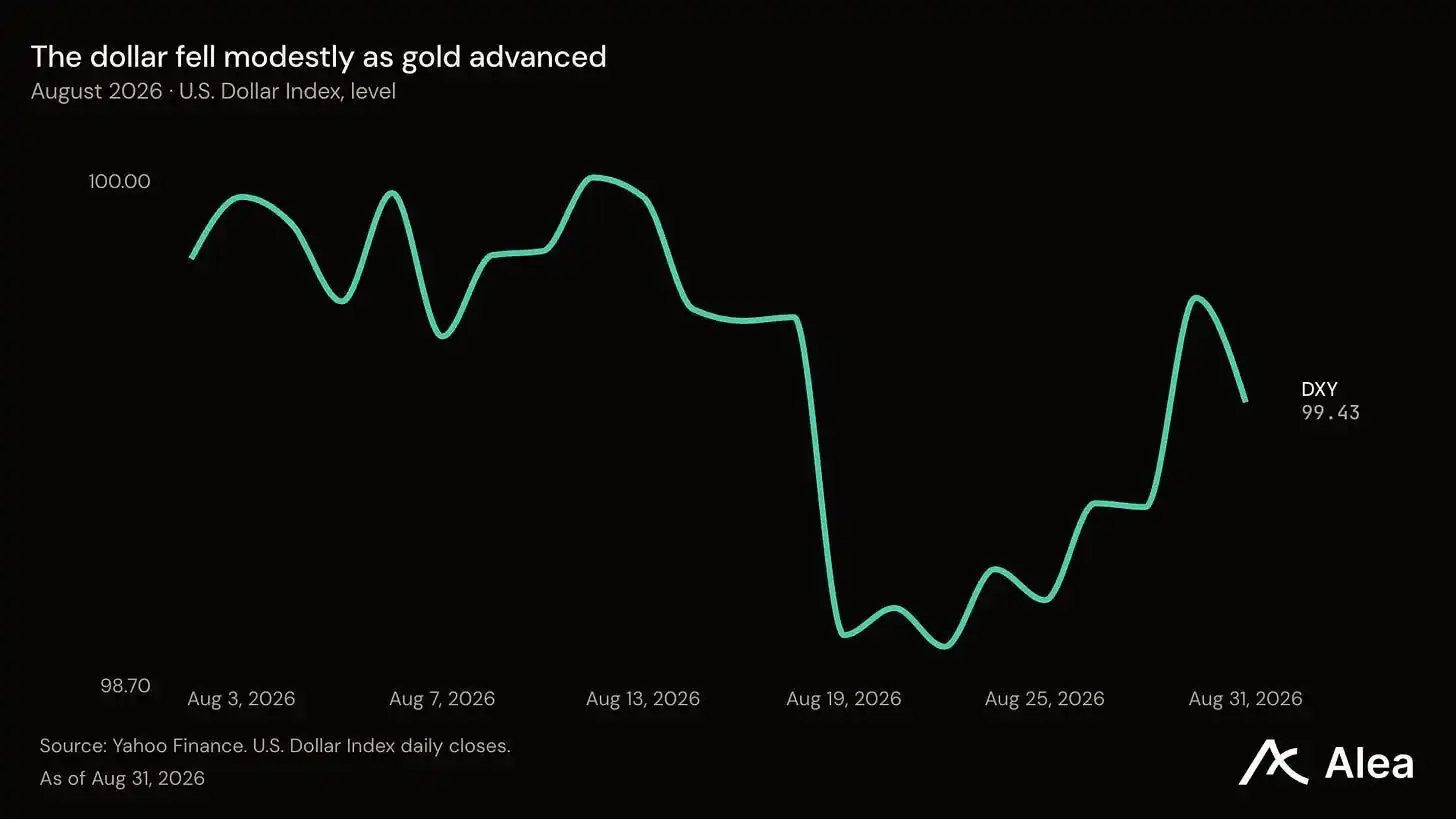
The U.S. dollar index slipped just 0.37% in August. In the report’s view, gold’s 9.43% gain was far too large to be explained by currency moves alone. It added that September inflation data would help determine whether short-term rates could move lower alongside the dollar.
On the macro side, July PCE prices rose 0.2% month over month. Annual inflation was 3.7%, with core inflation at 3.3%, while real consumer spending was flat. Using Bureau of Economic Analysis data, Alea described that mix as weak demand alongside sticky inflation.
Crypto posted broad gains, but token selection still mattered
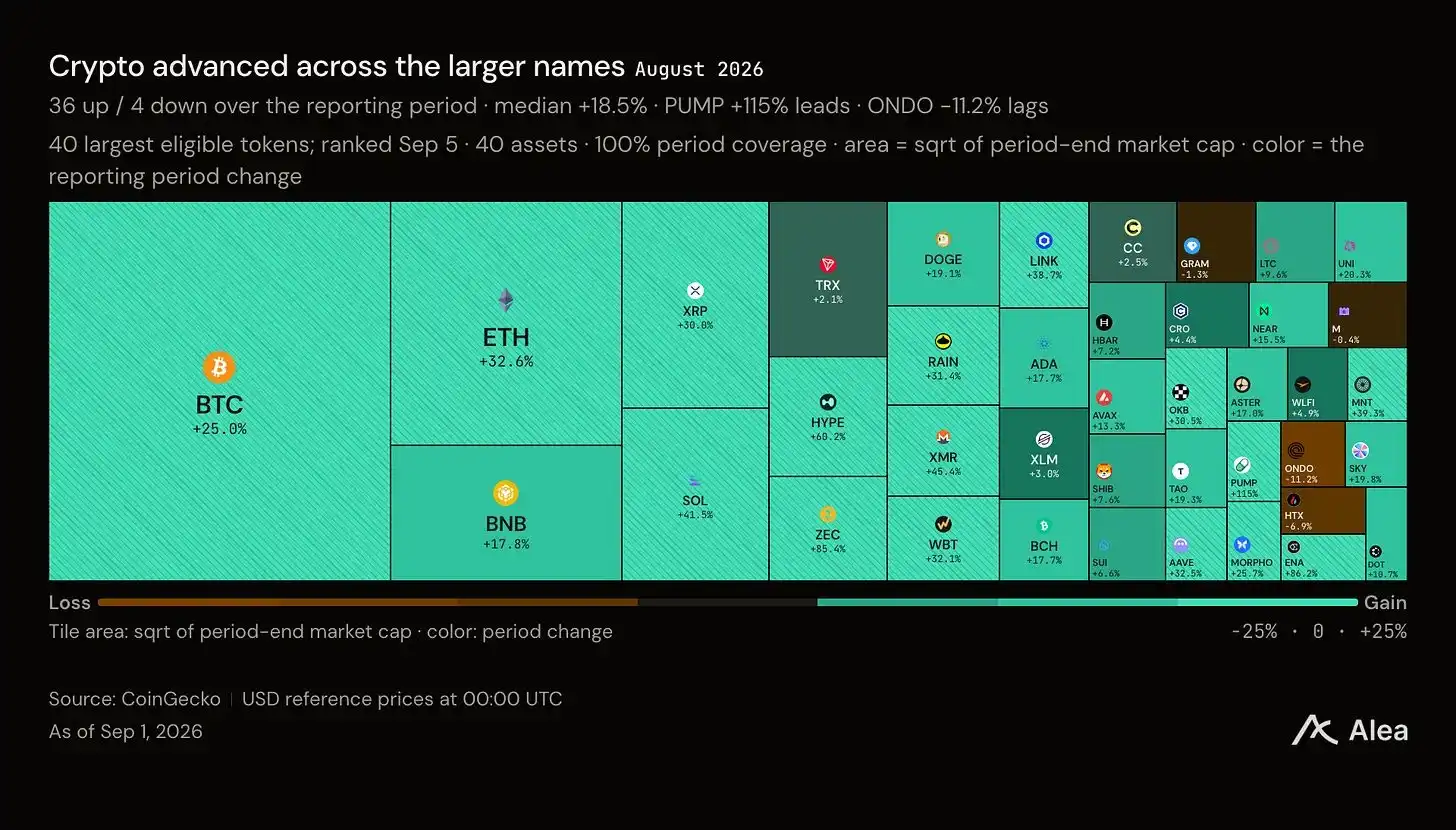
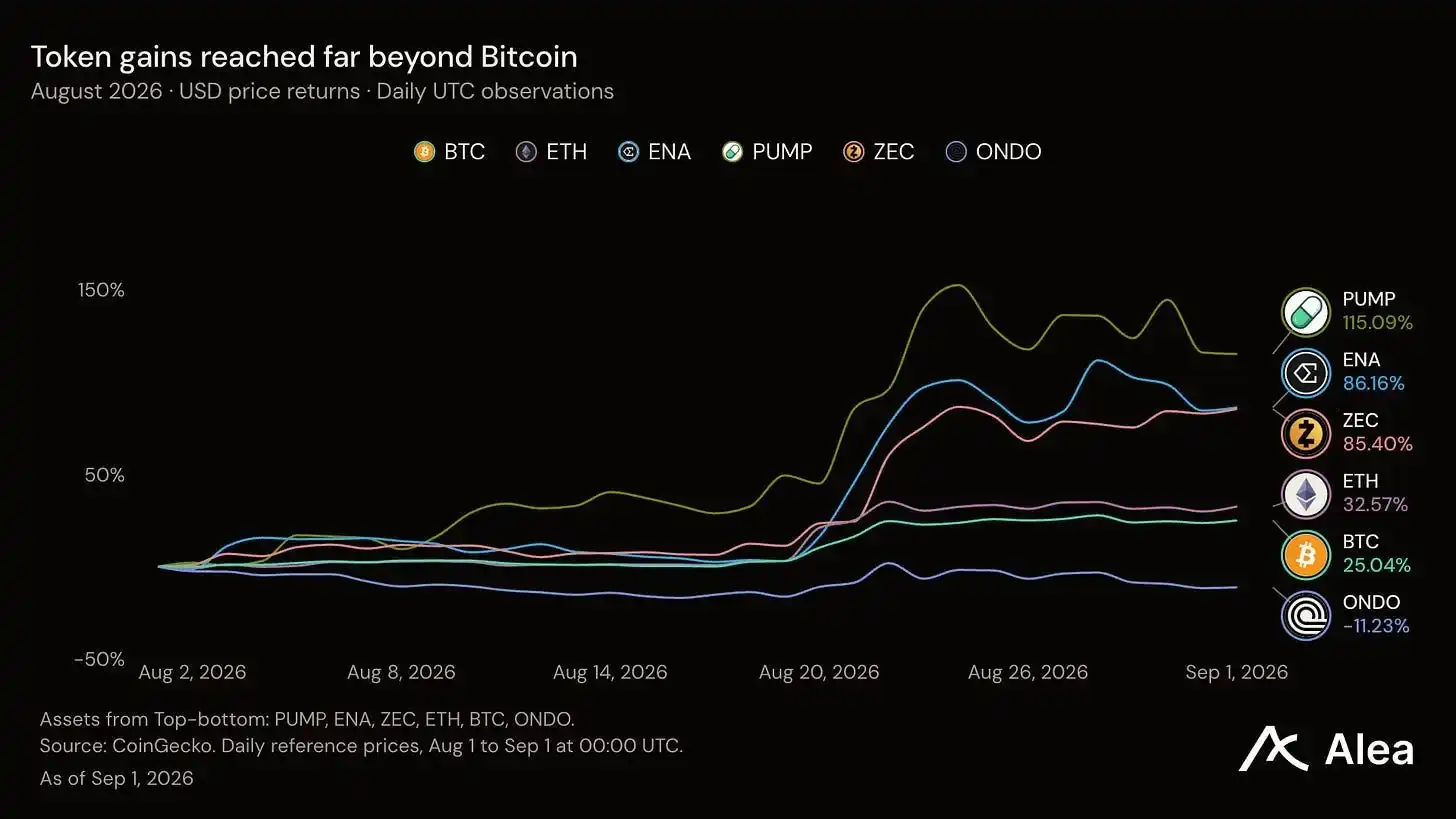
ETH outperformed BTC in August, rising 32.57% versus 25.04%. The move was not limited to the largest assets. Among qualifying tokens in the report’s screen, the median gain was 16.76%.
That broad advance still came with sharp divergence. Pump.fun climbed 115.09%, Ethena rose 86.16%, and Zcash gained 85.40%. Ondo fell 11.23%. Alea’s takeaway was that a rising market did not erase the impact of token selection.
The report also said token economics were becoming more transparent. Ether.fi started recording buybacks, while Ethena outlined a buyback plan tied to a supply threshold.
Ethena’s buyback threshold
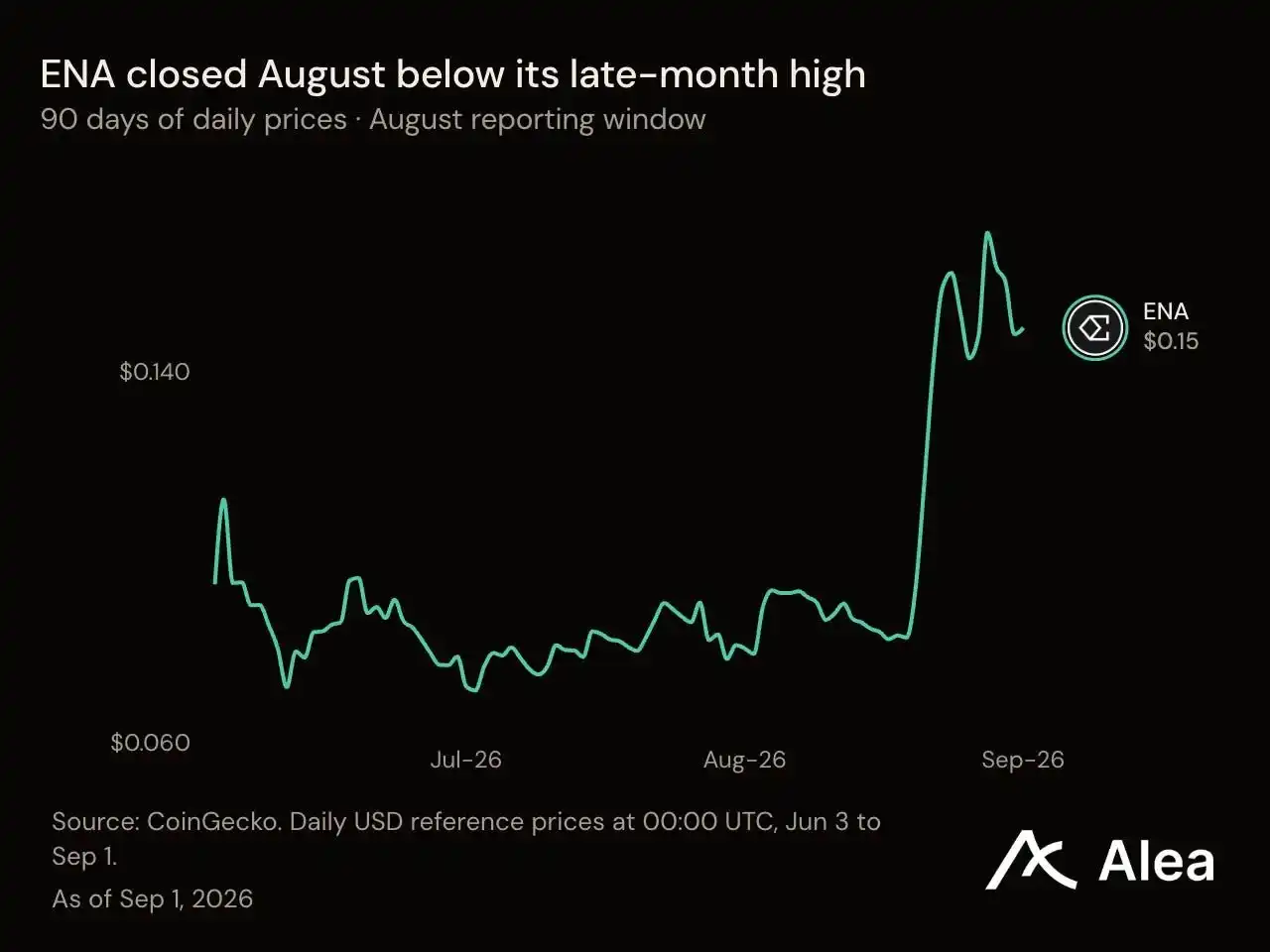
Under Ethena’s Aug. 27 fee proposal, the first tier would allocate 95% of net revenue to buybacks after the foundation takes 5% of gross revenue. The trigger is a USDe supply of $7.5 billion. The proposal disclosed current supply at $4.07 billion, implying that supply would still need to grow by about 84%.
Alea also noted that ENA closed August roughly 12.1% below its Aug. 27 UTC close, despite the token’s strong gain for the month as a whole. The pace of USDe supply growth and actual buyback execution will shape progress toward the proposal’s target.
Ether.fi expanded its product set
Ether.fi widened its product footprint in August, which Alea said broadened customer relationships. ETHFI rose 36.95% during the month. The report added that revenue after rewards and service costs would show how much value the expansion actually retained.
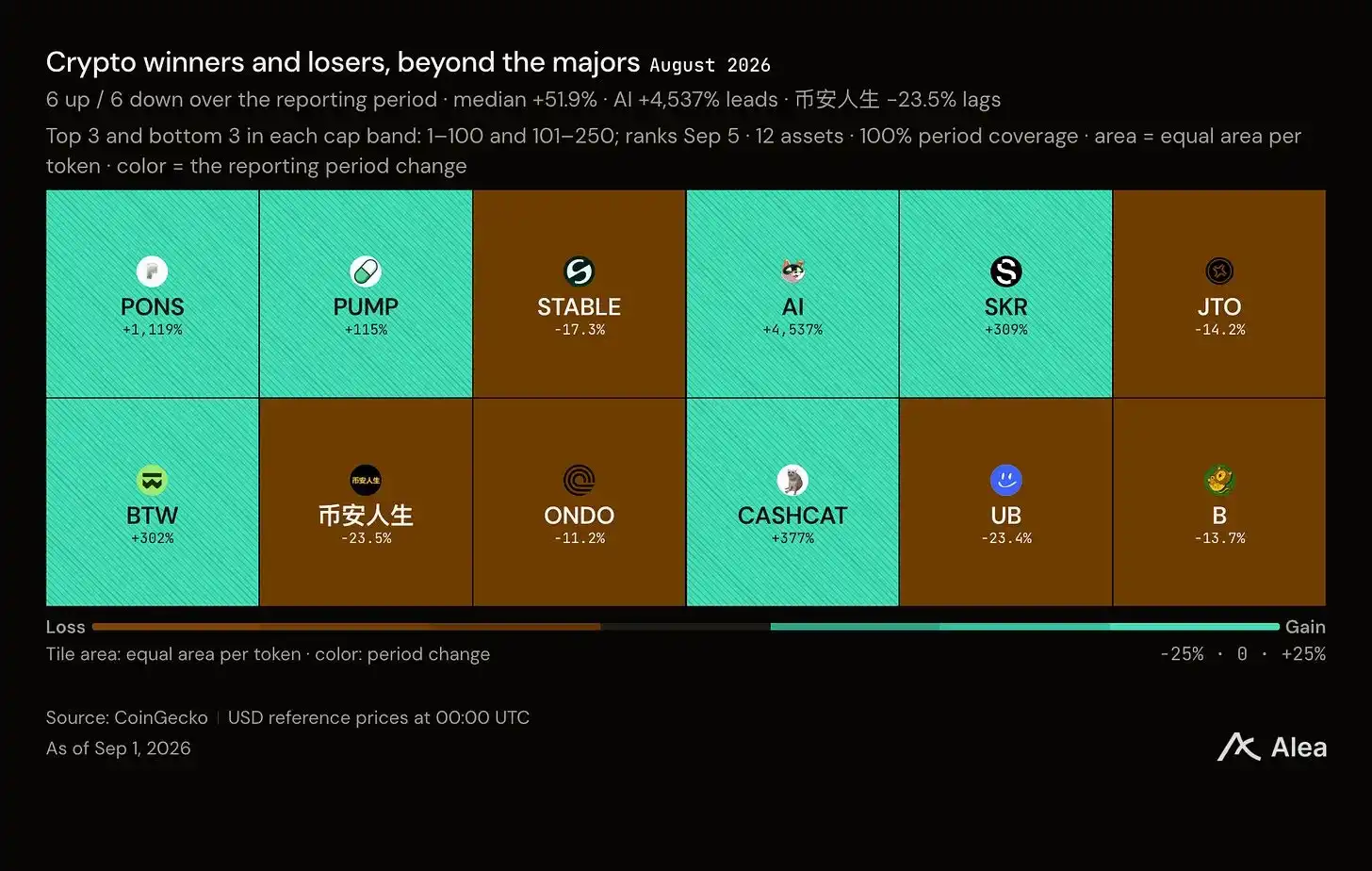
Alea also flagged Pons, which rose 1,119% and closed August at roughly 12 times its starting price.
U.S. equities rose, but gains were concentrated in a handful of names
The S&P 500 gained 2.62% in August and the Nasdaq 100 added 4.18%, both well ahead of IWM’s 0.94%. Alea described the setup as a bull market for a minority.
Within its 49-stock research basket, Coinbase, Robinhood, and Freeport-McMoRan led with gains of 28.62%, 21.08%, and 20.93%, respectively. At the bottom were GE, UnitedHealth, and Walmart, down 6.77%, 6.03%, and 5.69%.
Nvidia was one of the report’s main examples of that concentration. The company posted quarterly revenue of $96.2 billion, up 106% year over year, and guided to $108 billion for the next quarter. The midpoint of that guidance implies another 12.2% quarter-over-quarter increase. NVDA rose 9.98% in August, while the semiconductor ETF SOXX gained only 1.22%. Alea said the earnings report reinforced Nvidia’s AI growth narrative, but broader chip-sector returns showed that the rally was not evenly distributed.
Commodity gains spread beyond precious metals
Gold rose 9.43% and silver gained 14.98% in August, but the report said that was only part of the commodity story. Out of 28 front-month futures contracts, 23 finished higher.
Cocoa rose 23.22%, sugar gained 21.49%, and Chicago wheat advanced 18.34%. Orange juice fell 23.04%, lean hogs dropped 15.35%, and feeder cattle declined 7.64%. Alea said the data pointed to diverging trends between food-related inputs and industrial inputs.
WTI crude rose only 1.29% in August. According to the report, commodity inflation pressure during the month came mainly from selected food and metal contracts rather than oil. It also noted that delivery dates and contract rolls can affect front-month futures prices.
Methodology and data sources
The report compared spot closing prices on July 31 and Aug. 31. CoinGecko reference prices covered Aug. 1 to Sept. 1 at 00:00 UTC, capturing August UTC closes.
For crypto, the screen excluded pegged assets as well as tokenized funds, securities, and commodities. It required complete prices at both endpoints and used $1 million in trading volume on the closing date as a threshold. Stock breadth covered a 49-name research basket, and futures data used vendor daily closing prices. Data sources cited in the report were CoinGecko, Yahoo Finance, and the U.S. Treasury.