


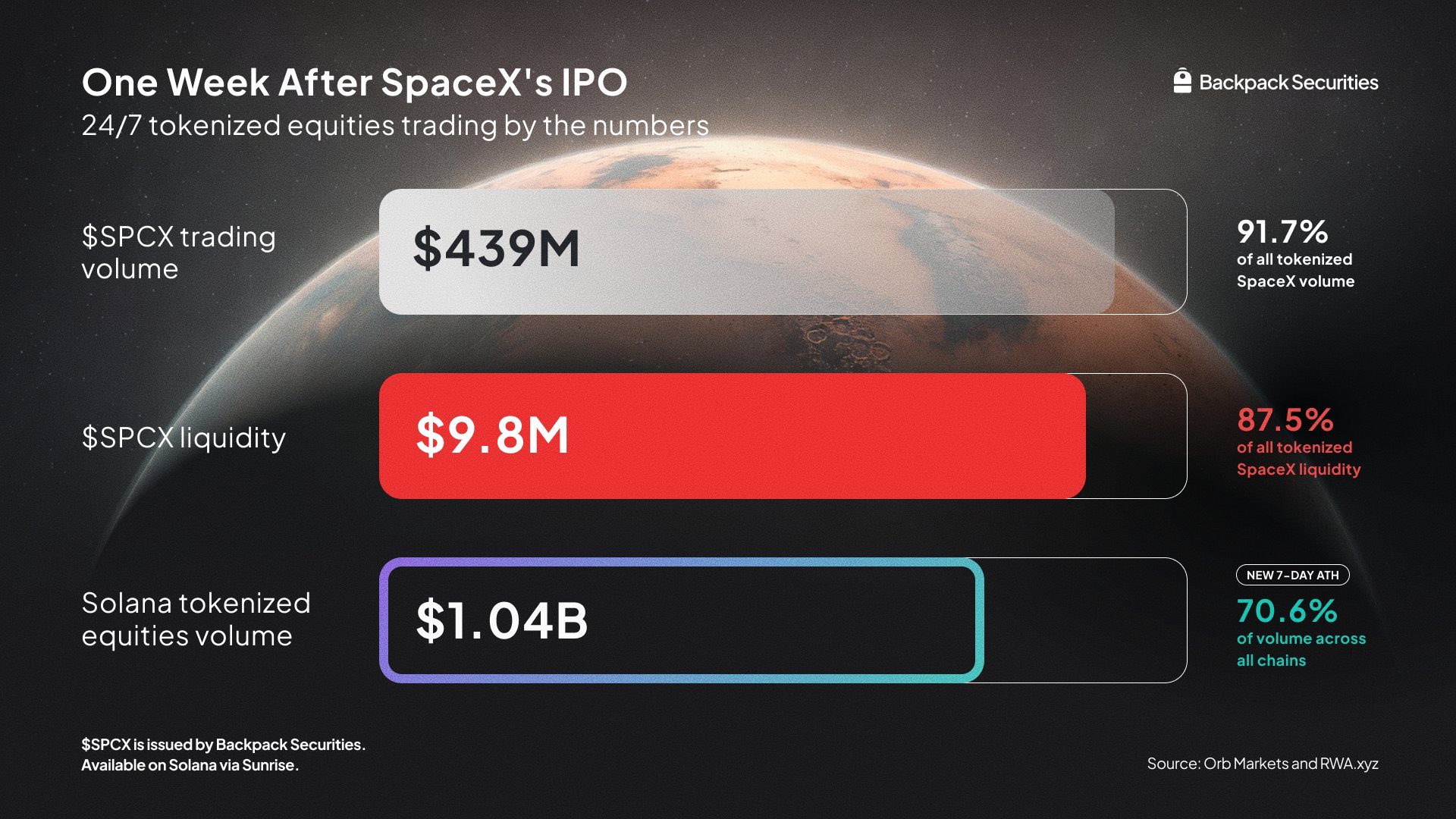
Backpack_CN shared a set of figures on X related to tokenized SpaceX trading. According to the post, during the week of the SpaceX IPO, $spcx — described in the post as being issued by Backpack Securities and traded on Solana — generated $439 million in trading volume. Backpack_CN said this accounted for 91.7% of tokenized SpaceX trading volume.
The post focused on $spcx and presented the data in three parts: weekly trading volume, liquidity, and Solana’s position in tokenized stock trading volume across networks. Backpack_CN introduced the post by saying it was “sharing some data,” then listed the figures for the asset and the network.
SPCX accounted for 91.7% of tokenized SpaceX volume
For trading activity, the number disclosed by Backpack_CN was $439 million. The same post stated that this represented 91.7% of tokenized SpaceX trading volume. The information therefore included both the absolute weekly volume attributed to $spcx and its share of the broader tokenized SpaceX trading volume referenced in the post.
The original post did not provide separate trading volume figures for other tokenized SpaceX products, nor did it include a breakdown by day or by venue. The verifiable information from the post is that Backpack_CN compared $spcx volume with total tokenized SpaceX volume and reported a 91.7% share.
Liquidity was reported at $9.8 million
Backpack_CN also disclosed a liquidity figure for $spcx. The post said the asset reached $9.8 million in liquidity, equal to 87.5% of tokenized SpaceX liquidity. This was the second core metric presented alongside the $439 million weekly trading volume figure.
The liquidity data was presented in the same format as the volume data: an absolute amount and a percentage share. The post did not specify the calculation method for liquidity and did not provide a detailed table of liquidity by network or marketplace. What the public text states is that the $9.8 million liquidity figure was associated with $spcx, the Backpack Securities-issued asset traded on Solana.
Solana set a new all-time high in tokenized stock volume
The same Backpack_CN post also included network-level data for Solana. It said Solana set a new all-time high in tokenized stock trading volume at $1.04 billion. According to the figures shared in the post, Solana led all networks and accounted for 70.6% of total tokenized stock trading volume.
This placed the $spcx asset data and Solana network data in the same update. The post’s wording stated that Solana’s tokenized stock volume reached a record high of $1.04 billion and led among all networks, with a 70.6% share of total volume.
Backpack_CN ended the post with the line: “排除万难,确保流动性发生在Backpack和Solana🫡,” referring to ensuring that liquidity took place on Backpack and Solana. The X post was timestamped at 6:19 on June 20, 2026. The page text showed 13,000 Views and included the prompt “Read 21 replies.” The source of the figures is the public X post from Backpack_CN.