
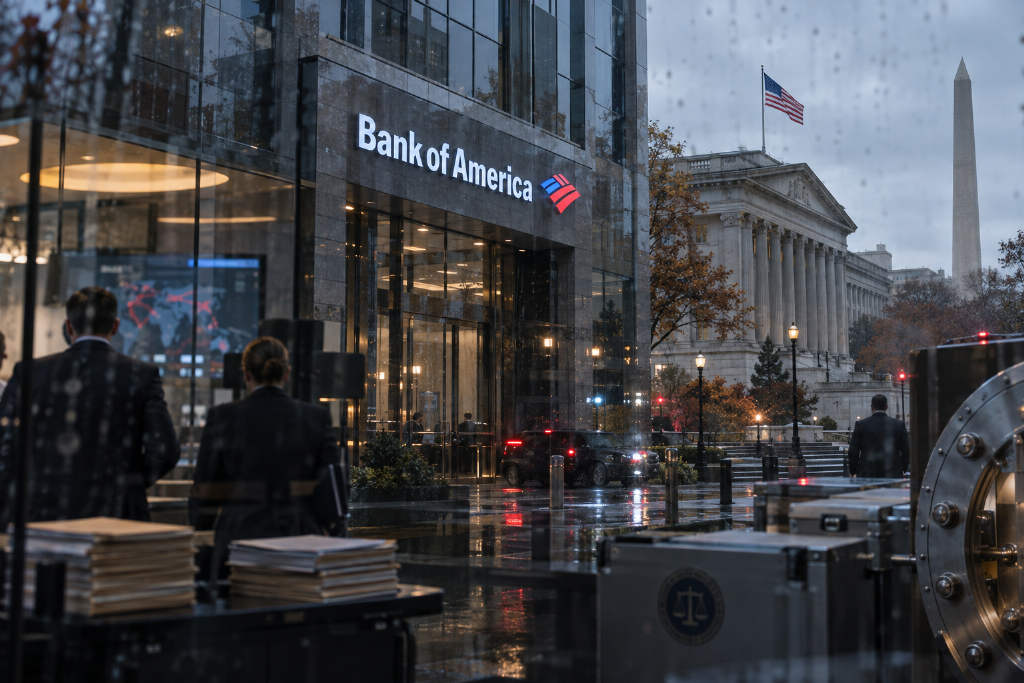
Bank of America was hit with more than $1.21 billion in combined penalties after U.S. authorities said the bank failed to timely report more than $5 billion in suspicious transactions.
In a statement issued on Oct. 13, the U.S. Treasury Department said the Financial Crimes Enforcement Network (FinCEN) imposed a $1.2 billion penalty on Bank of America. Treasury said it was the department’s third-largest penalty on record.
According to the Treasury release, Bank of America admitted in the settlement that it willfully violated the Bank Secrecy Act. The admitted failures included not maintaining a compliant anti-money laundering program, not carrying out required due diligence on correspondent accounts for foreign financial institutions, and not filing suspicious activity reports.
More than $1 billion tied to priority illicit finance risks
Treasury said more than $1 billion of the unreported suspicious transactions involved national security and other priority illicit finance risks. Those included suspected Chinese money laundering networks, fraud, and trade-based money laundering closely linked to the U.S. southwest border.
The department also criticized the bank for relying too heavily on law enforcement requests and referrals from other financial institutions instead of its own automated monitoring, which left suspicious activity unreviewed for long periods. According to CNBC, Treasury said the bank had prioritized revenue while limiting compliance resources.
Under the consent order, Bank of America must hire a third party to conduct a lookback review of previously undetected suspicious transactions and file any required reports. Its transaction monitoring, customer due diligence, correspondent account due diligence, and data governance will also be subject to independent review covering the U.S. southwest border, drug trafficking organizations, Iran, and Russia.
Treasury Secretary Bessent said, 「Financial institutions stand on the front lines of protecting our economy and national security. Today’s action makes clear that even the largest financial institutions are not above the law.」
OCC issues a record $750 million penalty
On the same day, the Office of the Comptroller of the Currency (OCC) imposed a $750 million civil money penalty on Bank of America, the largest in the agency’s history.
In its own release, the OCC said the bank had already received a cease-and-desist order in December 2024 requiring improvements to its anti-money laundering program, but major deficiencies remained more than a year later. The agency said the bank still had not routed potentially suspicious activity to investigators for review, and its transaction monitoring systems failed to properly monitor trillions of dollars in transactions, leading to substantial delays in suspicious activity report filings.
The OCC penalty will be credited against FinCEN’s $1.2 billion penalty. Separately, the Office of Foreign Assets Control (OFAC) reached an $11.6 million settlement with Bank of America over 475 apparent violations involving sanctions programs related to Russia, Iran, and others. The three actions total about $1.21 billion.
Acting Comptroller Jonathan Gould said, 「The bank’s response to its Bank Secrecy Act deficiencies was inadequate and unacceptable.」
Bank of America says it will book a $1.2 billion charge in Q3
Bank of America told CNBC that it will record a $1.2 billion non-deductible expense in its third-quarter results, reducing earnings per share by about $0.17. The bank said remediation costs are already reflected in its existing expense base.
The bank also said it has invested billions of dollars in compliance and that its remediation work is already well advanced. Spokesperson Christa Robinson said, 「Financial crimes compliance is serious, and we have a responsibility to get it right.」
After the announcement, Bank of America shares fell about 2% in extended trading. The bank is scheduled to report third-quarter earnings on the morning of Oct. 14 Eastern Time.