
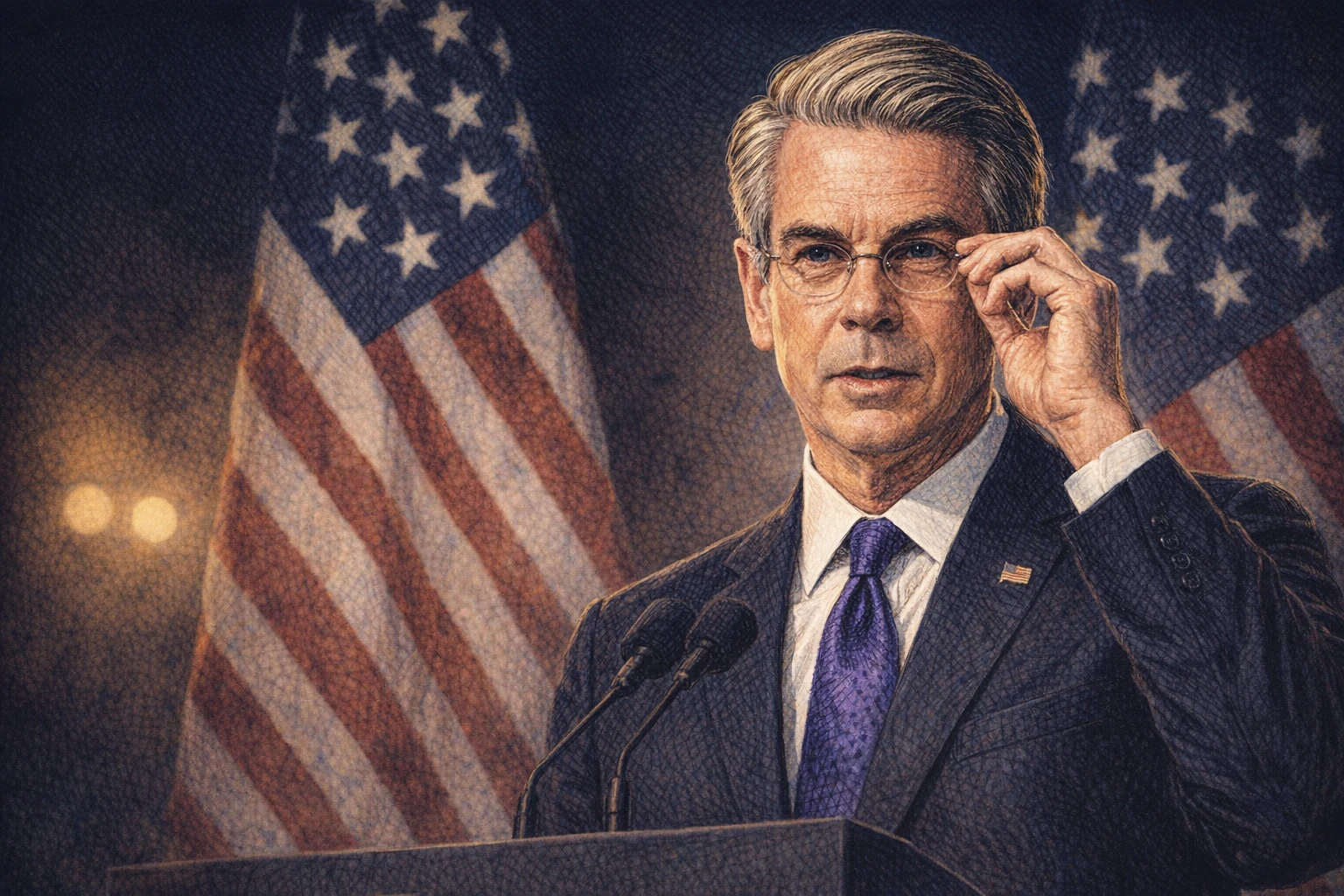
US Treasury Secretary Scott Bessent said on June 24 that consumer inflation can fall back to the 2% target as the conflict involving Iran cools, adding that new Federal Reserve Chair Kevin Warsh can balance economic growth with price stability.
Speaking after his remarks at the Economic Club of New York, Bessent said he was confident the Fed chair would optimize the dual path of controlling inflation and supporting growth. He also said Warsh would not face pressure from Donald Trump to cut rates, pointing to Trump’s statement at Warsh’s swearing-in that the Fed chair would remain independent.
Three factors Bessent says could cool inflation
Bessent pointed to three forces behind a possible decline in inflation. The first was energy costs. He said the US and Iran were in ceasefire talks and added that he believed the conflict had been passed, which would allow oil prices to fall and inflation to return to target.
The second was pressure from the bond market. Bessent cited a line that Trump understands “more governments have been taken down by the bond market than by howitzers”, using it to argue that higher long-term yields driven by inflation would put fiscal pressure on governments. The third factor was artificial intelligence. Bessent said he and Trump had already seen real economic growth effects from AI, which could support a mix of lower inflation and stronger growth.
Warsh holds rates steady as inflation expectations stay elevated
Warsh chaired his first FOMC meeting last week, where policymakers voted to keep rates unchanged. According to the source material, several officials had turned more dovish and started considering rate hikes in 2026. A Bloomberg survey also showed economists broadly expected the Fed’s preferred inflation gauge, the PCE price index, to rise 4.1% year over year in May, with core PCE seen at 3.4%, both well above the 2% target.
On the same day, Goldman Sachs multi-asset investment chief Lindsay Rosner warned there was a 50% chance of a July rate hike, saying the wealth effect from higher stock prices could show up in inflation data and act as a catalyst. Morgan Stanley chief strategist Mike Wilson said shrinking liquidity remained the main near-term risk for US stocks, while calling Warsh’s FOMC meeting a good and necessary start to rebuilding Fed credibility.
Bessent’s three policy pillars behind a “strong dollar” view
Bessent also outlined three pillars for US economic policy: responsible financial deregulation to speed up what he called economic privatization, reworking international trade relationships with tariffs as a tool rather than an end goal, and treating economic security and national security as one framework.
Asked whether a strong dollar conflicts with manufacturing competitiveness, Bessent said he did not define dollar strength simply by the Bloomberg dollar index. In his view, it means building conditions that make people and businesses want to come to the US, including certainty on taxes, regulation, and energy.