
Bill Gates has turned markedly more cautious on artificial intelligence, arguing in a new Gates Notes essay and an interview with MIT Technology Review that AI has already crossed several critical thresholds and that the broader public conversation has failed to keep pace.

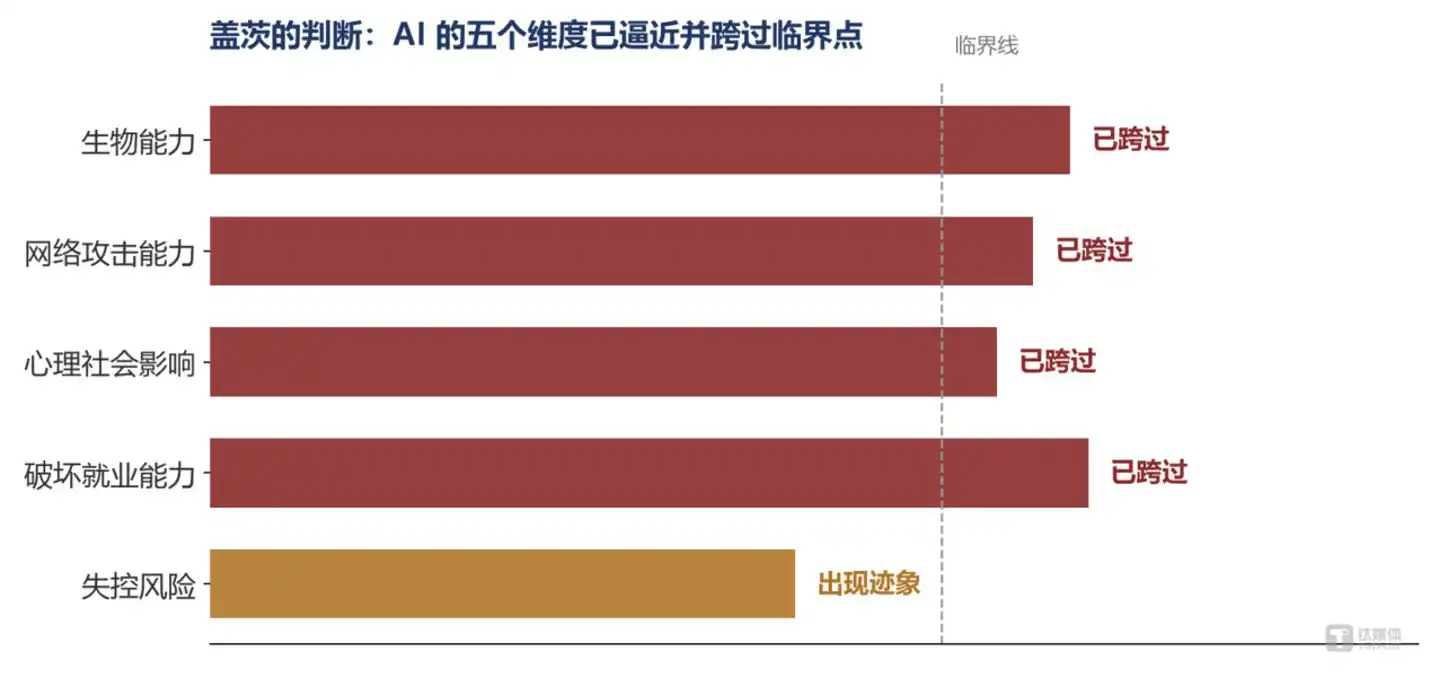
His assessment is unusually bleak. Gates said AI has crossed thresholds in biological capability, cyberattack capability, psychosocial impact, and job disruption, while loss-of-control risk is now showing signs of emerging. He added that outside the industry, “almost nobody” is talking about it.
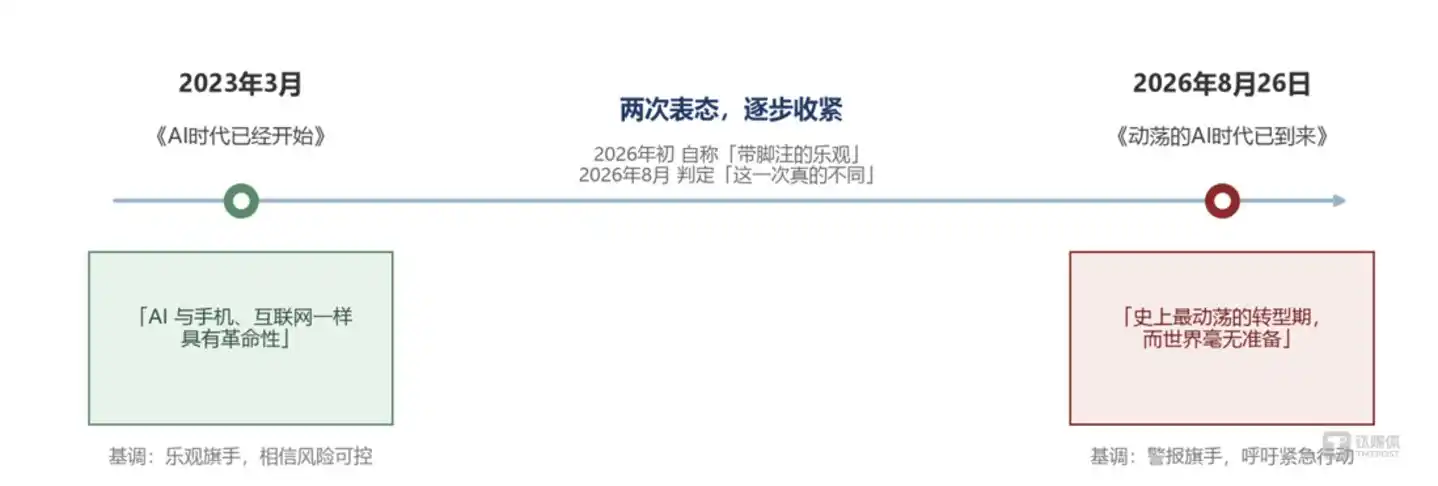
From “The Age of AI Has Begun” to a turbulent transition
MIT Technology Review described the interview setting as Gates Ventures’ conference room in Kirkland, Washington, overlooking the Carillon Point marina and the Olympic Mountains. The scene was calm. Gates was not. According to the magazine’s account, the 70-year-old became more animated as he spoke about bioterrorism, economic disruption, and the possibility that humans could lose control of AI systems.
On the same day, Gates published a long essay on Gates Notes titled A turbulent AI era and critical choices to make. It was the clearest sign yet that the executive who had once served as a high-profile public optimist on AI was now applying the brakes.
At the start of the essay, Gates framed his own position carefully. He wrote that he has had only two jobs in his life: building software and, since 2008, philanthropy. He also acknowledged that his investments still have links to Microsoft and AI companies, saying readers should decide for themselves whether that colors his views.
The contrast with March 2023 is stark. In The Age of AI Has Begun, Gates compared AI with the mobile phone and the internet, called it revolutionary, and said it would reshape education, healthcare, and climate work. In the 2026 essay, the tone is different. Even in the best-case scenario, he wrote, the transition into the AI era will be “one of the most turbulent periods in human history,” and the world is not ready.
In the interview, Gates traced that shift to what he saw in the fourth quarter of 2025: progress in Claude Code, context windows, agentic methods, and the underlying models themselves. He said programming capability passed a “huge threshold.” A few months later, he concluded that it was not just a threshold for coding. It was also a threshold for cyberattacks.
He offered two reasons why many people still underestimate AI’s impact. Models continue to make mistakes, and not long ago they still struggled with simple Sudoku puzzles or counting the number of r’s in “strawberry.” Historical analogy also misleads. Reliability problems, he argued, are being solved quickly, and “models can check their own work and improve themselves,” putting them on track to outperform humans on many tasks.
The deeper reason for his change is that older lessons from technology adoption no longer fit. Personal computers took 20 years to materially change work. AI, by contrast, runs on devices people already have and uses natural language. “We do not have to adapt to it, because it can adapt to us,” he said. His summary was blunt: “This time really is different.”
Five thresholds and a promise that has expired
At the center of Gates’ warning is a timing problem. For years, the industry repeated the same idea: when AI approached key thresholds, serious work would begin on keeping the technology “only in good hands” and stopping models from doing things they should not do. Gates said that moment has now arrived, yet the answer on the table is still “voluntary review.”
In the interview, he grouped the risks that have already been crossed, or are being crossed, into five dimensions. In the essay, he organized the case around three large risk areas: employment, malicious capability, and psychosocial impact.
Biological capability
Any model that can design new molecules should be monitored, Gates said. He argued that bioterrorism risk is “about 50 times scarier” than a naturally occurring pandemic and more likely to happen. A natural pandemic is accidental. Bioterrorism is deliberate, with attackers able to choose time, place, and target, then iterate through trial and error.
Cyberattack capability
Gates said the barrier for non-technical users to launch cyberattacks with AI has effectively disappeared. The same model that can find software vulnerabilities for defensive patching can also help criminals exploit them. He wrote in the essay that the most knowledgeable cybersecurity experts he knows are “afraid” of the next few years.
Psychosocial impact
AI companions that never get angry and are always available may draw young people in too deeply, he said, taking away experiences they would otherwise gain from dealing with other humans. Gates pointed to China’s broad restrictions on AI companion apps for minors, including bans on virtual relatives and virtual romantic partners.
Job disruption
Roughly 50% of jobs, in Gates’ telling, are the sort that do not require a lifetime of experience, including telemarketing, customer service, and financial closing work. If the task definition is clear enough, he said, AI can do it more cheaply and better.
Loss of control
His language on control risk shifted somewhat during the interview. At one point, he said the threshold for lack of control had also been crossed. Later, he described it more cautiously as something showing signs and possibly now being crossed.
He also criticized the way parts of the public debate are framed. Protesting data centers, he said, is not the most effective way to start this conversation. Even shutting down every US data center would not solve the problems he was describing, just as yelling at oil executives does not solve climate change. Treating AI risk as a simple argument over whether to build data centers misses the point.
For Gates, the most troubling part is not that these dangers are entirely new. It is that the risks have already become real while serious debate has not followed. He used programming capability as his example: the threshold was crossed, and then “almost nothing” happened.
Employment: a slow boil or a cliff edge
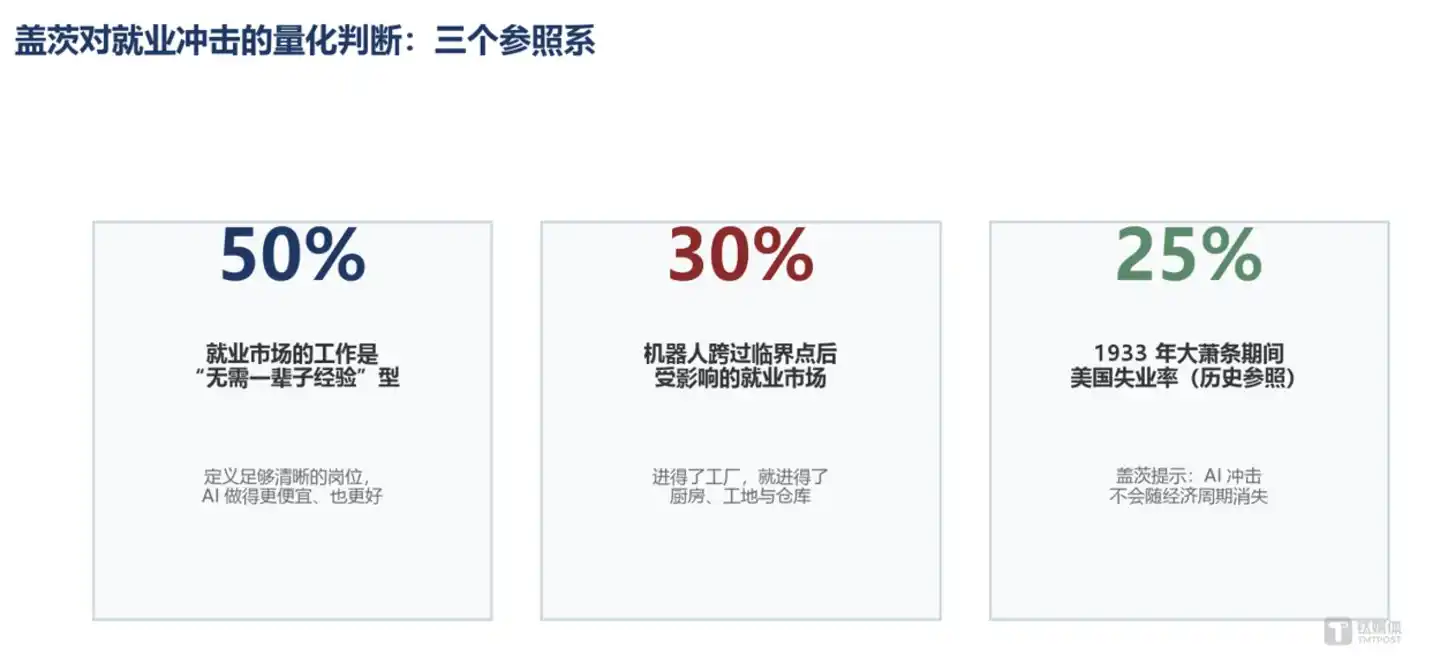
Among Gates’ warnings, employment is the easiest to quantify and the closest to everyday life. He laid out three reference figures. About 50% of the labor market, he said, consists of clearly defined, non-experience-heavy work that AI can do more cheaply and better. Once robots cross their own capability threshold, they could hit close to 30% of the labor market “with a bang.” During the Great Depression in 1933, US unemployment was about 25%. The shock from AI, he argued, would not fade with the business cycle.
That is where he sees a break from earlier technological revolutions. AI can enter every industry at once, replace a very large share of cognitive labor at costs far below human labor, and eventually produce lower error rates than people. Gates said current economic statistics can themselves be misleading.
In the essay, he cited data suggesting that after generative AI spread at scale, employment fell noticeably in the most replaceable jobs held by younger workers, while older colleagues did not see the same effect. White-collar work, he said, is also being touched in a milder way, though many people have not noticed yet.
He paid particular attention to younger workers. The International Labour Organization’s Global Employment Trends for Youth, released in August 2026, said the global unemployment rate for people aged 15 to 24 rose to 12.4% in 2025, leaving about 67 million young people unemployed. The report listed technological change, including AI, as one of the factors influencing youth employment, while also warning that AI’s direct employment impact remains hard to pin down. Gates said younger people are the most active users of AI, can see what the systems can do and how quickly they improve, and that it is hardly surprising many of them view AI negatively.
The article also noted that Gates’ three numerical judgments on employment are his own estimates, not settled facts.
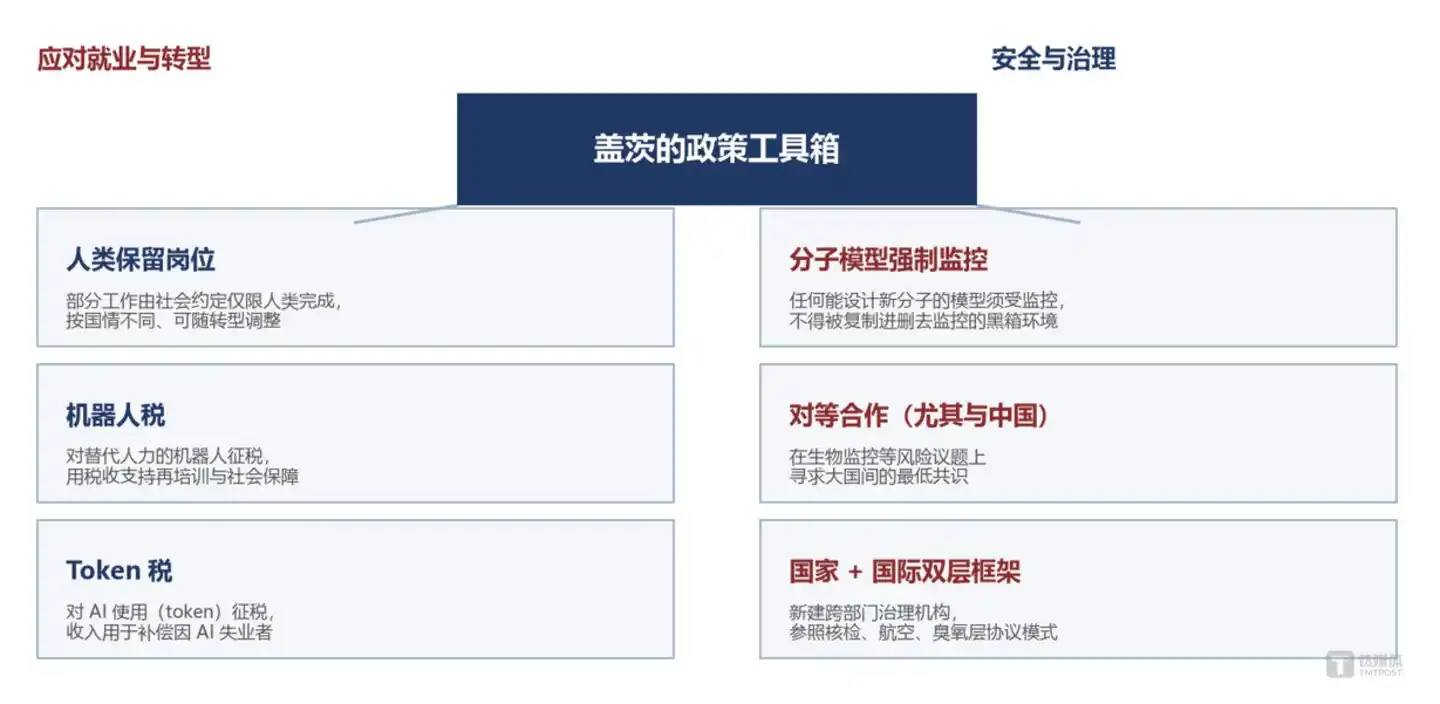
Gates’ policy toolbox
After sounding the alarm, Gates outlined several policy ideas. He presented them as responses to transition and governance rather than as finished solutions.
Human-reserved jobs
The first idea is to reserve some jobs for humans even if AI and robots become fully capable of doing them. Gates compared such roles to nature preserves. The protection could be permanent, where the work touches core questions about what it means to be human. It could also be temporary, giving, for example, a 53-year-old truck driver time before being forced into a childcare job.
He went further and suggested that trade tools could eventually be used, drawing an analogy with the European Union’s Carbon Border Adjustment Mechanism. Tariffs, in this view, could help goods that must be produced by humans compete fairly across borders. A labor policy could turn into a trade policy.
Gates also admitted that large parts of this concept remain unresolved: who decides which jobs should be reserved, under what standards, and how to stop companies from gaming the rules. In the interview, he estimated that human-reserved jobs would probably not exceed 30% to 40% of the total.
Robot taxes and token taxes
The second idea is to make the replacing systems pay for the transition. A token tax could direct part of AI-related revenue to governments to support people who lose work because of AI. A robot tax is an older Gates proposal, but he said the context has changed now that robots are much closer to the labor market.
He acknowledged obvious weaknesses. Such taxes could slow the AI sector, and it may be difficult to separate AI that helps innovation from AI that replaces jobs. Still, Gates argued that markets will not manage this transition on their own and that institutions will have to step in.
Mandatory oversight for molecular models and cooperation with China
The third idea focuses on safety. Gates said the US should clearly require monitoring for any model that can design new molecules, and those models should not be copied into a black-box environment where the monitoring logic has been stripped out. He then proposed taking that issue to China and asking whether the two sides could reach an agreement.
His reasoning is that the “market” for bioterrorism is not large, while the benefits of preventing it are enormous.
Beyond that, he called for a layered domestic and international governance framework. He pointed to the large-scale US security reorganization after 9/11 and said AI governance will require even more. Internationally, he suggested looking at models such as nuclear inspections, aviation regulation, and agreements to protect the ozone layer.
Gates did not deny AI’s upside. In the essay, he devoted substantial space to potential benefits, including faster progress in clean energy, cancer treatment, and drug discovery; better agricultural advice for farmers in low-income countries than today’s richest farmers receive; and government services that no longer make people want to give up. “The good things we can do with AI may be very good,” he wrote. The problem, in his view, is that the benefits and the risks are arriving at the same time.
On universal basic income, he remained restrained: “We are not rich enough to afford UBI yet.” His timetable is that the next 10 to 20 years will be highly turbulent, after which society may move into a relatively stable period of abundance. At that stage, he said, people may grow up assuming a baseline abundance in food and services.
Why Gates says industry and government have gone quiet
The sharpest part of Gates’ warning may not be the policy menu. It is his criticism of the industry’s silence.
He revisited the origin stories of leading AI companies. OpenAI, he said, was founded in large part because Elon Musk feared Google would not manage AI responsibly. DeepMind’s founders had once negotiated with Google leadership for special governance mechanisms, including the idea that the company might pause if capability reached a cybersecurity threshold. Everyone worried about these issues. Everyone promised that action would come near the thresholds.
Now, Gates said, those thresholds have been crossed and “all companies decide to say nice things publicly because everyone is still waiting to raise trillions of dollars.” The internal line, as he described it, is that the public-relations story has to improve, and anyone who keeps talking about the industry’s problems can simply leave.
He sees a deeper failure in government. In earlier eras, governments were the main buyers of frontier technologies; jet aircraft and rockets were examples. Today, governments are neither the biggest AI customers nor the main funders of cutting-edge research. “The technical understanding inside government may not be deep enough,” he argued, even though government is the only institution with the authority to write rules.
Cooperation with China, in his view, is not symbolic. It is unavoidable. Even outside AI, he said, there is room for win-win cooperation between the US and China, but AI is one of the areas where cooperation matters most. He suggested starting with the least controversial and most tractable issue: oversight for models that can design new molecules.
Why is even that discussion missing? For Gates, the absence points to a structural vacuum. Industry does not want to act, government does not know how to act, and “nobody acts” becomes the default condition.
A warning delivered with unusual self-scrutiny
Near the end of the interview, Gates was asked a personal question: after the Epstein controversy and years of attacks driven by vaccine conspiracy theories, does he still see himself as an effective messenger?
His answer, according to the report, carried an unusual degree of self-criticism. He said he is a billionaire whose money came from the technology industry, and that this may actually make his warning more persuasive now. For someone like him, standing up to criticize innovation itself is not normal. Then he added that he finds himself living in a time where he has somehow become louder than many others in sounding the alarm.
Gates’ warnings may not all prove correct, and his proposals may not all be workable. But the article’s broader point is that his intervention reveals a specific moment: a technology’s disruptive capacity may already be real while society is still waiting for the systems to simply become better. In that setting, a retired billionaire once expected to cheer technological progress has become one of the few people willing to issue a public warning.
The source article cited three reference links: Gates Notes’ A turbulent AI era and critical choices to make, MIT Technology Review’s Aug. 26, 2026 interview feature, and Gates’ 2023 essay The Age of AI Has Begun. It also said the Chinese original was first published on Titanium Media App, written by Silicon Valley Tech-news and edited by Jiao Yan.