

BIT formally launched Hong Kong stock trading under the "BIT Brokerage" brand on Oct. 12, adding support for Main Board and GEM trading, IPO subscriptions, margin financing, stock transfers, and stablecoin deposits. The launch expands the platform’s product set and highlights the route BIT has chosen: using governance, technology, and compliance infrastructure to connect traditional finance with digital assets.
From U.S. stocks to Hong Kong stocks
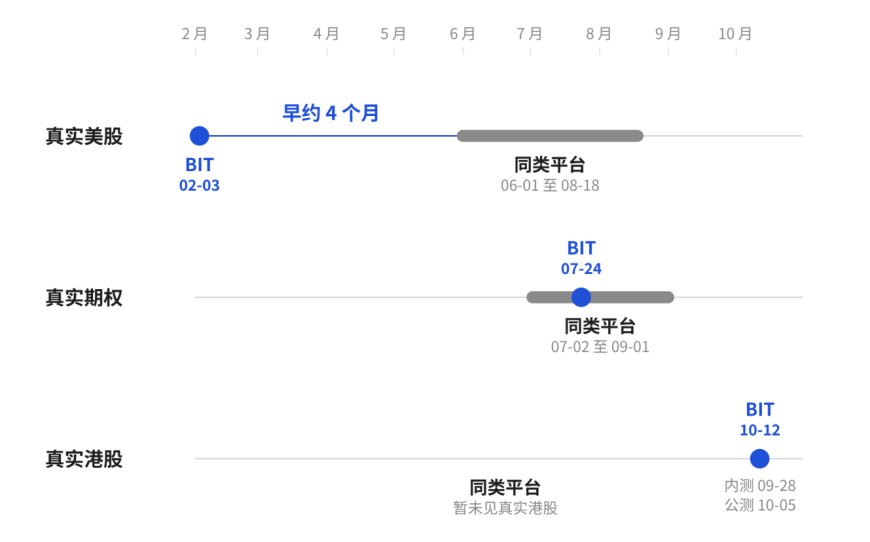
The source article says BIT has repeatedly moved early in brokerage-style products. This year, it was first to roll out a U.S. stock product connected to licensed brokers and was also among the earliest platforms to support full options trading. The Hong Kong stock launch marks the third time BIT has moved first in expanding brokerage-related services, according to the report.
On U.S. equities, BIT (formerly Matrixport) announced stablecoin-funded U.S. stock investing on Feb. 3 using a "digital assets + licensed broker" model. At that time, comparable platforms were still centered on tokenized stocks. Similar products were launched between June 1 and Aug. 18, and the earliest of them came 118 days after BIT, the article said.
On margin and options, BIT opened margin beta testing in June, then enabled short selling and launched U.S. stock options in July. Among peer platforms, real U.S. equity options went live between July 2 and Sept. 1, placing BIT among the earliest platforms to offer them.
For Hong Kong stocks, some platforms already offered what they described as Hong Kong stock trading, and a few had introduced IPO subscription products. But those services were still mainly built around tokenized stocks or perpetual contracts, while IPO access was limited to selected names. The article says those products also came with restrictions on transparency and user rights. Users might pay service fees of 5% to 15%, and after winning an IPO allocation they might not be able to dispose of the shares freely or convert them into real stock. BIT’s newly launched Hong Kong stock product follows the same compliance path as its U.S. equities service, covers a broader set of securities, and supports IPO subscriptions, margin financing, and stock transfers.
One account across multiple markets
With Hong Kong stocks now live, BIT Brokerage covers U.S. stocks, including options, Hong Kong stocks, cryptocurrencies, OTC services, wealth products, and asset management. The article frames that as a clearer step toward a "one account connecting global markets" strategy.
BIT, previously known as Matrixport, was founded in 2019 and changed its name to BIT earlier this year. The article says the platform now handles more than $7 billion in monthly trading volume, has more than $6 billion in custody and assets under management, and has paid more than $2 billion in cumulative interest. It also says product differences in crypto spot, OTC, wealth products, and asset management have narrowed across platforms over time, while U.S. stocks, including options, and Hong Kong stocks have become a new competitive focus starting in 2026.
In U.S. equities, the report describes BIT’s first-mover position and product breadth as notable. BIT launched real U.S. stock trading connected to licensed brokers on Feb. 3, nearly four months ahead of the earliest comparable platform. The Hong Kong stock business uses the same direct-to-licensed-broker model. Since the Oct. 12 launch, users have been able to trade a wider range of Hong Kong-listed securities with stablecoins and use margin financing and stock transfer functions.
Options and IPO subscriptions stand out as two areas where BIT differs more sharply from peers. The article says both depend on licensed institutions. IPO subscriptions must be handled through accounts at licensed entities, while listed options require clearing guarantees from the Options Clearing Corporation, or OCC. U.S. stock services require broker-dealers, clearing, and custody, and options also need market data connectivity. Hong Kong stocks require a Type 1 licensed corporation and access to Hong Kong Exchange clearing systems. Each added business line raises compliance and risk-control requirements and increases the barrier to entry for smaller platforms, according to the report.
The article also points to rising activity in Hong Kong IPOs. Data released by Deloitte on Sept. 24 projected about 116 IPOs in Hong Kong in the first three quarters of 2026, including expected listings, with fundraising of about HK$387.9 billion, ranking second globally. That would represent a 112% year-over-year increase in funds raised and a 76% increase in the number of listings. For the full year, fundraising is projected to reach at least HK$480 billion, with about 160 IPOs. With Hong Kong stocks now available, BIT users can subscribe to new listings directly with stablecoins, without being limited to one or two designated stocks and without paying high service fees, the article said.
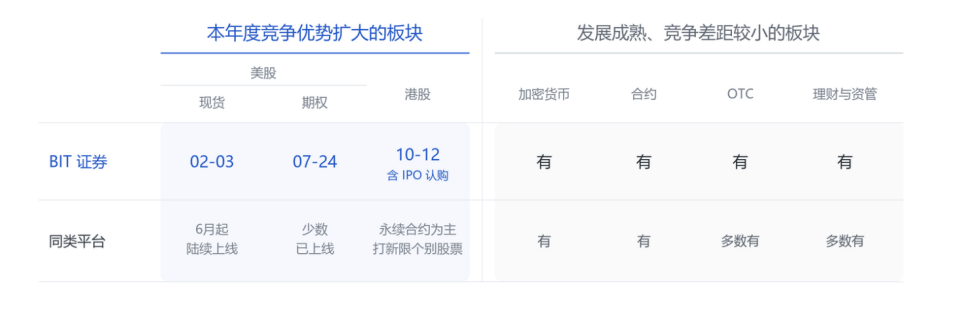
In terms of market coverage, BIT now supports cryptocurrencies, U.S. stocks including options, and Hong Kong stocks. Users can deposit USDT or USDC to buy BTC, Nvidia shares, or subscribe to Hong Kong IPOs without first converting into fiat currency or opening a separate account. Existing BIT U.S. stock account holders can activate Hong Kong stock trading directly.
On trading hours, the article says BIT uses a single account to connect markets with different schedules. Regular Hong Kong stock trading runs from 9:30 to 12:00 and from 13:00 to 16:00, for a total of 5.5 hours. U.S. stock trading lasts about 6.5 hours. Because the two sessions are staggered, they add up to about 12 hours. Crypto and perpetual contracts cover the remaining hours, while stablecoin deposits and withdrawals are processed 24/7 with fast settlement.
The compliance infrastructure behind the brokerage route
The article argues that BIT Brokerage has been able to move ahead because it built compliance channels early. In securities services, that work takes time, but it is foundational.
When U.S. stock-related products first gained traction, the industry split into two paths. One was to design products in-house, such as perpetual contracts and tokenized stocks. Those products do not depend on outside institutions, can be launched quickly, can trade around the clock, and can offer leverage. A CoinGecko report released on July 8 said crypto exchanges launched 358 real-world asset spot and perpetual products from the start of 2025 through May this year. In May alone, trading volume in those perpetual products reached about $347.17 billion across stocks and commodities. The article says that model is easier and faster to start, but it makes trade-offs on asset integrity and compliance that could limit long-term development.
The other path is to connect to licensed brokers so users can buy real stocks. Every trade then has to go through broker execution, clearing, and custody, which makes the launch process slower. BIT Brokerage chose that route and summarized it as "slowest in the short term, fastest in the long term."
In the U.S. market, responsibilities are clearly divided. Broker-dealers handle order intake and execution, while clearing and custody are provided by licensed institutions. BIT’s U.S. stock business works with three U.S.-licensed clearing institutions — Clear Street, RQD Clearing, and Atomic Vaults Securities, or AVS — for clearing and asset custody. Their registration status and business scope can be checked through FINRA BrokerCheck, the article said. It also noted that BIT released Trust Whitepaper V2.0 in September 2026, outlining three pillars: compliance and regulatory foundations, independent audit and attestation, and technology and operational transparency. The paper describes the company’s systems and practices in compliance governance, risk management, security, and transparency.
For Hong Kong stocks, service providers must hold a Type 1 license from the Hong Kong Securities and Futures Commission, and they face hard requirements on capital and client money. BIT’s Hong Kong stock service is provided by Atomic Vaults Asia. According to official materials cited in the article, the firm holds an SFC Type 1 license for dealing in securities. A Type 1 licensed corporation must have paid-up share capital of no less than HK$5 million and liquid capital of no less than HK$3 million. If it provides securities margin financing, paid-up share capital must reach HK$10 million. Client funds must be kept in segregated accounts, and license status can be checked in the SFC public register. The article says those requirements raise operating costs and create entry barriers.
For users, the two paths result in different assets. Buying Hong Kong stocks on a perpetual contract platform does not add the corresponding shares to the account. The user holds a contract tracking the stock price, pays funding fees, and may be forcibly liquidated if losses reach a certain level. Tokenized stocks are closer to real shares, but they usually represent economic rights only, often do not include voting rights, and redemption is limited by the trading hours of the underlying market. Buying through a licensed broker allows users to hold real shares, receive dividends and voting rights based on ownership, and use stock transfer and IPO subscription functions.
Options are presented in the article as a practical test of whether a platform has built the full route. If a platform only offers stock exposure through tokenized stocks or perpetual contracts, listed options are very difficult to support. U.S. listed options are based on real shares and trade in securities accounts. Their market data comes from OPRA, and OCC provides clearing guarantees. Ordinary market makers or financial institutions usually cannot complete those steps on their own. Before options trading is enabled, brokers must conduct suitability reviews, and users can trade only after completing risk disclosures and receiving written approval. Those steps cannot be recreated through internal bookkeeping alone. The article says that without direct broker connectivity, clearing, and custody, listed options are hard to offer, making options a key indicator of whether a crypto platform has truly adopted a brokerage model. Real access to U.S. equities comes first.
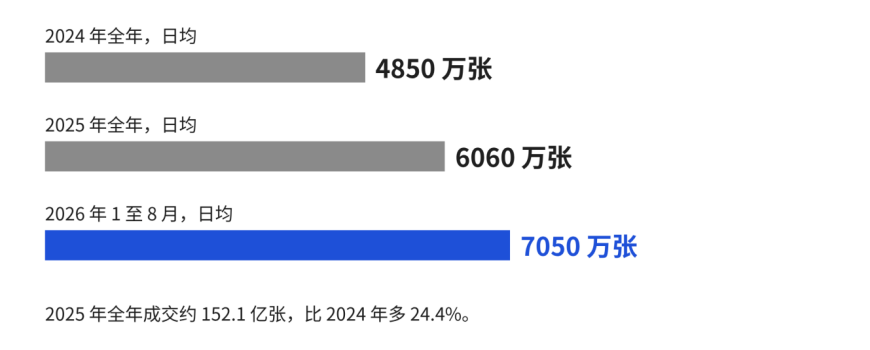
The options market itself has also been growing. U.S. listed options cleared by OCC reached about 15.21 billion contracts in 2025, up 24.4% year over year. From January to August 2026, average daily volume was about 70.5 million contracts, up 22.7% from a year earlier.
The article says the difference between the two development paths is already visible. Platforms that design products themselves can launch faster, but users do not buy real shares and services such as options are harder to add. Platforms that connect to licensed brokers must build brokerage, clearing, and custody links first, which slows the initial rollout, but that is the only route that can support options, IPO subscriptions, and other services that depend on licensed institutions. BIT Brokerage built that compliance base from the start and chose what it calls the "slowest in the short term, fastest in the long term" path.
From products to a unified brokerage brand
BIT’s brokerage route has continued to expand from U.S. stocks to Hong Kong stocks. The formal launch of the "BIT Brokerage" brand brings the products introduced earlier under one umbrella.
When U.S. stocks went live in February, BIT offered stablecoin-funded access to U.S. equities. By the time Hong Kong stocks launched on Oct. 12, BIT had integrated U.S. stocks, including options, Hong Kong stocks, and its existing crypto business under the BIT Brokerage name and a unified account structure. The article says the difference between BIT Brokerage and exchange-style businesses lies in both security architecture and operating philosophy. Exchange products such as perpetual contracts and tokenized stocks are often designed by the platform itself. Under BIT Brokerage, users buy real stocks, and assets are held by licensed clearing and custody institutions. On the operating side, BIT emphasizes building governance and compliance systems first.
Once the compliance chain was in place, the roadmap moved forward in sequence. BIT launched U.S. stocks on Feb. 3 and opened margin beta testing on June 26. Seventeen days later it enabled short selling, and 11 days after that it launched options. Margin, short selling, and options all use the same brokerage, clearing, and custody infrastructure, so no separate clearing integration or new deposit process was needed.
Eighty days later, on Oct. 12, BIT launched Hong Kong stock trading, marking its first expansion into a new market. Hong Kong and U.S. stocks share the same infrastructure. Users still use one account and the same stablecoin funding rail, while the back end adds a Hong Kong licensed entity and clearing links. The article says that model can be replicated in other markets. It also says the direction is consistent with regulatory and traditional finance policy trends. On Sept. 17, the U.S. Securities and Exchange Commission introduced an innovation exemption for platforms trading tokenized U.S. stocks on-chain, with one condition being that the tokens must carry real shareholder rights. Synthetic tokens are outside the scope of that exemption.
The article concludes that BIT Brokerage is extending BIT’s digital-asset experience into real securities services, using a unified account and stablecoin entry point to connect different markets. Rather than simply adding more trading products, the brokerage route puts more weight on licensed operations, clearing and custody, and risk management. The launch of Hong Kong stocks is presented as an important milestone in that expansion, making the company’s "one account connecting global assets" strategy more concrete as "real U.S. stocks, real options, and real Hong Kong stocks" are gradually opened to eligible users worldwide.
Risk disclosure
Investing involves risk. Prices of crypto assets, securities, options, margin financing, and securities lending products can fluctuate sharply, and users may lose all principal. Options and leveraged trading carry higher risk, and stablecoins may depeg. Past performance does not represent future results. Hong Kong stock services are not offered to Hong Kong residents or people located in Hong Kong. The article does not constitute investment advice or a solicitation. Services are available only to eligible users in permitted jurisdictions and remain subject to the terms of each licensed entity.