FOLD, the token of The Interfold, jumped after South Korean exchange Bithumb said on Aug. 28 that it would list a KRW trading pair. The token briefly touched $0.10, up close to 15% from before the announcement. At the time of writing in the source article, FOLD was trading at $0.094, giving it a circulating market capitalization of about $30.71 million and a fully diluted valuation of roughly $120 million.
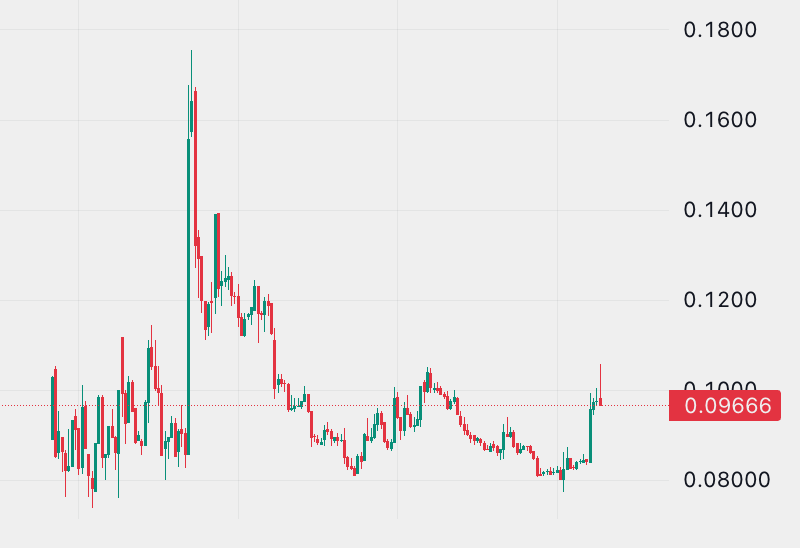
The listing was FOLD’s third major exchange debut in nine days. On Aug. 19, The Interfold completed its token generation event, opened token transfers, and launched Network Alpha, the first phase of its mainnet. FOLD fell to a record low of $0.03467 in the public market that day. On Aug. 23, Upbit listed FOLD in KRW, BTC, and USDT markets, and the token climbed to an all-time high of $0.1754. Kraken followed on Aug. 25 with a FOLD/USD listing.
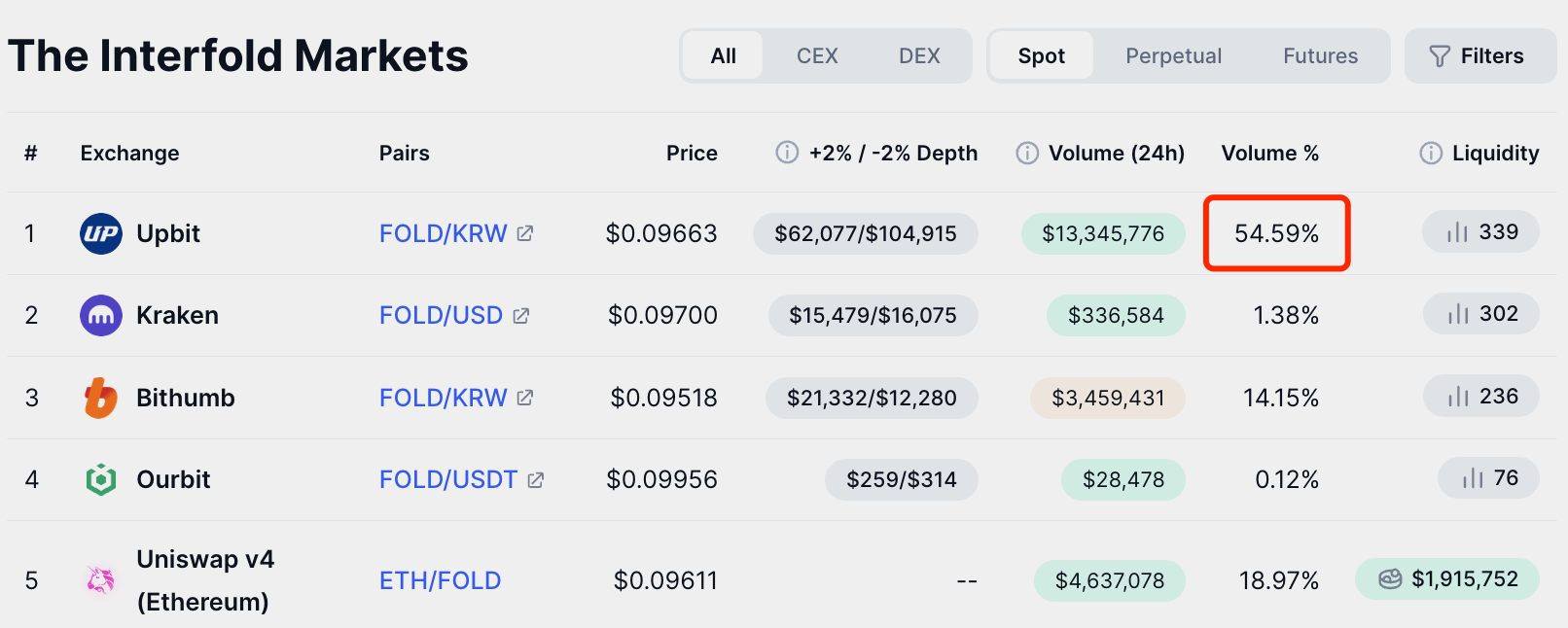
Liquidity distribution stands out here. Before Bithumb entered the market, Upbit’s KRW pair already accounted for about 55% of global FOLD trading volume, while two pools on Uniswap v4 together made up only a little more than 30%. Bithumb launched only a KRW pair, unlike Upbit, which also opened BTC and USDT markets. That means all of the newly added liquidity from this listing came from the Korean won side.
The Interfold is an Ethereum privacy infrastructure project built by Gnosis Guild and publicly endorsed by Vitalik Buterin. At this stage, its price discovery is being driven largely by South Korean trading activity.
How the market first priced FOLD
Before exchange listings, FOLD had gone through two rounds of public price discovery, both through Uniswap continuous clearing auctions, or CCA.
The first auction ran from July 8 to July 10. Participation required KYC through Predicate. The clearing price came in at about $0.023, implying a fully diluted valuation of around $27.6 million. The raise was oversubscribed, but the sale did not clear all available tokens. Up to 120 million FOLD could be sold in that round, and 43.66 million were actually purchased, or 36.39% of the maximum amount. Buyers then had to wait through a 40-day cooldown before transfers were allowed.
The second auction took place from Aug. 17 to Aug. 19, just before the cooldown window ended. It offered 24 million FOLD, equal to 2% of total supply. This round sold out, but the clearing price was about $0.0224, only 4% above the floor price.
Those two auctions were separated by 40 days and by the launch of the mainnet’s first production phase, yet the pricing barely moved. One round was oversubscribed but left tokens unsold. The other sold out while staying close to the minimum price. In a market without exchange trading and without a visible candlestick chart, KYC-cleared participants valued the network at roughly $27.6 million. Using the source article’s reference price of $0.096, both auction cohorts were sitting on paper gains of about 4.2x to 4.3x.
Circulating supply, float composition, and the Sept. 1 unlock
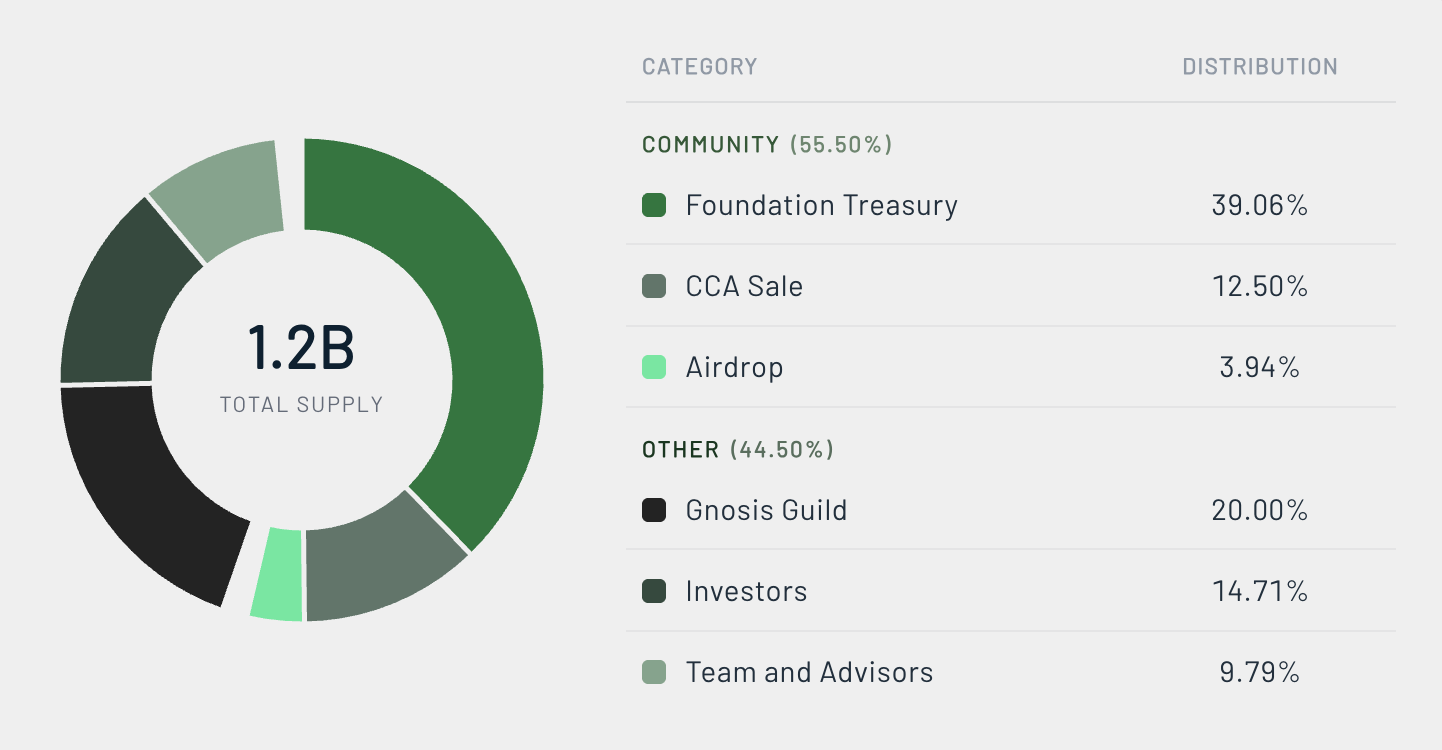
FOLD has a total supply of 1.2 billion tokens, with 27.22% in circulation at TGE. The investor allocation accounts for 14.71% of supply, while CCA auction allocations account for 12.50%. Both were fully unlocked at TGE with no vesting. Together they add up to 27.21%, almost identical to the initial circulating ratio.
That suggests nearly every FOLD now circulating came from those two buckets. At the same time, the two auctions actually sold only 5.64% of total supply, and the project had not provided a detailed breakdown of where the rest went, according to the source article.
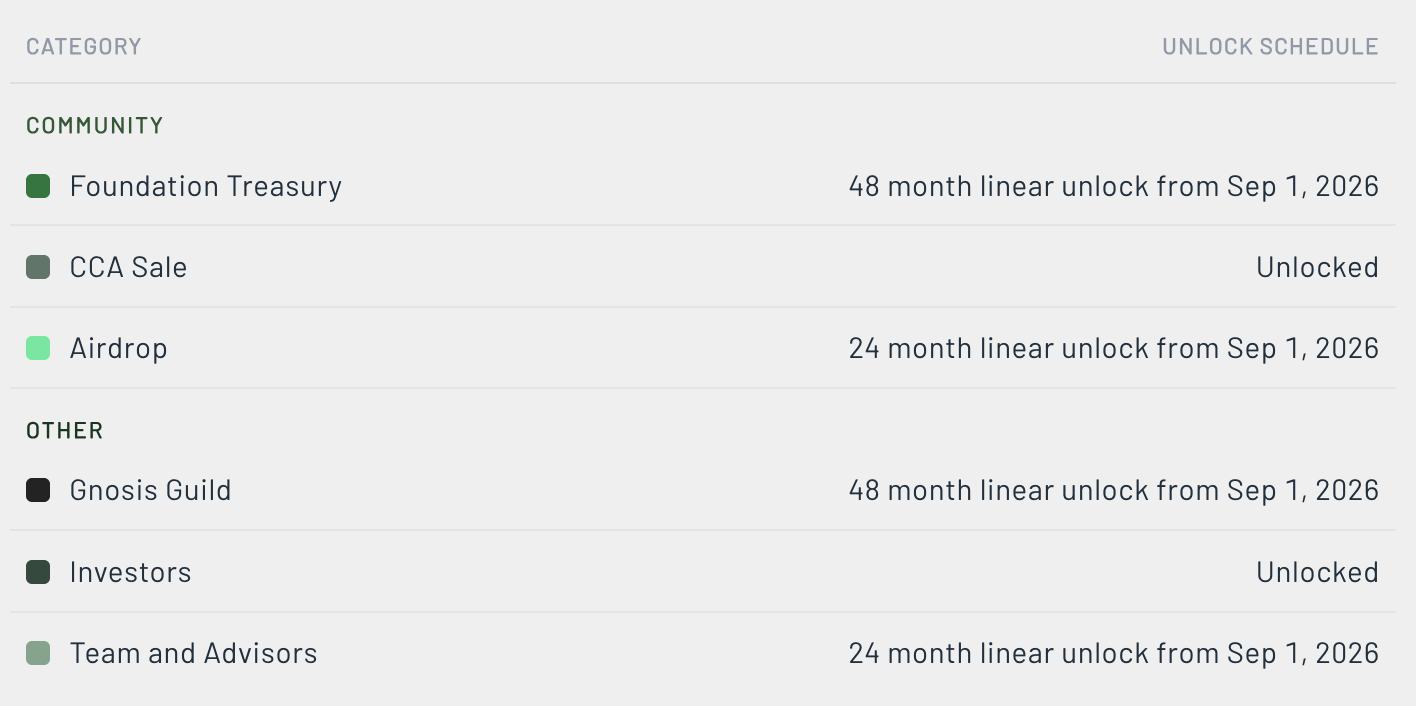
The next issue is the unlock schedule. The largest allocation, the foundation treasury at 39.06%, and Gnosis Guild’s 20% allocation are set to begin linear unlocks over 48 months starting Sept. 1, 2026. The 3.94% airdrop allocation and the 9.79% team and advisor allocation will also start unlocking on the same date, but over 24 months.
Based on that schedule, about 21.63 million FOLD would enter circulation each month. That is equal to 6.6% of the current circulating supply. At a token price of $0.096, the monthly notional value would be about $2.08 million. Current daily trading volume across the market has been fluctuating between $4 million and $11 million.
In practical terms, after Bithumb listed FOLD on Aug. 28, the token was just four days away from its first batch of linear unlocks.
Network Alpha is live, but the limits are still clear
The Interfold was previously known as Enclave. It is being developed by Gnosis Guild, the team behind the Zodiac DAO framework. The project is targeting a specific governance problem: on-chain voting is public, so anyone can verify how a wallet voted, which makes vote-buying verifiable. The Interfold’s approach is to prevent voters from proving their choices to third parties, removing the basis for those payments. On May 28, Vitalik Buterin said publicly that this was essentially a generalized implementation of the MACI approach he had advocated for nearly a decade.
On Aug. 19, The Interfold launched Network Alpha, which the project describes as "the first production phase of mainnet." Its encrypted execution environment, or E3, combines fully homomorphic encryption, zero-knowledge proofs, and multi-party computation, and is now available on mainnet. A ciphernode committee handles distributed key generation and threshold decryption, while the on-chain lifecycle is designed to be end-to-end verifiable.
The team has also laid out the present constraints. The committee is capped at 19 nodes, with a threshold of 9. The operator set is still permissioned, though public registration is described as "coming soon." Distributed key generation currently takes hours.
That time profile defines what the network can realistically support right now. A DAO governance vote often runs for days from proposal to close, so waiting several hours can be acceptable. But use cases mentioned in project materials, including sealed-bid auctions, collaborative analytics, and AI coordination, need response times measured in seconds or minutes.
At present, only one live application is actually running on the network: The Interfold’s own governance system, using the CRISP scheme integrated with Aragon. When Aragon announced that integration in July, the setup was still on testnet. Within the system, FOLD is used for node staking, E3 request payments, and governance. The project had not yet published figures for the minimum staking amount, E3 fee rates, or slashing terms.
According to the community schedule cited in the source article, a live demo is planned for Sept. 2. It would be the first full public demonstration of the system since Network Alpha went live.
What the market is watching next
The exchange-listing story may not be over. Upbit and Bithumb, two of South Korea’s main exchanges, have already listed FOLD, but spot listings on Binance, OKX, and Coinbase are still absent. That leaves room for more exchange-related catalysts. On the other side of the ledger, the Sept. 1 start of linear unlocks is fixed and quantifiable.
The source article points to three practical questions ahead. First, will public ciphernode registration open on schedule, and can the node count move beyond the current cap of 19? That goes directly to whether demand for FOLD staking is real. Second, can distributed key generation be reduced from an hours-long process to a lower time range? That is a hard requirement for use cases such as sealed-bid auctions. Third, after the Sept. 2 livestream demo, will there be a first production-grade E3 application that does not belong to Interfold itself?