

BitMEX is moving toward closure with about $270 million still sitting in its in-house insurance fund, and the exchange has not disclosed what will happen to that money once it shuts its doors on September 23, 2026, according to Protos.
The report said the fund now holds roughly $239 million worth of BTC and $31 million in USDT. BitMEX declined to comment on its plans. Protos added that the fund belongs to BitMEX, not to customers, and that the exchange never told users what it would do with the fund if the business eventually closed.
Questions center on where the fund came from and where it goes next
Protos said the label “insurance” does not match the conventional meaning of insurance. Instead of being capitalized through policyholder premiums or shareholder capital, BitMEX largely built the fund from assets taken when leveraged customer positions were liquidated on the platform.
The report also said the fund has paid out to customers during certain loss events, honoring BitMEX’s original promise in those cases. Even so, criticism has intensified because of the fund’s size and because a November 2025 rebalancing removed most of the assets it once held.
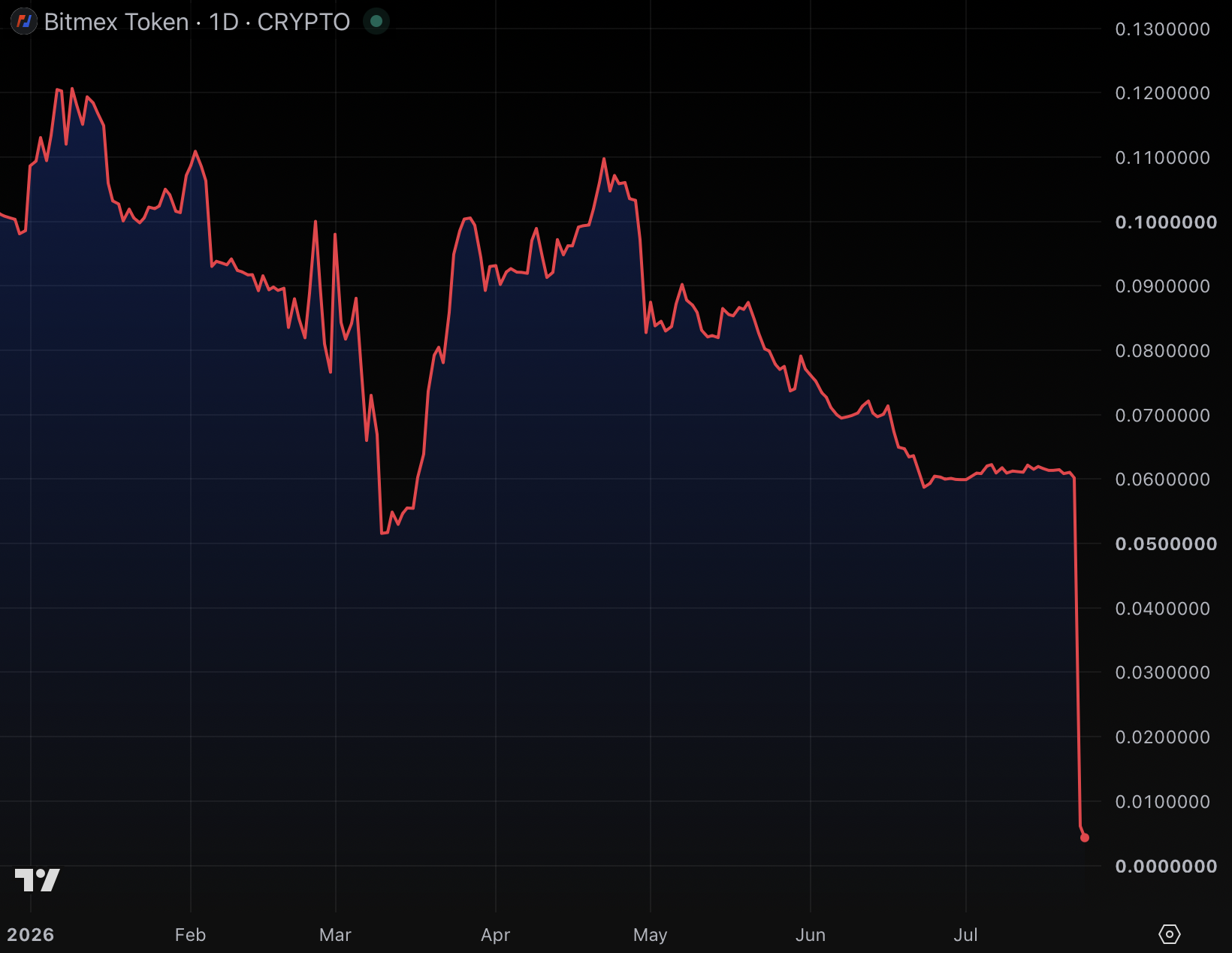
BMEX, BitMEX’s proprietary token, is part of that picture as well. Protos reported that the token has already lost 96% of its value year-to-date after a sharp drop tied to the shutdown news, and said its prospects for holding much value after September appear limited.
Proposed class action arrived the same day as the shutdown announcement
Speculation about BitMEX owners keeping the fund after the platform closes has spread widely across social media. Protos said the allegations drew hundreds of thousands of impressions as the story gained traction.
On the day BitMEX announced the closure, plaintiffs filed a proposed class action. The complaint argues that the exchange’s insurance fund grew rapidly during periods of downside volatility and market stress, moments when customers would have most valued insurance payments. Rather than shrinking during adverse events to offset losses, the filing says, the fund expanded as BitMEX force-closed leveraged customer positions.
Protos made clear that no court has reviewed those allegations. The named plaintiffs, BKX Services and David Namdar, say BitMEX liquidated their positions and that they lost more than 622 BTC between them. They want to bring claims on behalf of similarly situated US customers who traded on BitMEX since July 2018. Like earlier lawsuits, they are seeking the return of assets plus fees.
The report also pointed to past cases that ended in dismissal, including a 2020 class action led by Brett Messieh.
New complaint also raises claims about an internal trading desk
This week’s lawsuit goes further, alleging the existence of an in-house trading desk with what the plaintiffs describe as “God access” to hidden orders and customer liquidation levels. The complaint also claims those internal traders could keep trading during server freezes that locked most other customers out.
Protos inserted a caution here: a civil complaint is only a document containing allegations. Readers should not treat claims from plaintiffs seeking money as true, or even likely, unless a court reviews the evidence and rules on the matter.
The fund once held more than 36,400 BTC
For years, Protos said, BitMEX’s insurance fund held tens of thousands of bitcoin. It peaked above 36,400 BTC during the March 2020 market crash.
The next key point in the timeline came during the crypto crash of October 10-11, 2025. According to Protos, a surprise threat of a 100% China tariff and flash-crash pricing on several Binance trading pairs helped wipe out more than $19 billion in leveraged positions across the industry. BitMEX said its fund absorbed only about $2 million in losses during that episode and came through it with limited damage.
Weeks later, the exchange cut the fund by roughly 90%. On November 18, 2025, BitMEX announced that it would rebalance the fund to “approximately 3,600 BTC and just over 30,000,000 USDT” in order to “better reflect the risks in its markets.” At the time, it said the rebalancing would have “no impact on our traders.” What it did not say, Protos noted, was what happened to the tens of thousands of BTC that were supposedly no longer needed after that move.
Value estimates sharpened the debate
Protos laid out the arithmetic in blunt terms. At a BTC price near $64,000, the old fund would have been worth about $2 billion. The rebalanced version is worth around $270 million, and the exchange itself is set to disappear after September.
At BTC’s 52-week high above $126,000, Protos said the value of BitMEX’s pre-rebalanced insurance fund would have topped $4.5 billion.

That gap has fueled suspicion online. One skeptic wrote, “There used to be 36,000 BTC in the BitMEX insurance fund, now 3,600. Are they the ones selling I wonder.” Another alleged, “I guess last year they rebalanced the insurance fund down from 13-14k to 3,600 ie they pocketed 10k BTC.”
After the closure news, the questions became sharper. Aaron Bennett asked: “Wow.. Arthur Hayes and his partners will profit around $270 million bucks Is this the reason BitMex is shutting down? To collect this Insurance Fund cash?” Protos said neither BitMEX nor Arthur Hayes has answered those questions.
Earlier regulatory and legal history returned to view
Protos said it had previously documented how BitMEX operated a for-profit market maker and paid a $100 million settlement with the Commodity Futures Trading Commission. The report also noted that founders Arthur Hayes and Benjamin Delo later pleaded guilty to a Bank Secrecy Act violation before receiving a Trump pardon that removed their legal jeopardy.
None of that is new to the courts, Protos wrote. Traders have sued BitMEX before over market-manipulation claims and lost, while the founders remain free.
What is new, the report argued, is the deadline. After September 23, 2026, the customers whose liquidations fed the fund over time will no longer have a functioning BitMEX exchange to ask where their BTC went.