
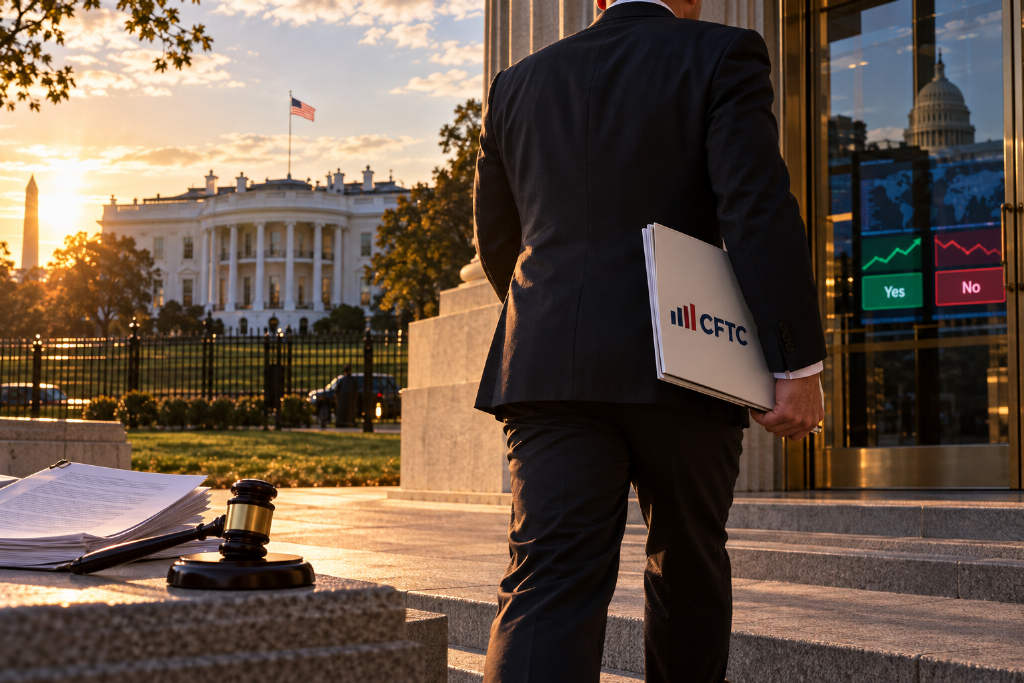
The U.S. Commodity Futures Trading Commission is moving to lock in its authority over prediction markets, sending the White House two rule proposals that would redraw the legal definition of a "swap" around event contracts, the yes-or-no wagers traded on platforms including Kalshi and Polymarket.
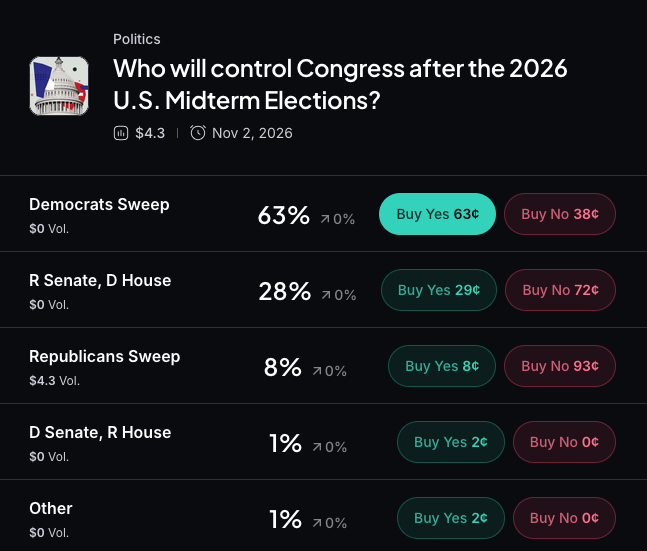
The agency submitted both proposals to the Office of Information and Regulatory Affairs, the White House office that reviews federal rules before publication, on Sept. 28.
Two filings target the swap definition
The first proposal, identified as RIN 3038-AF82, is a proposed rule that would further define the term "swap" and explicitly include event contracts. It will move to public comment.
The second filing, RIN 3038-AF81, is an interim final rule that would exclude "casino-style gambling products" from the swap definition and could take effect once approved.
The CFTC classified both rules as not economically significant. Their full text has not yet been made public.
Jurisdiction fight centers on whether event contracts are swaps
The swap label sits at the center of a fierce jurisdictional dispute. If event contracts are treated as swaps, they fall under CFTC authority. Chairman Michael Selig has argued that this authority is exclusive, a position that would place the platforms outside the reach of state gambling regulators.
Multiple states have sued prediction-market operators, alleging illegal gambling. The CFTC has responded with countersuits aimed at blocking that oversight. The rulemaking arrives after a series of conflicting appeals-court decisions over whether the contracts qualify as swaps, a split that is now drawing the attention of the U.S. Supreme Court.
Broader regulatory push continues
According to Decrypt, the move fits a broader pattern of the CFTC pushing ahead with its own rules instead of waiting for Congress, part of a post-Clarity Act shift toward regulators setting crypto policy.
The agency recently sent a separate crypto-markets rulemaking to the White House. At the same time, CFTC staff warned that "mention" contracts tied to public statements invite manipulation.
Federal scrutiny is also continuing on other fronts. The CFTC is investigating former Rep. Adam Kinzinger over Kalshi bets tied to his own pardon. Earlier this week, the Commission issued an advisory warning against "mention markets," saying prediction-market contracts that settle on whether a named person says certain words should be presumed readily susceptible to manipulation.
New York also moves against Polymarket
At the state level, New York last week sued Polymarket in an effort to ban the platform within its jurisdiction, echoing an earlier action against Kalshi.
For now, the CFTC filings signal intent rather than final rules. Still, by trying to write the swap definition itself, the agency is attempting to settle through regulation what courts and states have been fighting over case by case.