

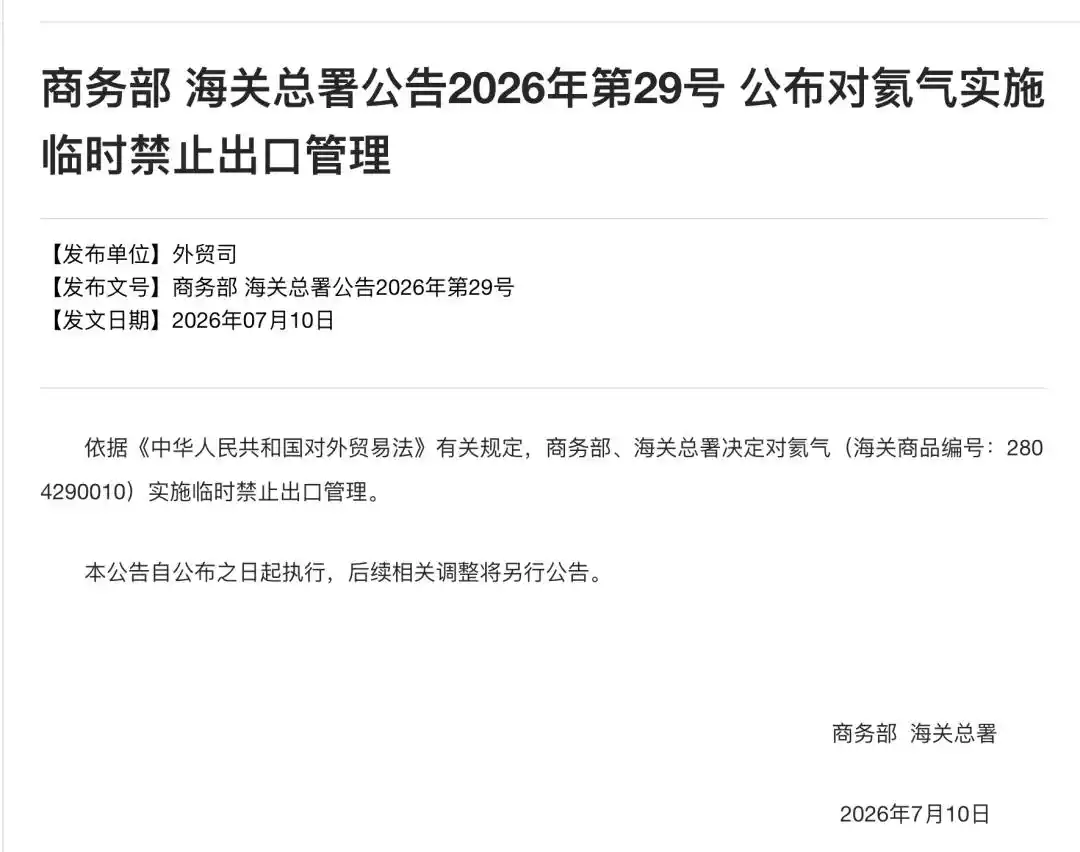
China banned helium exports on July 10, turning attention to one of the least visible but most indispensable materials in the semiconductor supply chain. Helium is used across advanced chip production, from wafer cooling during plasma etching to leak detection, purging and thermal management in precision equipment.
It is an unusual material. Helium is the second most abundant element in the universe, and about a quarter of the sun’s mass is made up of it. On Earth, though, it is scarce. It cannot be produced economically through artificial means and is mainly extracted as a byproduct from natural gas, where helium concentrations are often only a few parts in ten thousand. Once released, it rises, escapes the atmosphere and is effectively gone.
That physical reality has made helium easy to overlook and hard to replace. It rarely gets the attention that lithography machines or advanced packaging do, and even sharp price moves often pass with little notice. But in chip production, it sits inside several critical steps that cannot be interrupted easily.
Why fabs rely on helium
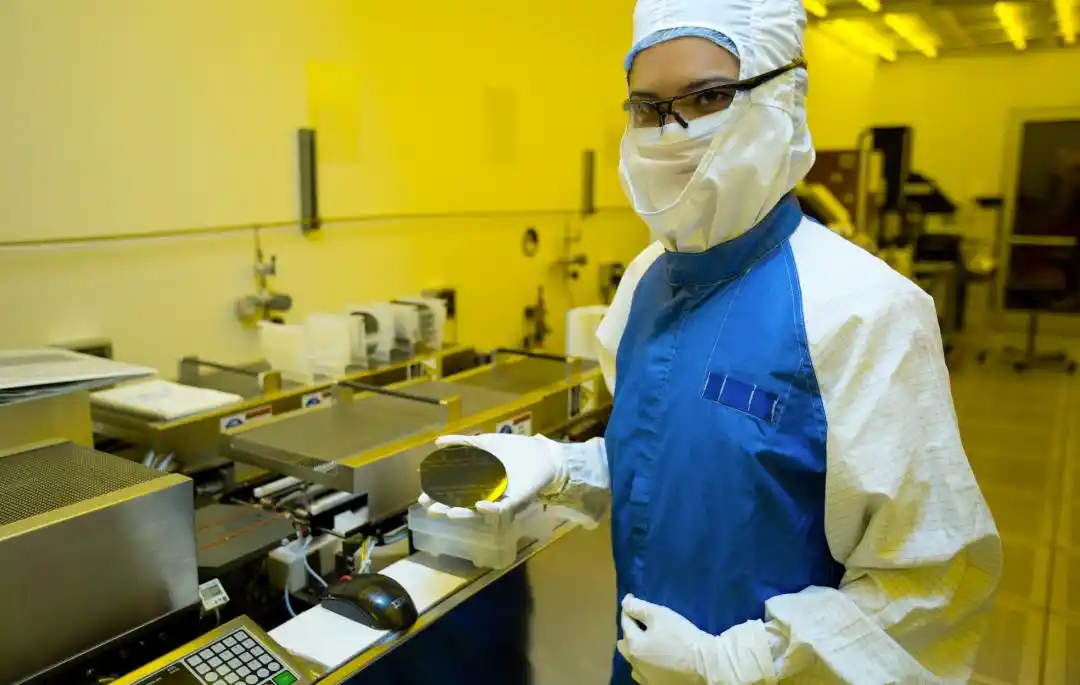
Inside a wafer fab, wafers move through dozens of large tools. One key step is plasma etching, where charged particles carve nanoscale patterns onto the wafer surface. The process generates heat, and if that heat is not removed evenly, tiny temperature variations can distort the structure being etched and damage yield across the wafer.
To manage that, engineers introduce helium between the back of the wafer and the chuck. The gas acts as a heat-transfer medium, doing a job similar to thermal interface material between a CPU and its heatsink, except here it is used in gaseous form. Helium helps pull heat away quickly and evenly while the wafer is going through a high-precision process.
Hydrogen can conduct heat even better, but it comes with obvious combustion risk. Helium combines strong thermal performance with chemical stability and nonflammability, which is why many validated production recipes still depend on it.
Helium also plays a central role in leak detection. Fabs run large numbers of vacuum chambers and gas lines. Engineers spray helium outside the system and monitor whether detectors inside pick it up. Because helium atoms are small and ambient background levels are low, the method is highly effective for finding leaks in high-precision equipment.
It is also used in purge processes, protection applications and thermal control in some advanced tools. A Deutsche Bank research note cited in the source said the semiconductor industry consumes about one-fifth of global helium supply.
The helium used in chipmaking is not standard industrial gas. Electronic-grade helium for advanced processes can reach 6N purity, or 99.9999%, with impurities controlled at the parts-per-million level. In nanoscale circuit production, even trace contamination can hurt yields. That is why electronic-grade helium can cost dozens of times more than conventional industrial helium.
There are substitute paths in some isolated steps, but switching is difficult in practice. A fab cannot swap process gases casually. Changes can alter tool settings, temperature profiles, contamination control and final yield, often forcing a full requalification of the production line. The time and cost are substantial. Some leading manufacturers have installed helium recovery systems. The source said one Samsung production line can save 4.7 tons a year, but recovery only reduces consumption. It does not create new supply.
That is why helium stayed out of the spotlight for years. It was available, so the industry kept moving. The problem appeared only when supply tightened.
How the global helium market tightened
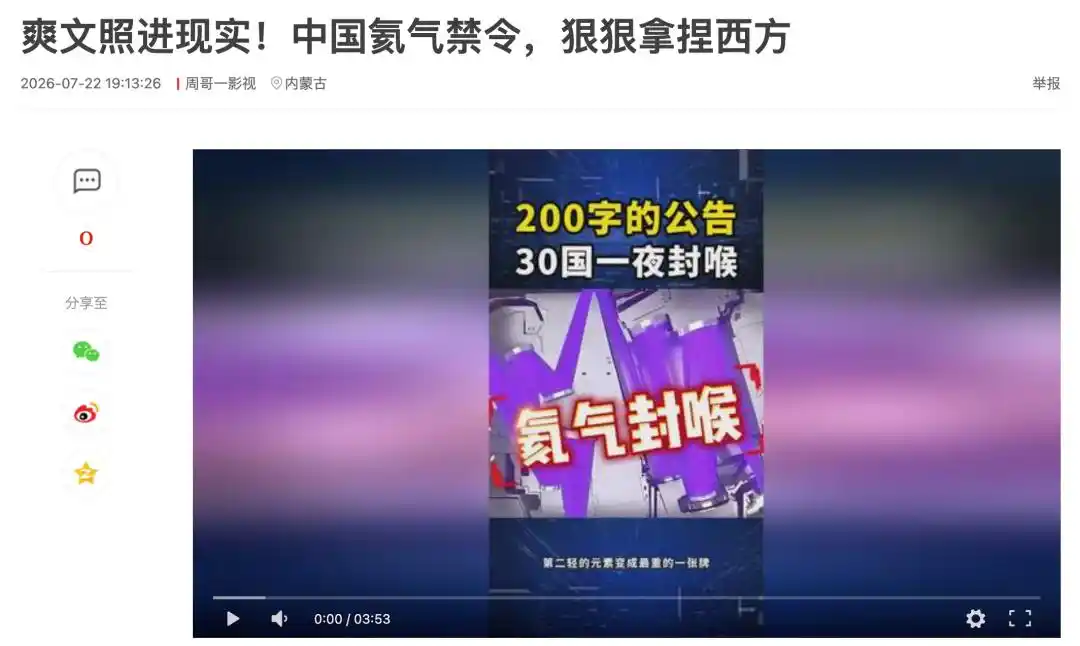
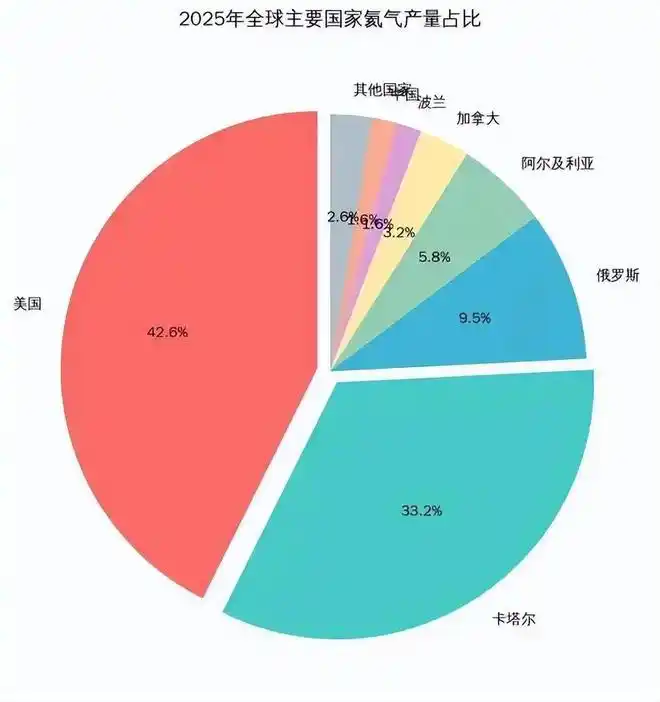
Helium production cannot be expanded at will because it depends on specific natural gas resources, especially helium-rich fields. Roughly 85% of global helium supply is concentrated in three countries: the United States, Qatar and Russia. Qatar alone accounts for about one-third of the market, with Ras Laffan Industrial City serving as the main hub. Helium there is produced as a byproduct of LNG operations.
According to the source material, fighting spread into the Gulf in early March this year. Drone attacks and the de facto closure of the Strait of Hormuz to commercial shipping prompted QatarEnergy to halt all production at Ras Laffan and declare force majeure. Helium output stopped alongside LNG production, removing about one-third of global supply from the market in the short term.
In the second half of March, two more rounds of ballistic missile attacks caused longer-term damage. Public figures cited in the source said Qatar’s helium export capacity fell by at least 14%, equal to roughly 5% of global supply, and the damaged facilities will take three to five years to repair.
Shipping disruptions added another layer of pressure. Liquid helium must be transported in dedicated cryogenic containers. Each unit is worth about $1 million and typically offers a cold-retention window of 35 to 48 days. After that, the helium gradually boils off and must be vented through safety valves to prevent excessive pressure. Around 200 containers were stranded in the Middle East after the conflict escalated, according to the source. Even if shipping resumes, repositioning those units to other supply points would take months.
Prices reacted quickly. Spot prices around the world doubled, and some industrial gas companies added surcharges. In China, bundled high-purity helium prices rose from RMB 76 per cubic meter to RMB 251 per cubic meter in seven weeks.
The semiconductor industry responded by reviewing inventories and supply risk. TSMC said on its April earnings call that gas and chemical prices could rise and affect profitability, adding that it had built safety stock. A supply-chain consulting group warned that if shortages persist, companies may be forced to cut output, with effects spreading from electronics into autos.
Allocation priorities also become clearer in shortage conditions. Hospitals usually come first. One MRI system needs about 1,500 liters of liquid helium, and around 30% of global helium use already goes to medical applications. Laboratories, with smaller contracts and lower priority, are often cut first. Chipmakers sit in the middle. If the shortage gets severe enough to trigger production cuts, the source said the industry expects high-margin AI chips and HBM to receive priority, while mainstream consumer products face greater risk.
The industry has even labeled earlier shortage cycles by version number. The period around 2011 to 2013 was called helium shortage 2.0, 2018 to 2020 was 3.0, and 2022 marked 4.0. The current debate is whether this latest disruption is temporary or the start of helium shortage 5.0.
The other two major suppliers have their own issues. The US remains the world’s largest producer, and ExxonMobil’s Wyoming field is one of the biggest single helium sources globally. The source noted that in 2024 the US sold its federal helium reserve — built up over nearly a century — along with storage facilities and 423 miles of pipeline to a private gas company, leaving the government with no strategic stockpile.
Russia, meanwhile, shifted helium exports outside the Eurasian Economic Union to a special government permit system from April 2026, with the policy set to remain in place through the end of 2027.
Unlike oil, helium has no equivalent of OPEC and no large pool of idle production capacity waiting to step in during a disruption. It looks like a small market until something breaks. Then it becomes obvious that MRI systems and wafer fabs are both attached to the same pipe.
Why China moved to halt exports
China occupies an awkward position in this supply squeeze. In 2025, the country’s total helium supply was about 5,818 tons, including 4,913 tons of imports and around 905 tons of domestic production, leaving external dependence at 84.4%. Import sources were highly concentrated: about 54% came from Qatar and about 44% from Russia, almost 98% combined.
That left China exposed on both sides. Supply from Qatar was hit by the production halt and shipping disruption, while Russia tightened export controls through licensing. Domestic strain was already visible. The source described one specialty gas producer in Shanghai running double shifts, with daily output up twofold from the start of the year and still unable to meet demand. A production executive there described the market as changing “every day.” Expansion at wafer fabs was cited as one reason demand kept rising.
At the same time, China still exported about 445 tons of helium in 2025, up 96% year on year. That volume equaled about 7.6% of domestic supply. In a tighter market, that outflow became much more sensitive.
The economic logic was straightforward. Before the current disruption, helium prices in China had long stayed below levels in Japan, South Korea, Europe and the US. Higher overseas prices naturally pulled bottled helium and tanked liquid helium toward higher-margin markets. For a country already dependent on imports, that outflow added pressure at home.
China’s July 10 ban shut that route. The Ministry of Commerce said plainly that China is a major helium importer and that the measure was intended to protect domestic supply. It also said adjustments could be made later based on changes in domestic and overseas supply and demand, which suggests the door is not permanently sealed.

Outside observers have read the move through different lenses. Export controls on gallium, germanium and rare earths have been tightened over the past three years, making it easy to place helium in the same sequence. But the source argued that this case is somewhat different. The legal instrument used was a temporary ban under the Foreign Trade Law rather than the Export Control Law. On the demand side, TSMC said it expected no significant impact, SK Hynix said its supply had long been diversified, and an analysis cited by the Associated Press also viewed the move more as a domestic supply safeguard than as a weaponized trade action.
Even so, when the world is short of gas, any new restriction gets amplified. The fact that an import-dependent country can still move the broader chip industry with an export ban says a lot about how deep the shortage has become.
China’s domestic helium push
China is not naturally rich in helium. Some overseas gas fields carry helium concentrations in the range of tenths of a percent or higher, while Chinese resources are typically only 0.03% to 0.05%, according to the source. That gap of one to two orders of magnitude makes conventional extraction much less economical.
China’s workaround has come from LNG plants. When natural gas is cooled into LNG, most components liquefy. Helium does not, because its boiling point is extremely low. It ends up concentrated in a small stream of boil-off gas, or BOG, making extraction much more practical than trying to separate it directly from a large natural-gas stream.
In July 2020, a facility in Yanchi, Ningxia, became the first domestic installation to extract liquid helium from LNG tail gas. Its cold box, expander and liquefier were all domestically produced.

By 2025, a plant in Yan’an, Shaanxi, had produced ultra-high-purity helium at 99.99997%, or 6N9, and passed engineering acceptance. The path from breaking equipment dependence to commissioning ultra-high-purity helium systems took five years, and it began before the current round of geopolitical disruption.
Domestic output remains small, though. China’s self-sufficiency rate is still below 20%, and imports continue to cover the gap. The export ban closes an outflow channel, but it does not widen import access or instantly erase the shortage. Whether China can materially improve self-sufficiency depends on how quickly installations like those in Yanchi and Yan’an can be replicated and scaled up.
Globally, there is little sign of immediate relief. Damaged facilities in Qatar will take years to restore, the US strategic reserve is now in private hands, Russia’s permit system shows no clear sign of easing, and new US capacity is not expected until 2028. On that basis, the source concluded that this helium shortage is unlikely to be brief.
For years, helium was treated as an ordinary industrial input, used in balloons, laboratories, medical systems and chip plants without much strategic attention. Now, with supply strained and chip manufacturing once again exposing its dependence on high-purity helium, the market is looking at the gas differently.
The source of the original article was the WeChat public account “酷玩实验室,” republished by MarsBit.