
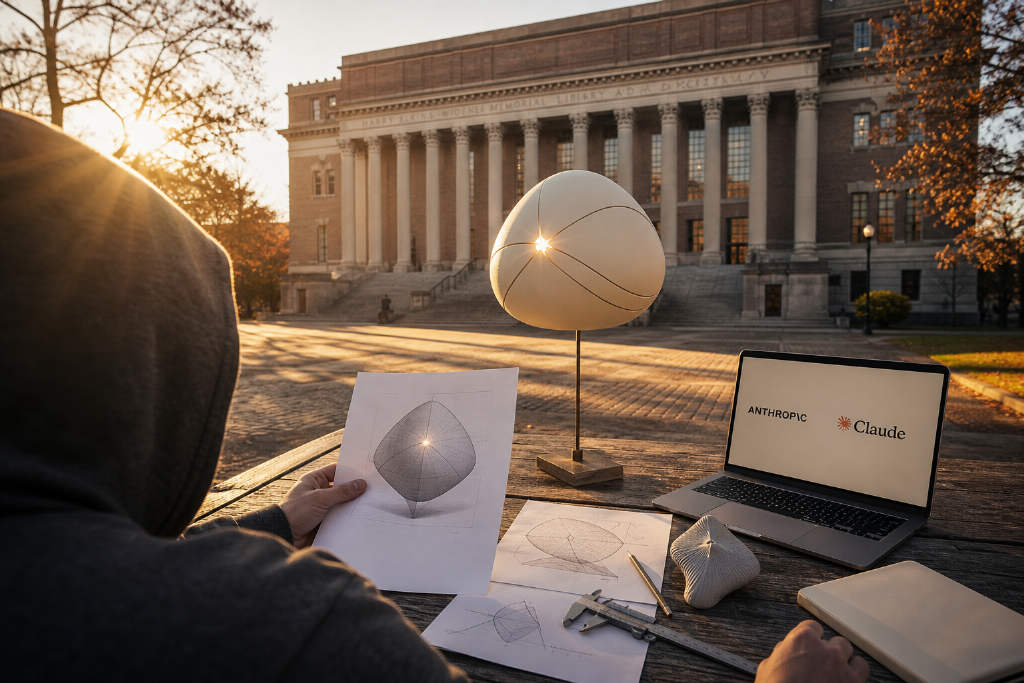
A counterexample to the Carathéodory conjecture, a problem that had stood for more than a century, has now been formally made public. The source says Anthropic and Harvard mathematician Levent Alpöge, working with Claude, directly disproved the conjecture and also knocked down the Loewner index conjecture.
A PDF tied to the result had been circulating in mathematics circles for a week before its formal release.
What the century-old conjecture says
The article traces the Carathéodory conjecture back to 1924. It says German mathematician Hans Ludwig Hamburger posed the problem in differential geometry and named it after the Greek mathematician Constantin Carathéodory, who had been his doctoral advisor.
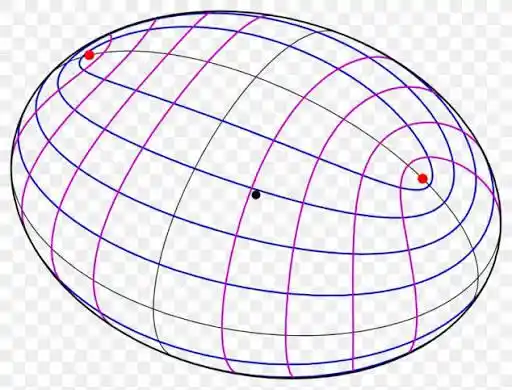
The conjecture states that any convex, closed, sufficiently smooth surface in three-dimensional Euclidean space must contain at least two umbilic points.
An umbilic point can be understood as a point on a surface where the curvature is the same in every direction. In the differential geometry of surfaces in three dimensions, all normal curvatures agree at such a point, the two principal curvatures are equal, and every tangent vector is a principal direction. The source gives a simple comparison: every point on a sphere is an umbilic point, while an ellipsoid has two.
In that form, the claim is easy to state and hard to settle. No matter how a convex surface is deformed, as long as it stays smooth enough, the conjecture says it cannot be left with only one umbilic point. It must have at least two.
Running alongside it was the Loewner conjecture. As described in the source, it says the index of an isolated umbilic point cannot exceed 1. The article presents the two conjectures as mutually reinforcing for more than 100 years.
One construction, two conjectures
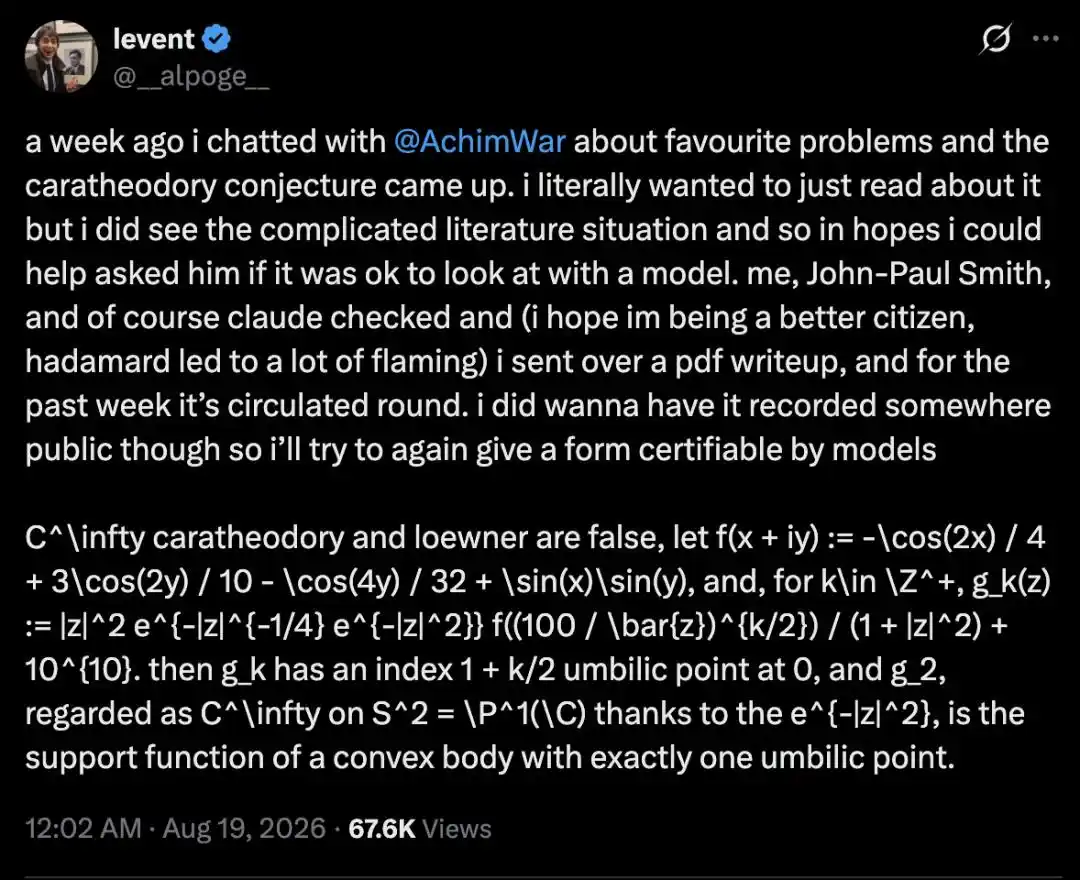
The core claim in the report is that Levent Alpöge found a convex surface with only one umbilic point, while still meeting the smoothness condition mathematicians denote as C∞, or infinitely differentiable.
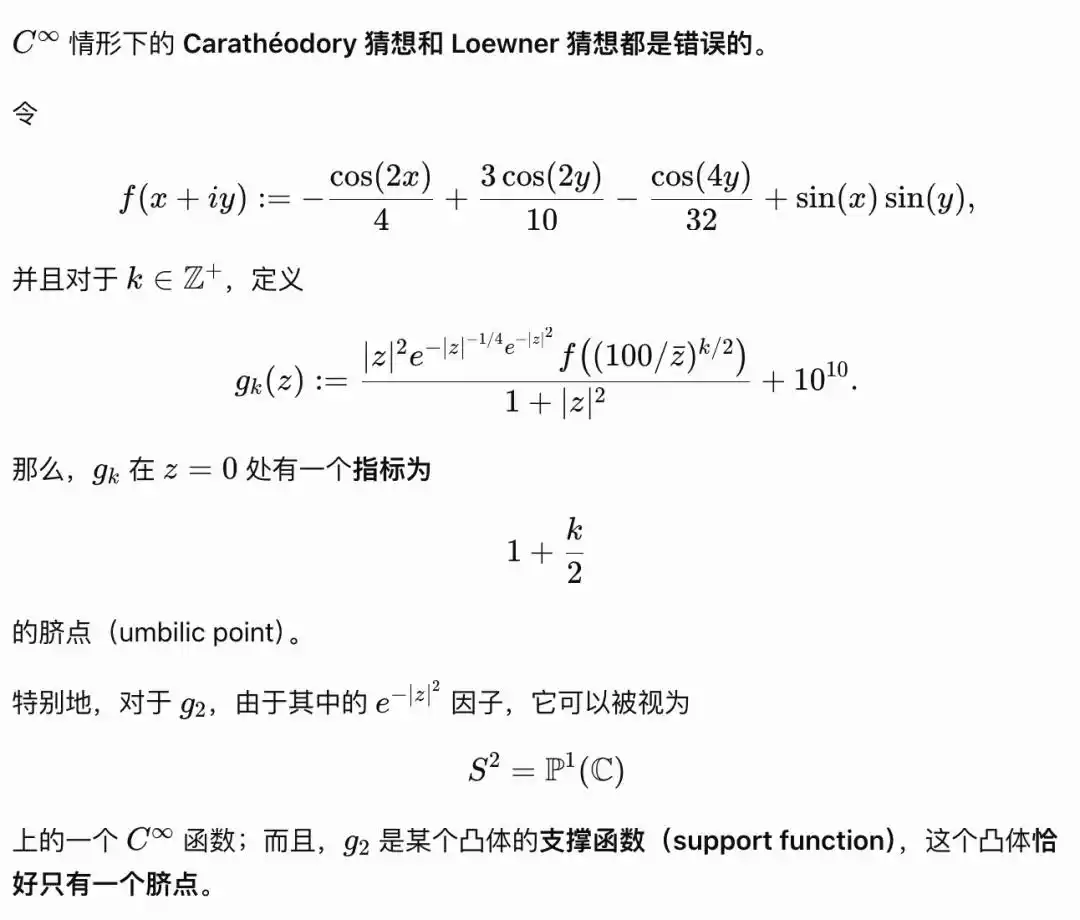
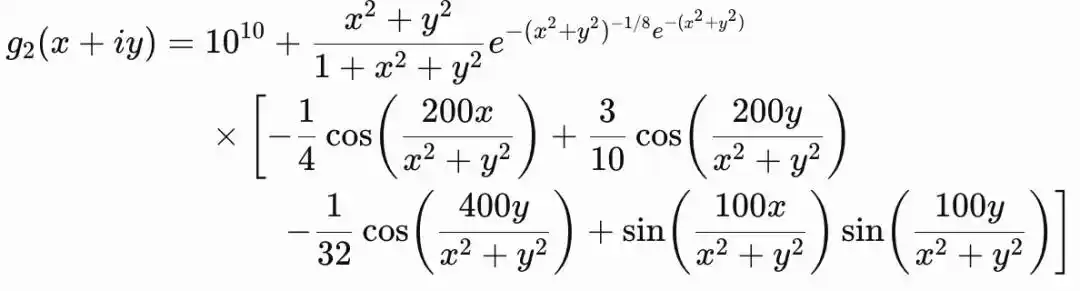
According to the article, Alpöge and John-Paul Smith built a very explicit construction. They defined a family of functions g_k. When k=2, the function g₂ serves as the support function of a sphere, and the associated convex body develops an umbilic point of index 2 at the origin.
That already conflicts with the Loewner conjecture as presented in the source, because the conjectured upper bound is 1 and the constructed umbilic has index 2.
The article adds a second key point. Because of an exponential decay term, g₂ remains C∞ smooth. That means the convex body satisfies the smoothness requirement built into the Carathéodory conjecture, yet it has only one umbilic point.
On that basis, the source says both conjectures fall at once: Carathéodory requires at least two umbilics, while the counterexample gives one; Loewner caps the index at 1, while the construction yields 2. The article describes this as an explicit and verifiable counterexample that simultaneously overturns two conjectures that had survived for more than a century.
Another Claude collaboration involving Alpöge
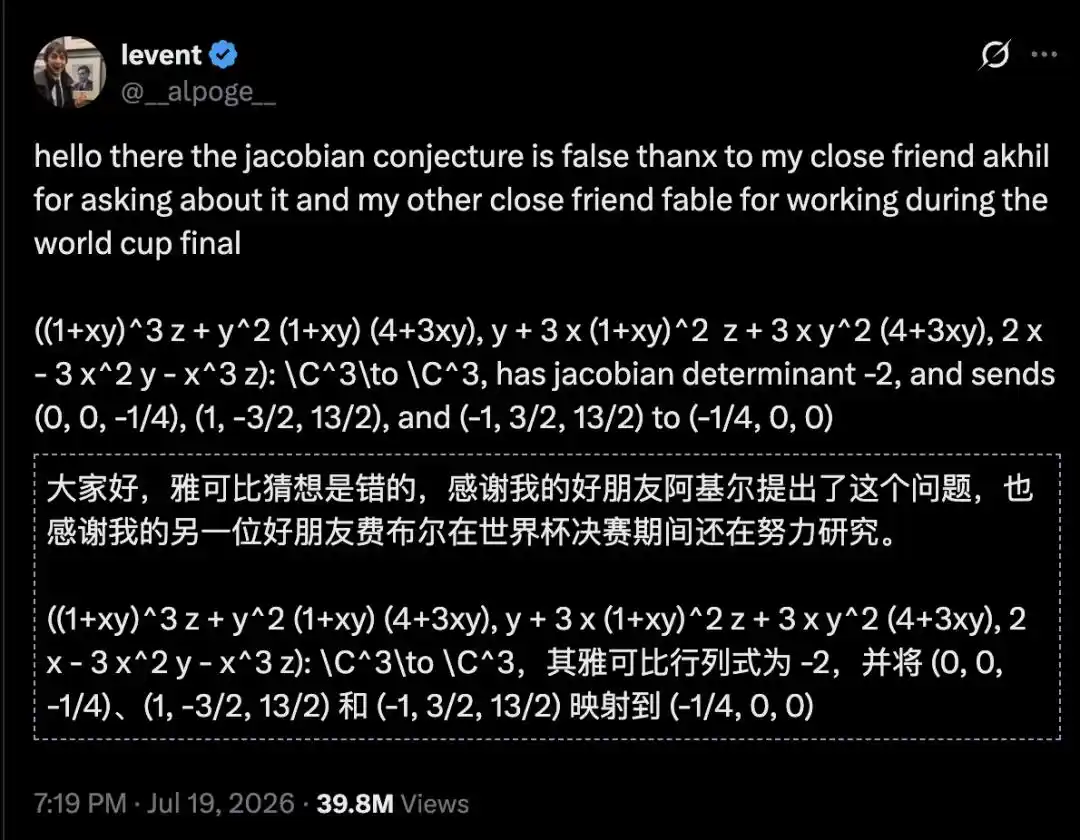
The report says this is not the first time Alpöge has worked with Claude. During this year’s World Cup period, the article says, he used Claude to produce a counterexample to the 3D Jacobian conjecture, drawing broad attention in mathematics circles.
It also lists several other recent developments in AI-assisted mathematics from the past few months:
- Claude pushed the lower bound on the proportion of zeros in work tied to the Riemann hypothesis from 41.6% to 67.2%, while the source says human researchers had improved that figure by 0.8 over 37 years.
- OpenAI released 10 advances in mathematics and theoretical computer science.
- Alpöge repeatedly used Claude to disprove multiple classic conjectures.
- A newly named Fields Medal winner announced plans to join OpenAI.
References cited in the source
The original article points to posts on X from Haider and Alpöge, along with the Wikipedia page for the Carathéodory conjecture.
- https://x.com/haider1/status/2090034966717677902
- https://x.com/alpoge/status/2089971359921156203
- https://en.wikipedia.org/wiki/Carath%C3%A9odory_conjecture
The source says the article was republished from the WeChat public account Xinzhiyuan and credits the author as ASI Qishilu.