

Panelists at Cointelegraph’s CONNECT event in Singapore said tokenized assets, stablecoin payments and crypto venture investing are all running into the same broad constraint: market infrastructure has improved, but liquidity, usability and exits remain uneven.

Tokenized assets are expanding, but demand is not keeping pace
Speaking on Oct. 9 during a panel on liquidity and market fragmentation at CONNECT by Cointelegraph: Singapore Edition, GSR chief revenue officer Alex Taaffe said tokenized markets are opening new trading opportunities across finance. He said liquidity has been improving in trading tied to pre-IPO stocks, commodities and global equities that had previously been harder for investors to access.
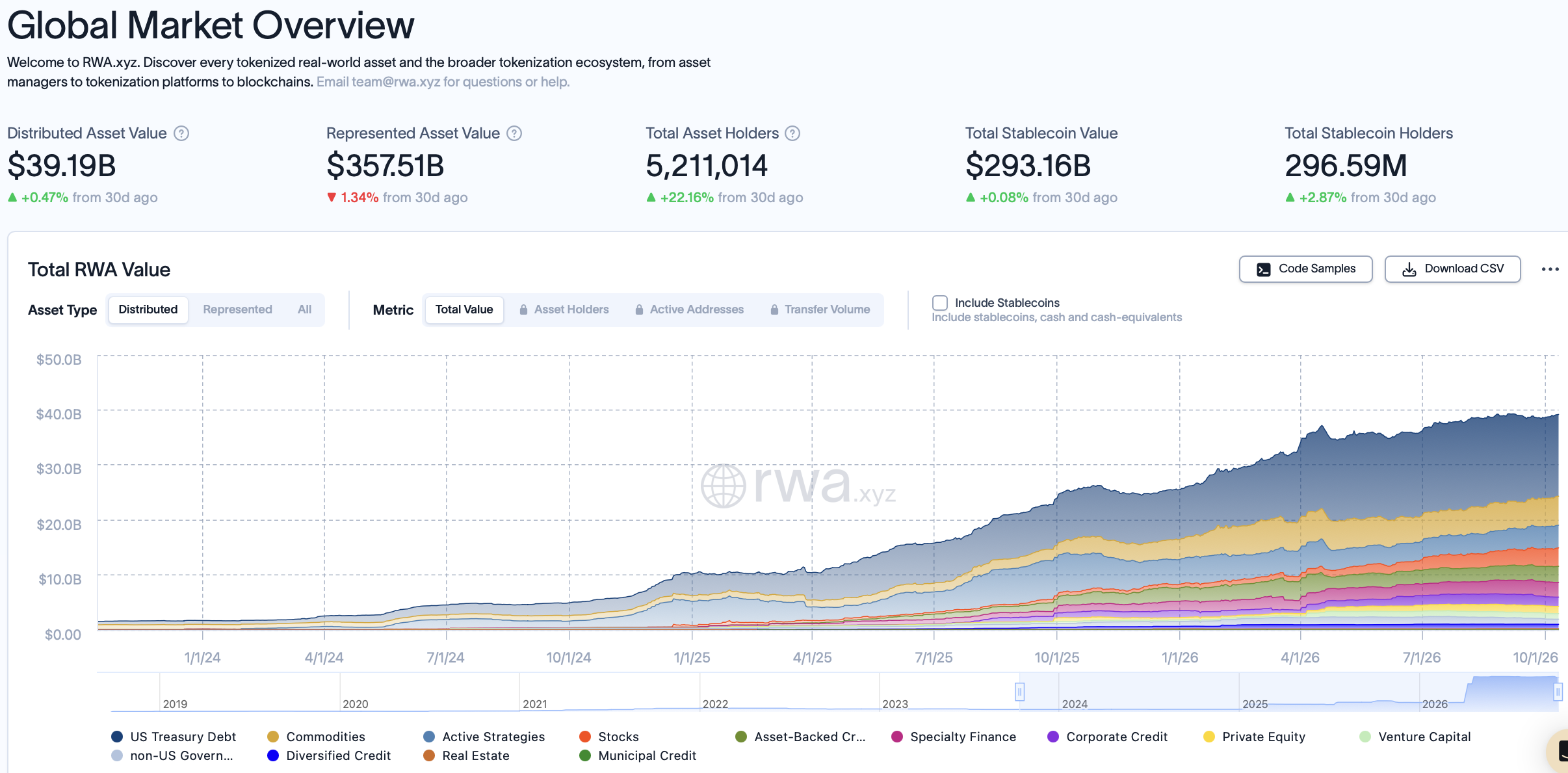
Even so, Taaffe said the increase in fully tokenized real-world assets has not been matched by investor demand. “Specifically on RWAs, and fully tokenized assets, there’s a supply and demand inbalance. There’s a ton of supply. Every asset manager issuer wants to do capital formation onchain,” he said.
He added that the growing number of issuers and blockchains has pushed tokenized-market liquidity into more fragmented pools. Lingling Jiang, partner at DWF Labs, agreed and said fragmentation remains a challenge, especially when separate issuers tokenize the same underlying asset while creating different liquidity pools around it.
Jiang also said crypto liquidity has improved significantly in recent years, though she said the industry still has more work ahead.
Cointelegraph’s event brought together Web3 founders, investors and industry executives for four panel discussions covering tokenization, stablecoin payments, onchain trading infrastructure and venture capital exits, along with a startup pitch competition.
Stablecoin growth depends on everyday spending use cases
During the panel “Stablecoins at the Point of Sale: Cards, Wallets and the Race for Everyday Spend,” ether.fi founder and CEO Mike Silagadze said stablecoins have made cross-border money movement easier, but broader adoption will depend on whether consumers can actually use them for ordinary expenses.
He pointed to Singapore as an example: a consumer may hold USDC and still need local currency to pay bills. In his view, that gap shows how blockchain payment rails and everyday financial services still do not line up cleanly.
Yvonne Chia, head of communications at USDD, said the key issue from the user’s side is experience. “That’s the kind of direction that we want to move in, to make it as easy as possible for the user to have stablecoins, use stablecoins, to the point where it doesn’t cross their mind that they are using a stablecoin. It’s just a regular part of their lives,” Chia said.
Silagadze put it more bluntly: “The reason no one uses stablecoins in many parts of the world is because it just doesn’t plug into your day-to-day life.”
Ilya Podoynitsyn, co-founder and CEO of FinHarbor, said regulation is another barrier. Providers have to deal with rules that vary across jurisdictions, which means adjusting infrastructure and compliance systems market by market.
Ashna Vaghela, chief customer officer at crypto payments provider Mercuryo, said stablecoin payments should become as direct as using Apple Pay, allowing users to complete a transaction without leaving an application. “I think that’s the whole point, to be invisible,” she said.

The discussion came as stablecoin market capitalization stood at $306 billion, up about 2% year over year after growing roughly 74% in the preceding 12 months.
Onchain trading platforms still struggle with fragmented liquidity and risk controls
Another panel, titled “What’s Still Missing in the Onchain Trading Stack in 2026,” focused on what trading venues still cannot do well enough: identify liquidity across blockchain networks and manage counterparty exposure.
DoubleZero co-founder Austin Federa said moving liquidity between chains remains harder than moving capital across traditional financial markets. “Fragmentation is not just an execution problem, it’s like a data problem,” he said, adding that “it’s actually very hard to figure out how much liquidity truly exists onchain.”
Miguel Morel, founder and CEO of blockchain analytics firm Arkham Intelligence, said onchain data can help firms evaluate counterparty risk, especially in prediction markets where some participants may hold an informational edge over others.
“If you know who’s on the other side and you’re taking less risk, you can offer a tighter spread,” Morel said. He added that better visibility can translate into better prices for customers.
Morel also said the same blockchain data can help exchanges review customer deposits by showing where funds originated and informing compliance decisions. “Without needing to ask for a passport, you can know where those deposits are coming in from,” he said. Exchanges can then decide whether deposited funds should be cleared for trading or routed for compliance review.
Crypto venture investors say exits are getting harder
In the panel “The Exit Problem: How Investors Get Their Money Back,” speakers said liquidity conditions have made it harder for venture investors to exit positions.
Pulkit Gupta of Nomad Capital said crypto-market liquidity has been especially weak over the past three months, with much of it concentrated in larger cryptocurrencies. “For me, on the altcoins, it has been really tough for us to get an exit,” he said.
The firm has backed several crypto projects with publicly traded tokens, including Movement, Solayer and Berachain.
OneAsset CEO Sonia Shaw said the market has matured and now requires startups to show stronger business fundamentals. Recalling an investor who expected an exit within six months, she said, “I don’t think the market’s like that anymore.” She described the shift away from rapid exits as a constructive sign of a more mature market.
Aleksandr Nechaev, partner at Funders VC, said the speed of change in both products and markets has made founders’ judgment and expertise more important in investment decisions. He said those same questions around change and how teams handle uncertainty also surfaced later in the day during the startup pitch competition powered by Funders VC.