

Core Scientific said in its latest quarterly report that it has signed a termination and settlement agreement with Block and its subsidiary Proto Global LLC, ending its existing mining hardware contract and all future delivery obligations. The company said the move resulted in a $41.9 million loss.
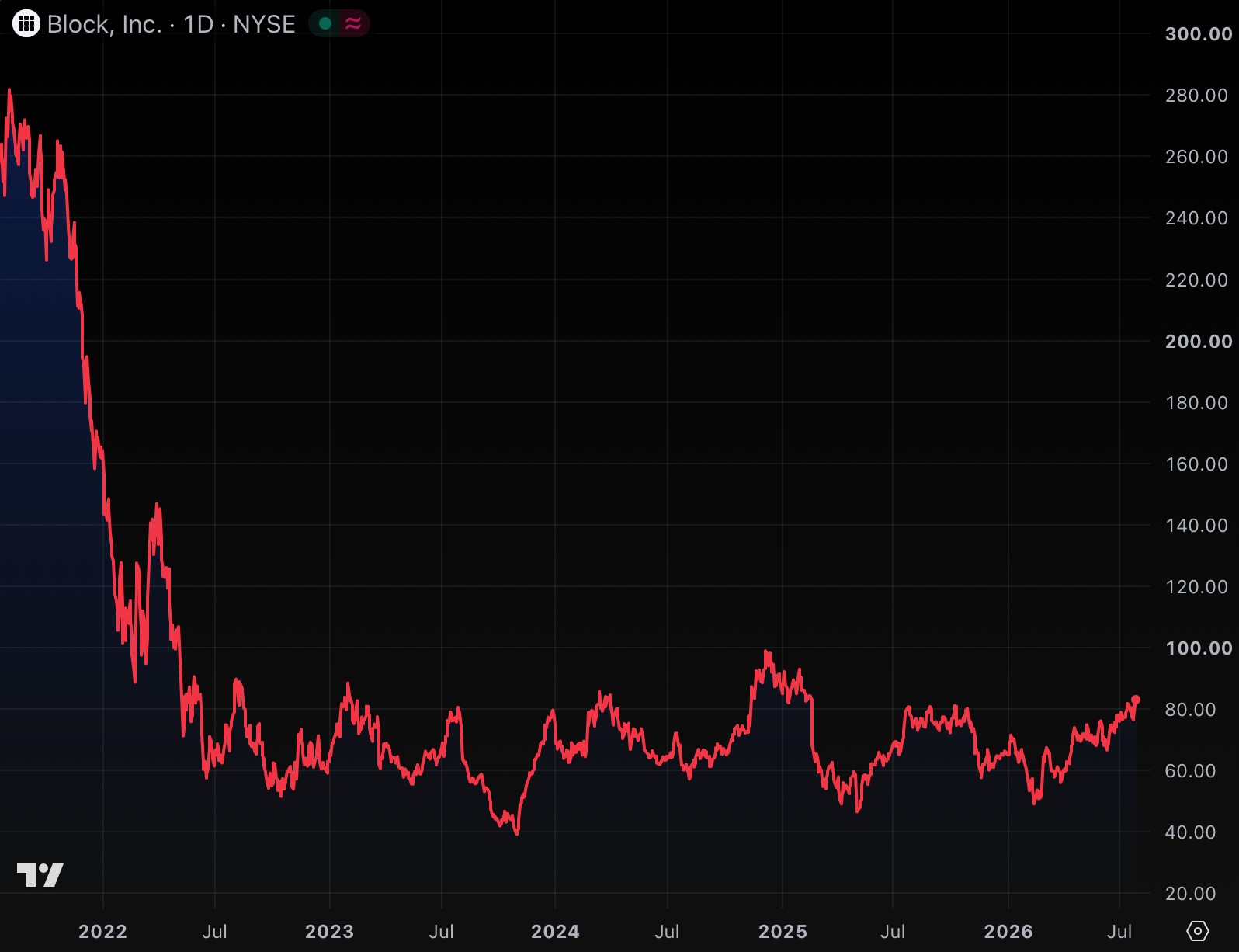
Since 2024, the data center operator has paid at least $67.9 million to Jack Dorsey’s Block to buy bitcoin mining chips. Even with that loss, Core Scientific chose to walk away from the remaining purchase commitments tied to Proto, Block’s mining hardware unit, as part of what it described as a strategic shift.
At least $67.9 million paid before Core Scientific canceled the rest
According to the report, Core Scientific paid Block $10 million in July 2024, $21.3 million in January 2025, and a final $36.6 million in January 2026.
As of January 2025, Core Scientific had already paid $31.3 million in deposits and prepayments, while it expected another $64.8 million in future payments at that time. In January 2026, after some of the machines had been delivered, the company made the additional $36.6 million payment. It then recorded a $41.9 million loss and canceled all remaining orders.
The filing did not break down the exact composition of the $41.9 million charge. What it did make clear was the outcome: Core Scientific was willing to absorb the loss in order to stop buying Dorsey’s bitcoin mining machines.
Block had planned to deliver about 15 EH/s of 3-nanometer chips
Block announced the procurement framework in July 2024, with plans to deliver its in-house 3-nanometer mining chips at roughly 15 EH/s of hash rate. Core Scientific was the first customer for Proto chips and, in Block’s public disclosures, the only large-scale buyer.
That left Core Scientific as the central external customer for Proto’s mining chip push. Its decision to terminate the remaining obligations now lands as a direct setback for Block’s mining hardware business.
AMD lease deal arrived one day before the contract termination disclosure
One day before announcing the end of the Block agreement, Core Scientific signed a 15-year data center lease covering 529 megawatts. Most of that capacity will be leased directly to AMD.
Core Scientific said the AMD-related contract, which is unrelated to Block, could generate more than $14 billion in contract revenue. In the framing of the report, leasing data center capacity to AMD now looks more profitable than mining bitcoin with Dorsey’s machines.
Block had said mining demand was strong
Protos had previously reported that Block shut down TBD, the internal unit behind its incubated bitcoin mining project and Web5 identity effort, in November 2024.
In its shareholder letter for that quarter, Block wrote: “We are reducing our investment in the music streaming platform Tidal and shutting down TBD. This gives us more capital to invest in our bitcoin mining business. That business has strong product-market fit, robust order demand, while we continue to develop the Bitkey bitcoin self-custody wallet.”
Set against Core Scientific’s latest decision, the article places that language beside a different outcome: a major customer accepted a $41.9 million loss to leave the purchase agreement.
Dorsey said on Block’s second-quarter 2025 earnings call, discussing the mining business: “We will have a large number of satisfied customers, expand the size of the market, and capture significant market share.”
According to the report, Block formally unveiled the Proto miner at Core Scientific’s site in Dalton, Georgia one week after that earnings call. Less than a year later, Core Scientific canceled all of its remaining orders.
Other Block businesses have also faced pressure
The article also reviews a string of other developments at Block. Over the past five years, Block shares have fallen 68%.
In 2021, Block spent an adjusted $237.3 million to acquire Jay-Z’s music platform Tidal. Reuters reported at the time that the acquisition was widely seen by the market as a major mistake. Block later recorded a $132.3 million goodwill impairment tied to the Tidal investment.
In July 2025, Dorsey launched the open-source messaging app Bitchat. Within days, he added a risk notice to the code repository stating that the software had not undergone an external security audit, could contain vulnerabilities, and might not meet the security goals described publicly.
In January 2025, the Consumer Financial Protection Bureau ordered Block to pay a $55 million penalty and as much as $120 million in additional compensation over mishandling fraud complaints on Cash App. One day before that order, state financial regulators had imposed another $80 million fine on the company.
In February 2026, Block told shareholders it planned a large workforce reduction, cutting headcount from more than 10,000 employees to below 6,000, leaving more than 4,000 employees facing layoffs or negotiated exits.
Block has not responded to the Core Scientific termination
Block is scheduled to release its second-quarter 2026 results after the U.S. market closes on August 5. As of publication, the company had not responded to the Core Scientific contract termination, according to the report.