
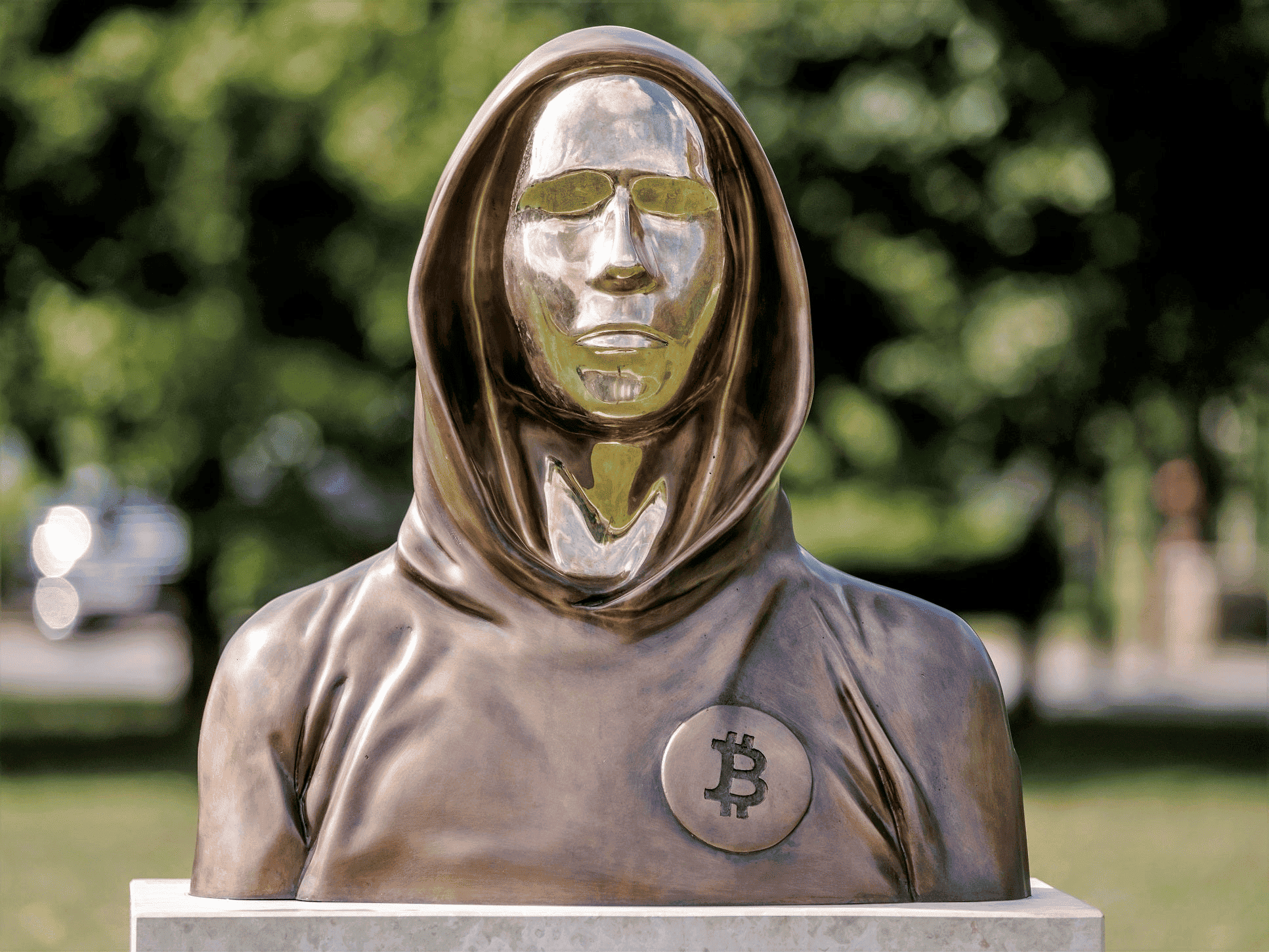
A 16-year-old comment from Satoshi Nakamoto is circulating again as Bitcoin trades through a deep 2026 drawdown and corporate buyers continue adding to their holdings.

On July 9, 2010, a user on BitcoinTalk asked whether a well-funded attacker could destroy Bitcoin by buying up all of it. Satoshi replied that such behavior would amount to cornering the market in traditional terms, but with a truly scarce asset, aggressive buying would push prices up faster and make each additional purchase more expensive.
Satoshi pointed to the Hunt brothers’ silver trade
To make the case, Satoshi referred to the Hunt brothers’ attempt to corner the silver market in 1979 and 1980. The article says silver rose from about $11 an ounce to nearly $50, then dropped quickly after exchanges changed margin rules, leaving the Hunt brothers with heavy financial losses.
The historical example was used to show how attempts to stockpile a scarce asset can reward existing holders as prices rise, while also encouraging others to hold on rather than sell. In that setup, the cost of cornering the market can end up hurting the buyer.
Bitcoin fell sharply, but corporate treasury demand kept building
The renewed attention on that old forum post is tied to changes in Bitcoin’s market structure in 2026. After reaching an all-time high of $126,210 on Oct. 6, 2025, Bitcoin fell back to roughly $62,000 to $63,000 by July 9, 2026, a decline close to 50%.
The article attributes pressure on the market to ETF outflows, geopolitical shocks, energy supply volatility and capital rotating into AI-related stocks.
At the same time, Bitcoin allocations on corporate balance sheets continued to rise. As of early July 2026, listed companies held about 1.27 million BTC in total, more than 6% of supply, and the number of companies with Bitcoin holdings was approaching 200.
Strategy Inc. remained the largest corporate holder. As of July 5, it held 843,775 BTC at an average cost of about $75,476, with total acquisition costs of roughly $63.69 billion. Twenty One Capital held about 43,514 BTC, Japan’s Metaplanet held about 43,000 BTC, and SpaceX and Tesla were also described as holding sizable positions.
ETFs, exchanges and dormant coins tightened available supply
Corporate accumulation was only part of the picture. According to the article, spot Bitcoin ETFs and crypto exchanges together held about 1.6 million BTC, equal to about 7.7% of supply. BlackRock’s iShares Bitcoin Trust alone accounted for about 3.9% of circulating Bitcoin.
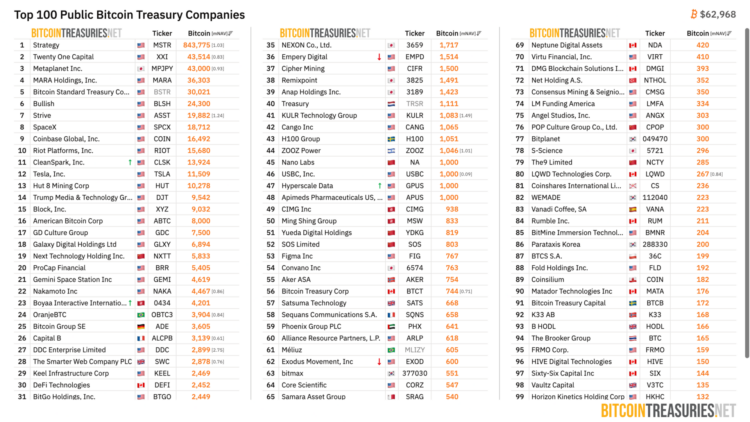
When governments, private companies, DeFi protocols, miners and other traceable entities are included, the piece says those holdings add up to around 18% to 19% of Bitcoin’s 21 million supply cap.
The report also cites research from Fidelity Digital Assets, which classifies Bitcoin that has not moved for more than seven years, together with the holdings of listed companies that own at least 1,000 BTC, as highly illiquid supply. That pool was estimated at more than 6 million BTC, or more than 28% of the eventual supply.
The article further says Satoshi is estimated to hold more than 1.1 million dormant BTC, a figure larger than the amount still left to be mined. With the current block reward at 3.125 BTC, miners produce about 450 BTC a day. Bitwise data cited in the report showed public companies added 50,351 BTC in the first quarter of 2026, meaning corporate absorption ran at about 2.8 times new issuance.
Strategy recorded a notable public sale
The article argues that Satoshi’s old logic is now showing up in more concrete form. Strategy’s holdings amount to more than 4% of total Bitcoin supply, making it the world’s largest single corporate position. But continuous buying has also lifted its cost base and left the company needing room to manage cash flow.
Between June 29 and July 5, 2026, Strategy sold 3,588 BTC for about $216 million to pay dividends on Digital Credit securities. The article describes that sale as the company’s first public disposal of meaningful size after years of accumulation.
The discussion has returned to supply mechanics
The piece also notes that Bitcoin is not the same as the silver market in 1980. Bitcoin’s supply cap is fixed by code, the on-chain ledger is public, large-scale accumulation is harder to conceal for long, and ownership is spread across a global holder base. It also points to repeated drawdowns of more than 50% as evidence that many long-term holders have built a high tolerance for price swings.
In the near term, Bitcoin is still tied to ETF flows, macro conditions and broader risk appetite. Even so, the report argues that corporate accumulation, rising illiquid supply and lower issuance after the halving have made Satoshi’s 2010 supply-demand logic a defining force in the current Bitcoin market structure.