
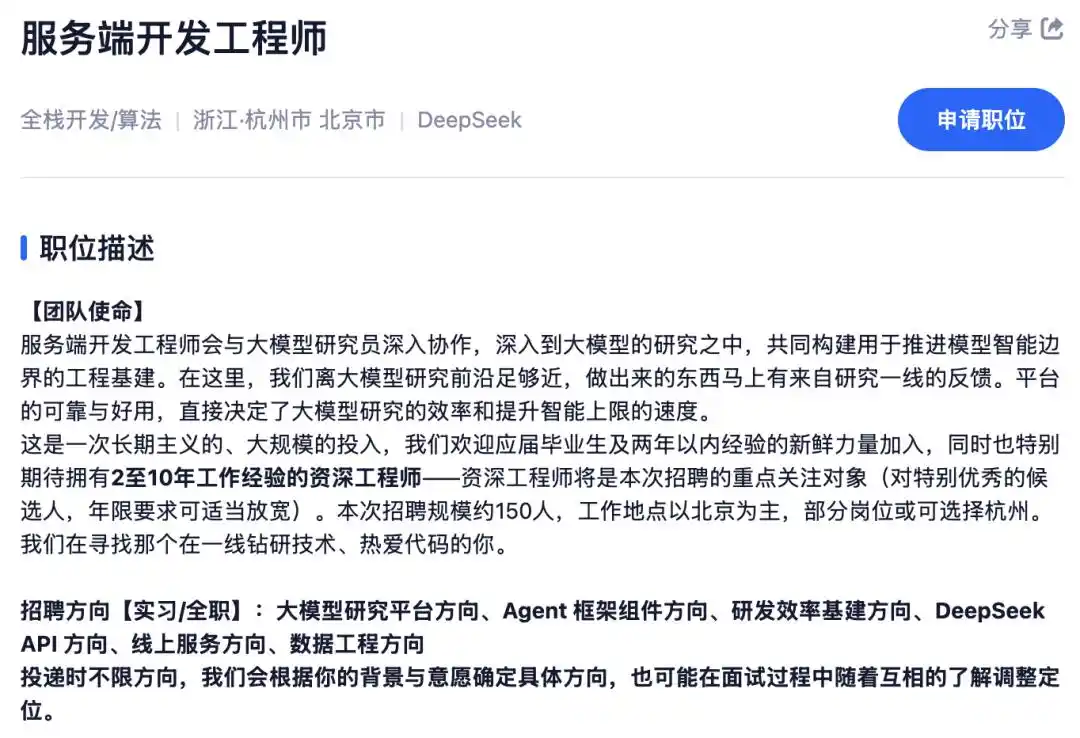
DeepSeek is hiring 150 people in one round, a notable number for a company whose team size was described in the source as only about 300 to 500 employees.
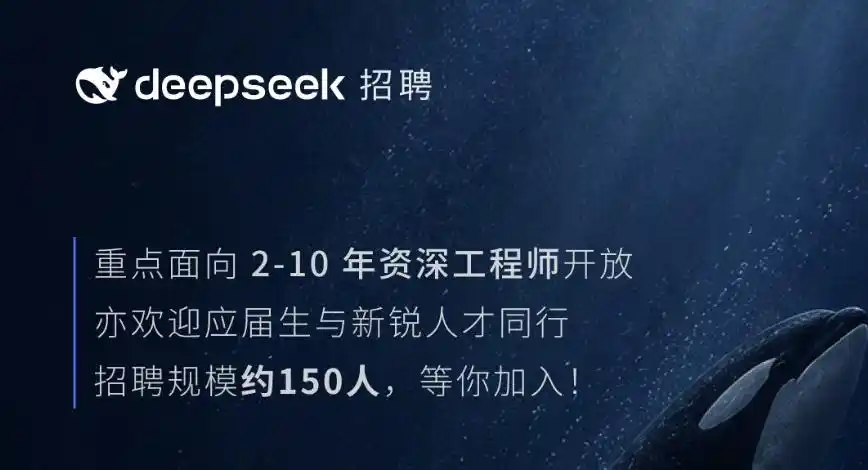
All 150 openings are being placed outside AI research. They are concentrated in two roles: backend development engineer and Agent elastic computing R&D engineer. The hiring focus is on senior backend developers with two to 10 years of experience.
Cui Tianyi, identified in the source as the person in charge, said that as scale grows, complexity grows with it, and that complexity then requires more scale.
DSec moves from paper to large-scale engineering
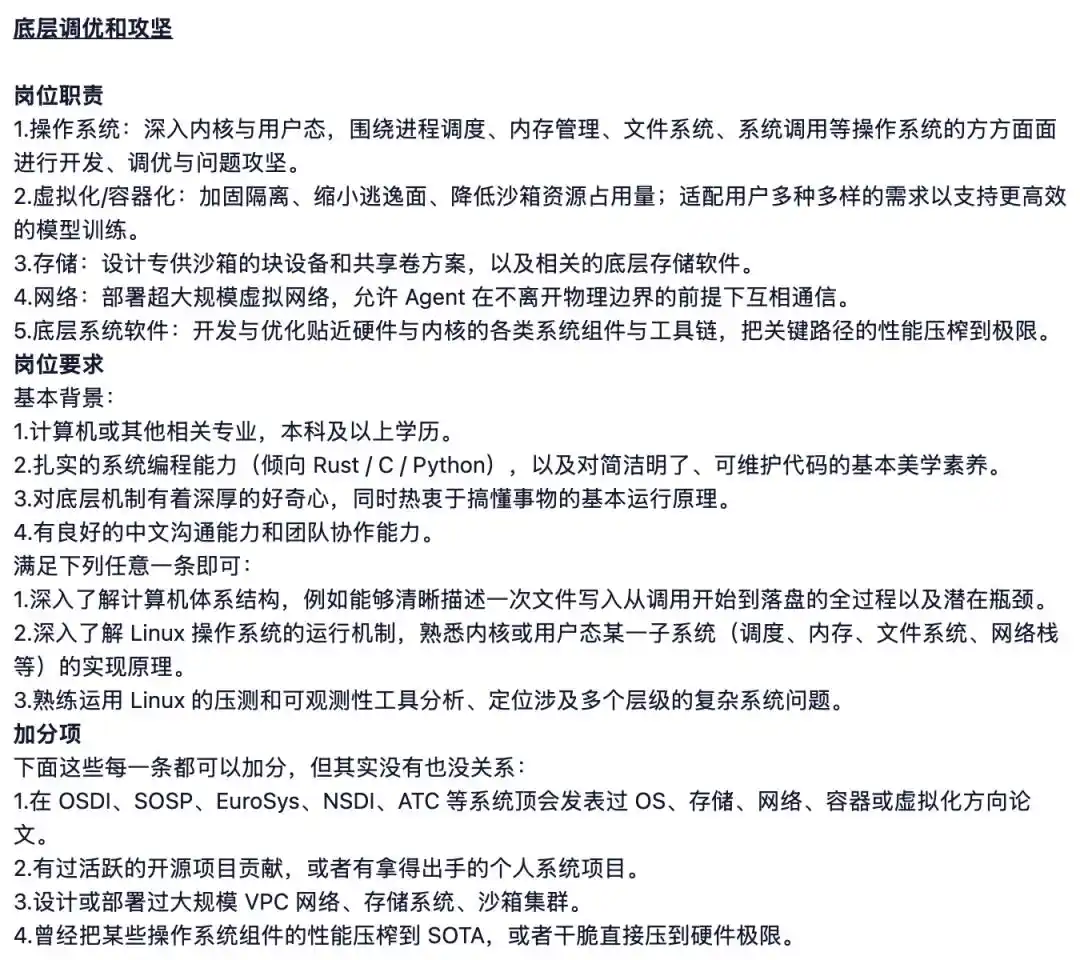
The Agent elastic computing R&D role is split into two tracks: platform development and underlying systems. The platform in question is DSec, short for DeepSeek Elastic Compute, a custom elastic computing platform built for Agents. It was first publicly disclosed in the recently released DeepSeek-V4 technical report.

According to the paper description cited in the source, DSec is made up of three Rust components: the API gateway Apiserver, an Edge proxy running on each host machine, and the cluster monitor Watcher. The three are connected through DeepSeek’s in-house RPC protocol and run on top of its self-developed 3FS distributed file system.
The job listings also show where the next engineering expansion is headed. To improve reliability and efficiency, DSec needs changes across the full system stack, from the operating system and virtual machines to networking and storage layers, and then up to application-level scheduling and control-plane services.
The source says this project includes work that has little precedent and no ready-made answers. The platform development and maintenance track combines product-like requirement understanding with system design, development, and maintenance. The lower-level systems track is more focused on optimization and hard technical bottlenecks. One line in the listing says it is a plus if a candidate can push certain operating system components to state-of-the-art performance, or even close to hardware limits.
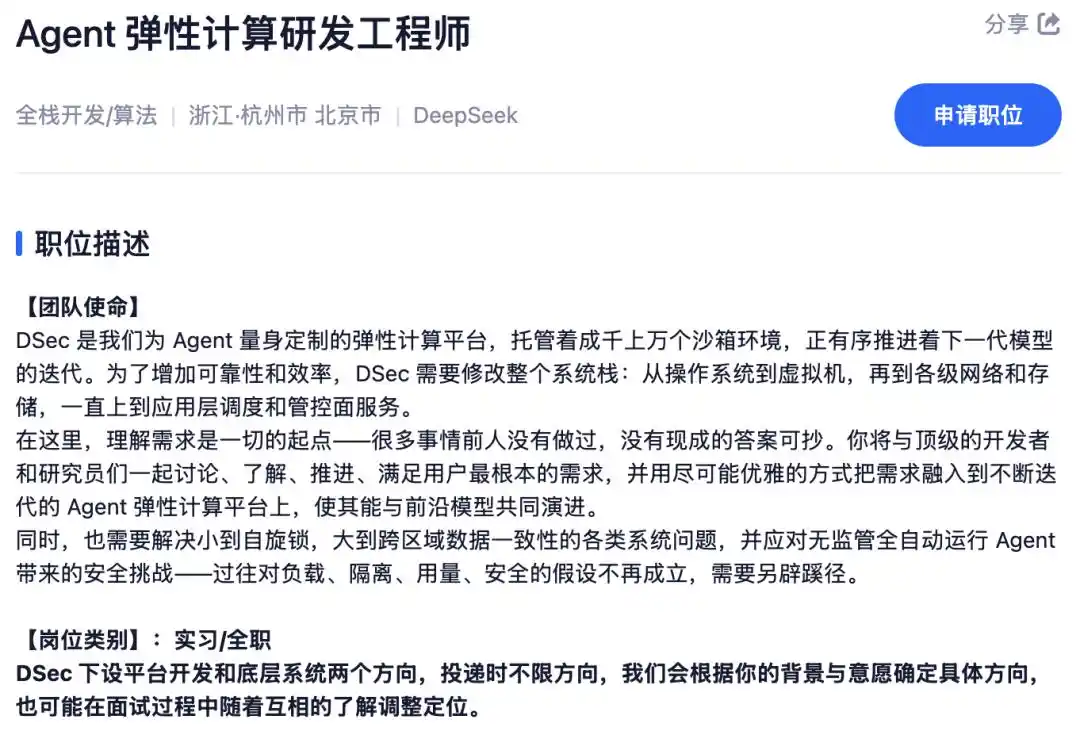
The listing also states that this work directly determines the diversity and efficiency of Agent model training. The source adds that DeepSeek aims to reach SOTA and open-source the result, which would affect not only future DeepSeek Agent infrastructure but also the wider industry.
Backend hiring spans the full chain from research to user-facing services
On the backend side, DeepSeek has six directions that together cover the full path from model research to user-facing services:
- large model research platform
- Agent framework components
- R&D efficiency infrastructure
- DeepSeek API
- online services
- data engineering
DeepSeek describes the team’s mission as staying close enough to the front line of large model research that what it builds can receive immediate feedback from researchers. The reliability and usability of the platform, the company says in the source, directly shape research efficiency and the speed at which the upper bound of intelligence can be improved.
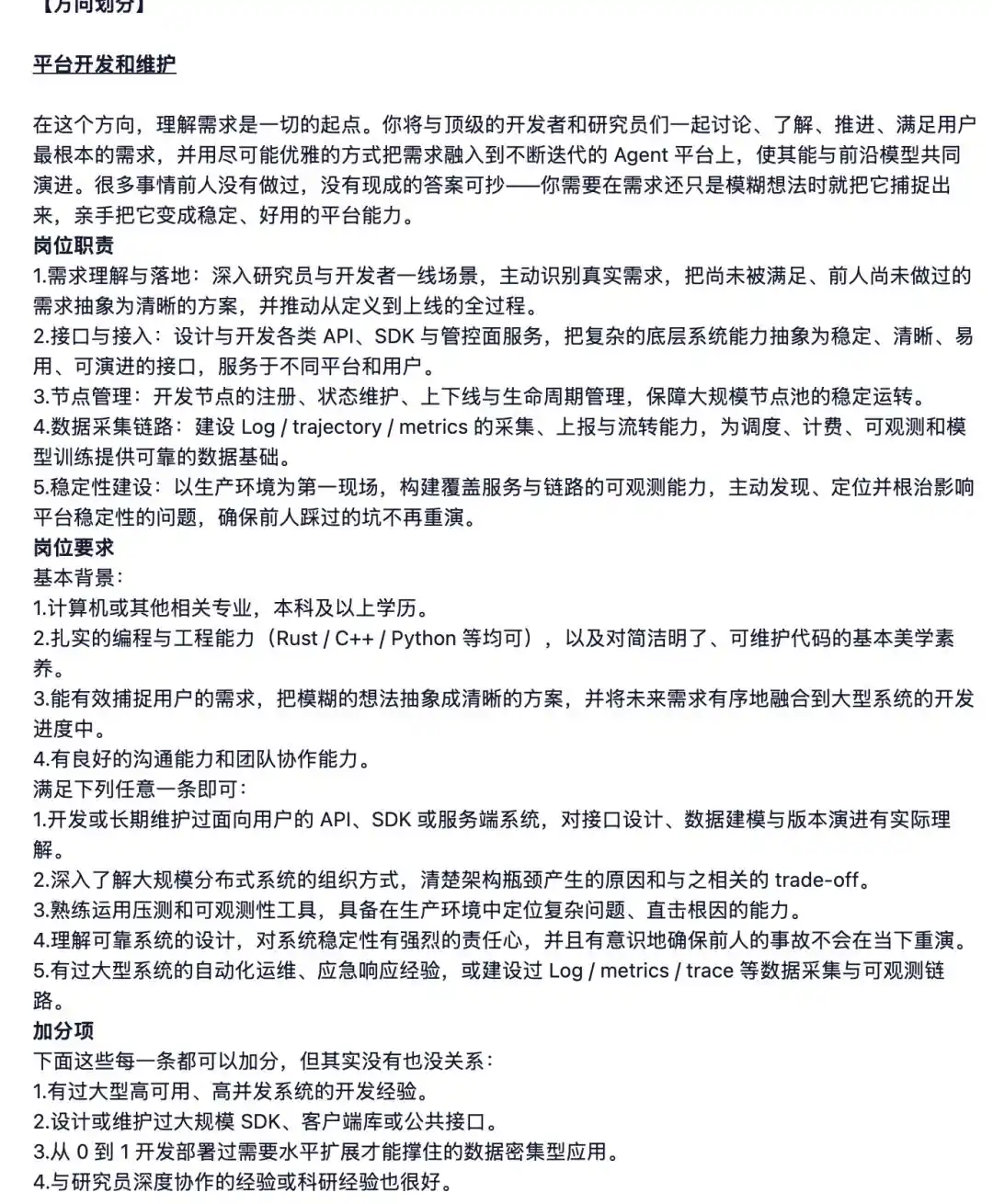
For the large model research platform track, the core task is to abstract research workflows into platform capabilities. Engineers are expected to get close to researchers’ real working scenarios, identify problems on their own, and shorten the cycle from an idea being proposed to validation and iteration.
The Agent framework components track is responsible for building a unified framework for Agent access and runtime.
The R&D efficiency infrastructure track covers a unified CI/CD system, observability and alerting, large-scale cross-cluster data movement and governance, and operations automation. It also explicitly calls for exploring the use of Agents in automated diagnosis and RCA.
Two of the tracks serve DeepSeek’s external products directly. The DeepSeek API team is tasked with handling the challenges of ultra-large-scale API services, delivering research output from frontier models to global developers and massive user bases through stable and efficient APIs, while co-evolving with the company’s internal inference framework.
The online services team is meant to support the architecture design and ongoing iteration of large-model applications serving tens of millions of daily active users.
The data engineering track supports every stage from model training to online services. The tech stack listed in the source includes Spark, Flink, Kafka, ClickHouse, and Iceberg. Candidates are expected to independently build end-to-end data models, from event logs to business metrics.

Taken together, the roles outline a full loop: a model executes tasks in a sandboxed environment, the platform records the process and outcomes, that produces training and evaluation data, and the data then feeds back into model improvement.
DeepSeek’s hiring profile centers on initiative and real Agent usage
Across research-related roles, the same requirement appears repeatedly: engineers need to work close to frontline researchers, identify problems proactively, and drive solutions from definition to implementation rather than just receiving and delivering tasks.
The recruitment material also spends considerable space describing the ideal candidate. DeepSeek wants engineers who already use Agents deeply in everyday development work.
One requirement says candidates should be proficient in using AI Agent tools for software development and, with AI assistance, be able to write quality-assured code in areas where they do not already have direct experience. Another says they should be able to quickly spot and step in when an Agent provides a flawed solution.
In the wording cited by the source, the importance of prior experience with a particular language, tool, or project type is falling in the Agent era. The emphasis in engineering work is shifting from knowing how to do something to knowing what to question, where errors may lie, and how to prove a solution is correct.
The source references Cui Tianyi’s post on X and a Moka recruitment page. The article itself states that it came from the WeChat public account QbitAI and was written by Meng Chen.