
On Oct. 21, 2026, the Office of the Comptroller of the Currency released its final rule implementing the GENIUS Act, giving last year’s stablecoin issuance framework a set of operating standards for licensing, reserve allocation, and supervisory review. The rule takes effect on Jan. 18, 2027, and its main provisions are codified in 12 CFR Part 15.

For a company preparing to issue a U.S. dollar stablecoin, the document reaches into day-to-day operations. Finance teams need to rework reserve allocation. Product teams need to adjust redemption access points. Legal teams need to review arrangements with trading platforms. Management also has to set aside funds for the issuer’s own ongoing operations. Issues that could once be handled separately now have to reconcile inside a single issuing entity.
The final version also makes several substantive changes. It gives issuers more flexibility in reserve allocation, changes how concentrated redemptions are handled, and carries the debate over holder rewards into the final rule itself. At the center of the framework is a basic question: when a user pays in $1, how must the issuer hold that money, and how must it return it?
Who falls under the rule
The OCC supervises national banks, federal savings associations, and related institutions. The GENIUS Act also assigns the agency part of the oversight for federally qualified nonbank payment stablecoin issuers, specified state-qualified issuers, and foreign payment stablecoin issuers. That means the rule covers issuance and related custody activities that sit within the OCC’s authority.
Other issuance paths inside the banking system still involve the Federal Reserve, the Federal Deposit Insurance Corporation, and state regulators. In this framework, a “payment stablecoin” is defined by the issuer’s promise to redeem at a fixed amount. Once users receive the token, they can transfer value through systems that support it, while the issuer remains responsible for redemption.
Section 15.10 lists the activities that may be conducted around that relationship, including issuance, redemption, reserve management, custody, and services that directly support those functions. It also allows fees for purchases and redemptions under stated conditions.

That makes the issuer’s financial perimeter more explicit. If a group runs a trading platform, lending products, and a stablecoin business at the same time, it has to identify which legal entity performs each activity, who receives the fees, and who holds the reserves. Intra-group cooperation can continue, but the issuer’s assets, risks, and payment obligations must be explainable on a standalone basis. For banks connecting to a stablecoin, that is also the starting point for due diligence: does the contracting party match the entity that is actually responsible for redemption?
There is also a federal-state handoff built into the statute. The GENIUS Act sets a transition arrangement for state-qualified issuers once they reach a certain scale, while preserving exemption paths under statutory conditions. The often-cited $10 billion threshold in market discussions has to be read together with issuer category, consolidation methodology, and exemption conditions. Companies planning to expand need to build that regulatory transition into their plans early rather than wait until issuance reaches the threshold and then try to rework the structure.
Foreign issuers face another layer of questions: whether their home-country framework satisfies U.S. legal requirements, how registration and examination would work, and whether redemption support would be available to U.S. customers. Those conditions will shape how offshore stablecoins enter the U.S. market and which coins U.S. service providers can offer to customers. A global issuance network therefore needs legal and operating arrangements tied to the jurisdictions it actually serves.
How reserves can be allocated
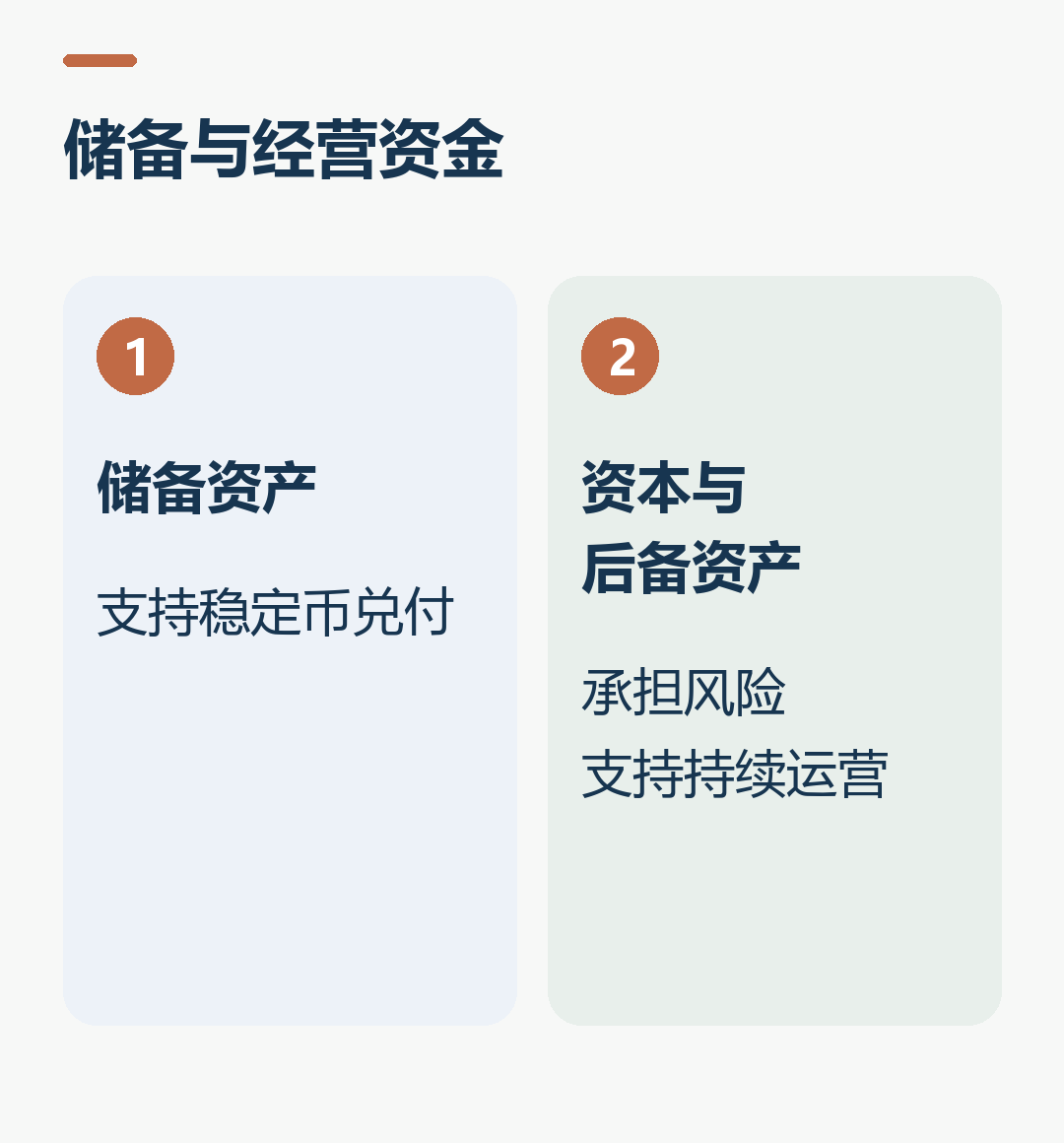
Section 15.11 requires issuers to maintain sufficient qualifying reserves. Eligible assets mainly include cash, qualifying demand deposits, short-term U.S. Treasuries, certain repurchase arrangements, and qualifying government money market funds. The rule also recognizes tokenized forms of some qualifying assets, with the exact conditions still tied to the underlying asset and applicable law.
What these reserve assets share is the ability to be converted into cash relatively quickly when needed. Short-term Treasuries, for example, can generate interest income, and they can also be sold or used in qualifying repo transactions to raise cash. The harder moment comes when a large number of customers seek redemption at the same time. Asset prices, trading hours, and a custodian’s processing capacity can all affect when cash is actually available. Having enough assets on paper solves only part of the problem.
The final rule adjusts the quantitative requirements. Section 15.11(c)(2)(i) requires at least 5% of reserves to be held in the form of deposits withdrawable on demand, qualifying funds in accounts payable on demand, or balances at a Federal Reserve Bank. That is lower than the 10% option in one version of the proposal. The draft’s quantitative limits tied to weekly liquidity and weighted average maturity were not carried over as written.
For issuers, that changes the split between yield and cash. An issuer with $1 billion in reserves, for example, would face a 5% floor equal to $50 million.
At the same time, Section 15.11(c)(1) requires issuers to hold more liquidity or additional reserves when needed, based on the business, the asset mix, and the diversification of redemption risk management. An issuer with highly concentrated customers or heavy reliance on a single channel may need more room for large same-day outflows. Finance teams therefore have to measure the statutory ratio against their own redemption history.
The baseline limit on counterparty concentration is 40%, with exceptions for exposures to the U.S. government, qualifying custodial relationships, and centrally cleared repos. The legal structure of the asset matters here. Depositing money at a bank creates a claim on that bank. Having a custodian hold Treasuries raises separate questions about asset identification, segregation, and return arrangements. The final rule distinguishes among those situations, and an issuer’s treasury systems need to classify them just as clearly.
That leaves issuers with more choices in day-to-day treasury management, but it also raises the importance of internal judgment. They need to explain why a given bank was selected, why a particular repo structure was used, and how redemptions would continue if that institution could not return assets on time. Reserve policy becomes part of routine cash management.
Redemptions and the two-business-day clock
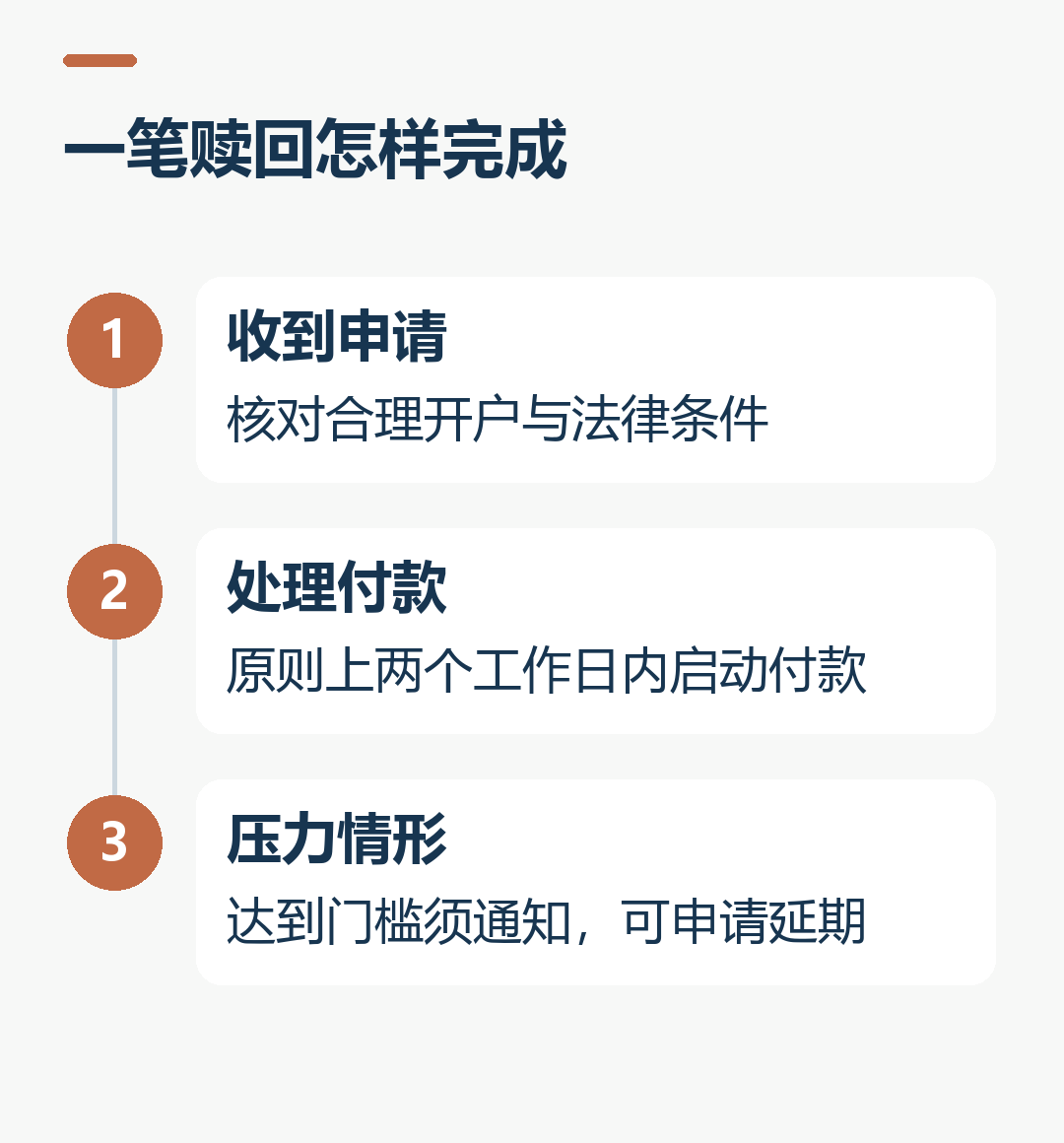
Redemption is the part of the rule users are most likely to feel directly. Section 15.12 sets two business days as the general outer limit for timely redemption and spells out when the obligation starts and what counts as completion. The clock starts once the issuer receives the customer’s redemption instruction, the customer completes reasonable onboarding procedures, and other lawful conditions for payment are met. Those onboarding procedures must themselves be designed reasonably and must not create improper delay, including during periods of market stress.

Completion is defined as the issuer having fully processed and initiated the transfer of monetary value to the customer or the customer’s designated financial institution, or, at the customer’s request, credited the corresponding value to the customer’s account with the issuer. That means the time when the customer finally sees funds arrive at a bank can still depend on the downstream payment channel. Issuers need to explain in product pages and customer agreements how long their own processing takes and where later settlement steps begin.
The final treatment of concentrated redemptions stands out. If redemption requests for a branded stablecoin exceed 10% of its circulating issuance value over a consecutive 24-hour period, the issuer must notify the OCC within 24 hours and may apply for an extension of the redemption deadline. The OCC decides whether to grant that request. In the proposal, crossing the trigger would have automatically opened a seven-calendar-day extension. The final text replaces that with notice and application.
That change matters for customer behavior. If a fixed threshold automatically triggered a longer wait, customers might worry about ending up later in the queue and redeem earlier. The final mechanism leaves room for supervisory judgment, but it also requires issuers to provide real data quickly: which channels the requests are coming through, whether same-day cash is sufficient, which assets can be liquidated, and what effect continued redemption would have. Without that information, an extension request is hard to assess.
Preparation therefore has to show up in service capability. Issuers can test the full process in advance: identity review, wallet verification, token burn or recall, fiat payment initiation, and failed-order handling. They also need fallback paths and external explanations for holidays, on-chain congestion, or interruptions in banking rails. Customers see a redemption button. Behind it, multiple teams have to work off the same time record.
Fees are also brought into a clearer disclosure framework. Section 15.12(e) requires purchase and redemption fees to be disclosed clearly, and fee changes generally must be announced at least seven calendar days in advance. For businesses that rely on stablecoins for settlement, predictable redemption timing and fees can directly affect treasury planning and supplier payment quotes.
Redemption timing and stress scenarios need to be read together with the conditions and definitions in 12 CFR 15.12.
Why holder rewards remain contested
Section 4(a)(11) of the GENIUS Act restricts issuers from paying interest or yield solely because a customer holds, uses, or retains a payment stablecoin. The final rule keeps that requirement in Section 15.10(c)(4). The business issue behind it is straightforward: Treasuries and deposits held by the issuer may generate income, and how that income is divided among the issuer, distribution platforms, and users affects product competitiveness.
The dispute centers on distribution arrangements. Stablecoins often reach users through trading platforms and other intermediaries. An issuer may pay fees to a partner, and that partner may then provide rewards to users. The proposal would have created a rebuttable presumption for certain affiliate or third-party arrangements, requiring the issuer to explain why the payments did not evade the yield ban. The final rule removes that presumption, but it keeps Section 15.10(c)(6) and the anti-evasion constraints in the statute.
Reviewing a distribution contract means following the money flow line by line: what service the platform provided, how much the issuer paid, and under what formula the platform rewarded users. A fee tied to transaction count creates a different factual record from a reward that accrues based on token balance and time held. Legal teams need to match service records to calculation formulas, assess the link between issuer payments and user rewards, and then evaluate how the anti-evasion rule applies.
The American Bankers Association objected on the day the rule was released, saying the OCC had moved away from its earlier approach and would leave room for crypto platforms to offer reward structures similar to holding yield, which in turn could affect banks’ funding for lending. That reflects the banking industry’s concern over deposit competition. Issuers and distributors are focused on a different question: whether channel services and customer incentives can continue within a clearer boundary. Both sides end up at the same issue of who is paying users for holding behavior.
When preparing compliance materials, companies can place payment rationale, service records, reward rules, and calculation formulas into one analysis. Rewards that accrue over time based on token holdings call for a closer look at the issuer’s level of involvement. Rewards based on actual payment activity should be backed by transaction and service evidence. That gives supervisors something verifiable to review during an application or examination.

Capital and operating reserve assets
Redemption reserves are only one side of the balance sheet. The issuing company also needs funds to maintain systems, staff, audits, and service providers. Section 15.41 treats those needs separately, setting minimum capital requirements and requiring operating reserve assets equal to 12 months of total expenses. Those assets must be identified separately in regulatory reports from stablecoin reserves and other assets.
For a newly established issuer, the capital requirement is generally the higher of $5 million and any amount specified in licensing or formation conditions. That category includes entities approved by the OCC to issue, as well as entities that moved from a state framework into the federal framework less than three years earlier. As a rule, they must maintain that amount for 36 months, though the OCC may adjust the period. Ongoing issuers also face a minimum capital floor of $5 million, with the actual level expected to match risk. Project planning therefore has to account for licensing conditions, the first three years of expenses, and risk.
The operating reserve asset requirement addresses a different kind of stress. Even if token reserves suffer no loss, a company can still run short of funds because of a sharp revenue decline, a cyberattack, a technology migration, or a major dispute. If systems go down or a key vendor stops providing service, customer redemption can be affected. Setting aside assets specifically for ongoing operations helps the issuer cover necessary expenses while handling an incident and keep core services running.
That operating reserve amount also has to be updated as expenses change. For issuers that have filed at least one year of quarterly reports, Section 15.41 uses expenses from the current quarter and the prior three quarters. Where quarterly reports are not available, the rule uses actual expenses or a reasonable estimate under the text. If an issuer fails to meet the capital or operating reserve asset requirement, it must notify the OCC within 24 hours. Management needs to decide in advance who monitors the gap and who sends the notice.
Issuance reserves, capital, and operating reserve assets are managed under separate provisions. That changes the cost structure of entering the market. Smaller issuers have to absorb relatively fixed costs tied to compliance, systems, and audits, and they also need to maintain banking and custody arrangements. Larger groups may share some services, but shared contracts, cost allocation, and contingency support still need to be spelled out. For white-label issuers or providers building custom stablecoins for enterprises, those continuing costs have to be reflected in pricing.
Section 15.13 adds that internal controls, audit, risk assessment, and operational management must match the scale of the business. In practice, one way to test that is to work backward from an abnormal transaction: who detects it, who can stop the related operation, who decides whether reserves and redemptions are affected, and who reports to the regulator. Governance documents matter only if they support real handling.

From publication to live operation
After releasing the final rule, the OCC also issued supporting guidance on applications, exemptions, and reporting. Companies need to track those procedural documents alongside the rule itself. A finalized regulation, approved information collection forms, the start of application intake, and a specific company receiving approval are different milestones. Project timelines need to match the stage a company is actually in.
For institutions already running related businesses, the most useful work during the transition period is a line-by-line review of existing arrangements. Do reserve asset categories and valuation methods meet the rule? Can custody contracts support asset identification? Can customers find a complete redemption explanation? Have capital and operating reserve assets already been built into the budget? Where temporary exemptions may be relevant, companies then need to check the supporting guidance for conditions and documentation.
On anti-money laundering, the Bank Secrecy Act, and economic sanctions, this prudential rule does not complete every implementation arrangement at once. Those rules will be coordinated separately. At the same time, legal obligations that already apply to the business remain in force. Companies can place prudential entry requirements, customer screening, and transaction monitoring into one project plan while distinguishing between current rules and requirements still to be finalized.
Talks between stablecoin service providers and banks, custodians, and payment channels are likely to become more concrete from here. The parties need to agree on tolerable redemption stress, how abnormal transactions will be handled, what information will be shared, and what exit arrangements look like. For companies considering stablecoin payments, procurement reviews can also change. Beyond the chain and the token, they can add the issuing entity, redemption path, reserve reporting, and incident contacts to the service assessment to see who is responsible for the money through the full payment process.
The timeline discussed here relates to this OCC prudential final rule.