
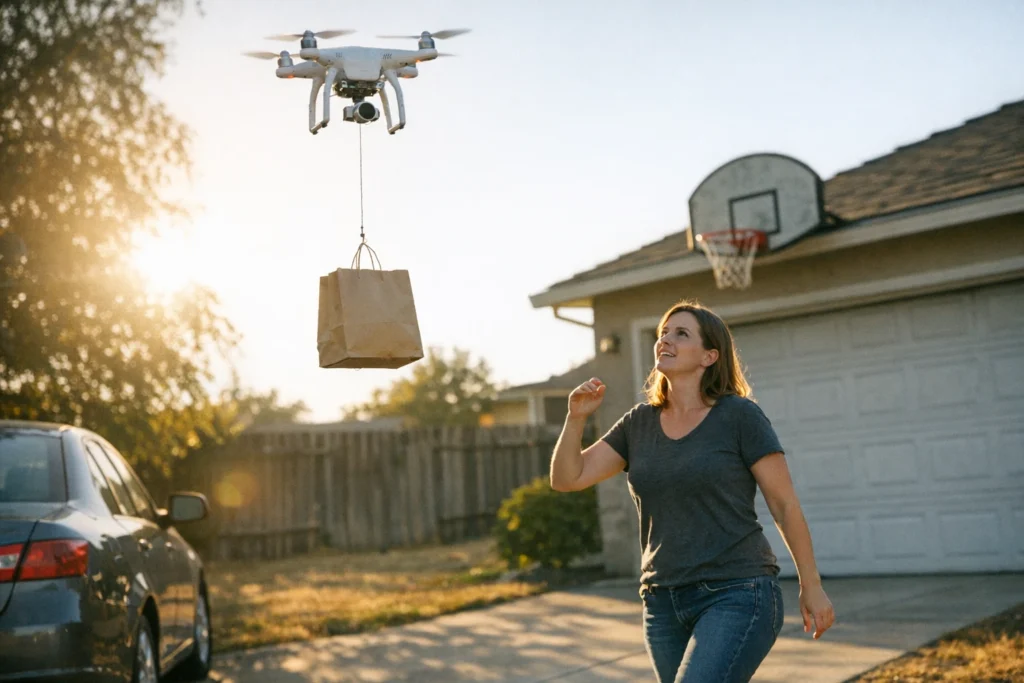
DoorDash said on July 29 that it had obtained a Federal Aviation Administration (FAA) Part 135 air carrier certificate and introduced its in-house drone delivery program, DoorDash Air. The company said the service is being built for orders within 5 miles and a 25-minute delivery window, with commercial operations expected to start in fall 2026 before being integrated into its main app.
DoorDash becomes the eighth U.S. operator with a Part 135 certificate
DoorDash said the system is being developed by DoorDash Labs, its robotics and autonomy unit. The same team previously built the sidewalk delivery robot Dot.
With the approval, DoorDash becomes the eighth company in the United States to secure a Part 135 certificate. Other names on that list include Alphabet’s Wing, Amazon Prime Air, Zipline, and UPS Flight Forward.
On the day the announcement was made, DoorDash shares closed at $193.53, up more than 6% on the day, though still negative for the year to date.
The certificate is not a green light for immediate drone meal delivery
Part 135 is an FAA operating certificate for commercial air carriers. In plain terms, it means a company is qualified to conduct commercial air transport operations. It does not mean DoorDash can start drone food delivery right away.
Under FAA rules, DoorDash’s aircraft and its proposed operating model still need review, testing, and validation before the company can carry out beyond visual line of sight, or BVLOS, missions. The approval gives DoorDash the right framework to pursue the business, but not final operational clearance.
That also means fall 2026 is DoorDash’s own target for commercial launch, not a date endorsed by the regulator.
In-house buildout will run alongside existing partnerships
DoorDash said it is not abandoning current partners after securing the certificate. The company said it will continue to work with Wing and Flytrex.
Its relationship with Wing dates back to Australia in 2022 and expanded into the Dallas-Fort Worth market in 2024. The setup points to a parallel strategy: build its own aircraft and ground infrastructure while keeping external operators in the mix.
DoorDash Air is being developed through DoorDash Labs, which is building the aircraft and related ground systems. At the same time, the company is keeping room for third-party drone operators in live markets.
Delivery economics remain the hard part
The bigger issue for drone delivery is not just whether aircraft can fly. It is whether each trip can be made cheap enough to work as a business.
DroneUp, Walmart’s former drone partner, had an actual per-delivery cost of $30 and a target cost of just $7, leaving a $23 gap. DroneUp eventually shut 18 sites and exited the Florida market.
Two years later, on the same July 29 date that DoorDash announced its certificate, Wing returned with Walmart in the greater Orlando area and took over service in that same airspace.
Those numbers help explain why DoorDash wants to build more of the stack itself. Relying on another operator’s fleet means paying someone else that spread. Building aircraft and ground infrastructure internally gives DoorDash a chance to push per-trip costs closer to a range that could support profitability.
Dashers are still expected to handle most orders
Whether couriers will be replaced is one of the most sensitive parts of the story. DoorDash said they will not. The company said deliveries completed by dashers, drones, and sidewalk robots will all grow together because total demand is expanding.
DoorDash also said its core business is growing more than 20% year over year, and merchants in early pilot programs saw order volume rise by about 30% within a few weeks of going live.
The company’s own wording, however, also laid out the division of labor. DoorDash said couriers will continue to handle the vast majority of deliveries, including orders that are difficult to automate, such as climbing apartment buildings and carrying larger orders.
Commercial rollout still depends on approval and execution
For now, DoorDash has secured a key operating certificate and set out the basic parameters for DoorDash Air: 5 miles, 25 minutes, and a fall 2026 commercial target. Before drones can actually begin routine delivery work, the aircraft and operating procedures still have to clear FAA review, testing, and validation.
The company has made its direction clear. Whether it can launch on schedule will depend on how quickly those approvals move and whether the cost per trip can be brought down to a workable level.